Late September update
The mostly great weather continued at Blackbushe during the month, with something of an “Indian Summer” and some, but not enough, rain to cause us any issues with our continuing work on “Vagabond” and “Loreley”.
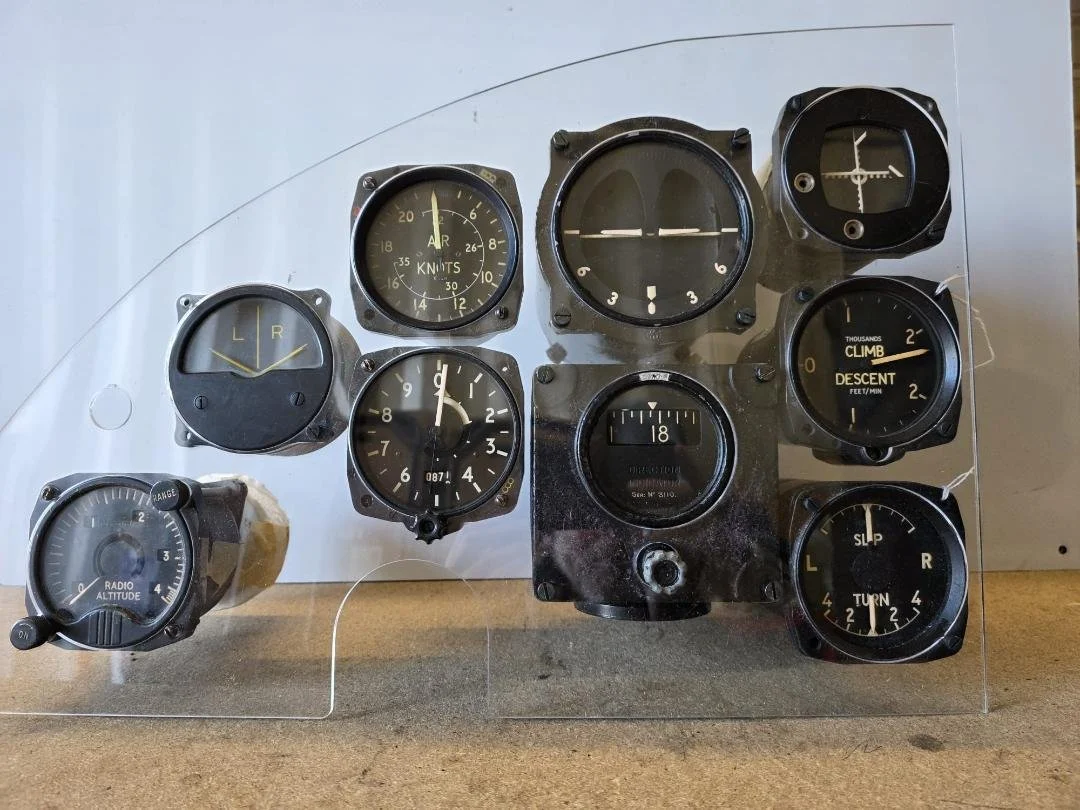
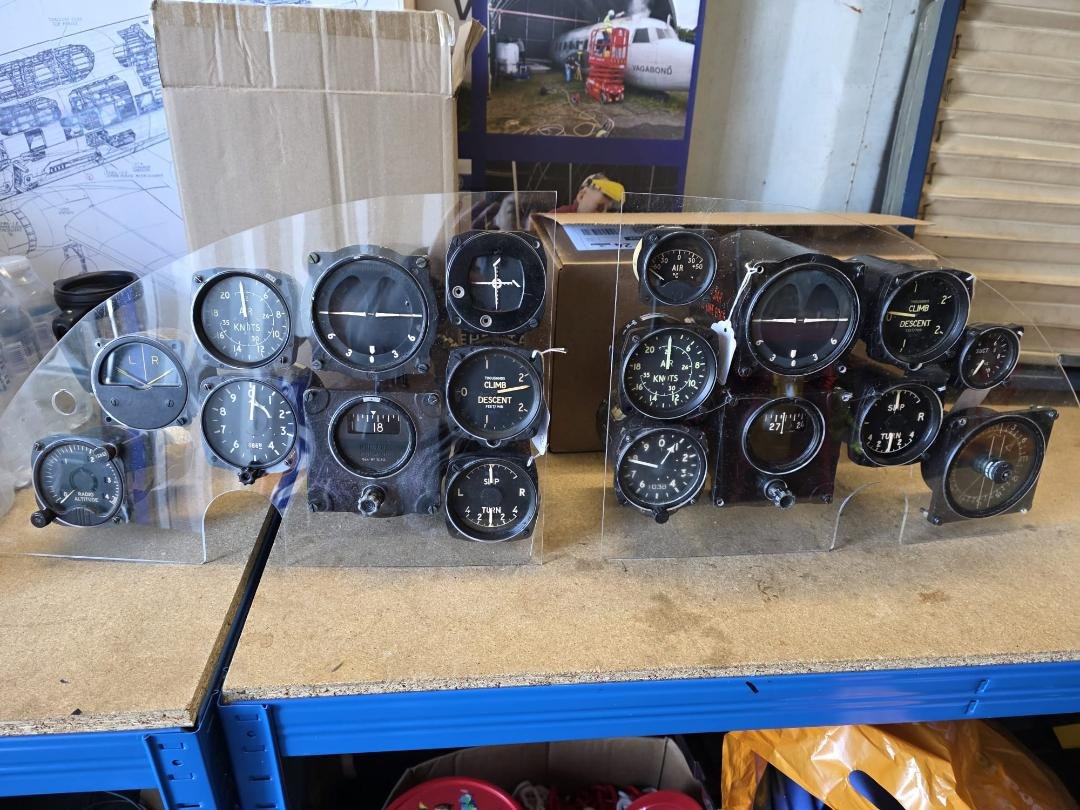
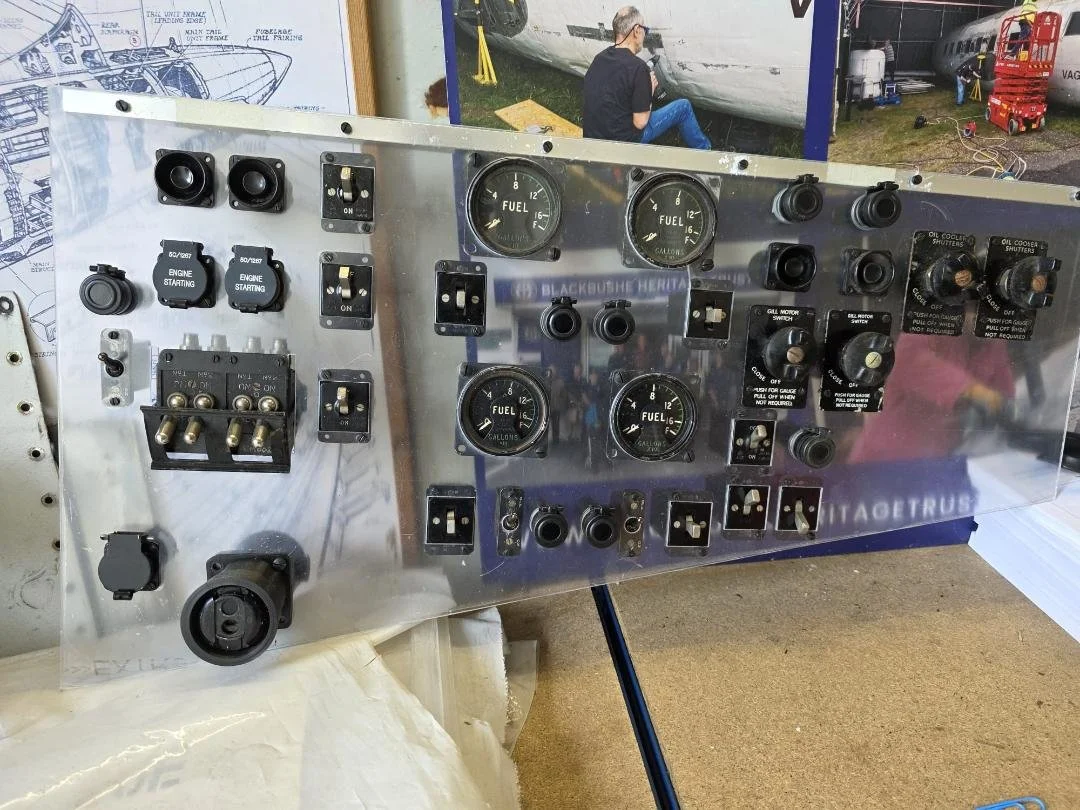
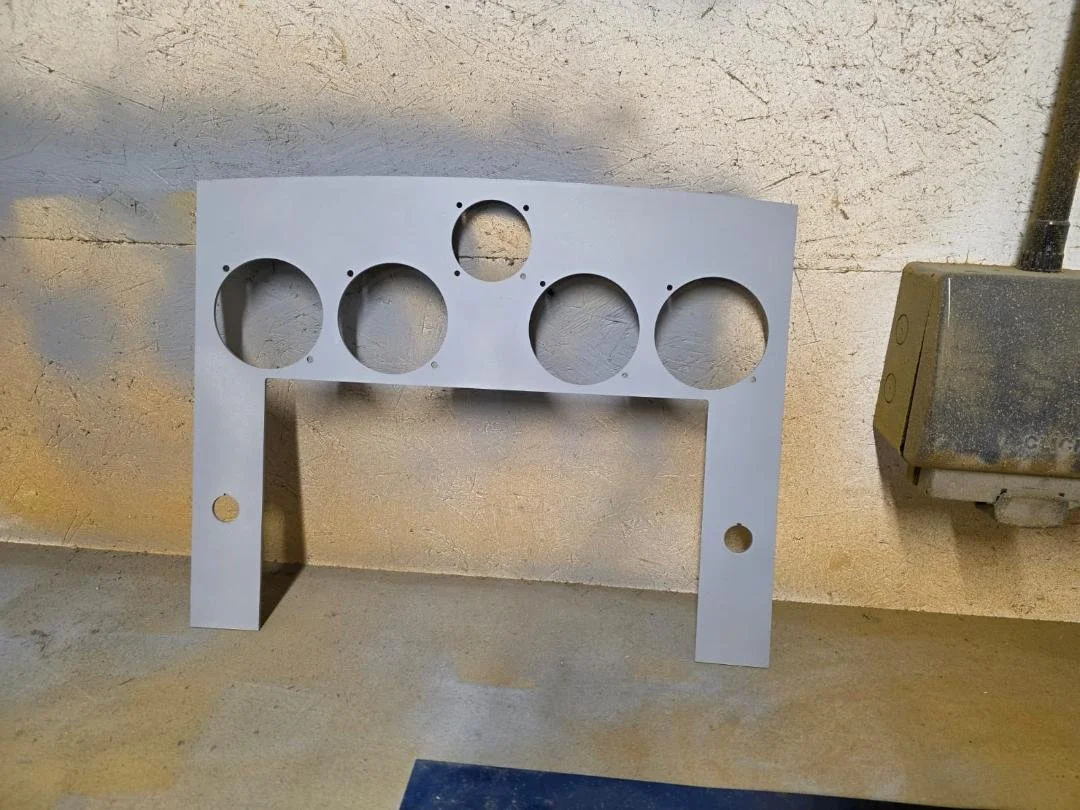
To start off this update, as you may have seen on our social media channels earlier in the month great progress has been made with the fabrication of the separate instrument panels that will in time make up “Vagabond’s” rebuilt cockpit.
To re-cap, when we brought her back from Austria in the Spring of 2023, the cockpit was almost completely bare, having been stripped of almost all instrumentation and controls during her years in use by 2 different restaurants, in The Netherlands and then in Austria.
One of the most complex parts of the entire restoration is to rebuild the cockpit back to as close as we can get it to how it would have looked during her flying days.
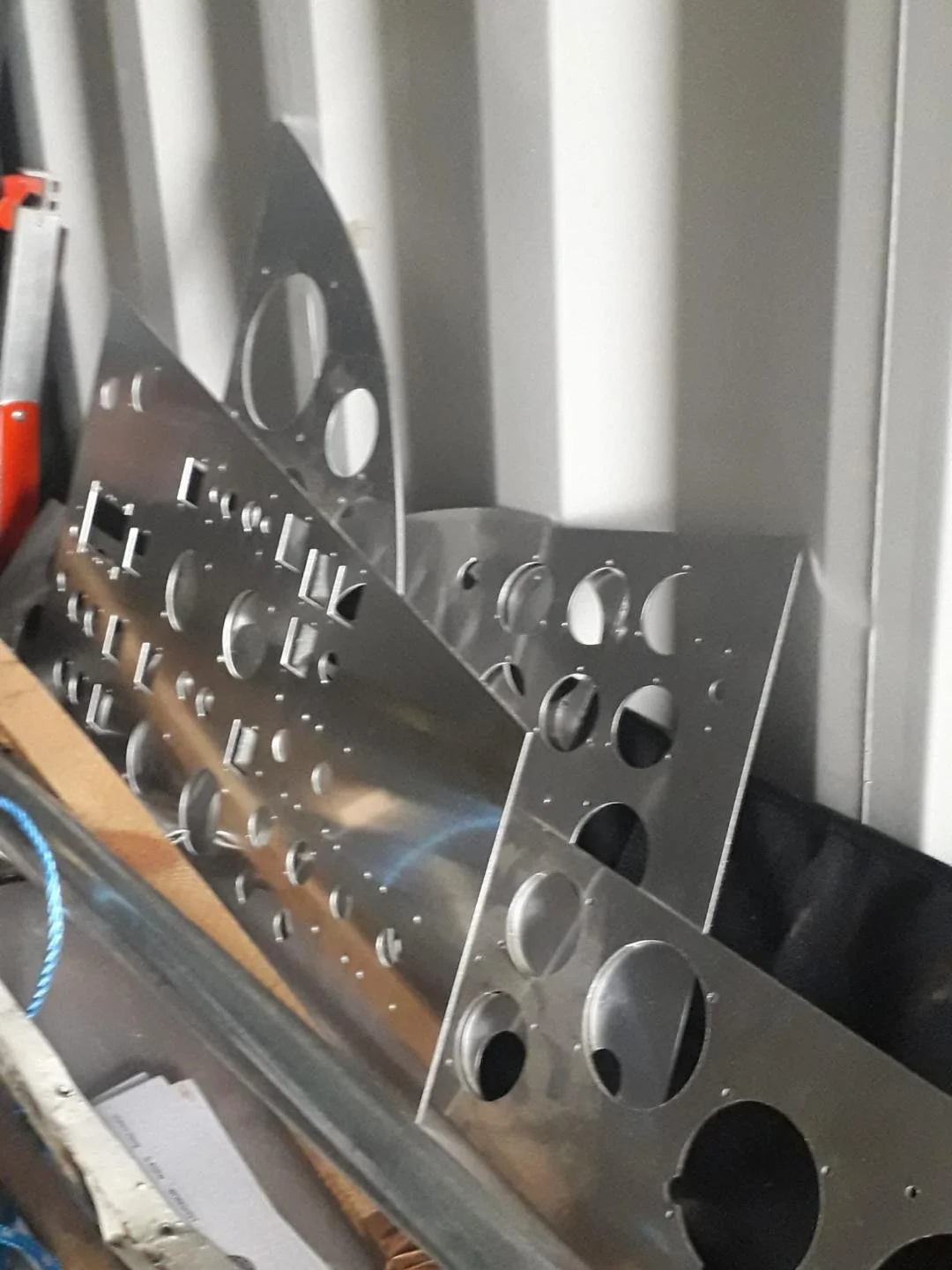
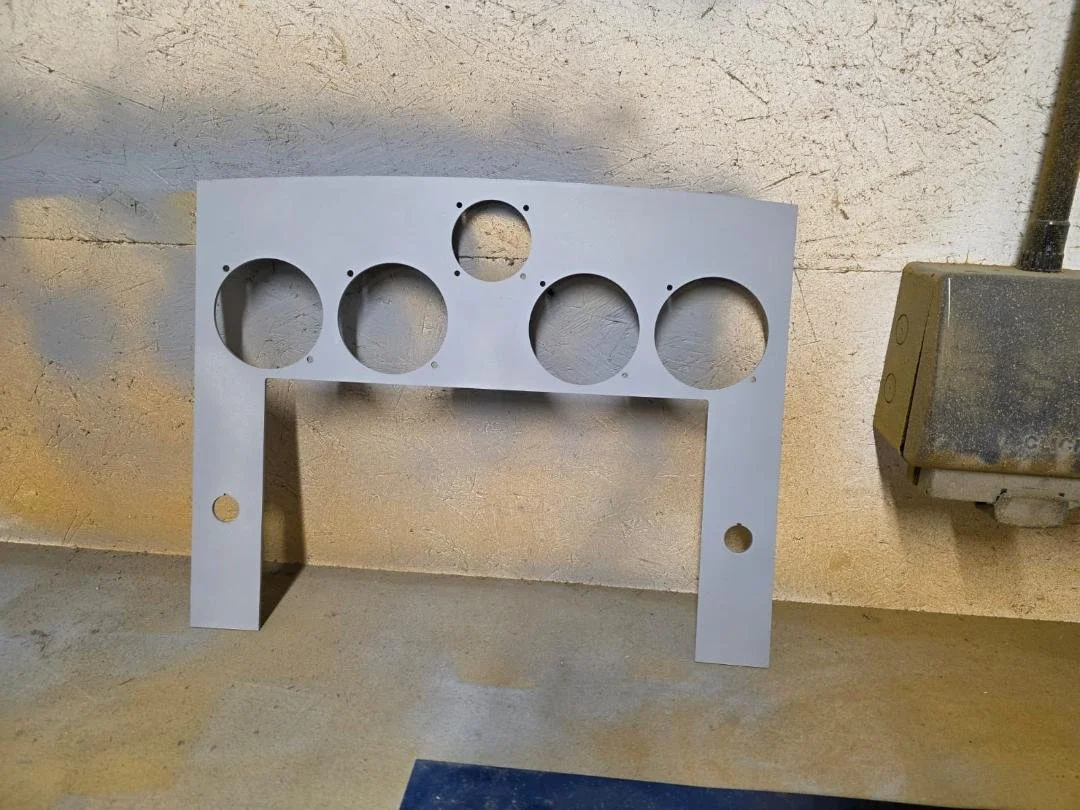
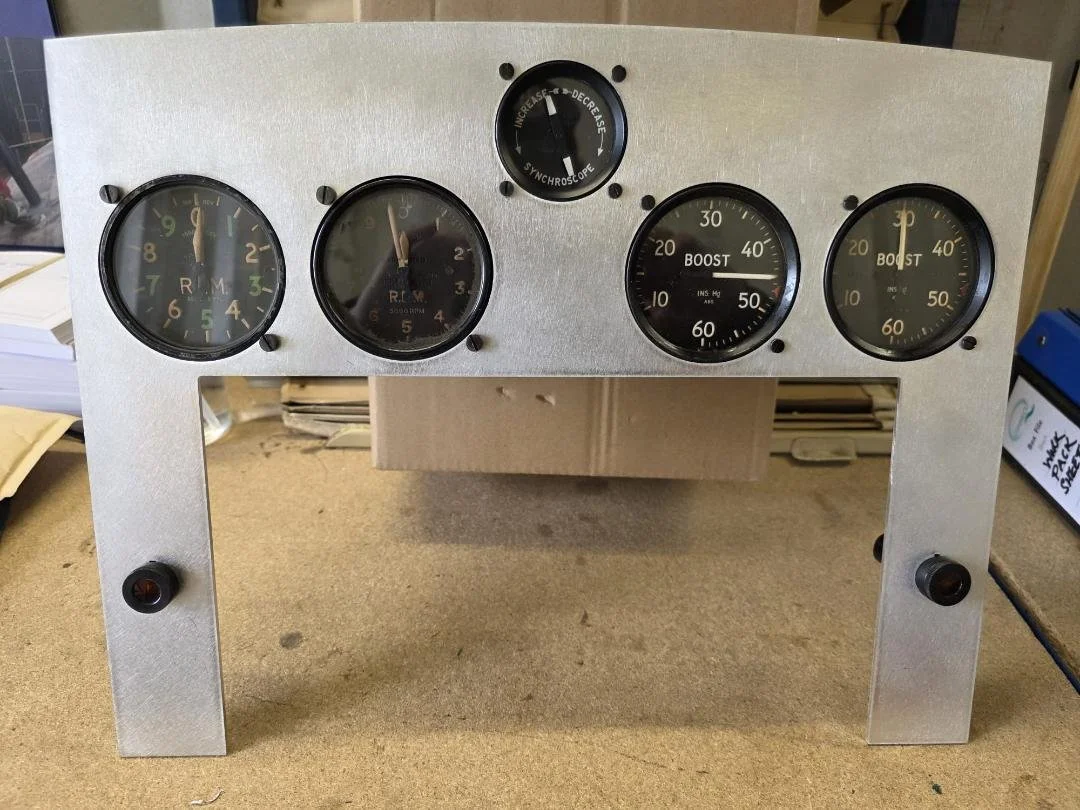
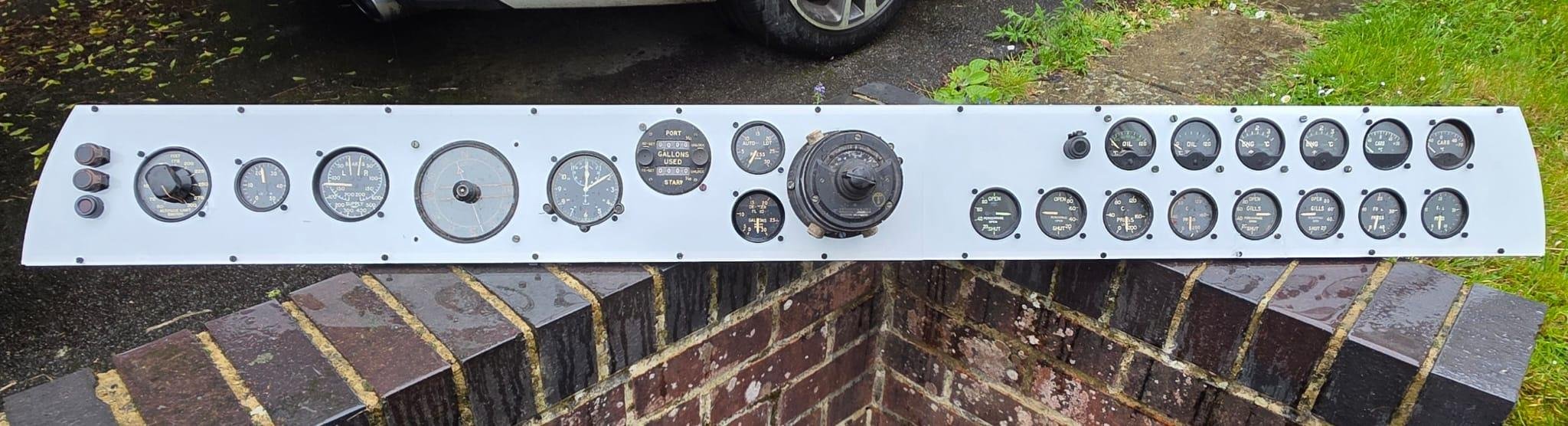
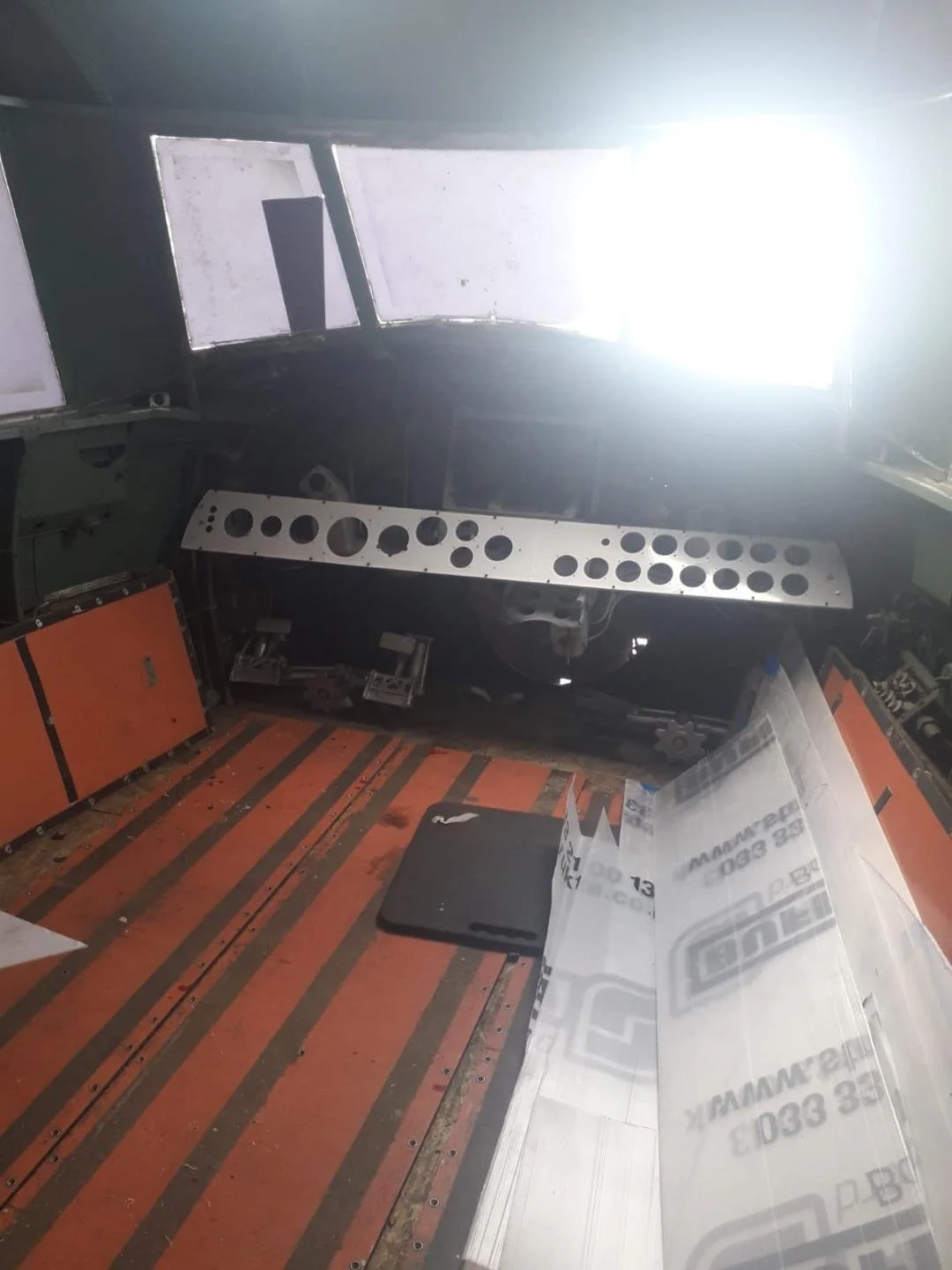
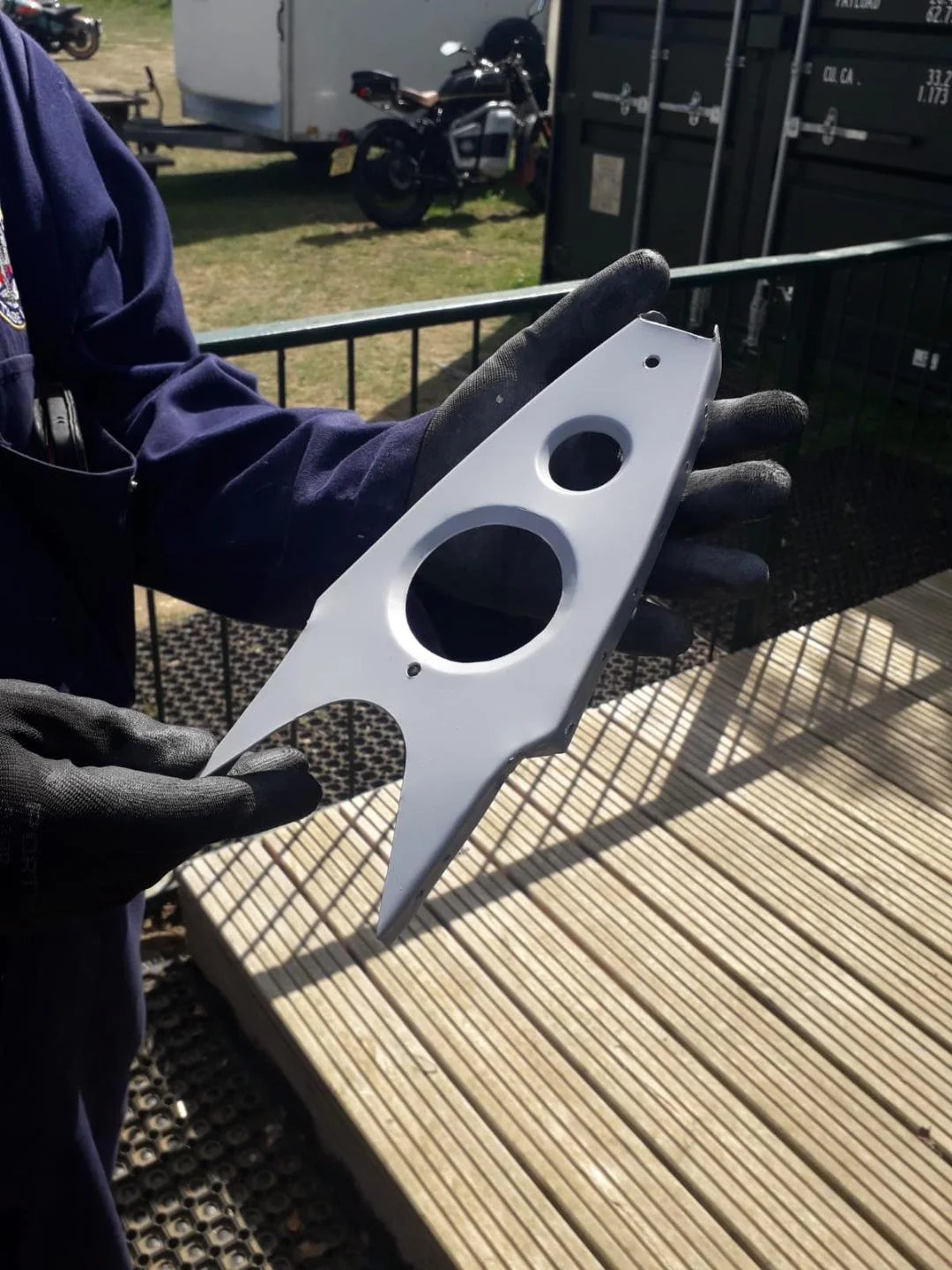
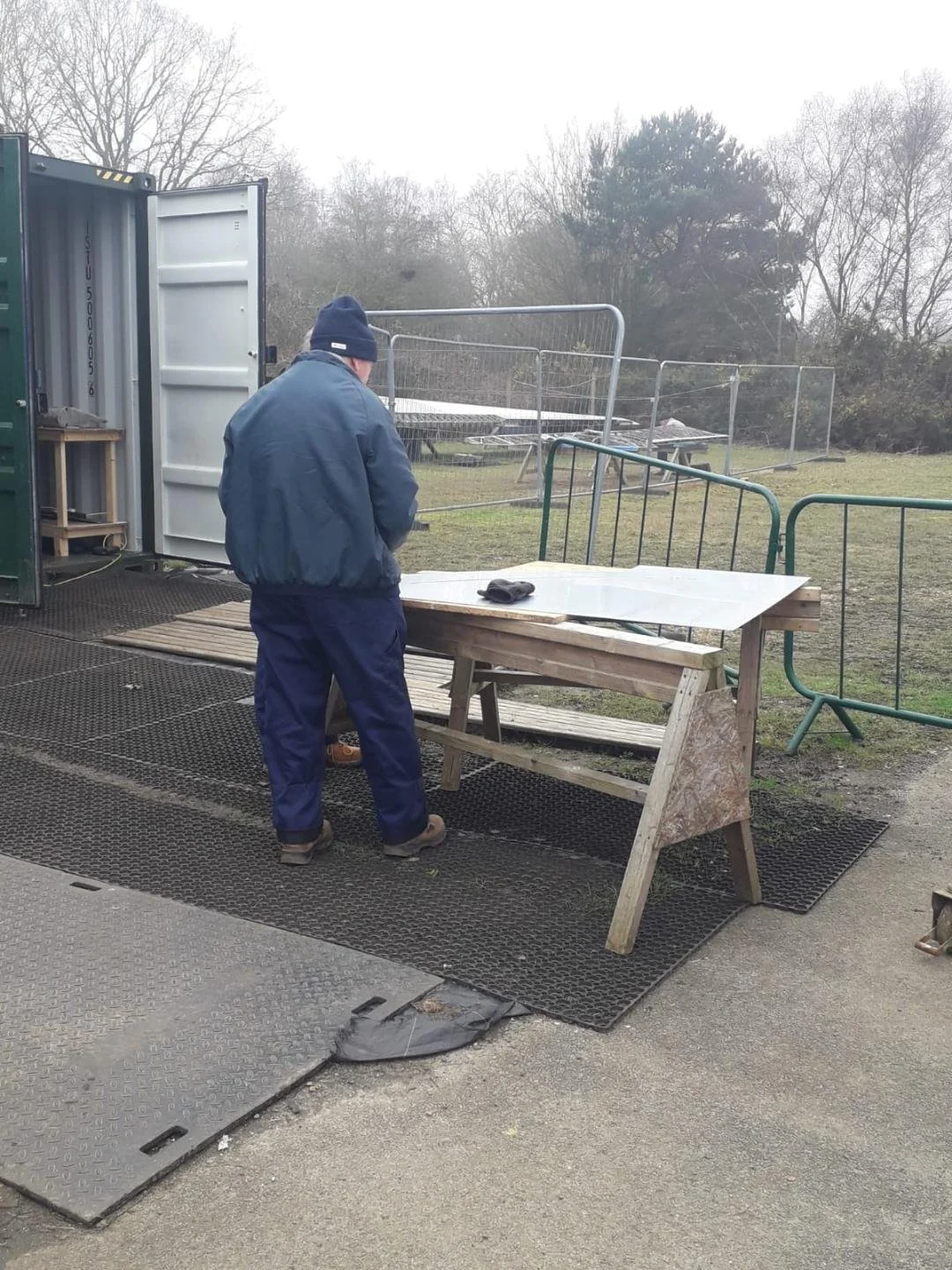
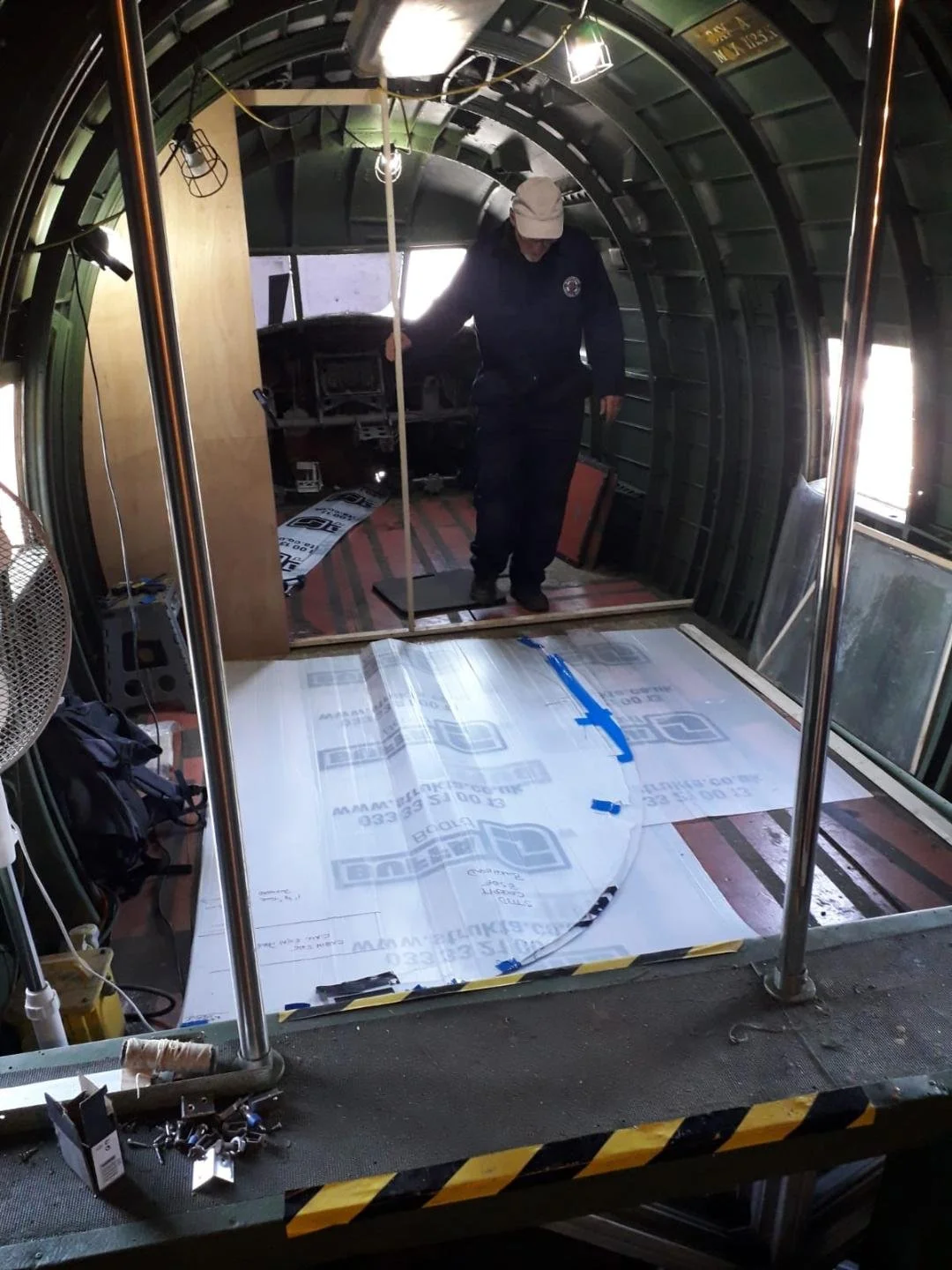
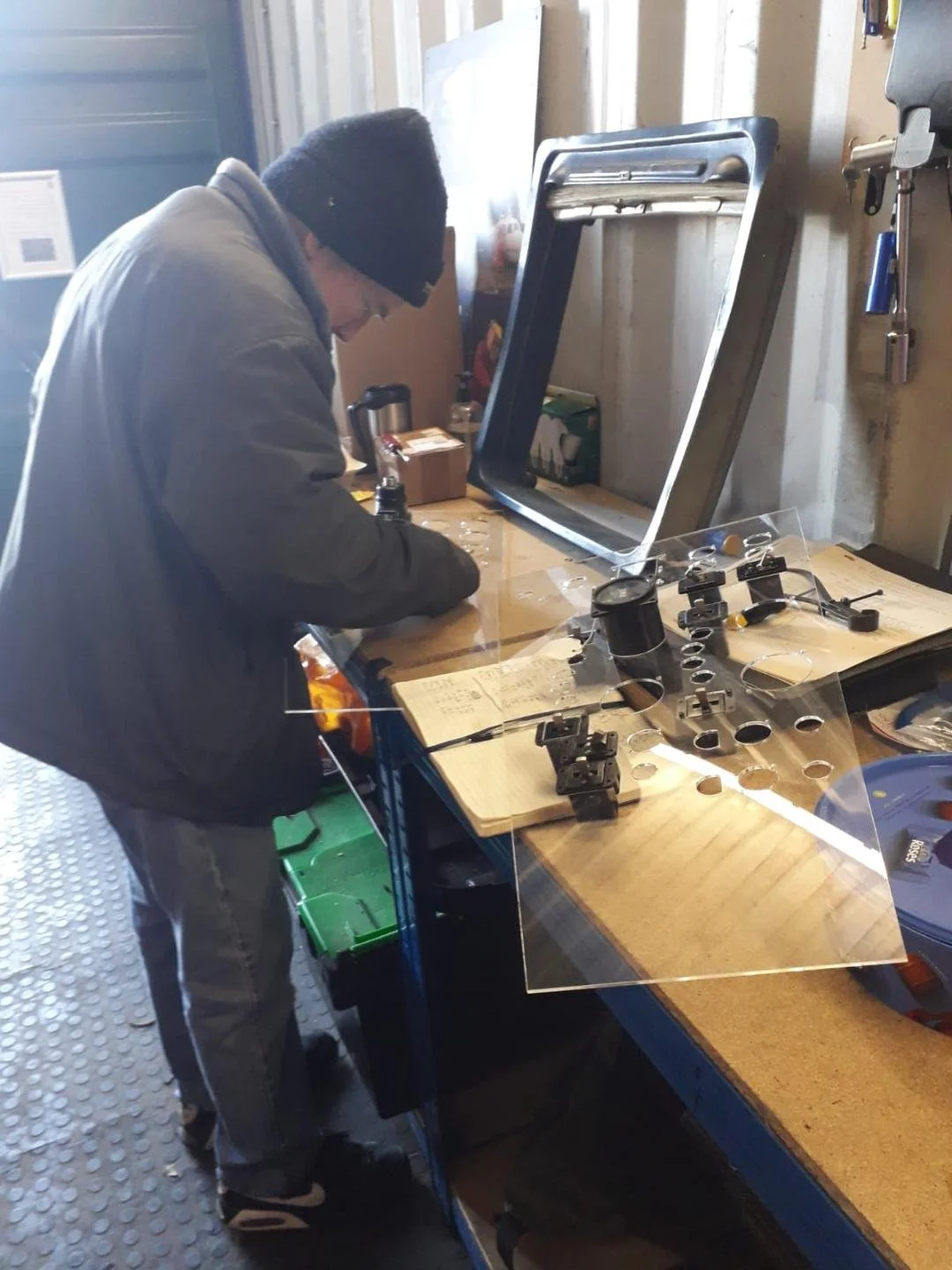
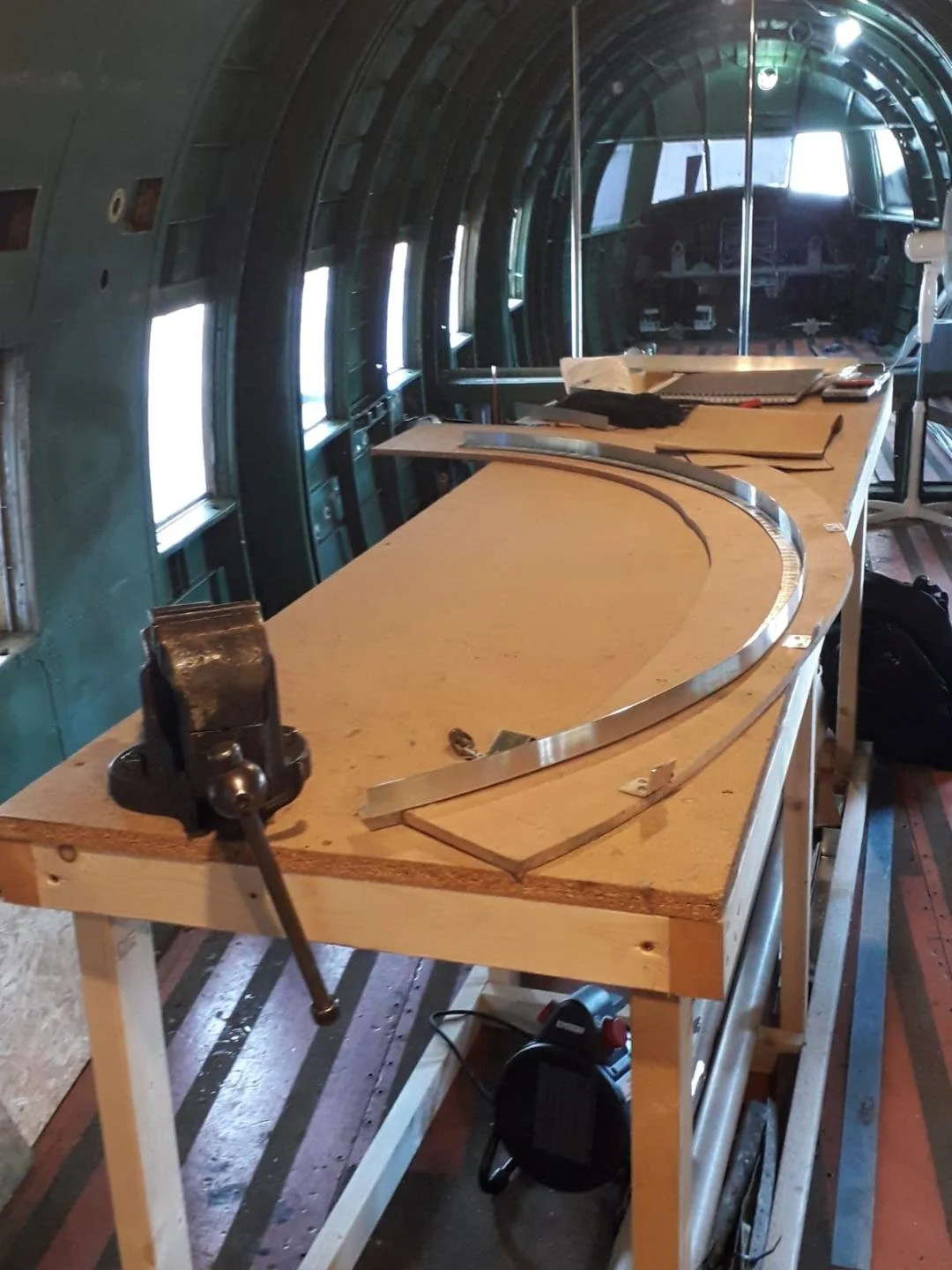
The pictures below show the great progress that has been made in acquiring many of the instruments needed to achieve this, and the great work by our volunteer Rich and our supporter Max (using documentation, photos from the period and other references supplied by ourselves) to firstly build acrylic templates to test the positioning and fit (as shown in the first few pictures), and then laser-cut the aluminium panels that will be used to mount the instruments in the re-built cockpit (as shown in the last pictures).
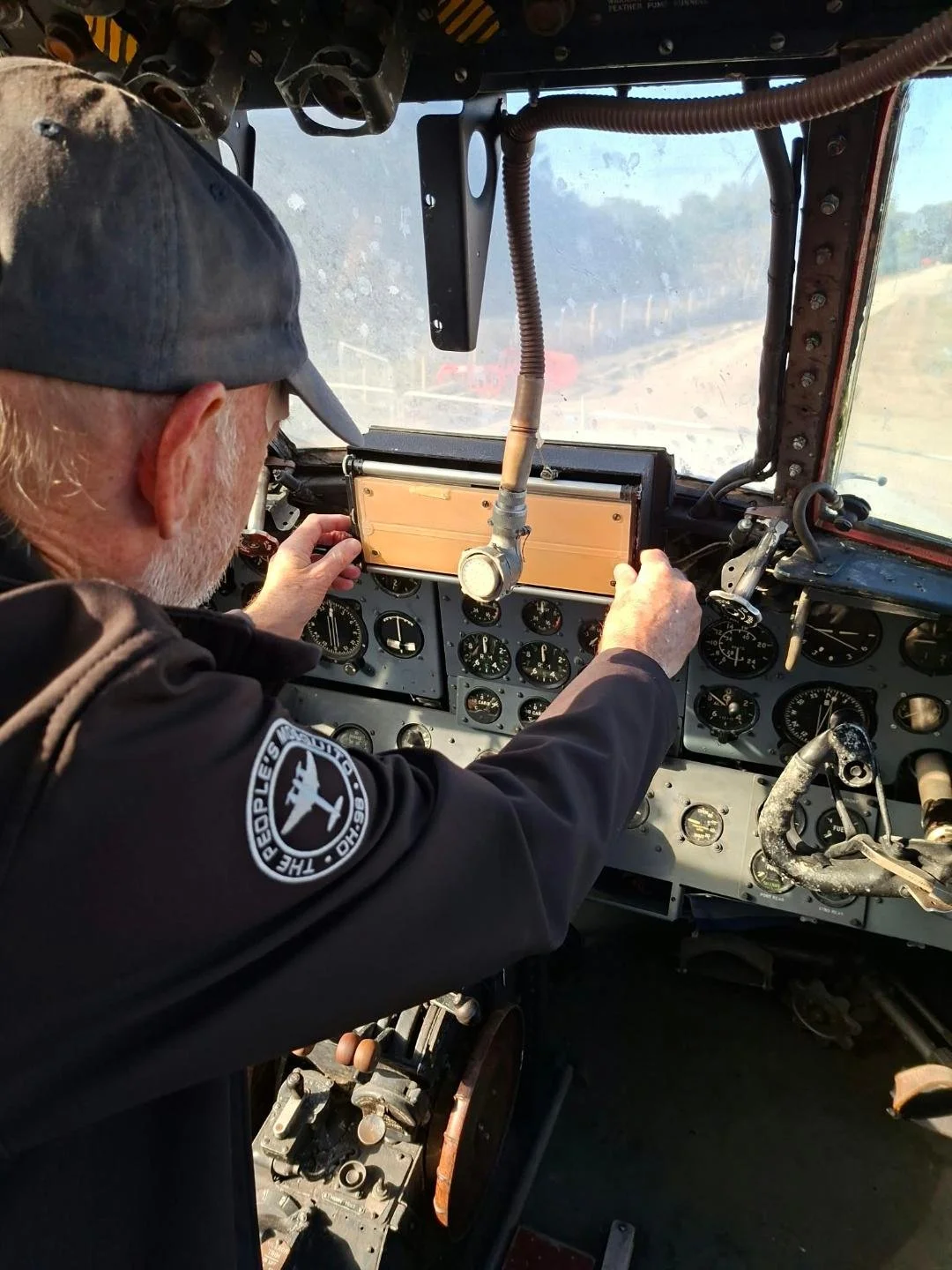
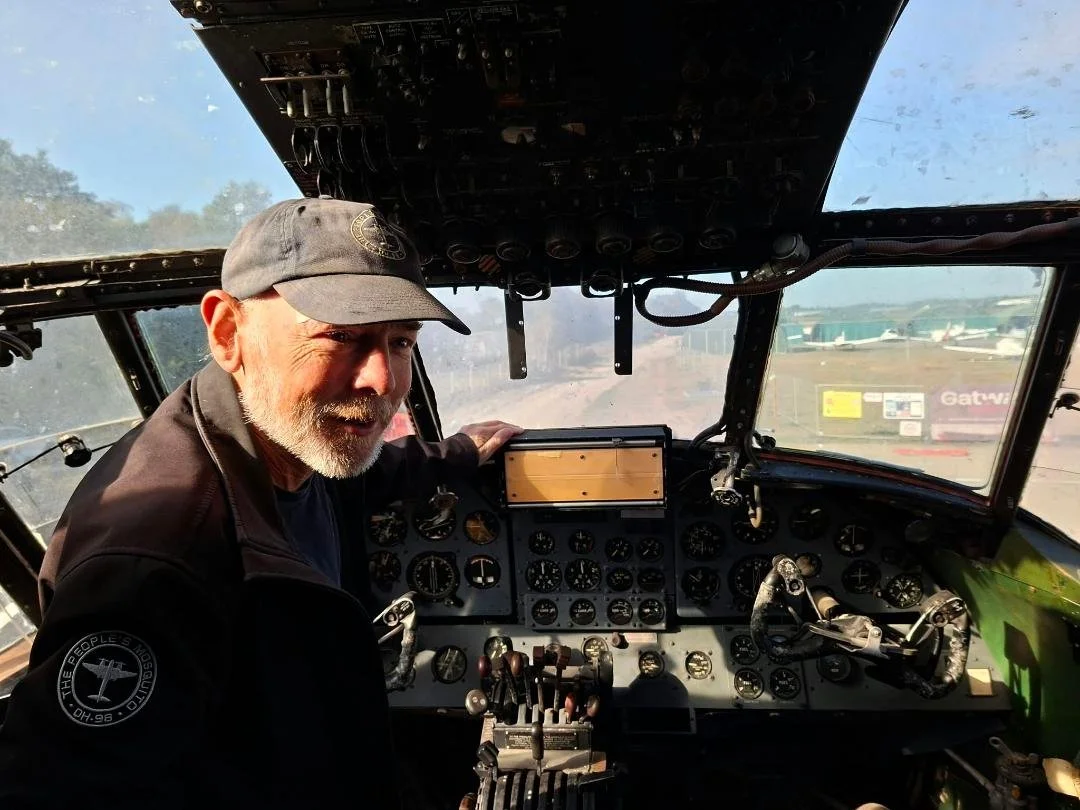
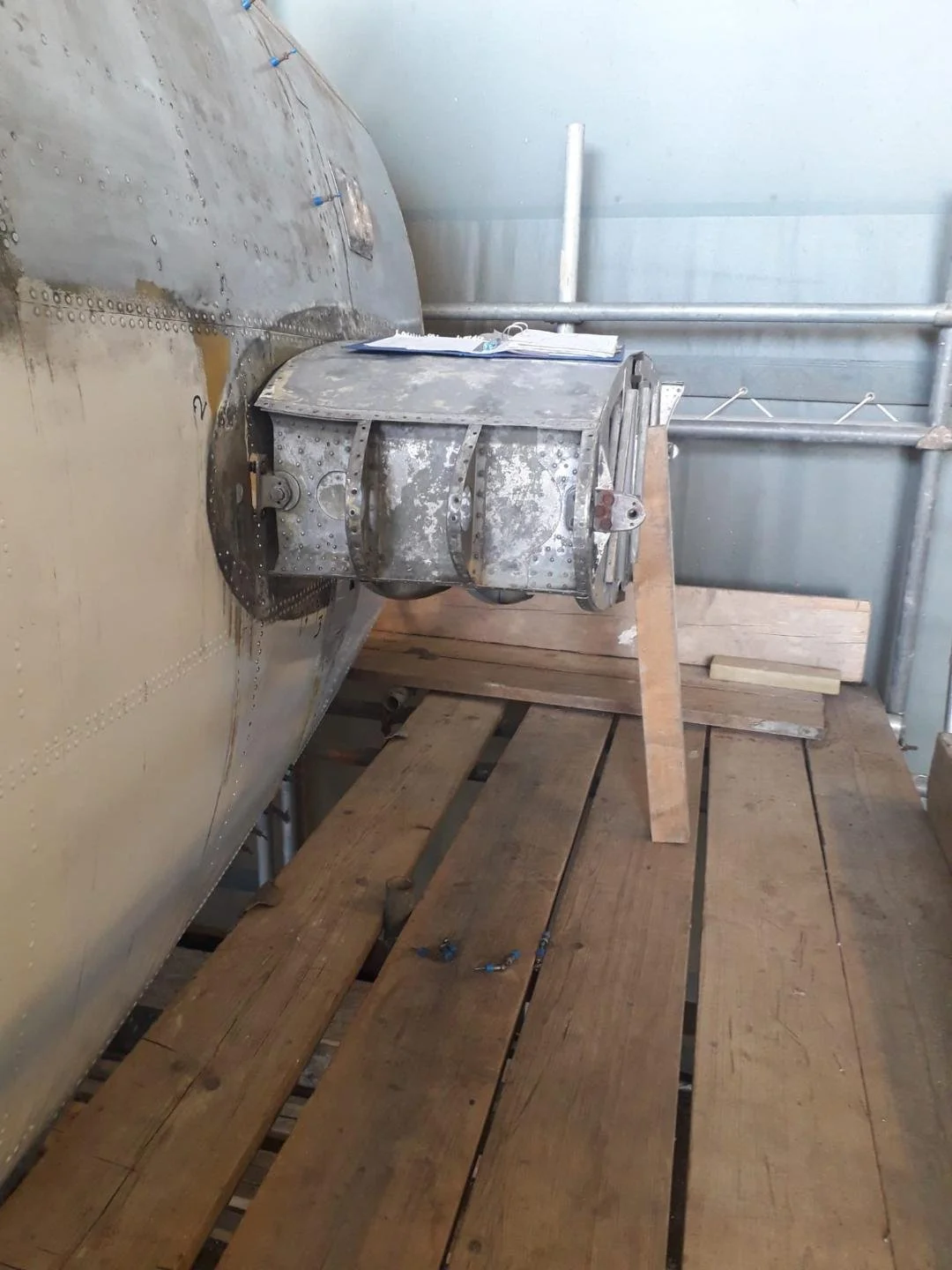
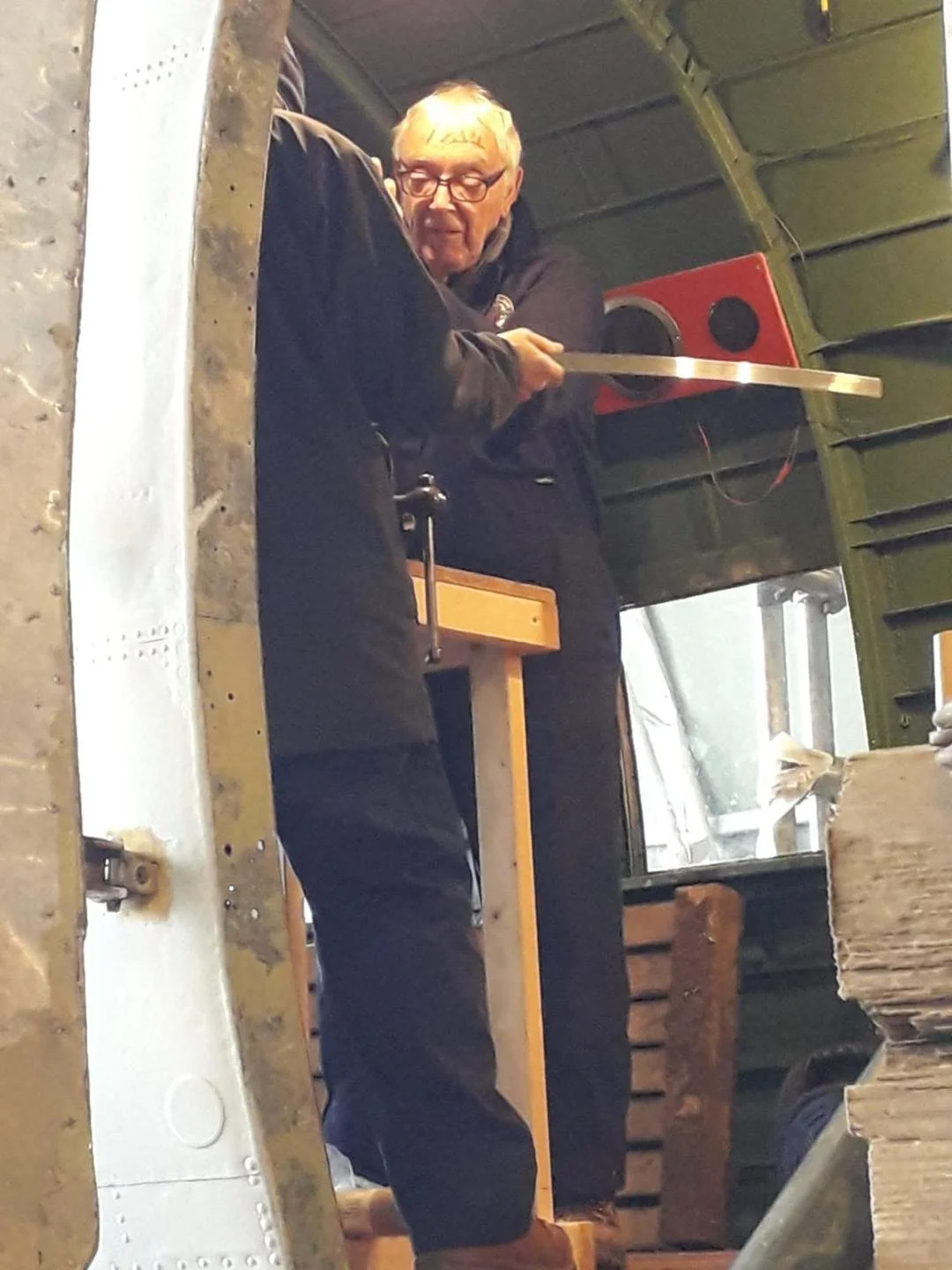
Whilst on the subject of cockpits, this time “Loreley’s”, we mentioned in the previous update below that you should “watch this (and that!) space” for developments in relation to an empty enclosure that should house a “Decca Flight Log Plotter”.
The great news is that a Plotter has been sourced (from The Netherlands) and is now at Blackbushe. We also have a navigation chart to fit into it (not shown in the pictures below) that shows Blackbushe!
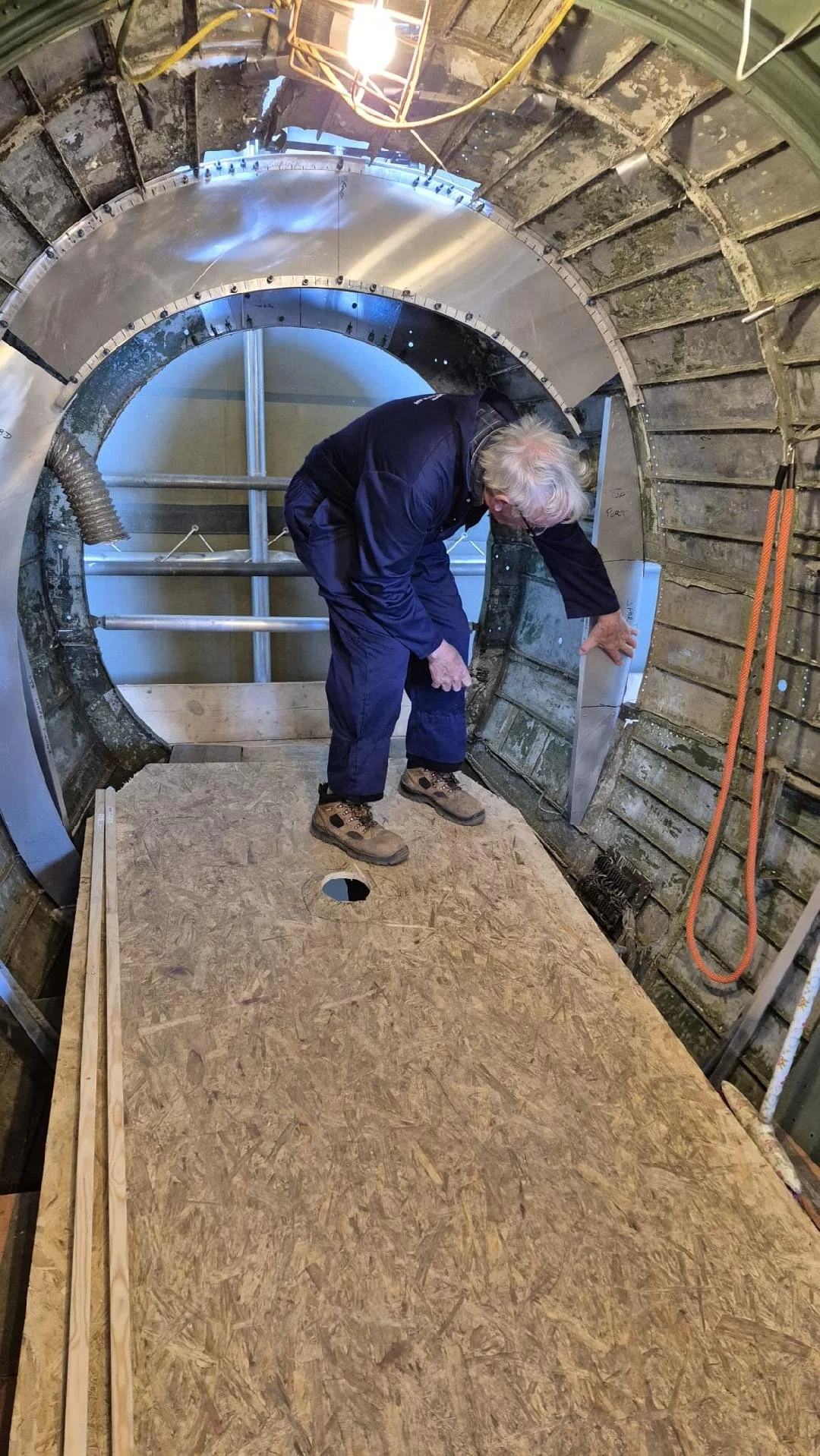
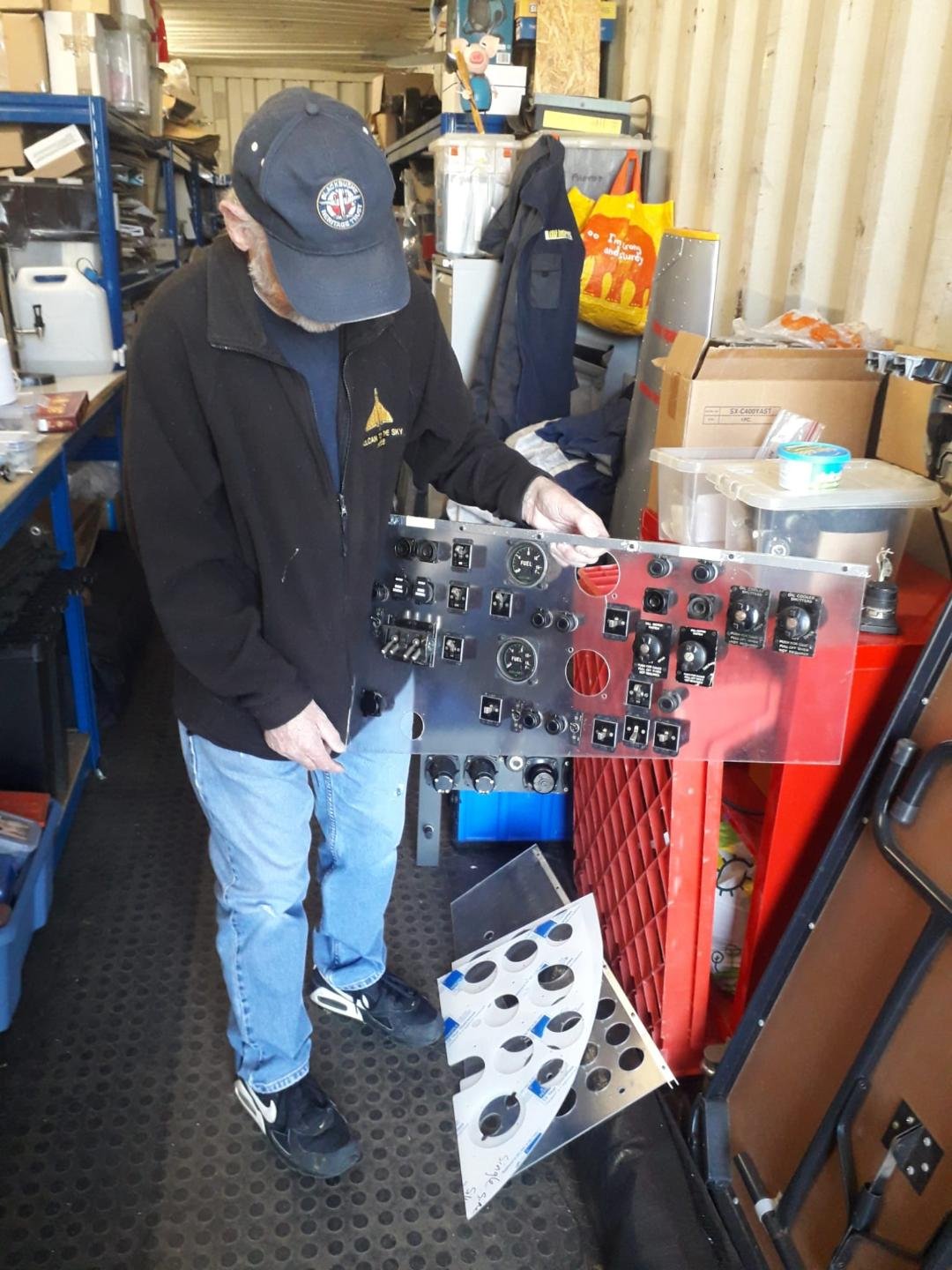
In the pictures below is volunteer Rich showing us how that empty enclosure will be filled. We are very grateful to him for his efforts.
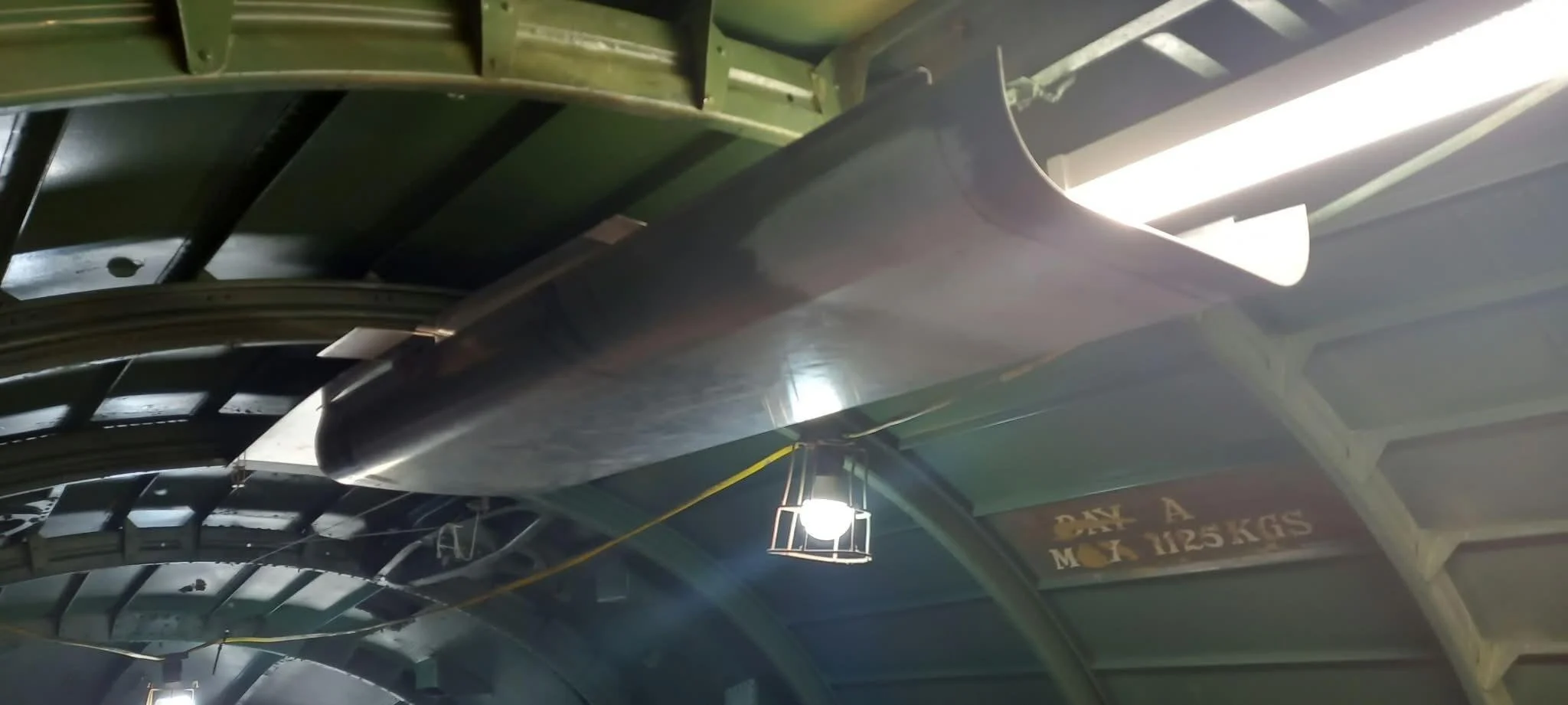
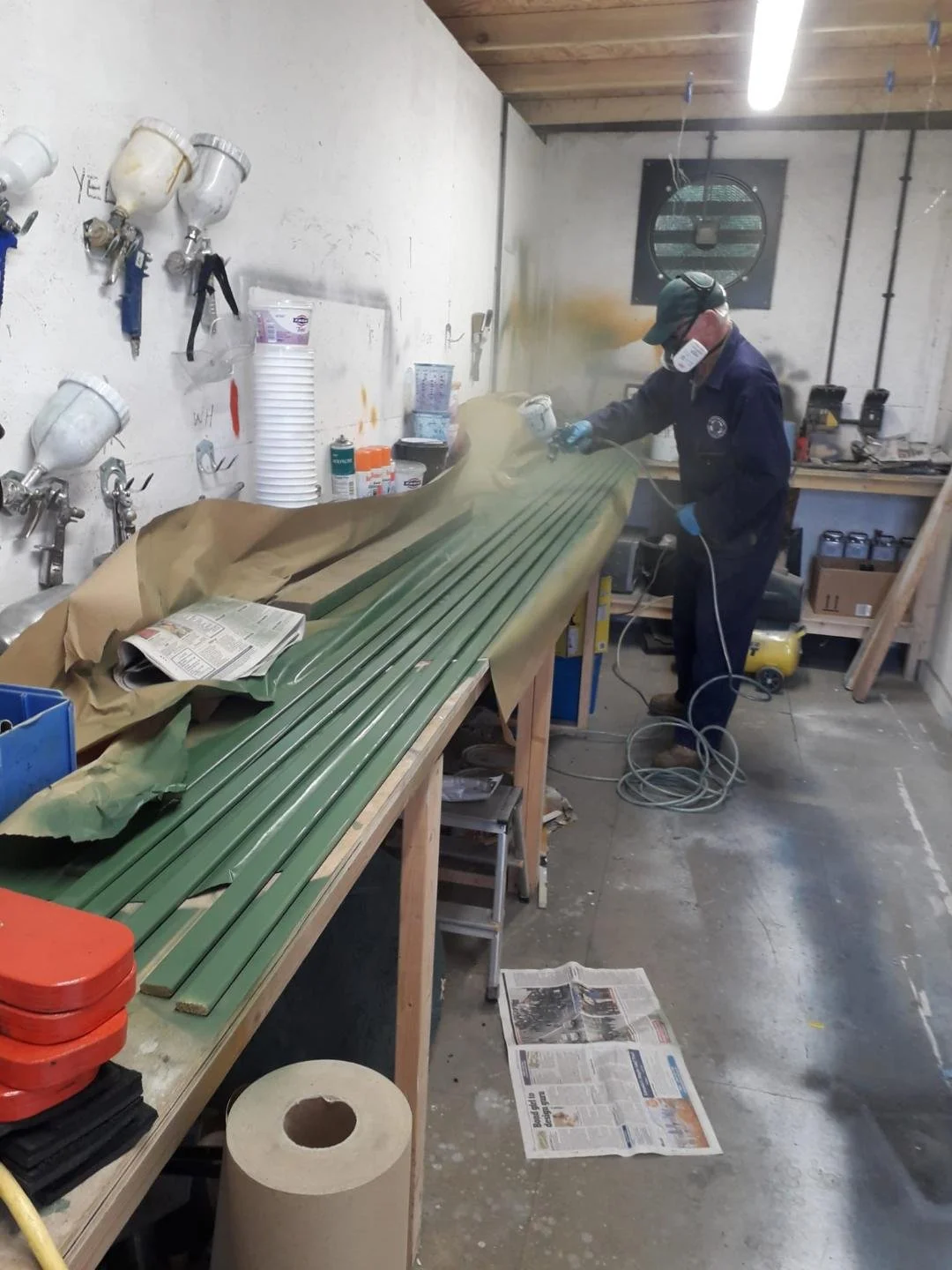
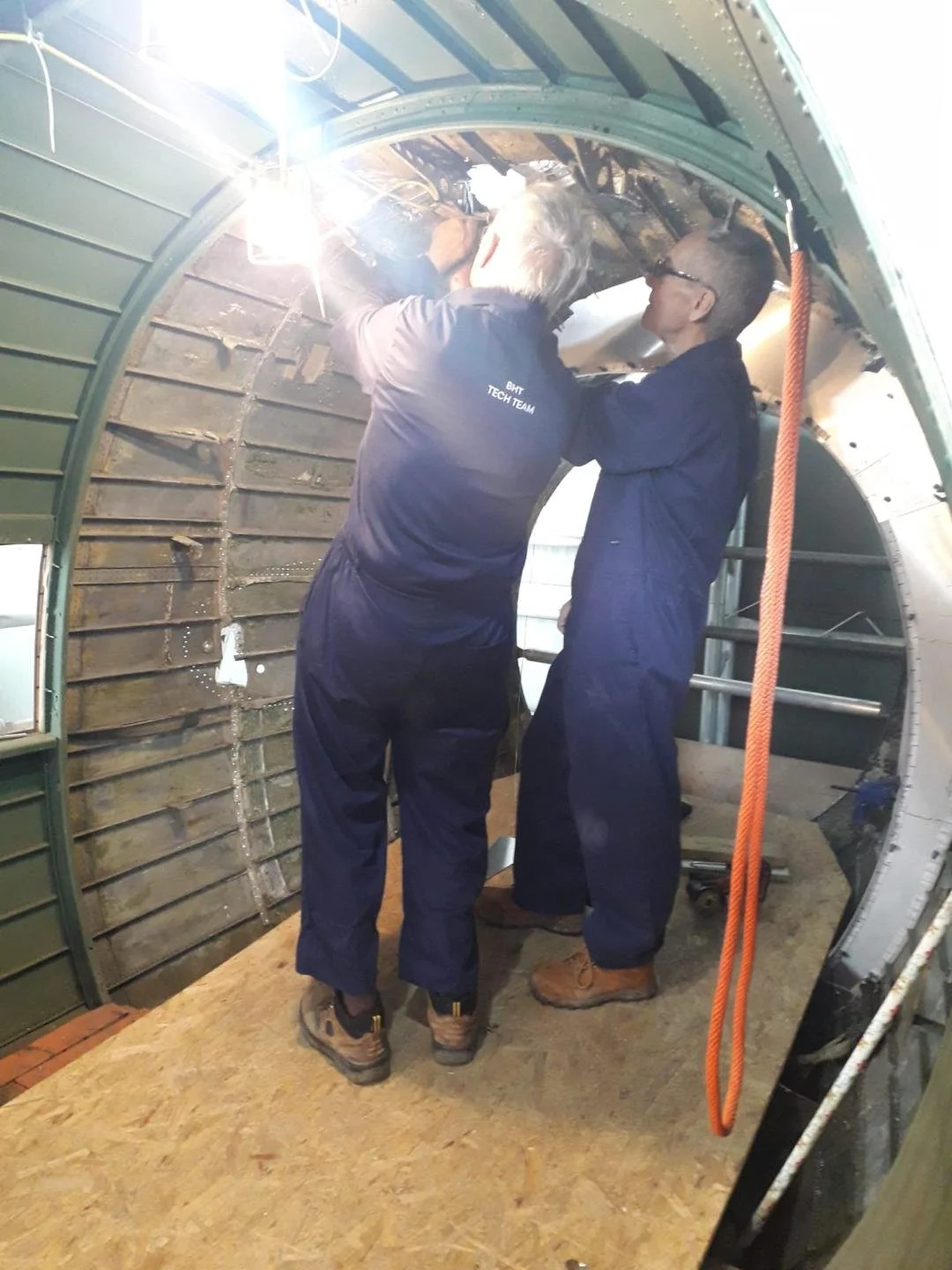
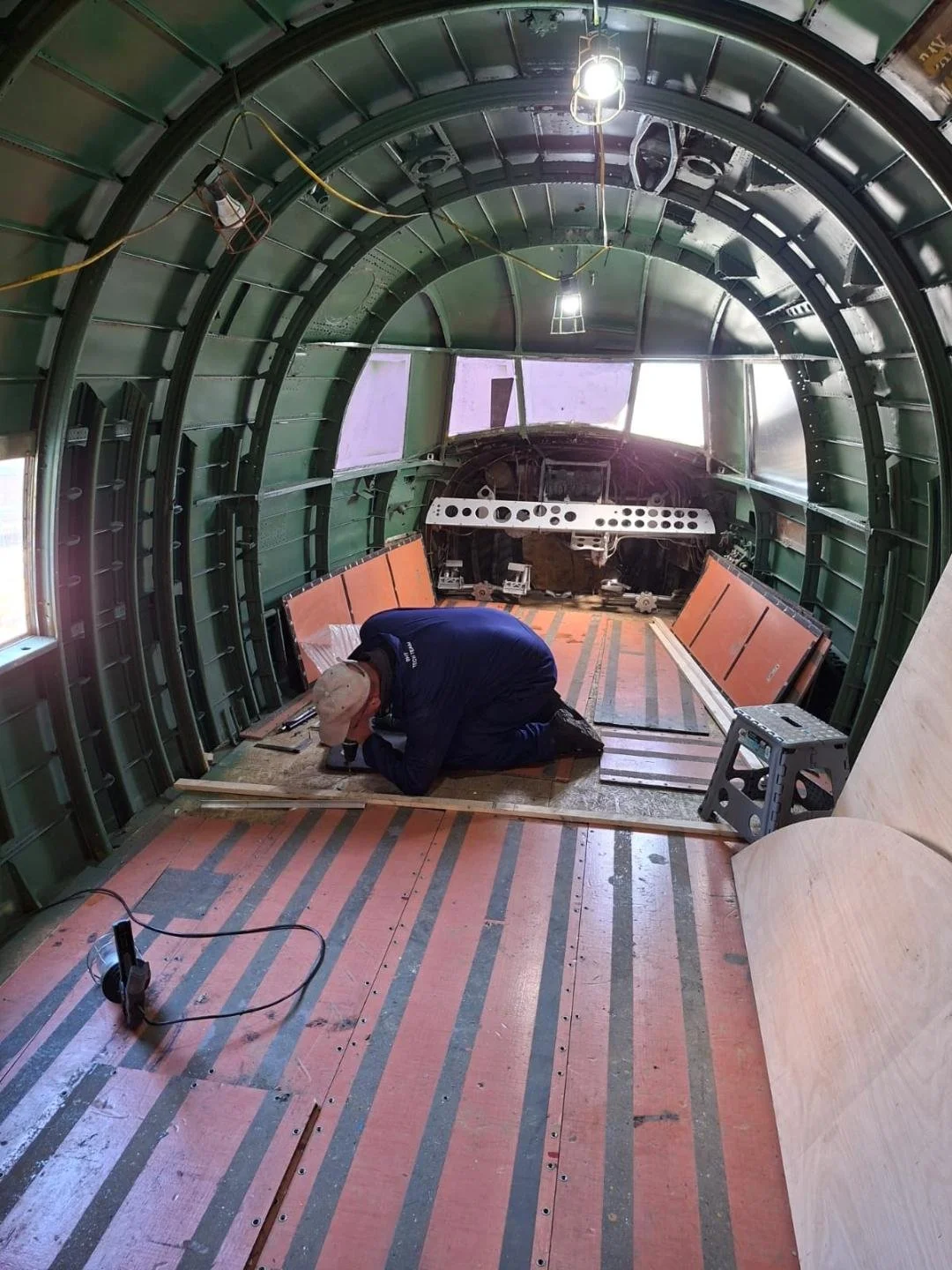
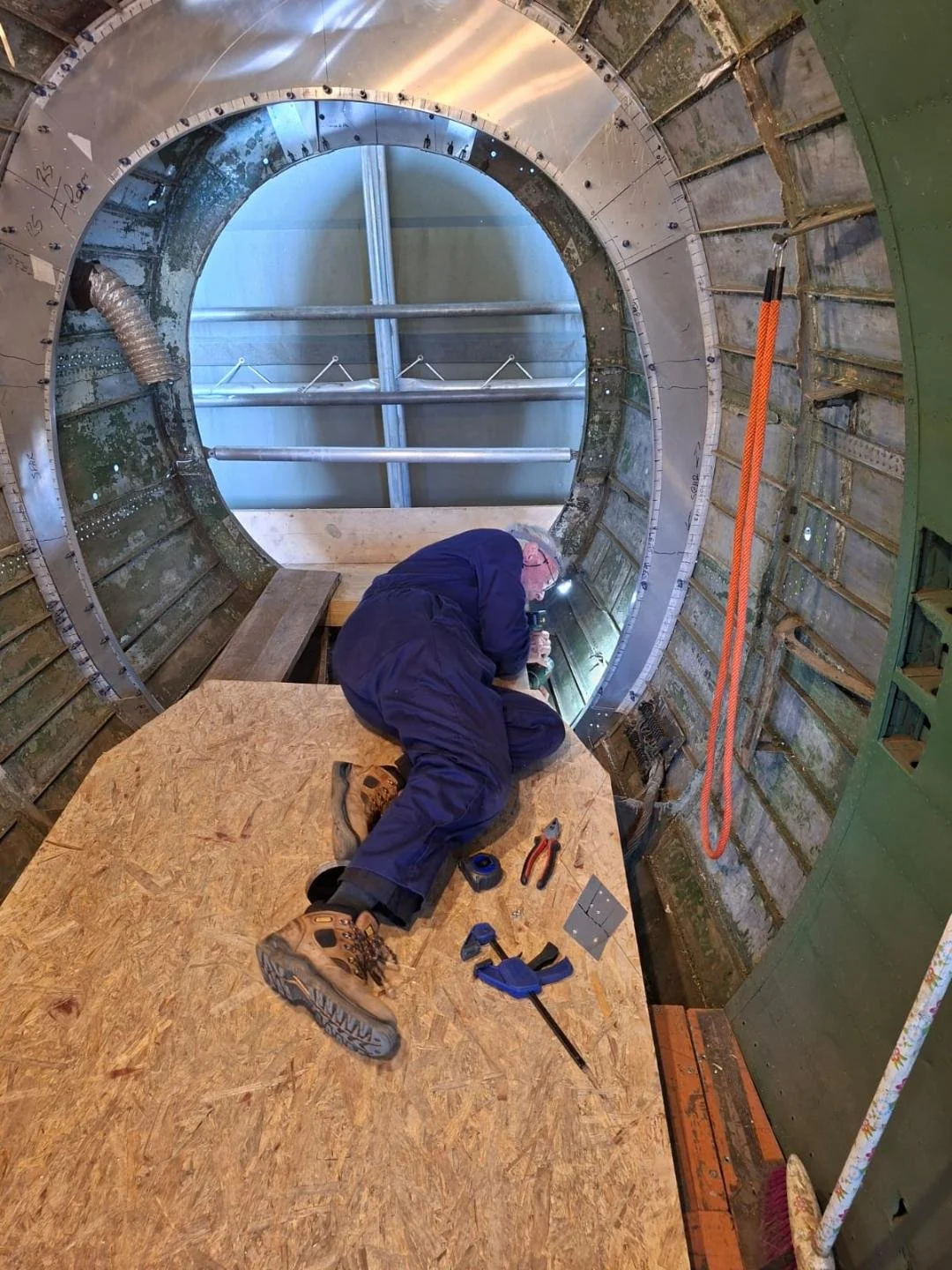
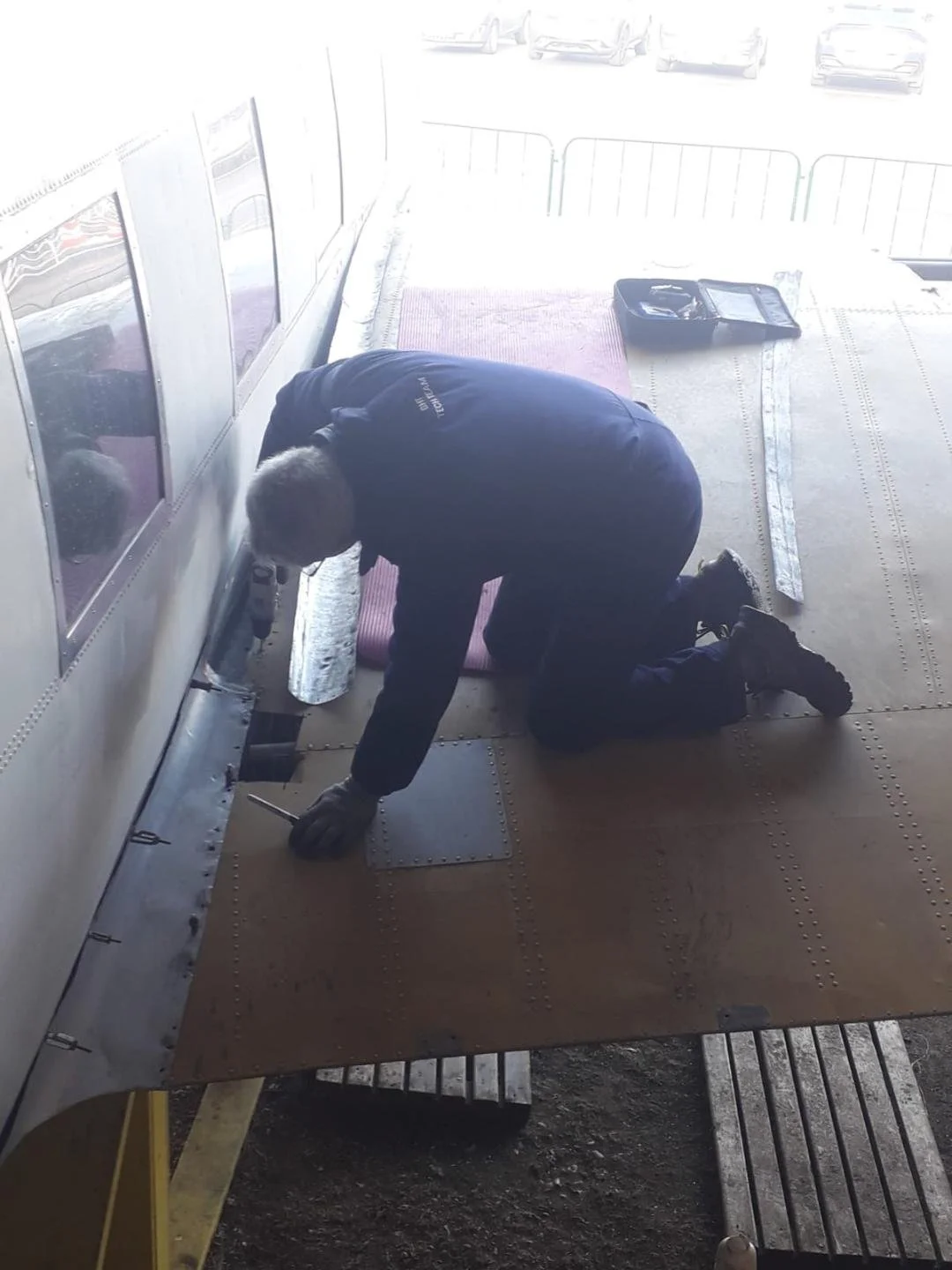
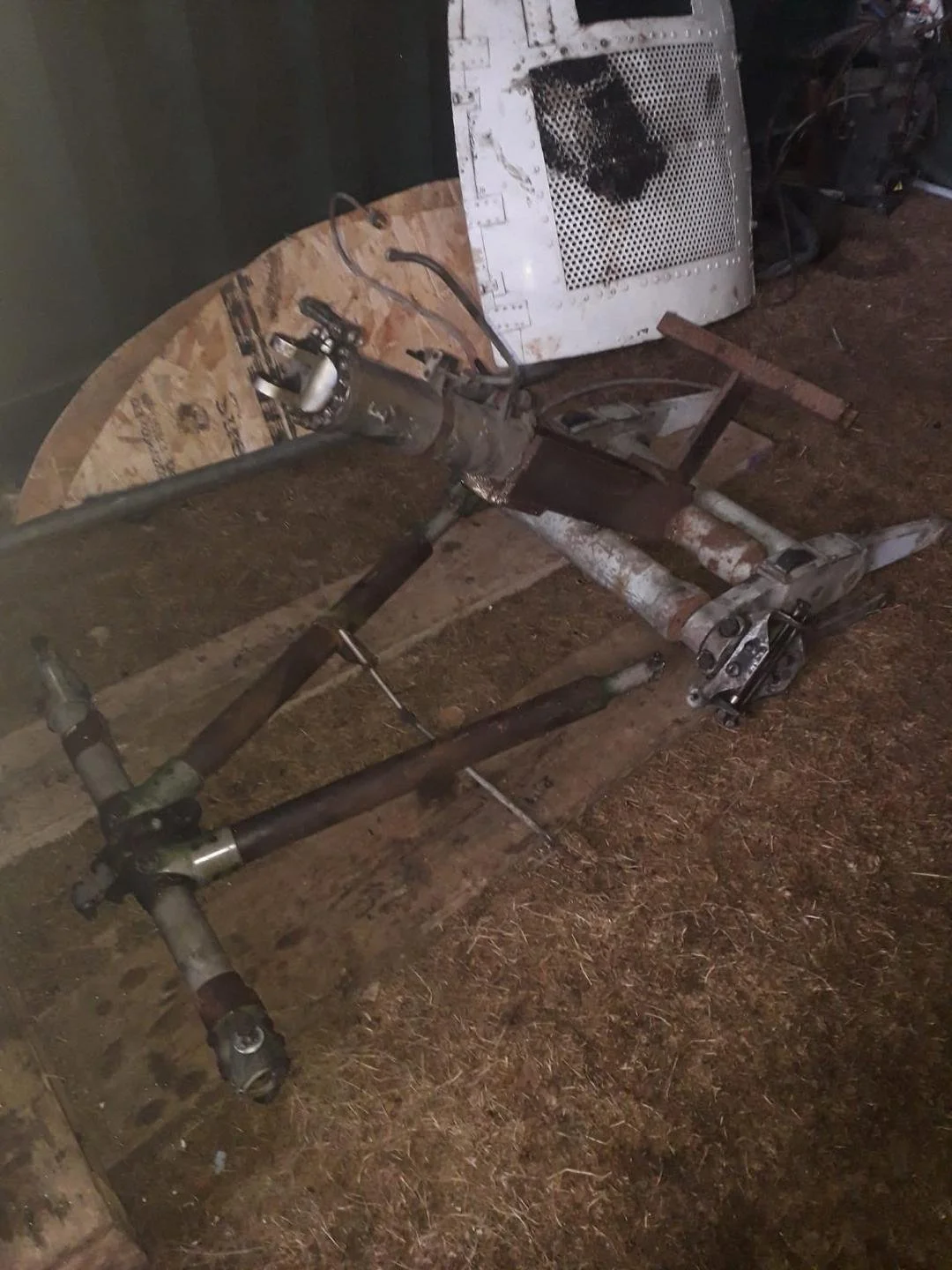
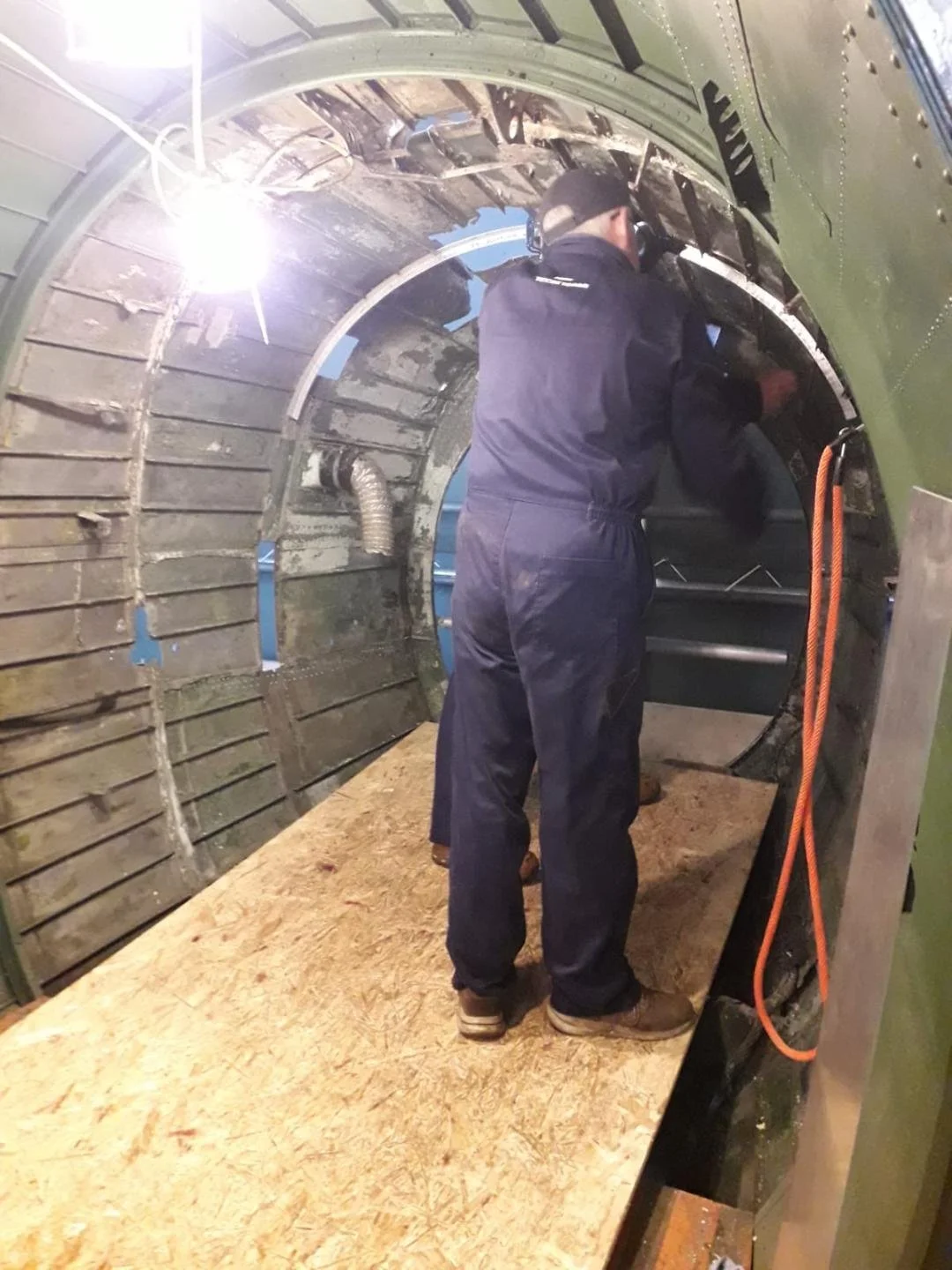
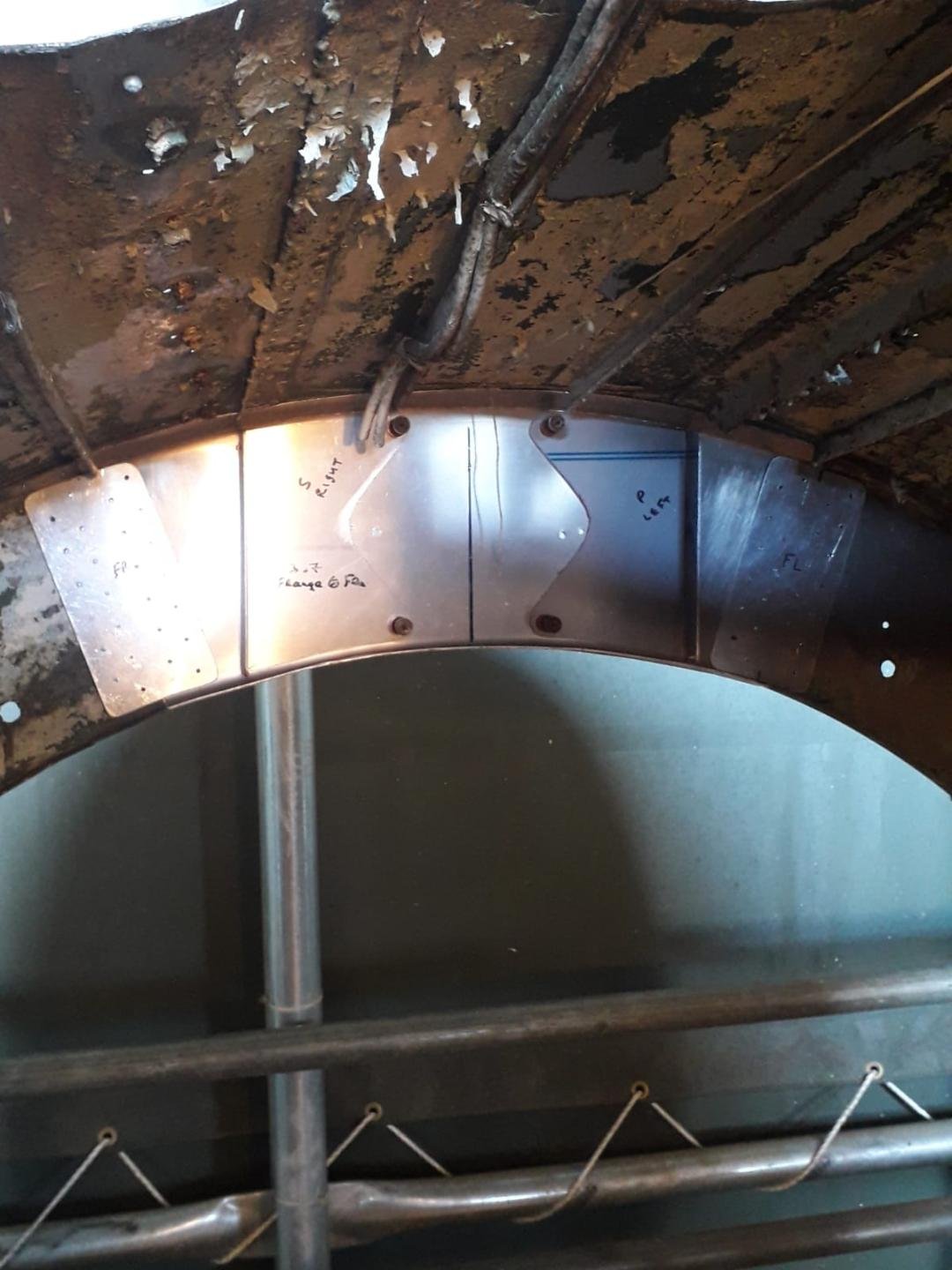
Moving on to other work during the period covered by this update, progress is being made in many of the areas that you’ll be familiar with if you’ve followed this blog for a while, and there are some further areas now receiving more attention. An example of this is the interior ceiling, where ducting has been successfully trial-fitted, and another is the wooden stringers that are being prepared for mounting interior decor, as shown in the pictures below.
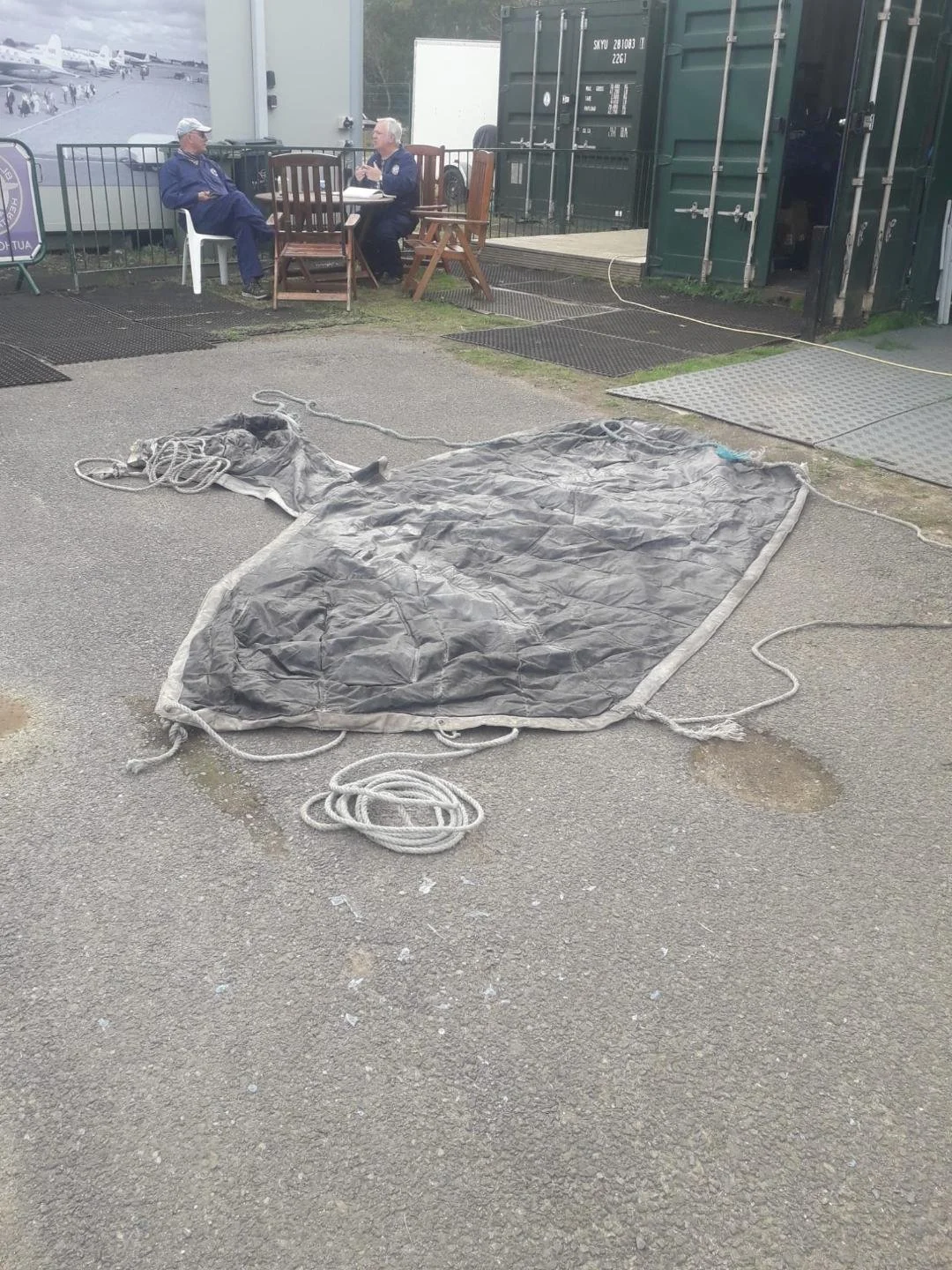
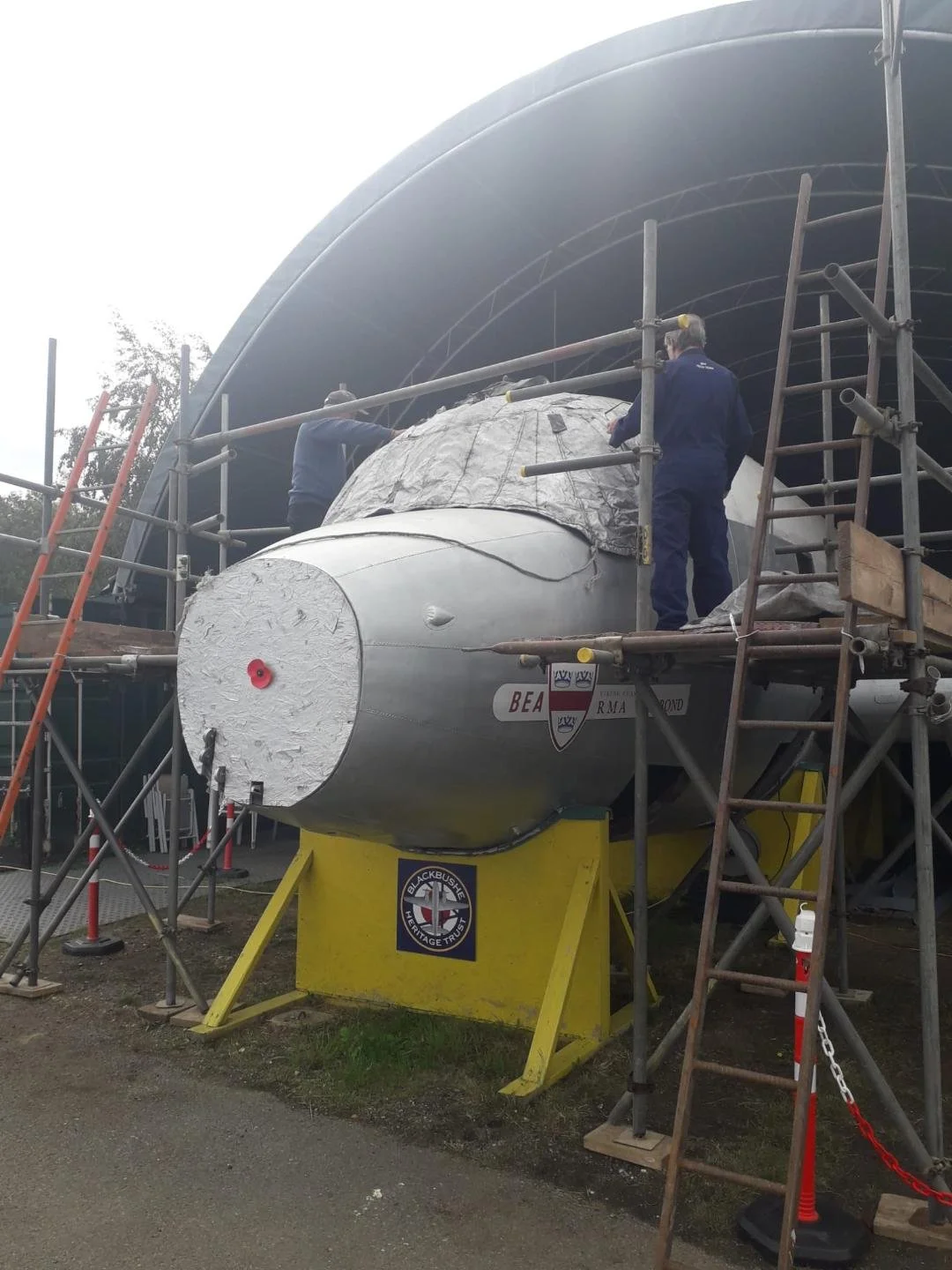
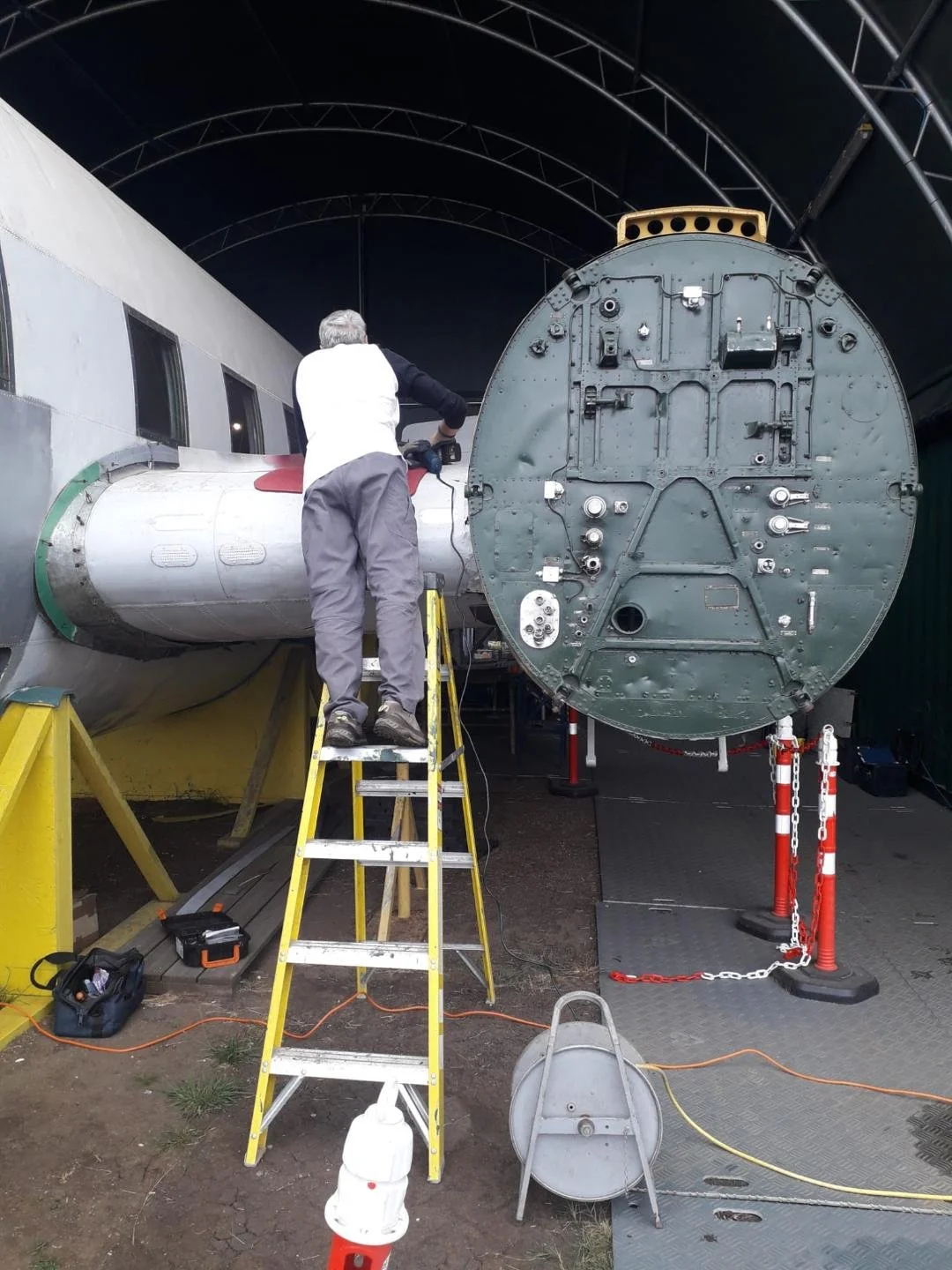
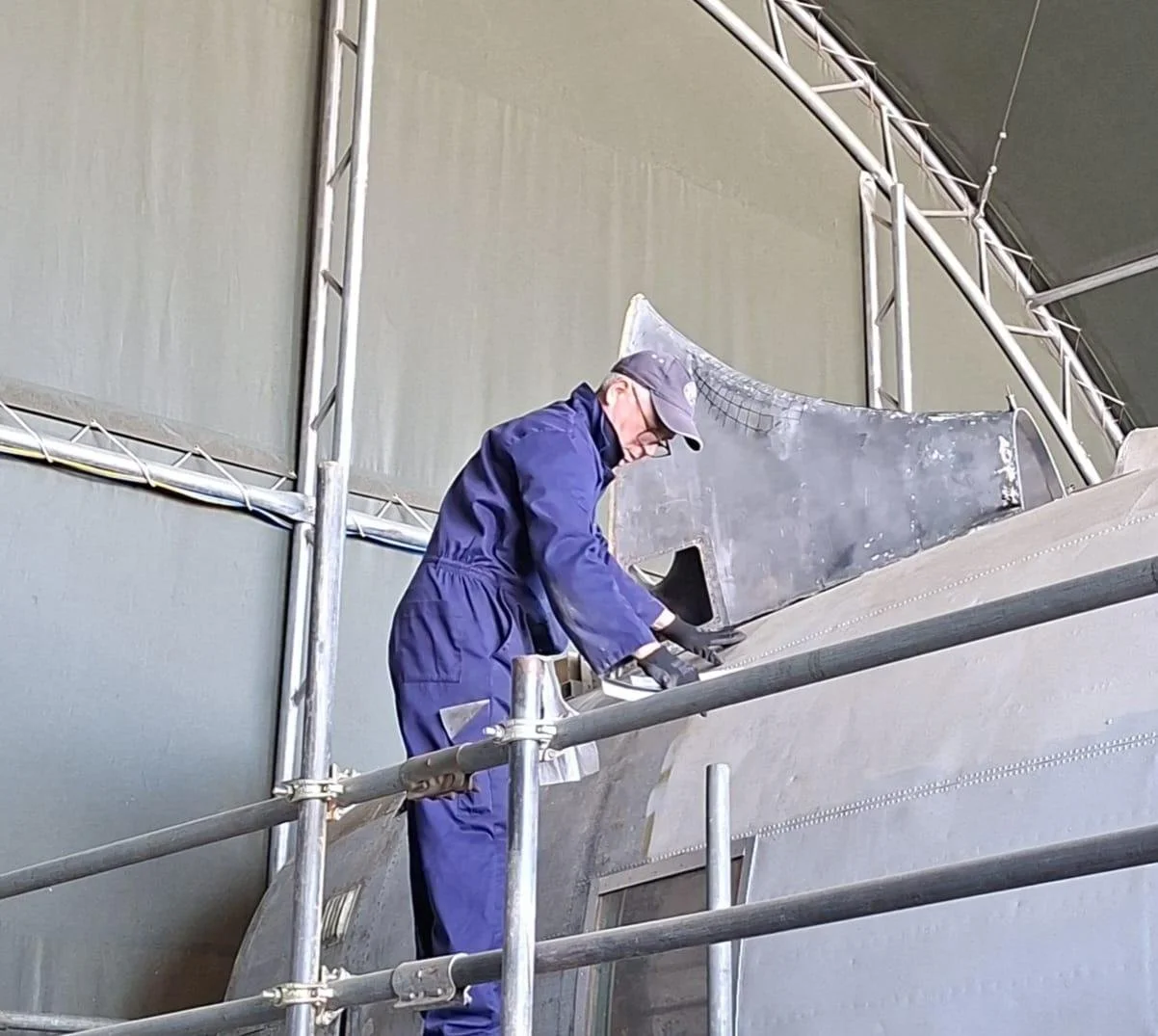
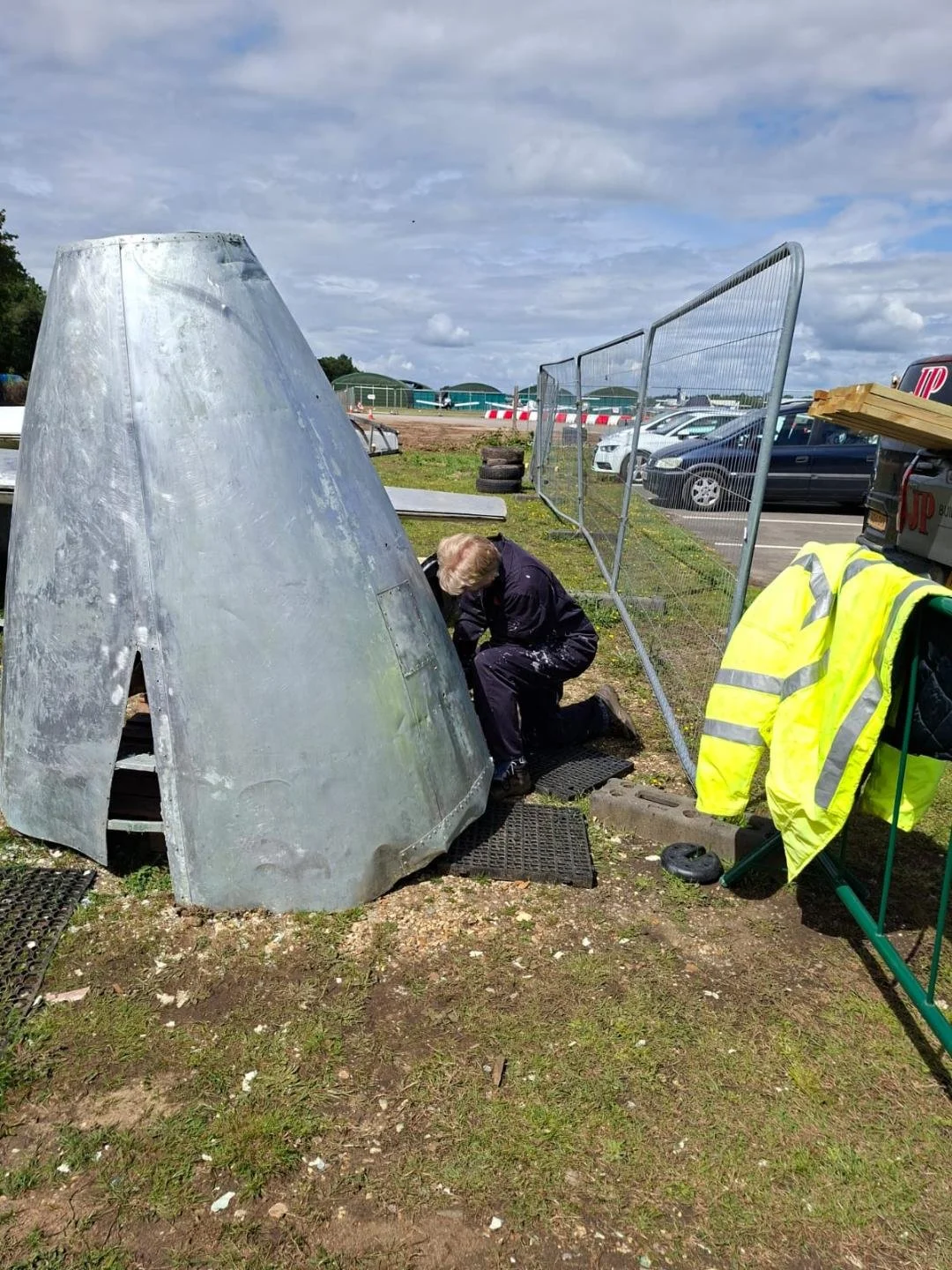
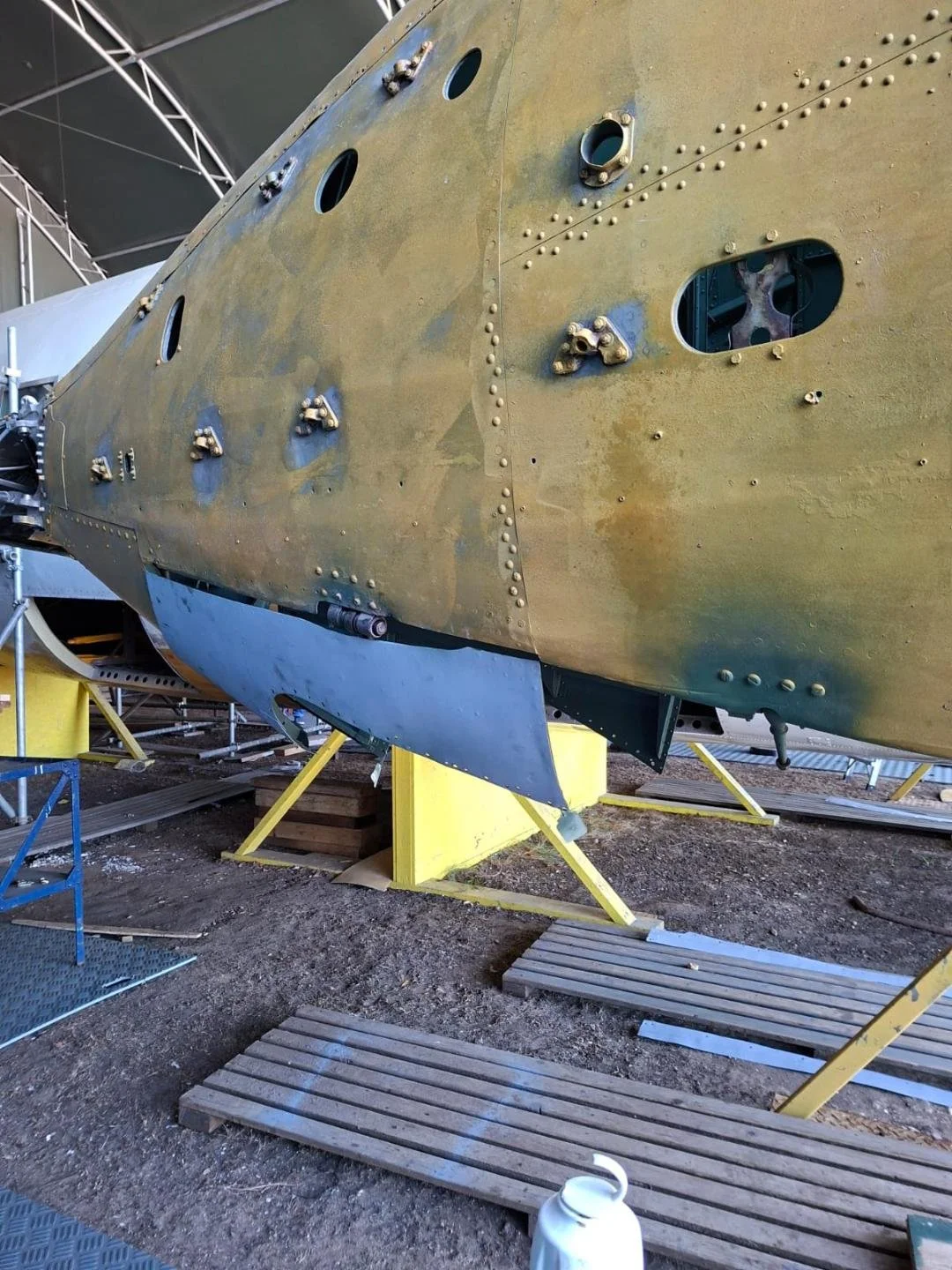
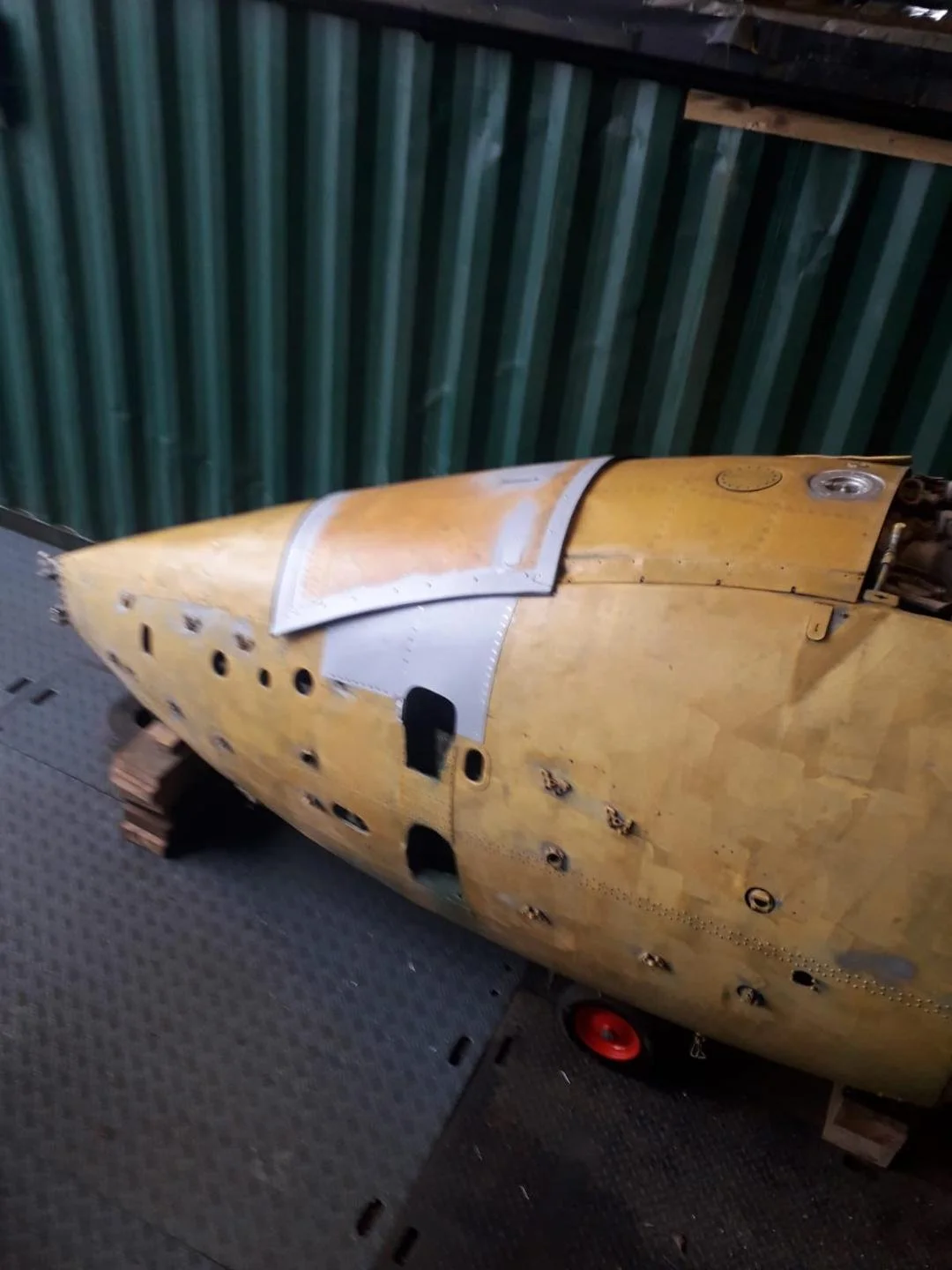
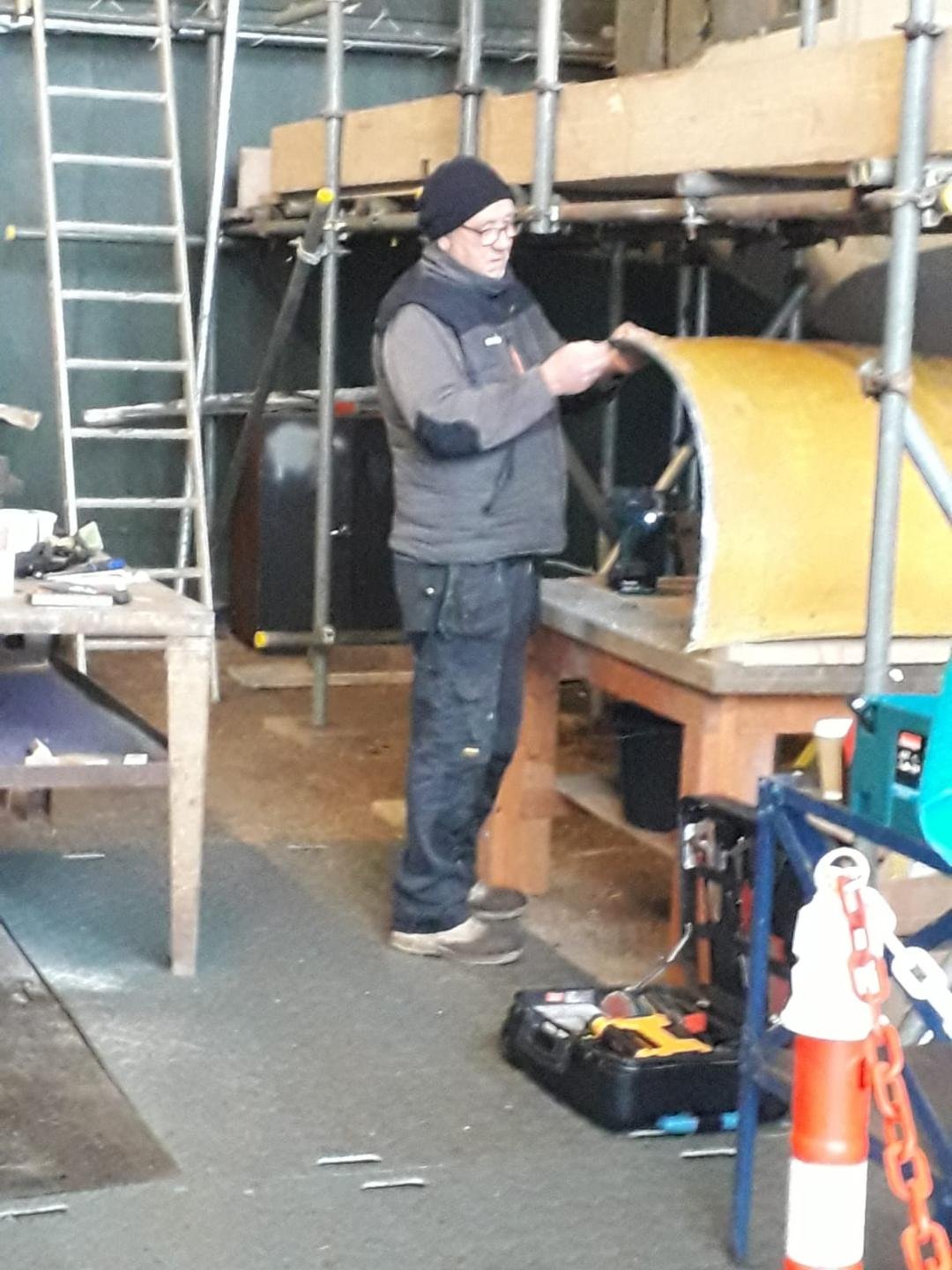
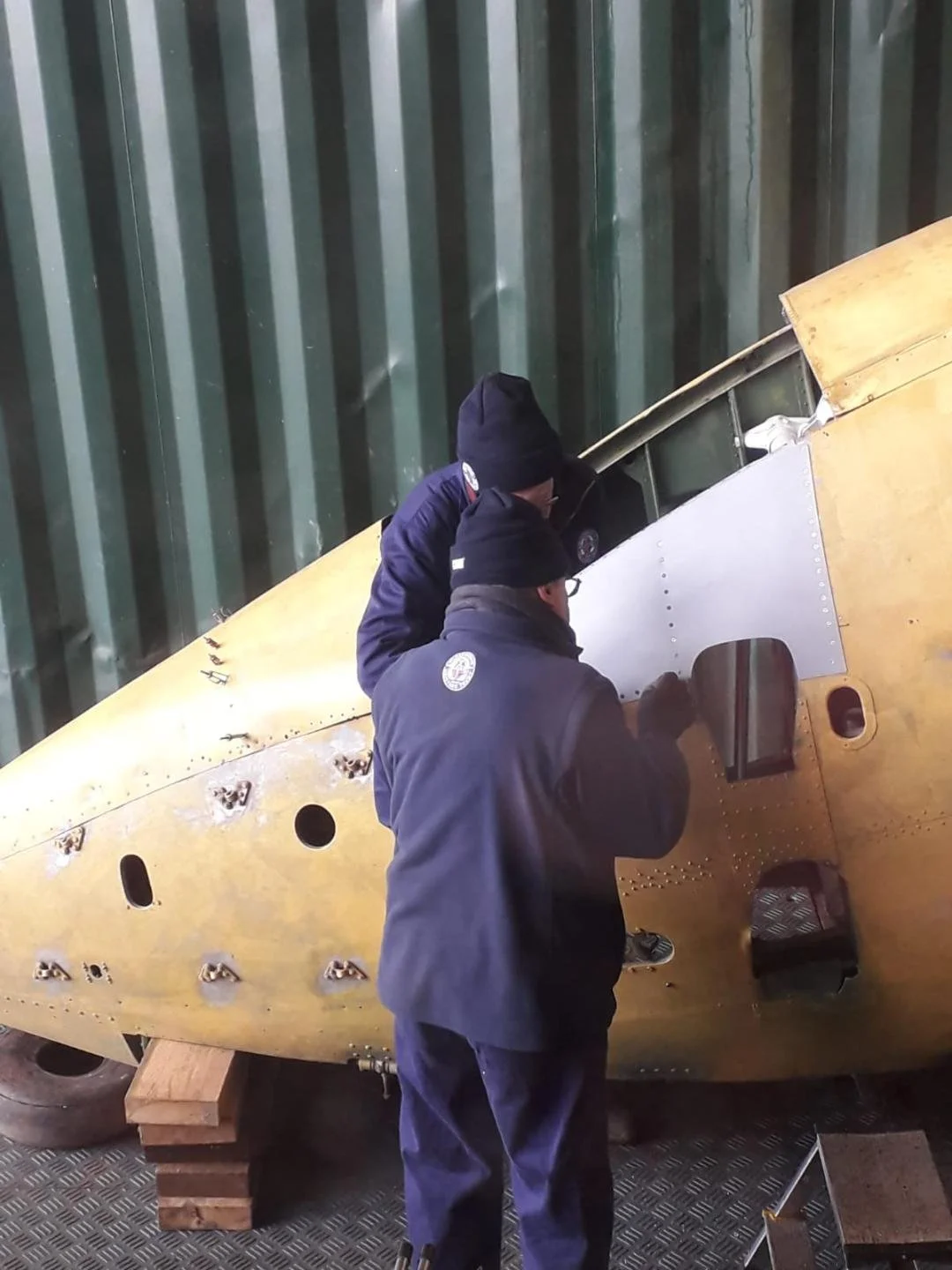
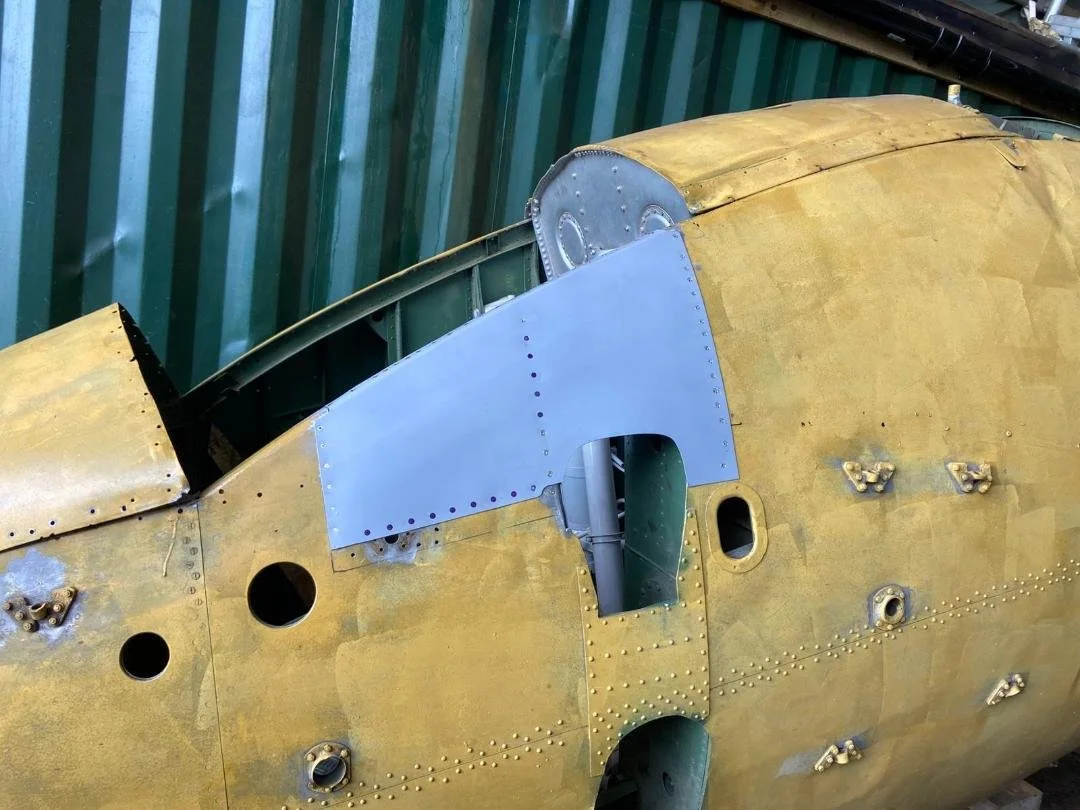
On “Vagabond’s” exterior, a recently-acquired Valetta cockpit window and astrodome cover, which came with “Loreley” from RAF Cosford, was trial-fitted. A copy of this cover is also planned for “Vagabond” and will help us to protect both aircraft during the colder/wetter months.
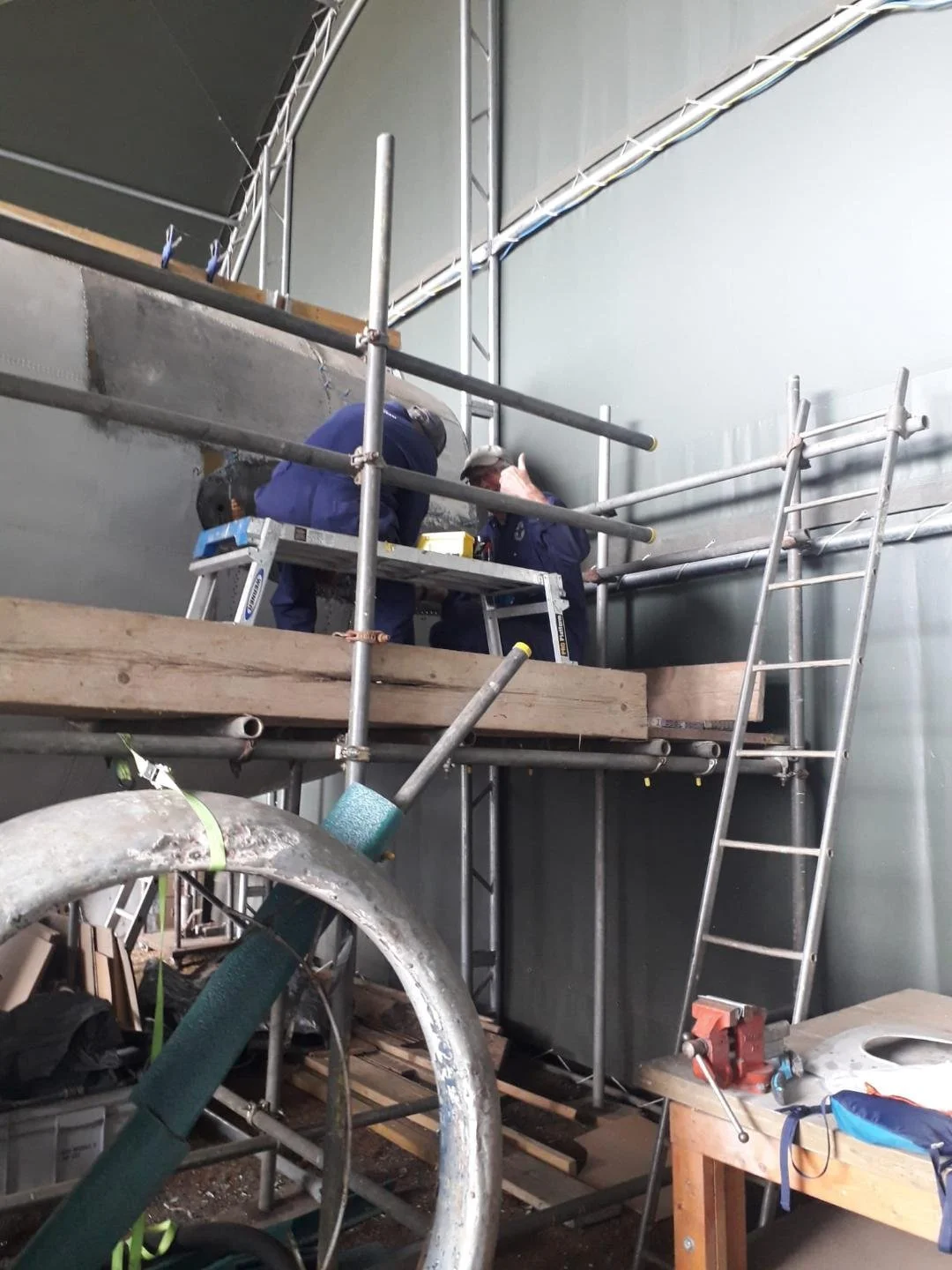
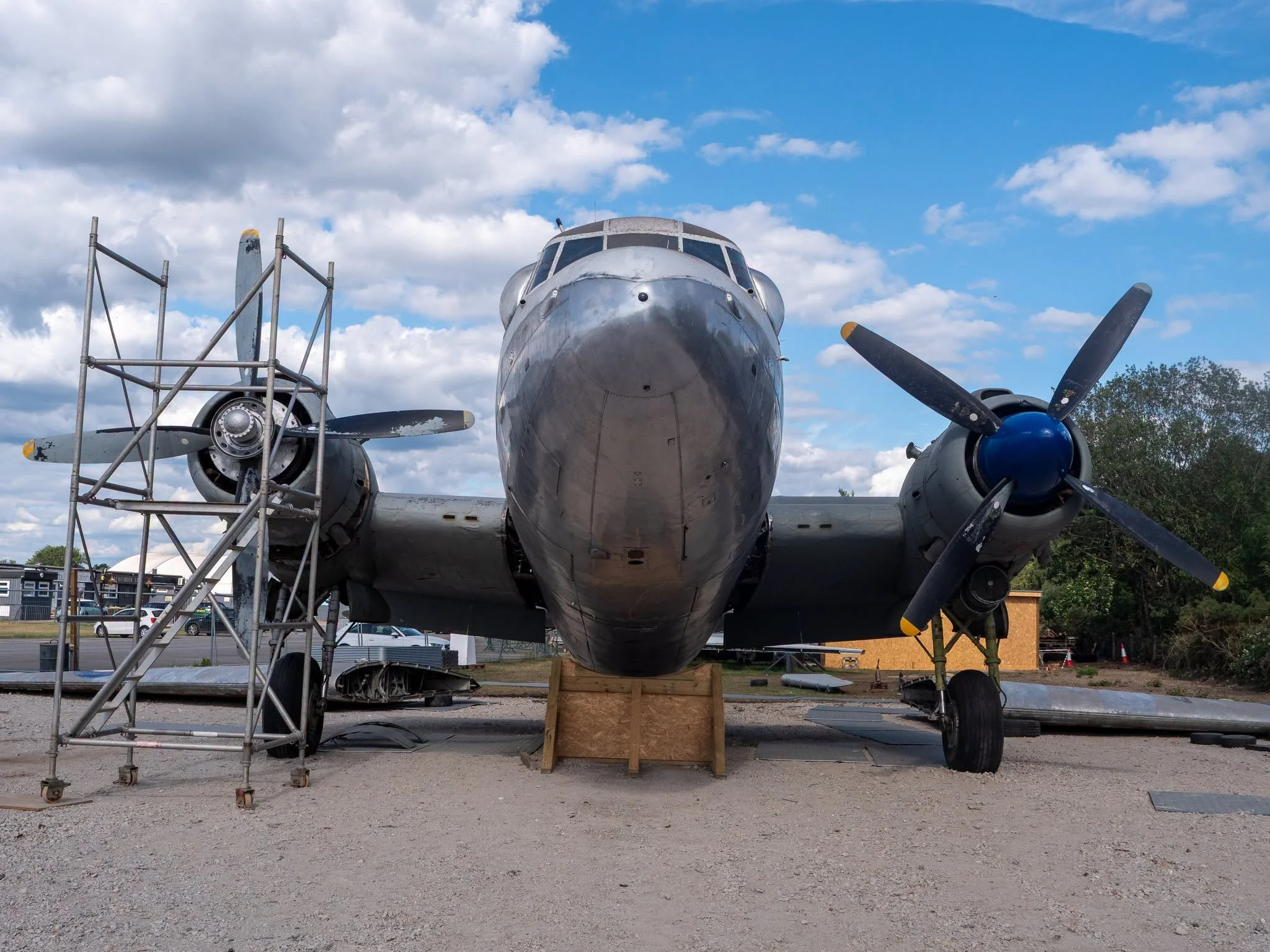
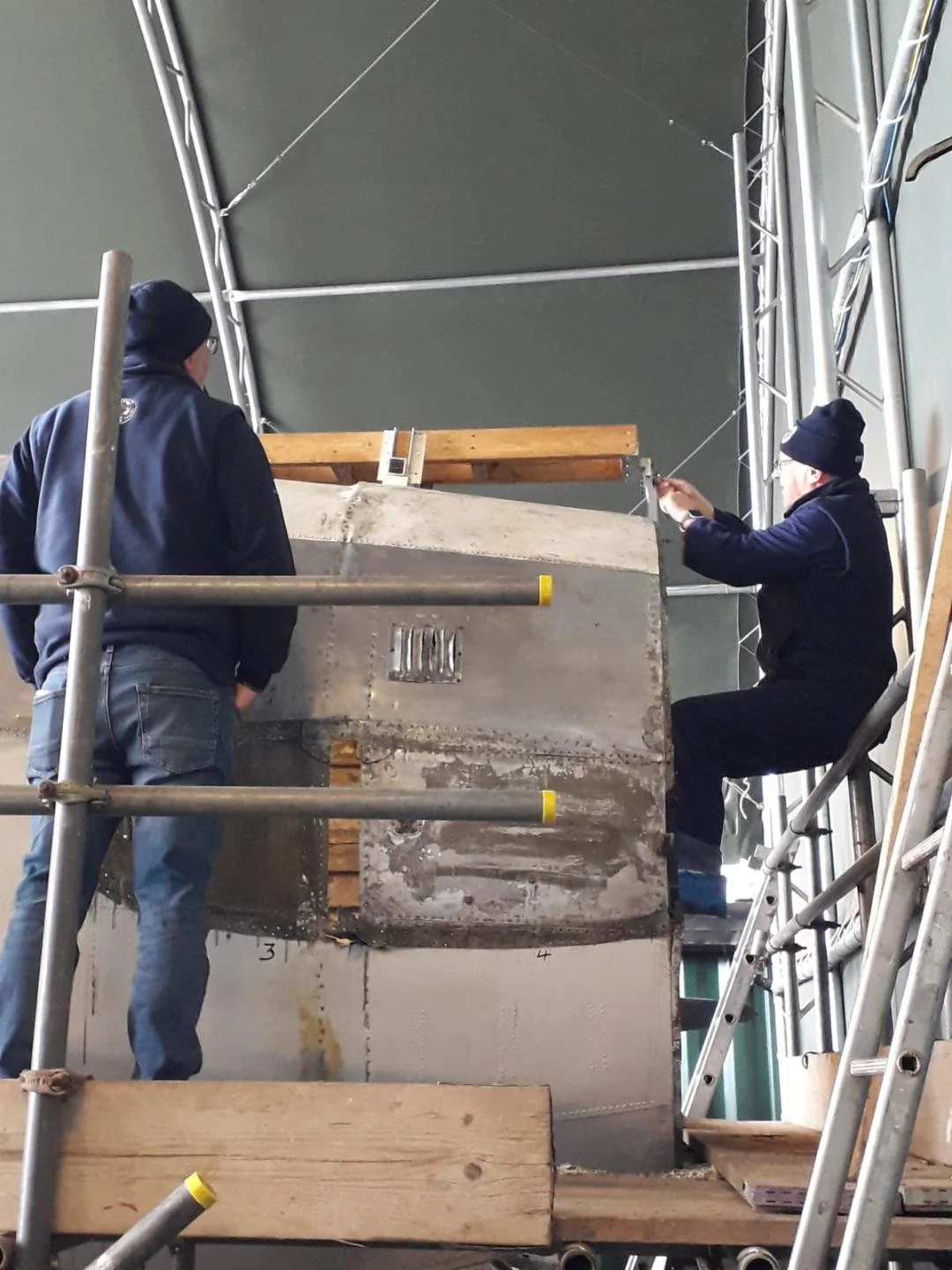
At this point, we also want to “shout-out” and thank Vision Scaffolding once again for their assistance with the scaffolding that has re-appeared around “Vagabond’s” nose section in recent weeks, to enable access for work on the aircraft’s cockpit windows.
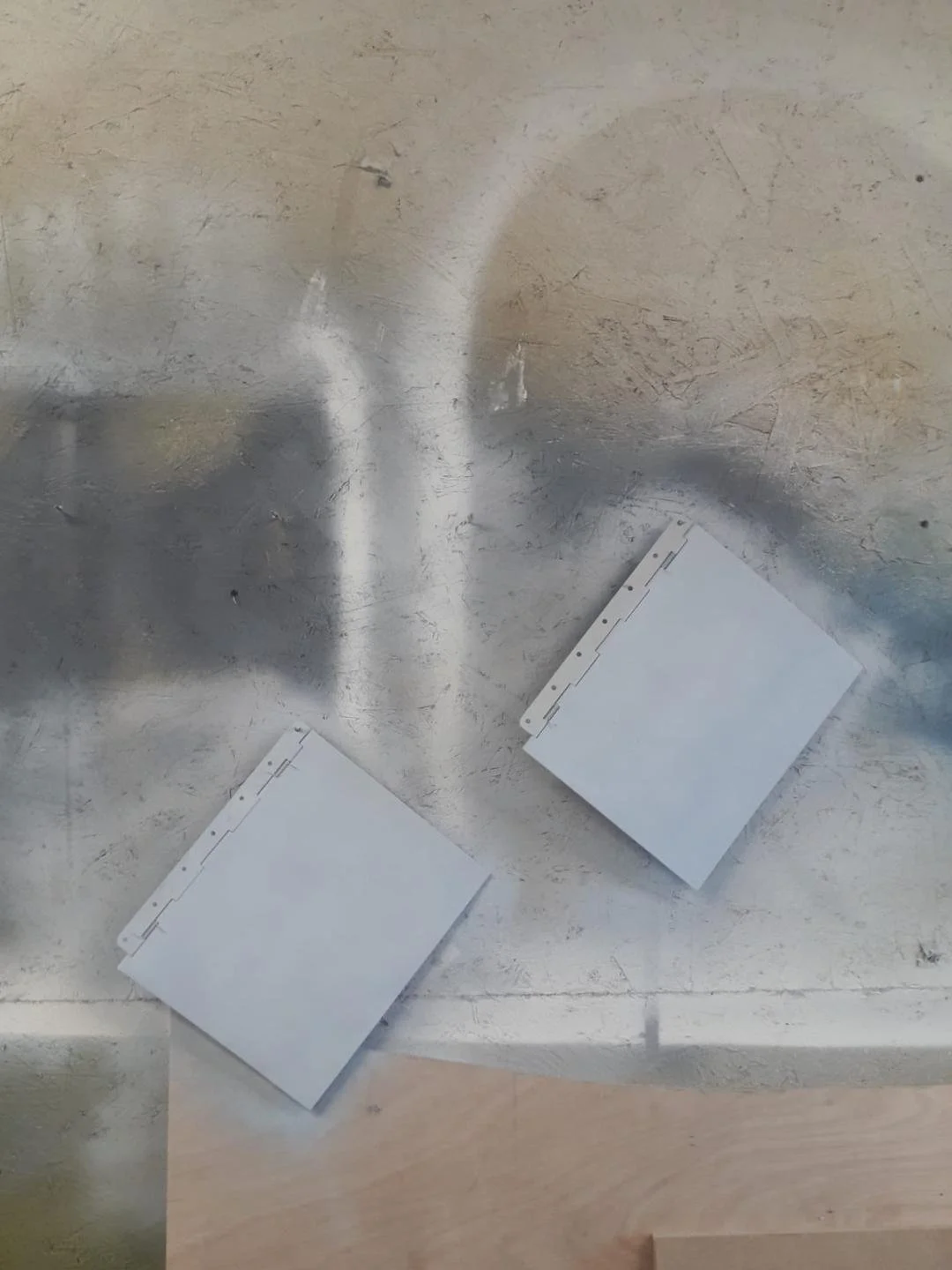
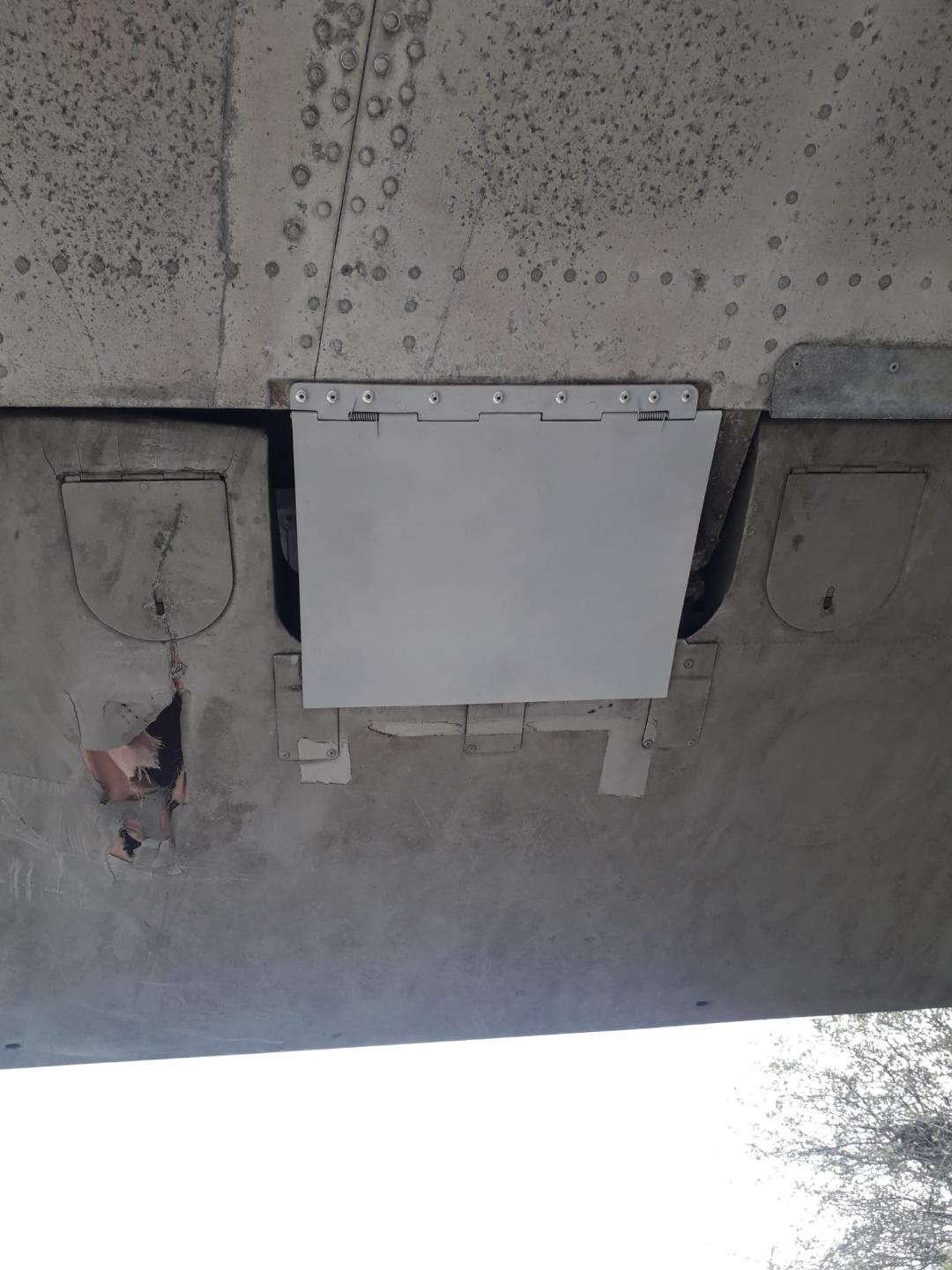
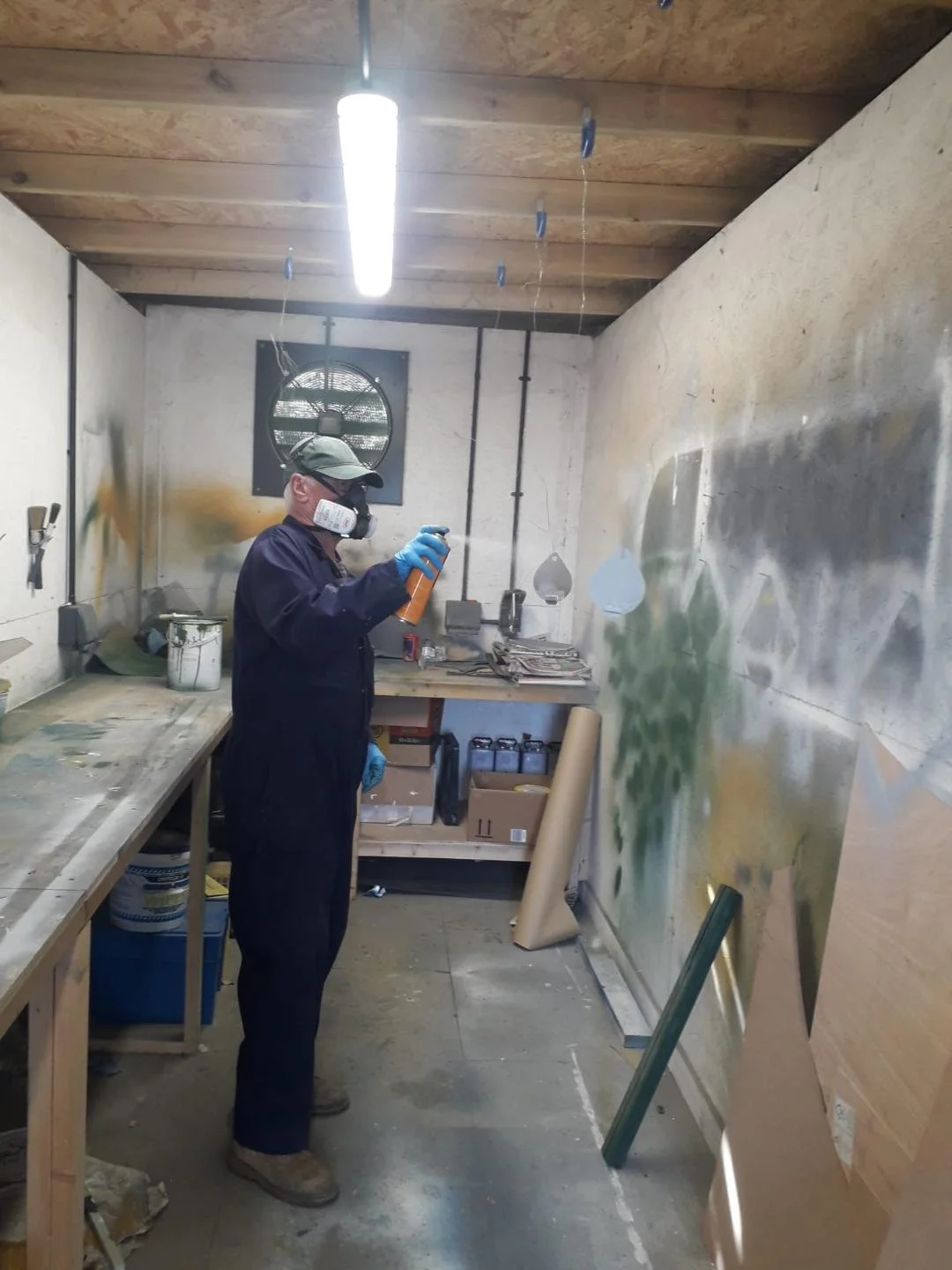
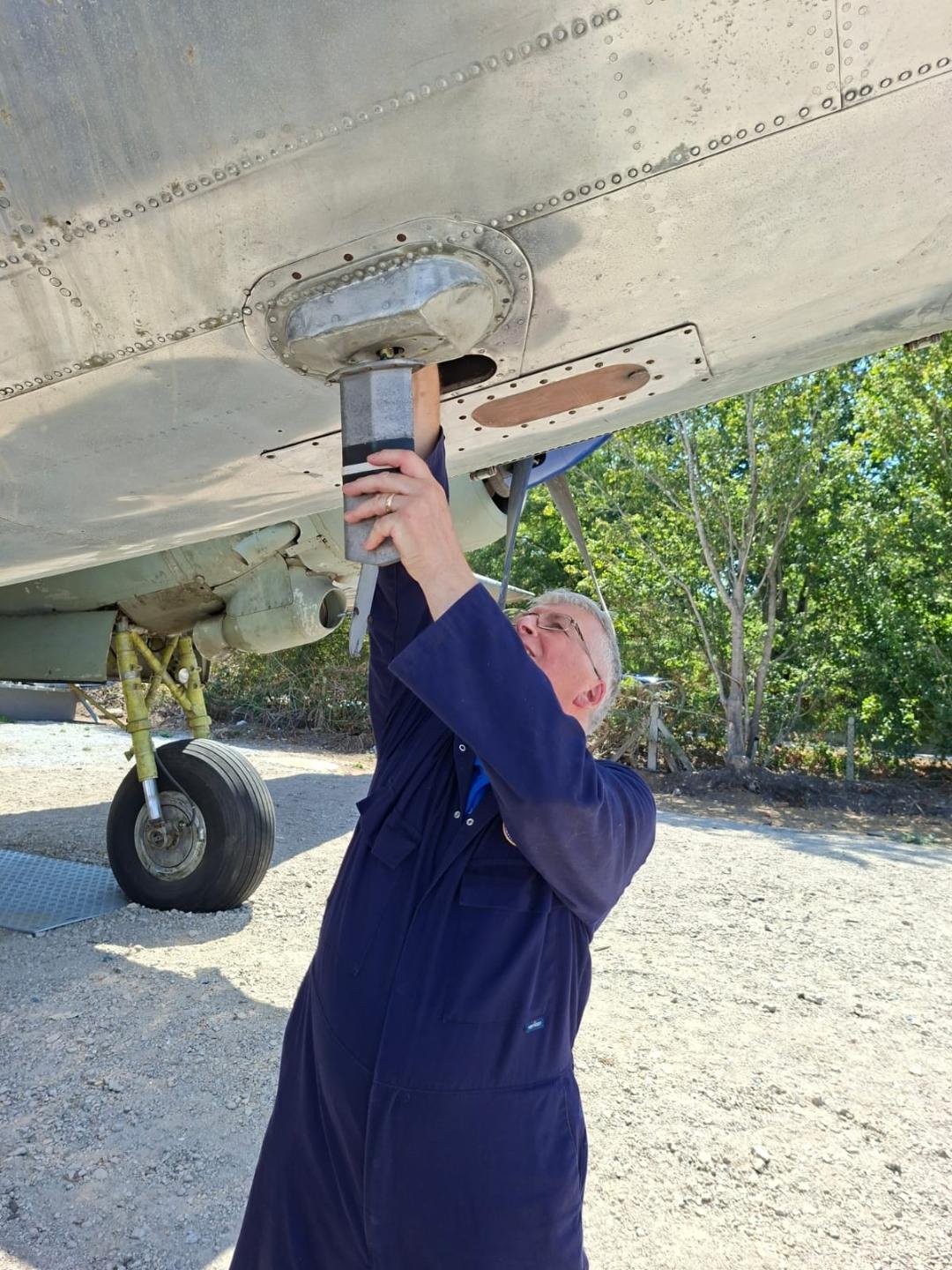
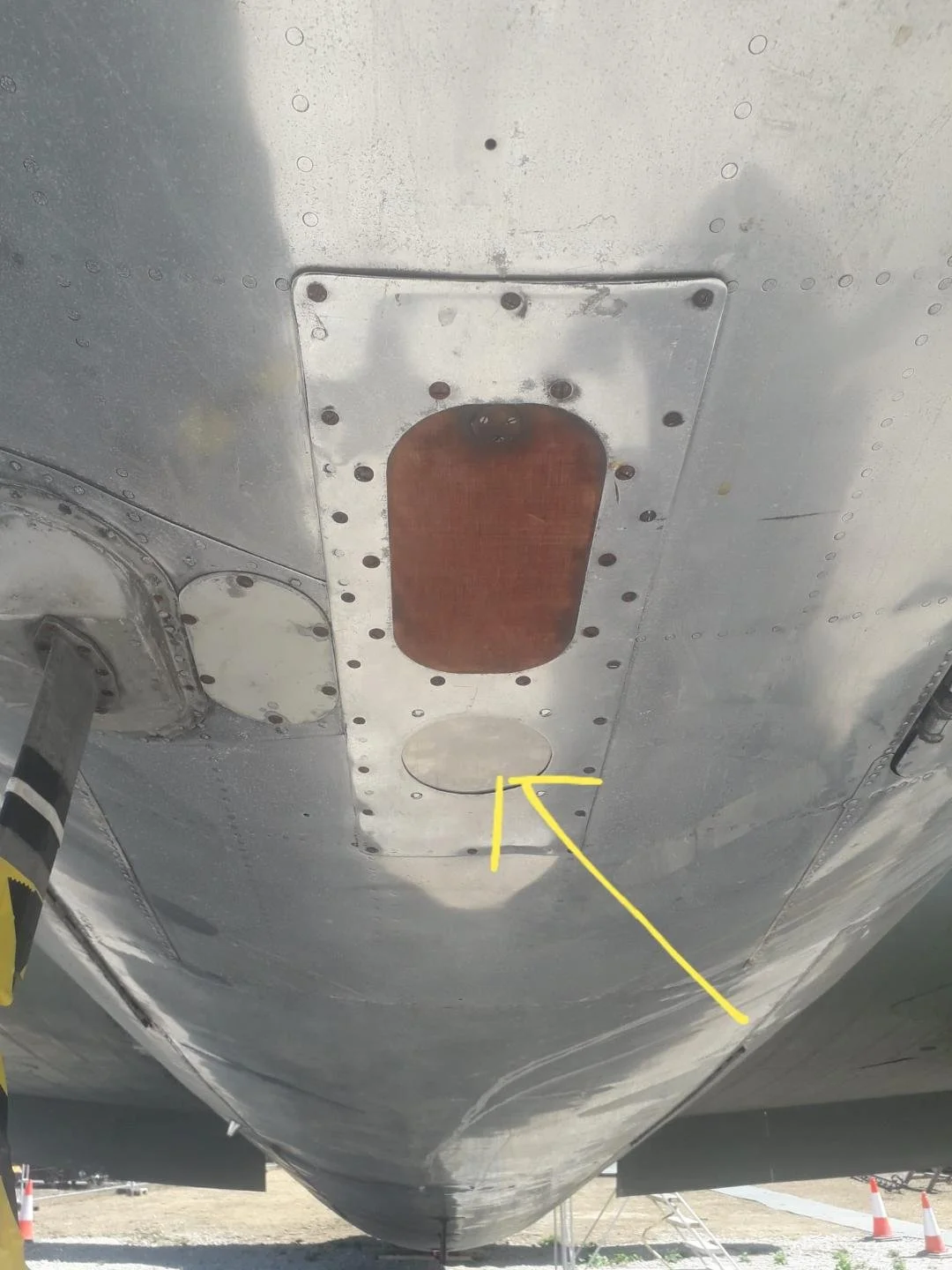
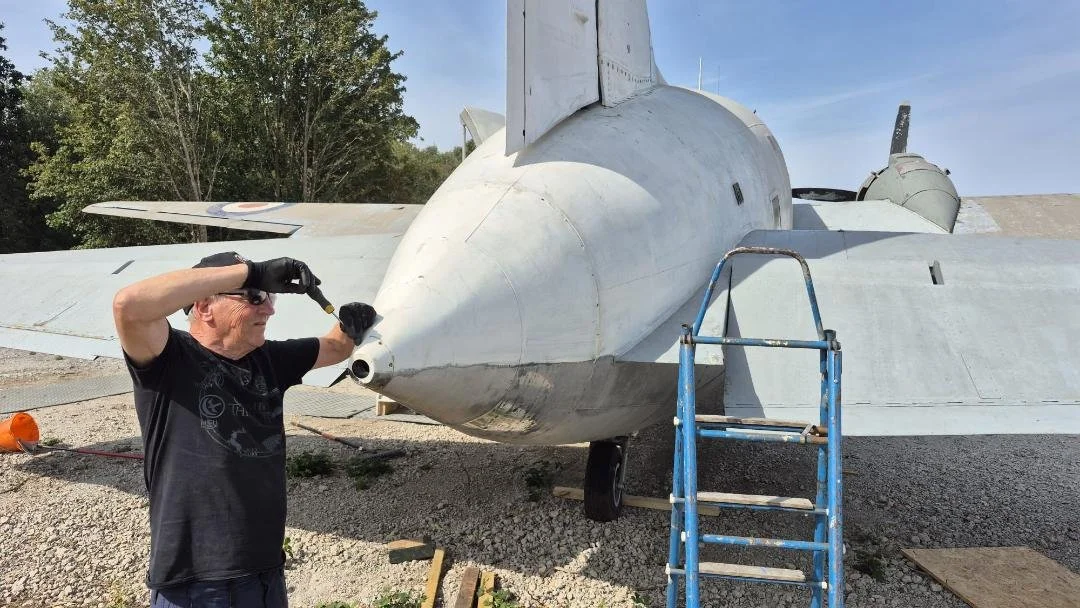
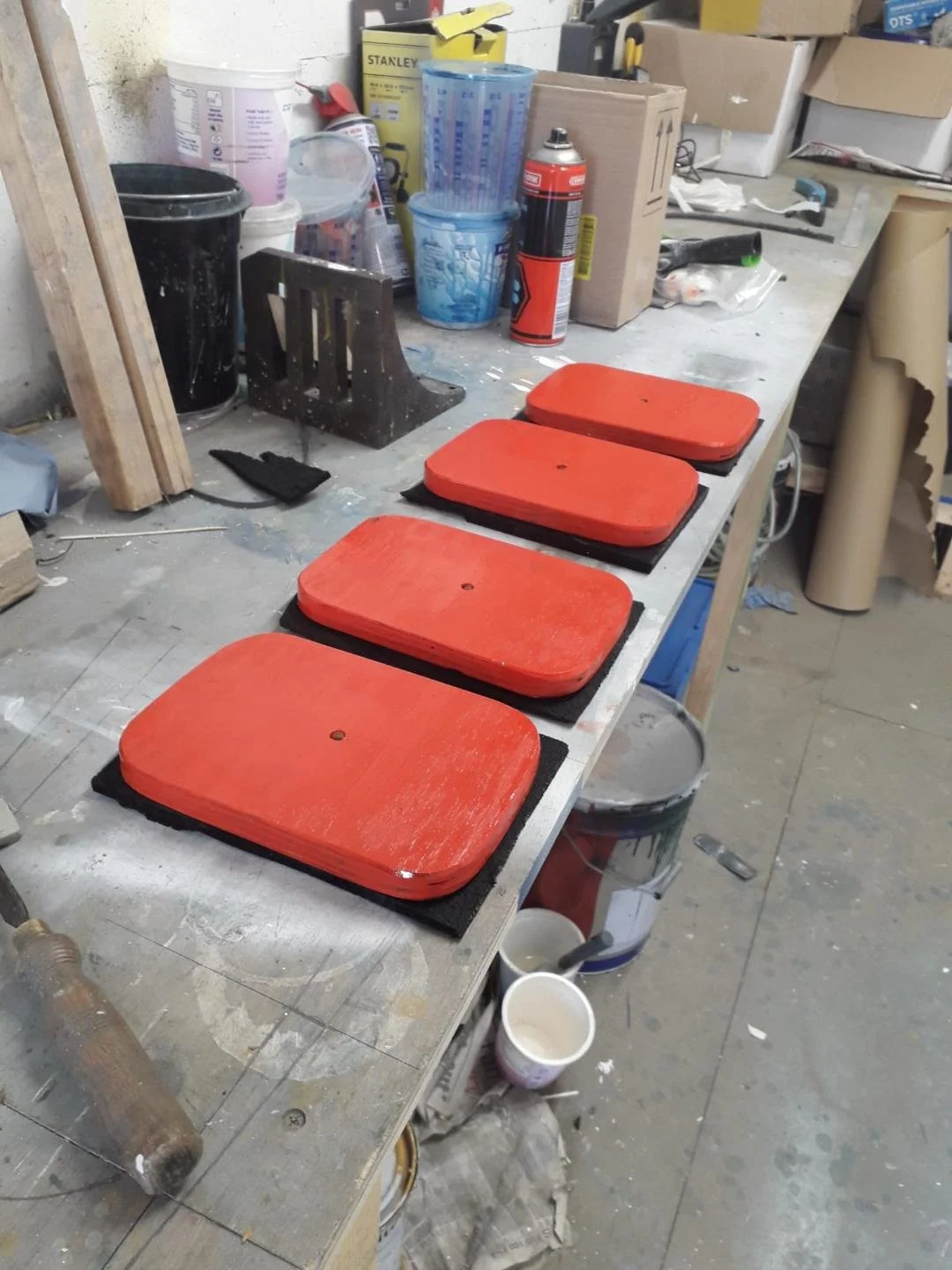
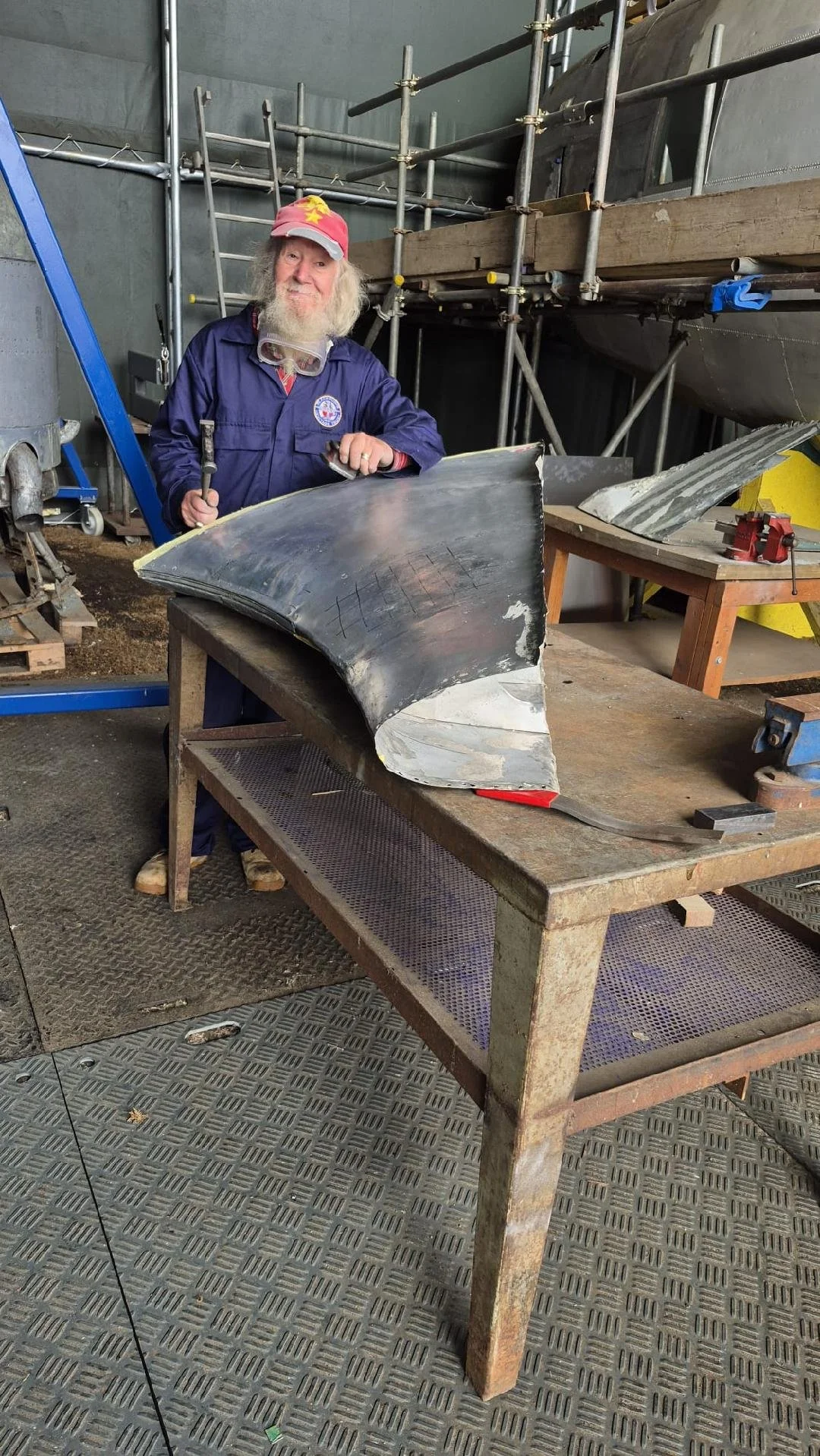
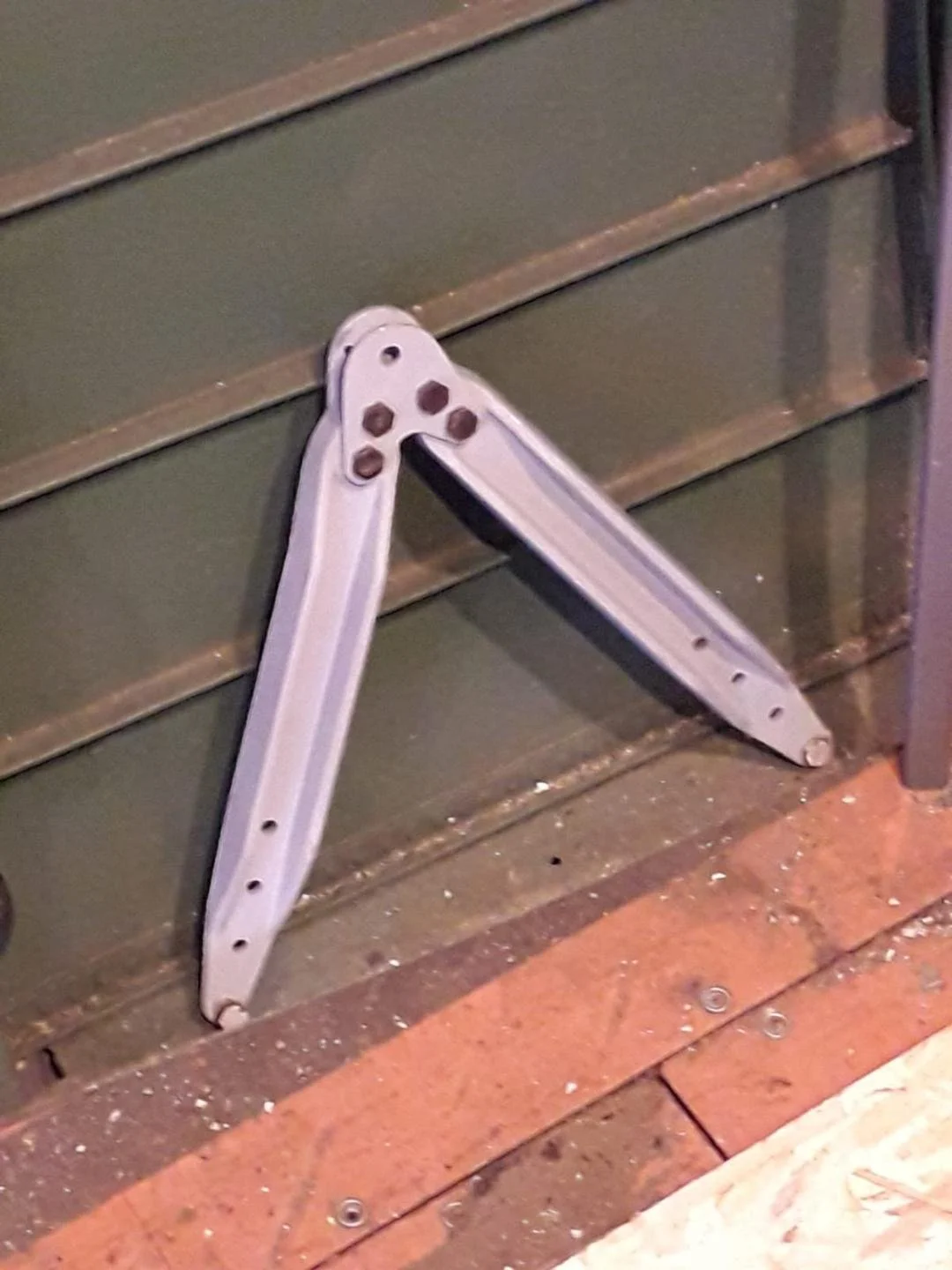
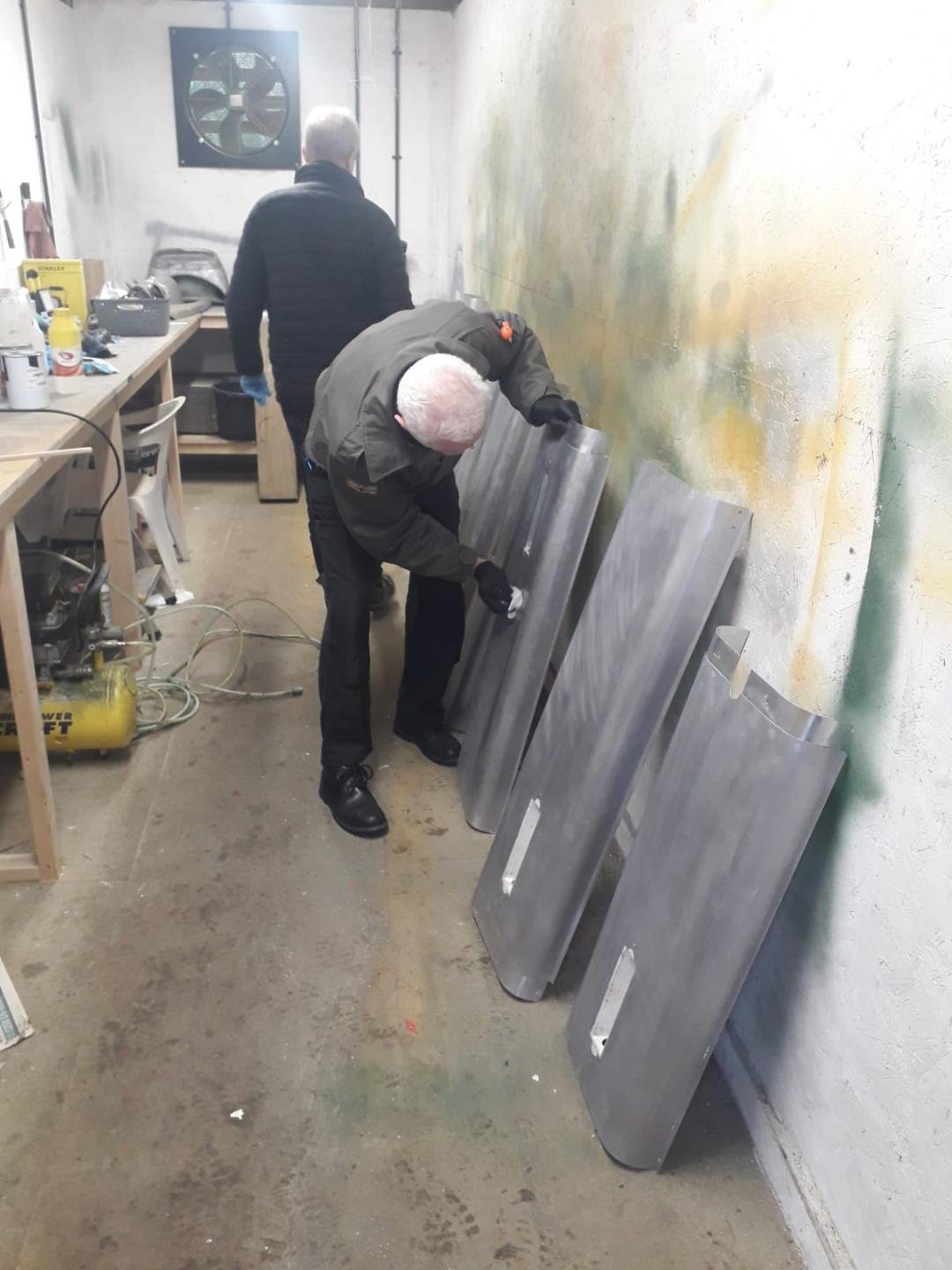
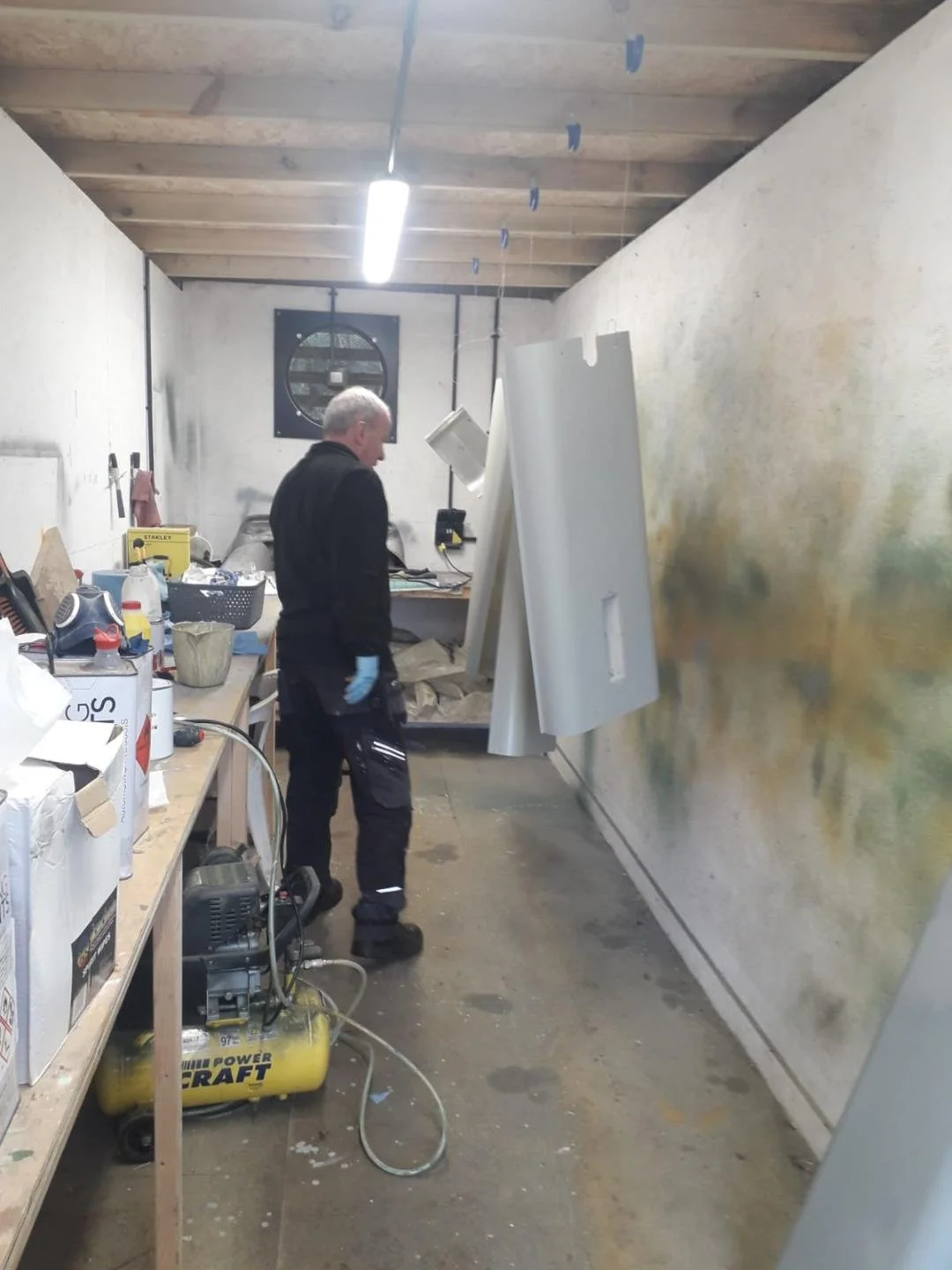
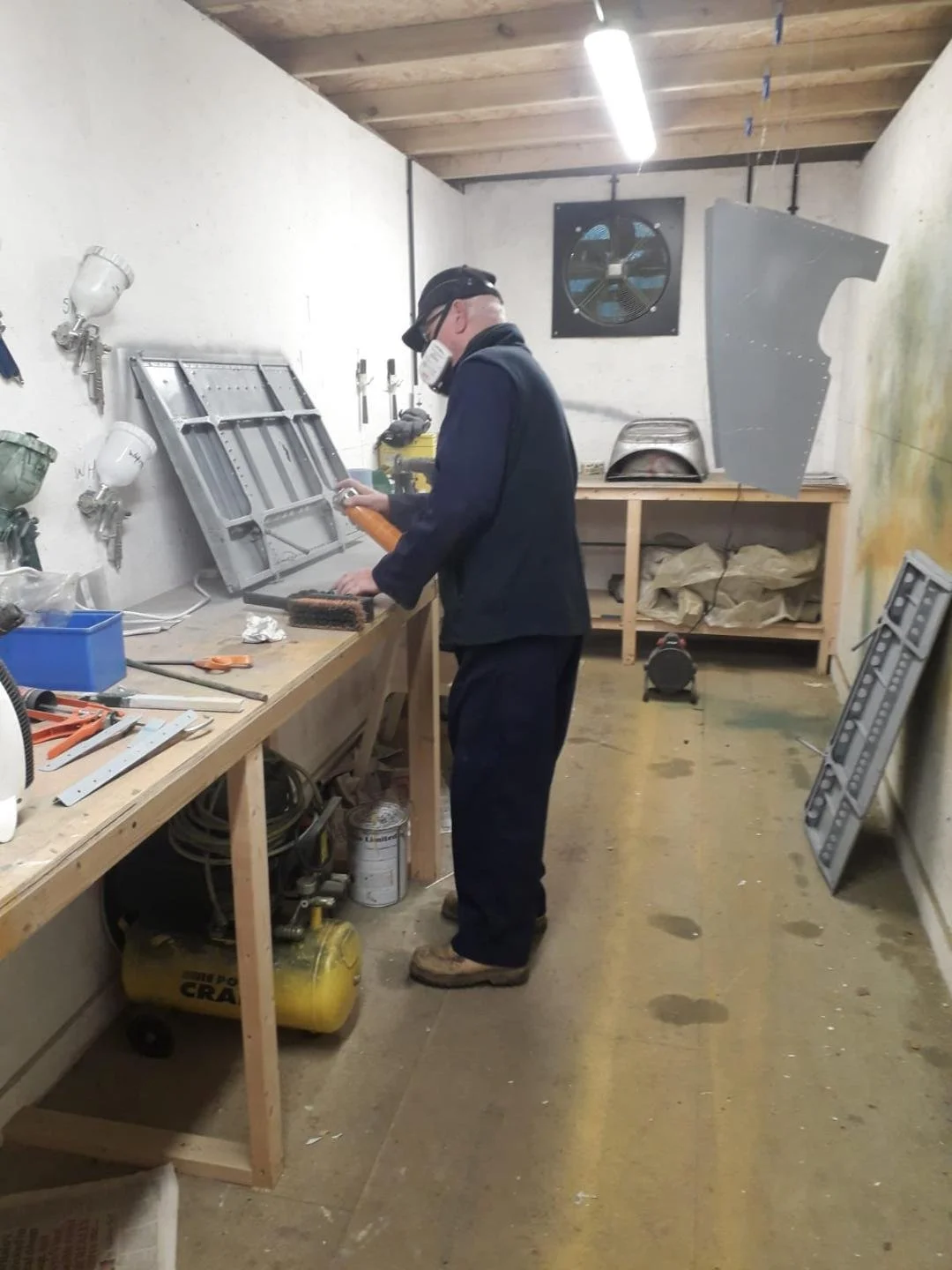
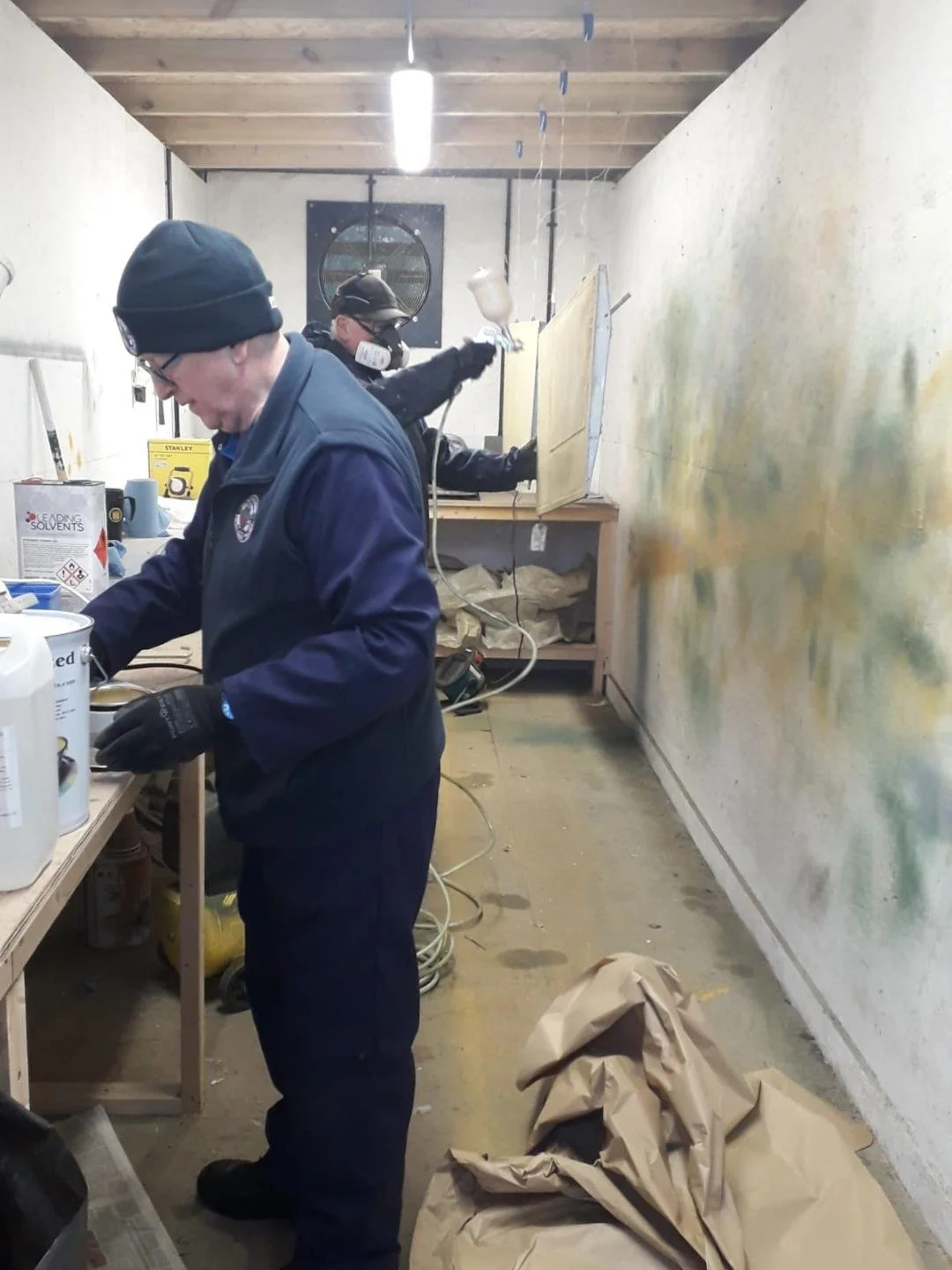
One more mention for “Loreley”, to say that some other smaller exterior “finishing off” tasks have also been undertaken, namely the fabrication and fitting of cover plates for the aileron actuator links, together with fuel caps (which are shown being sprayed, while suspended, in the third picture below).
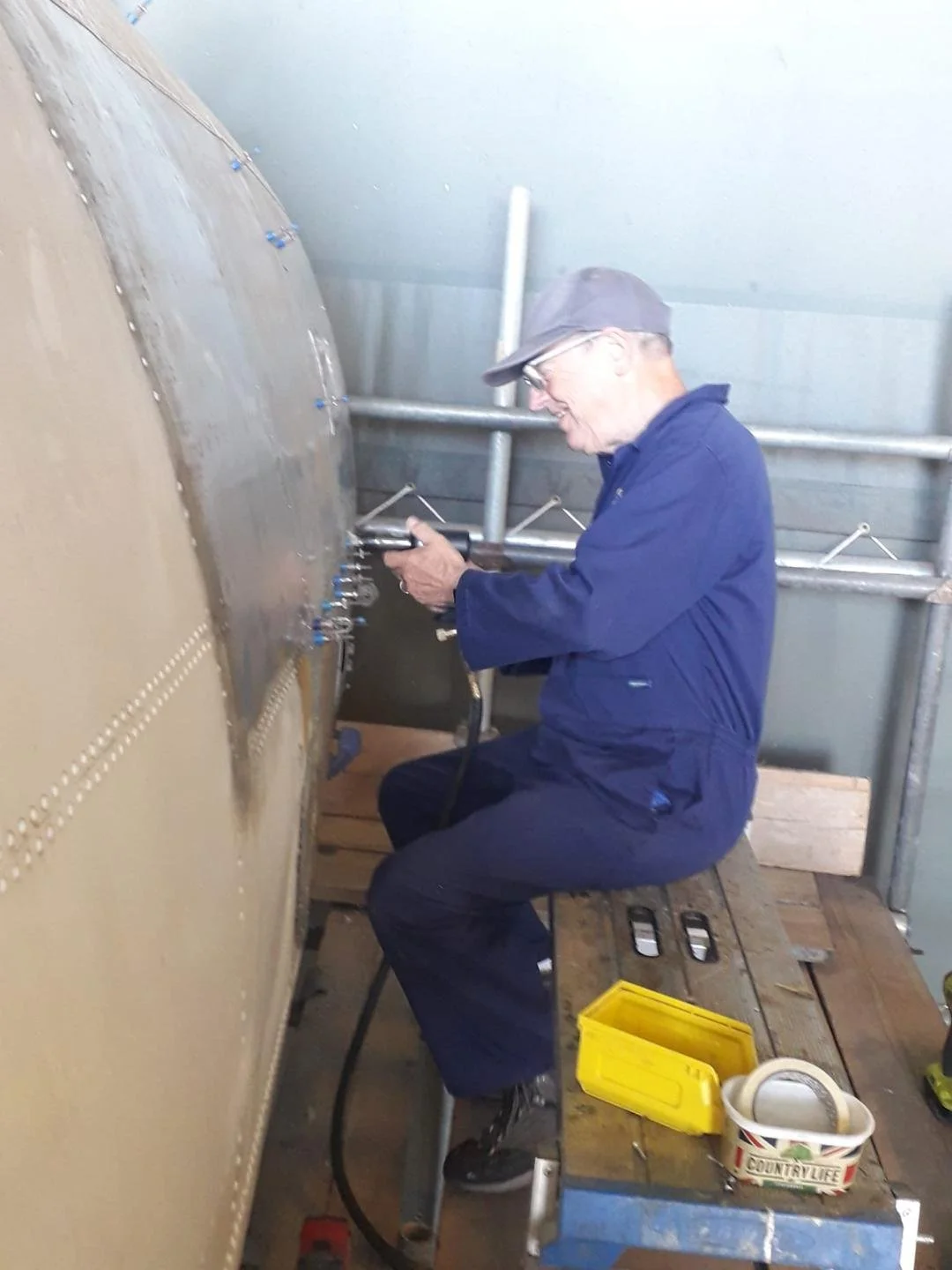
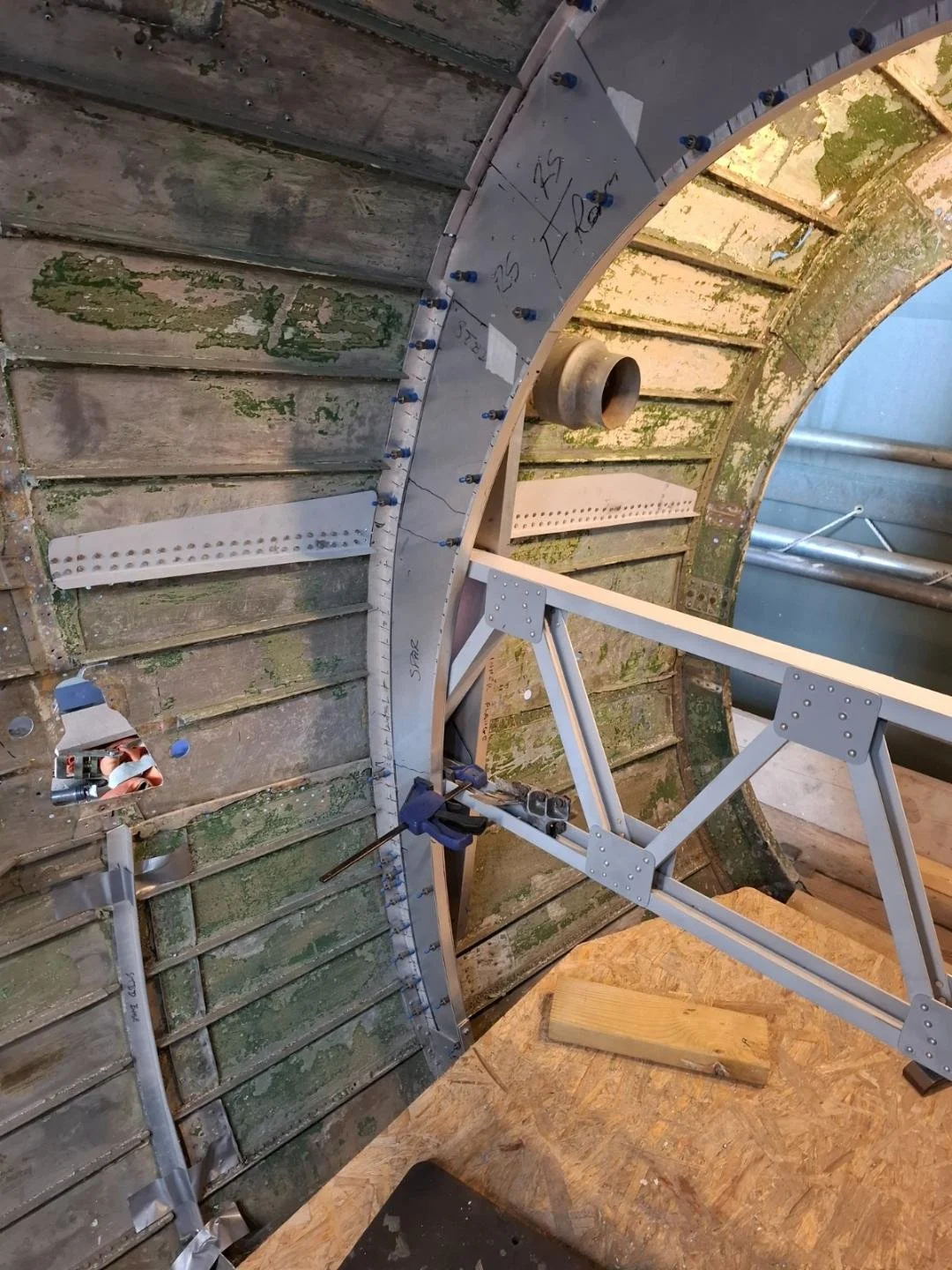
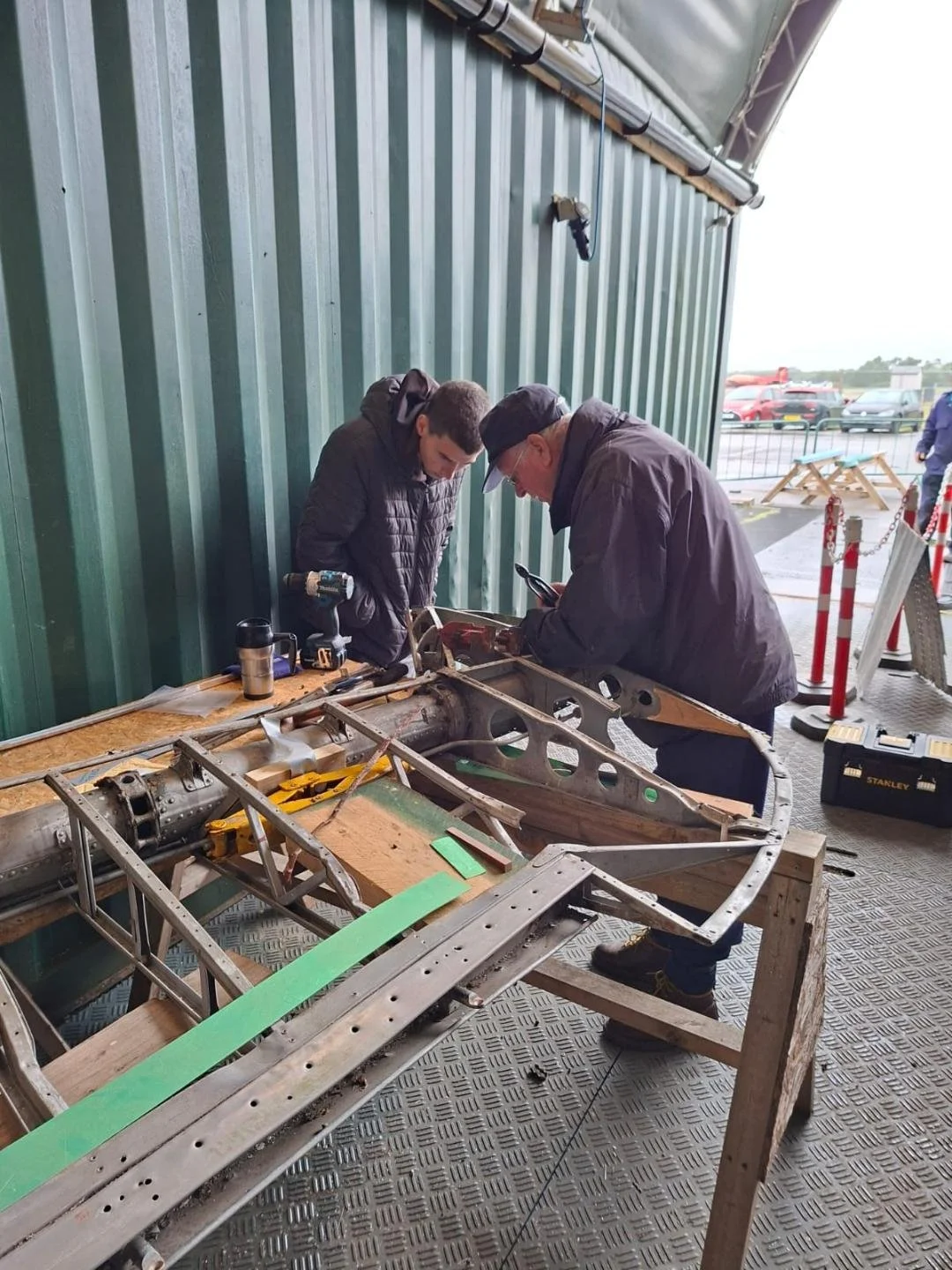
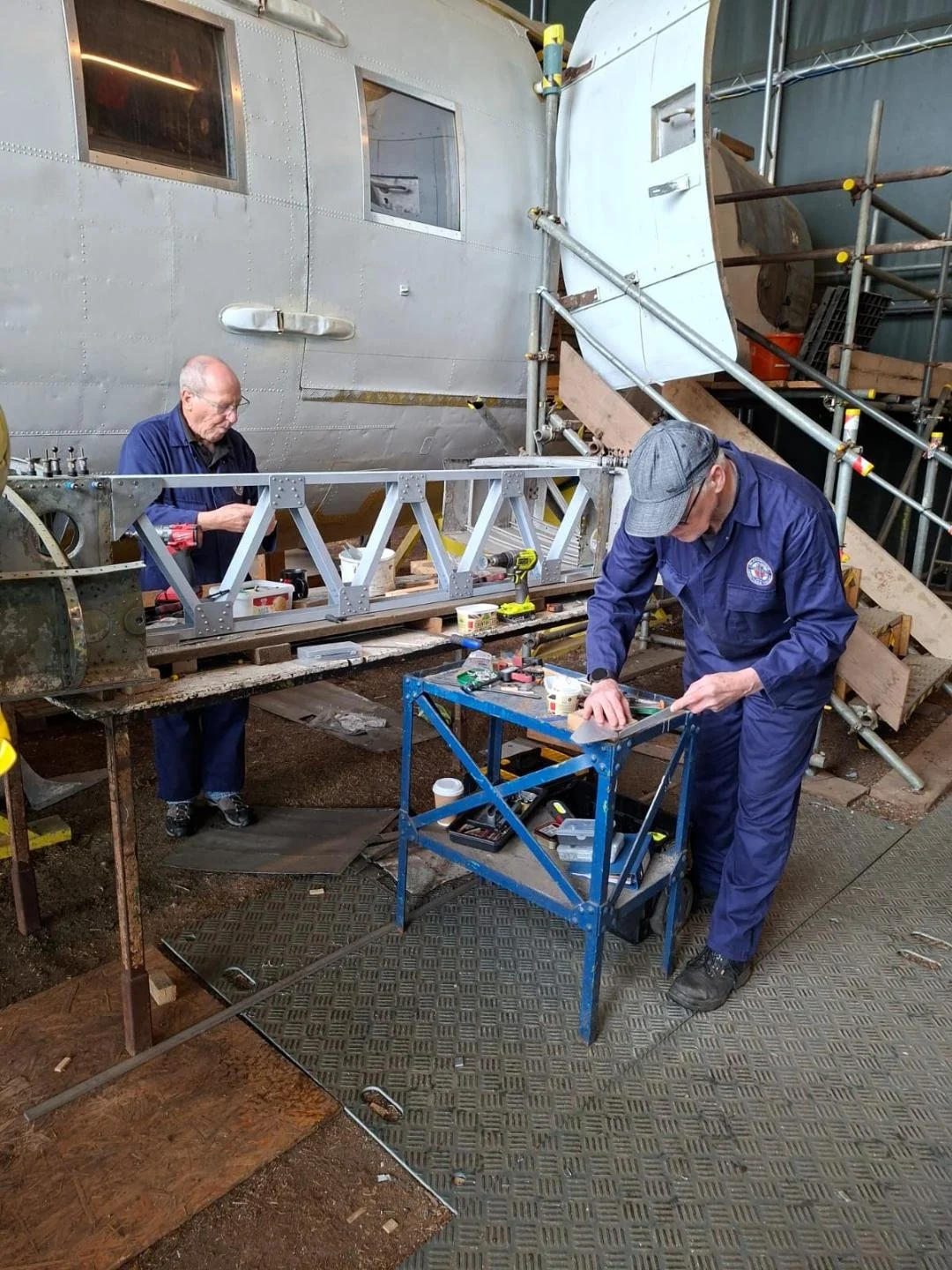
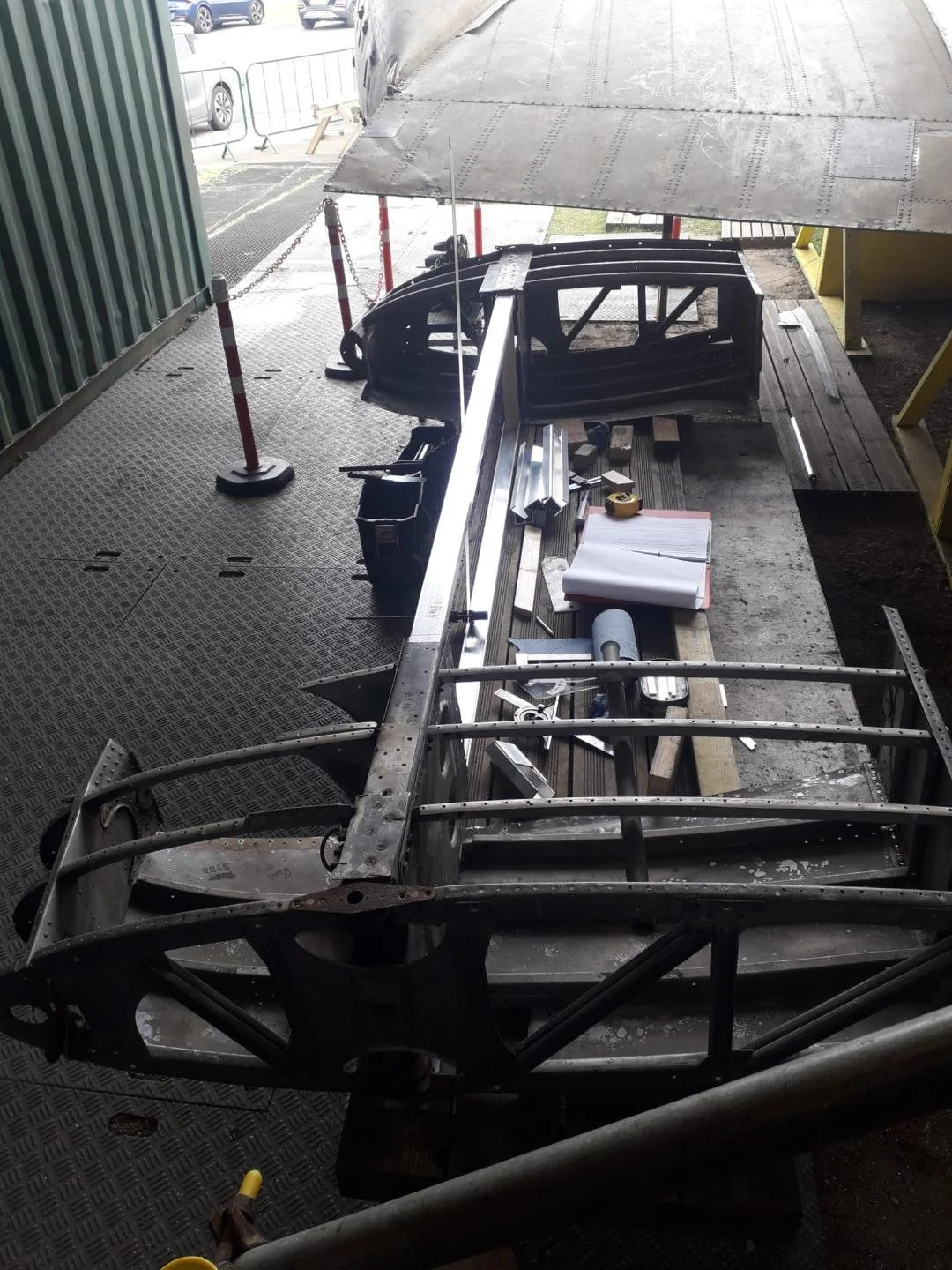
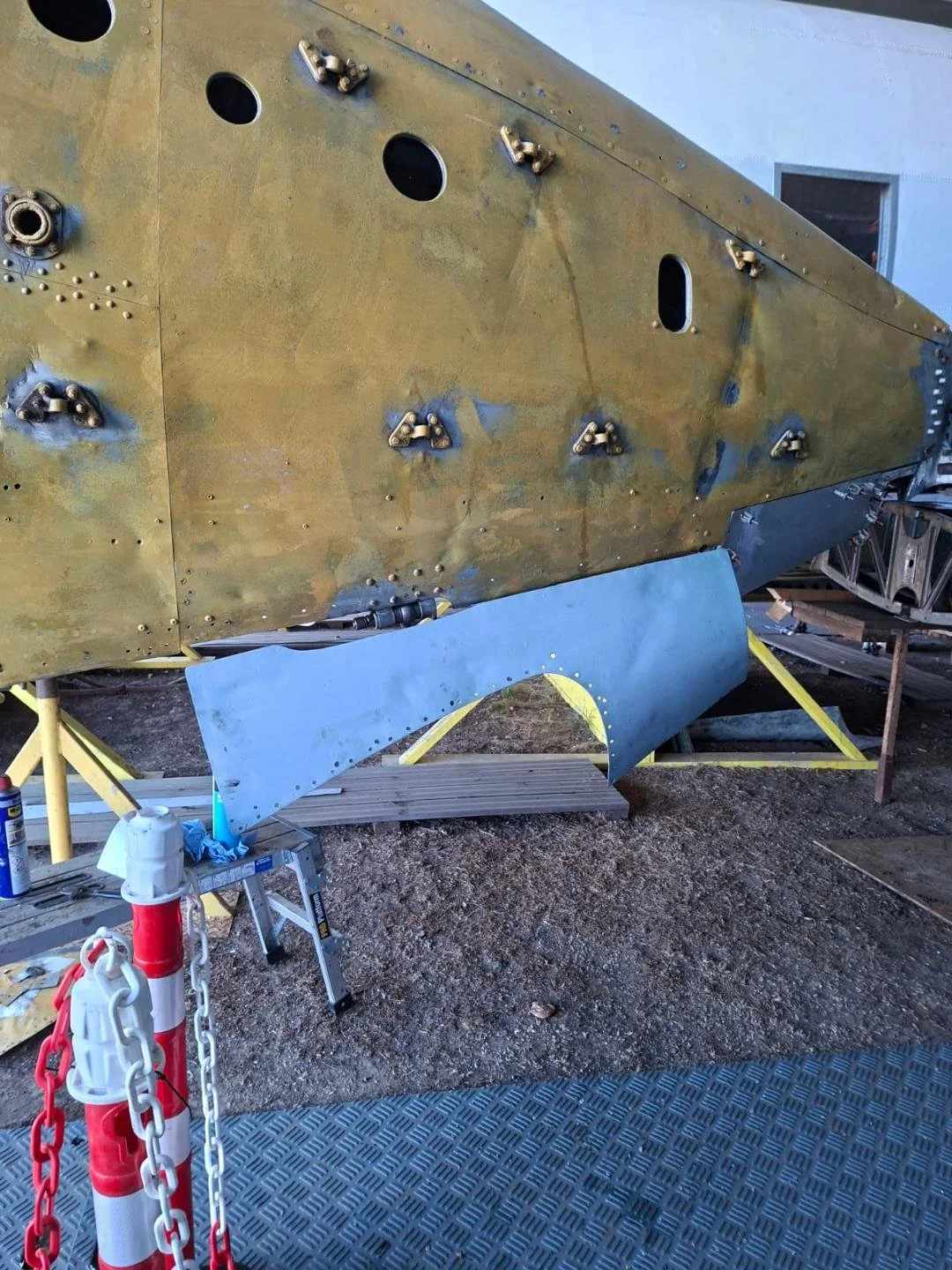
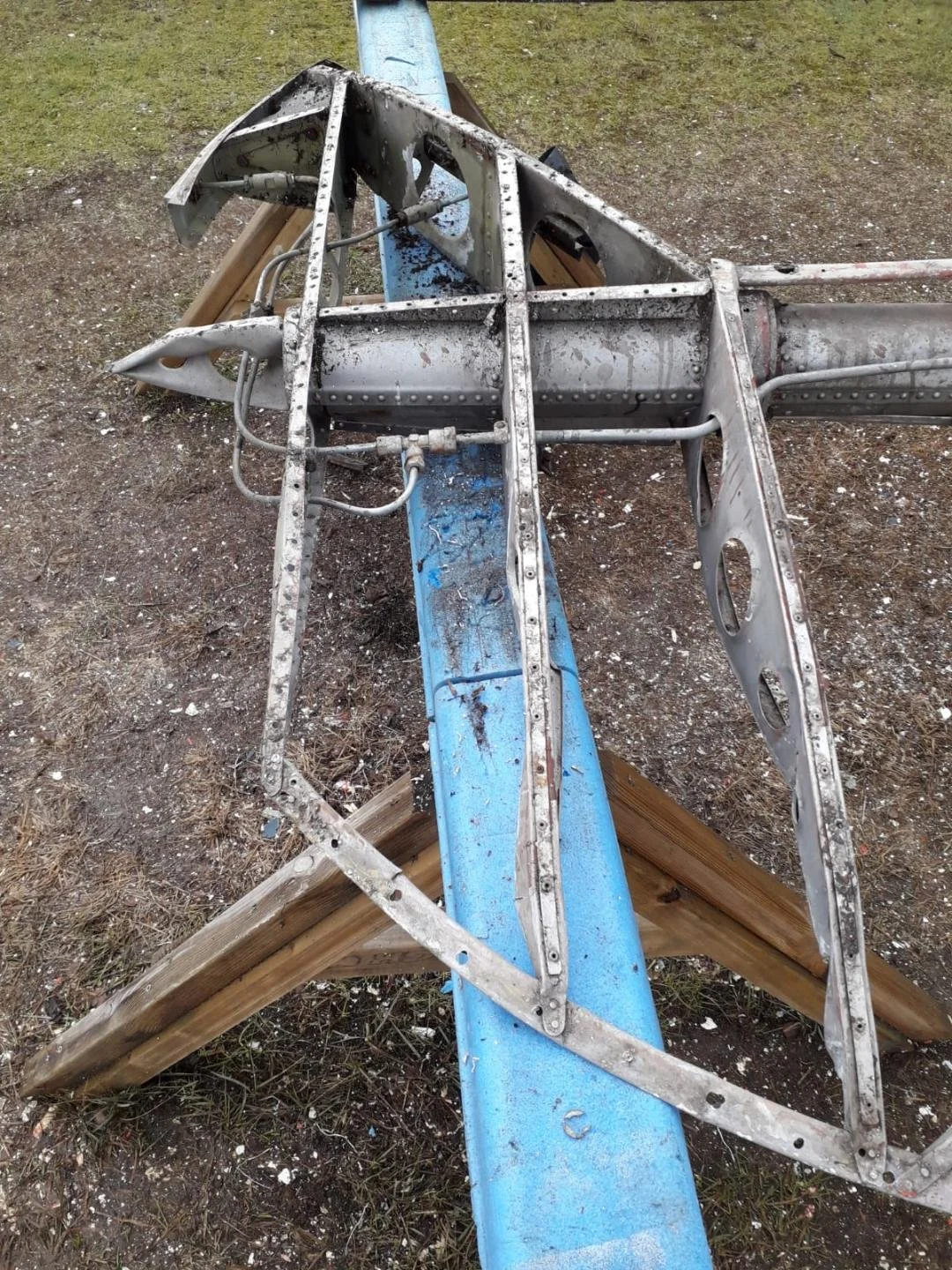
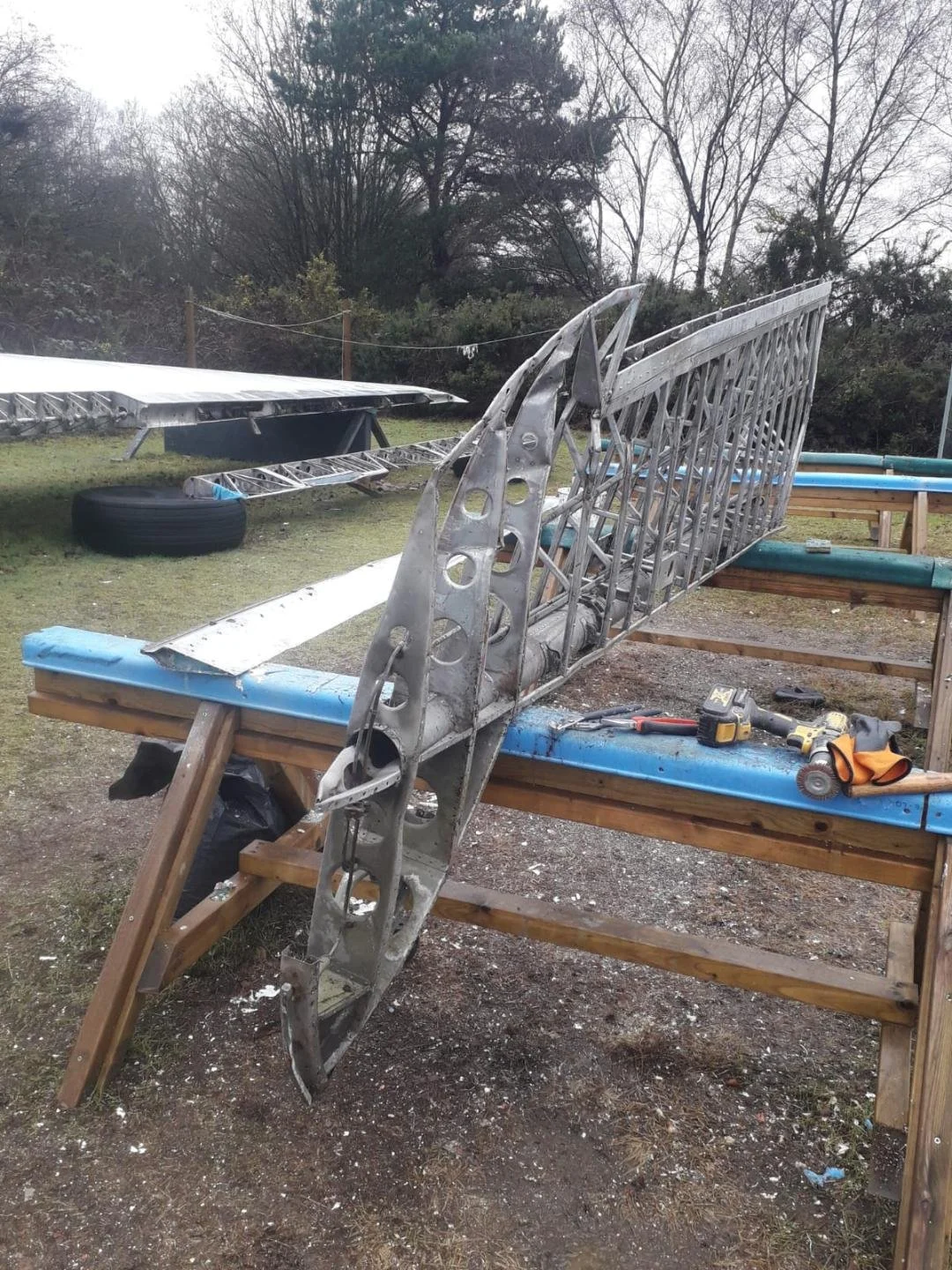
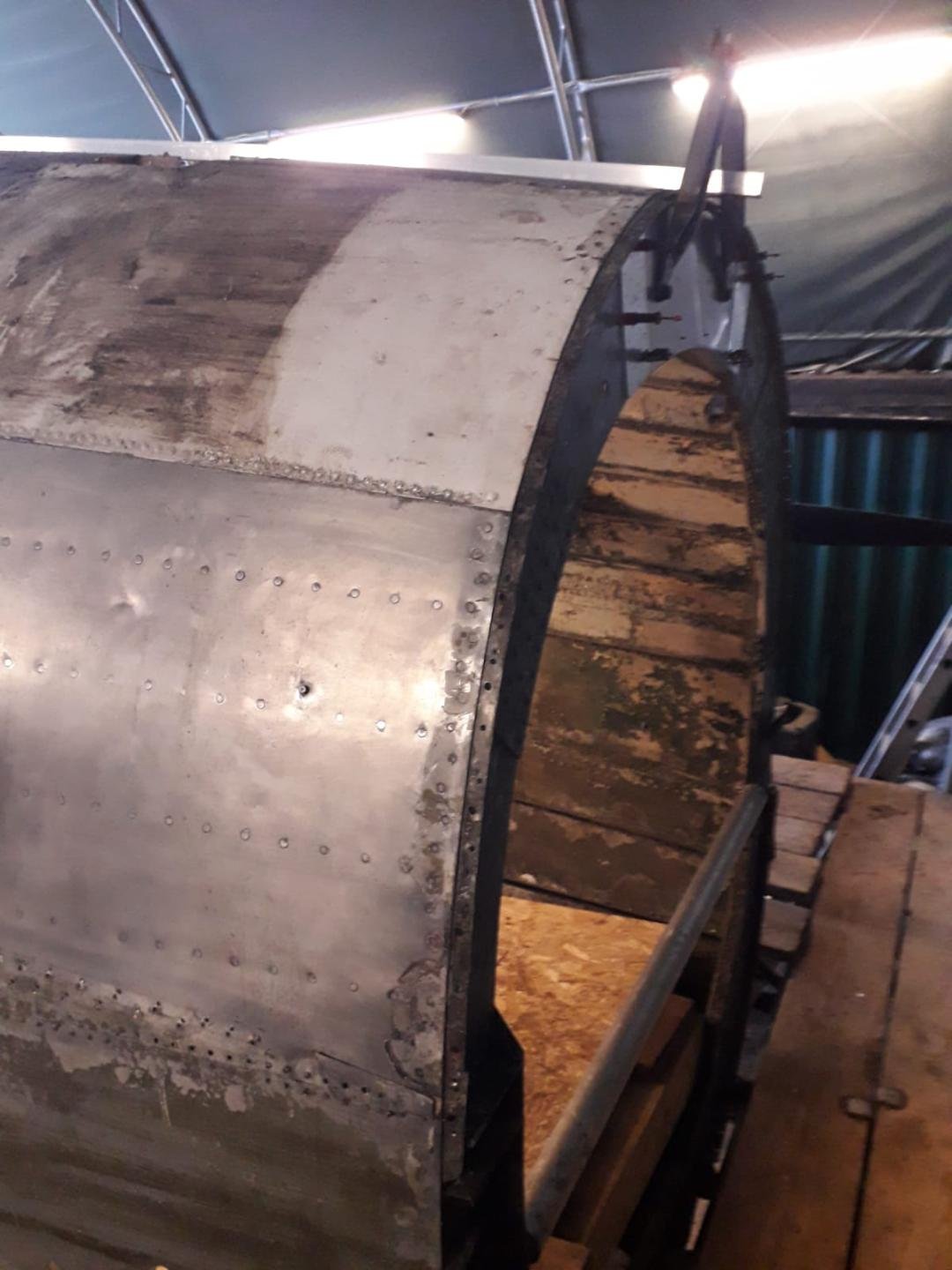
Back with “Vagabond”, and as we mentioned earlier we continue to make good progress on areas that we have been working on for a while. Some of these areas required major work, such as the rear fuselage/tail section and the pictures below show how that continues….
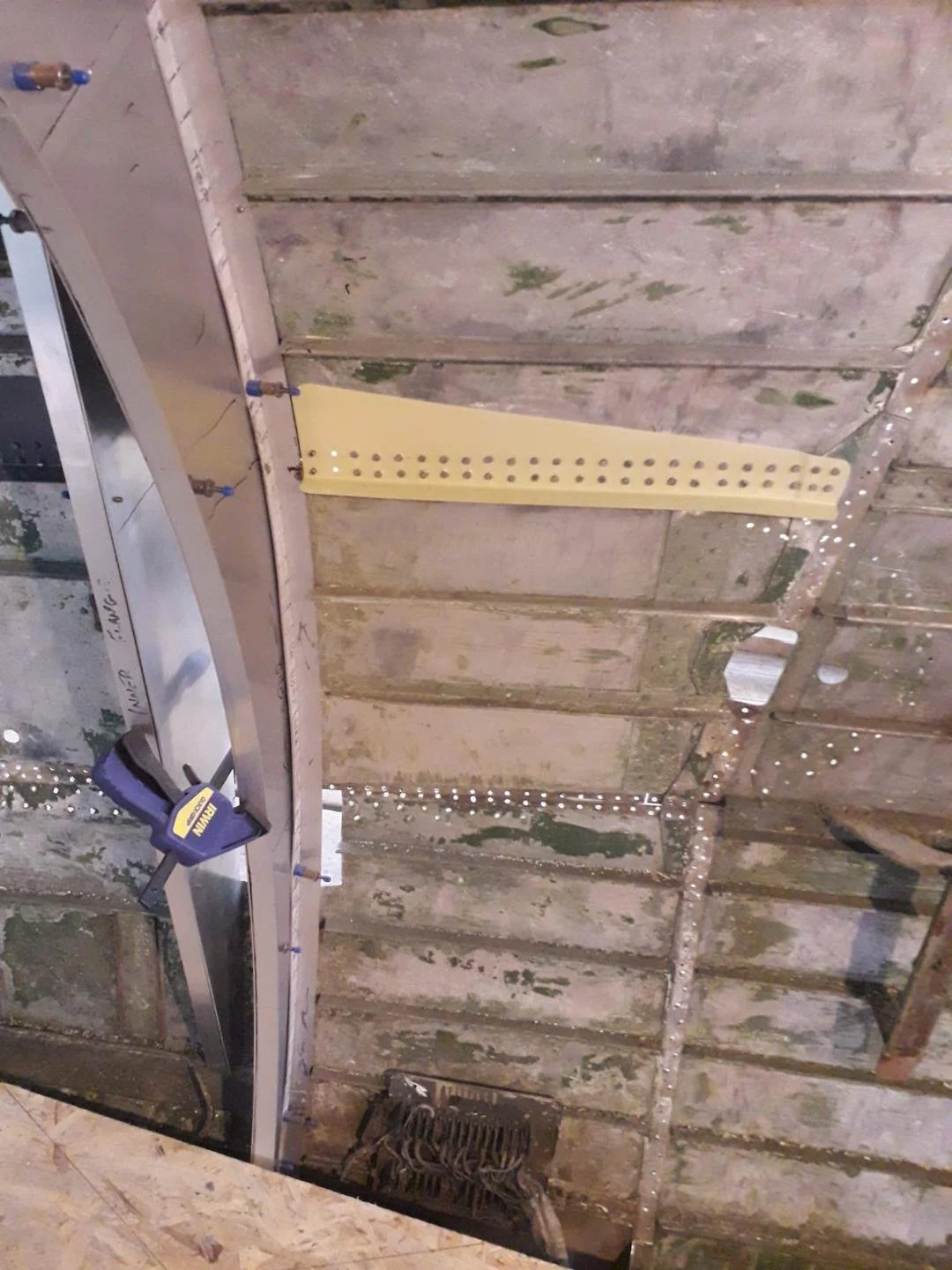
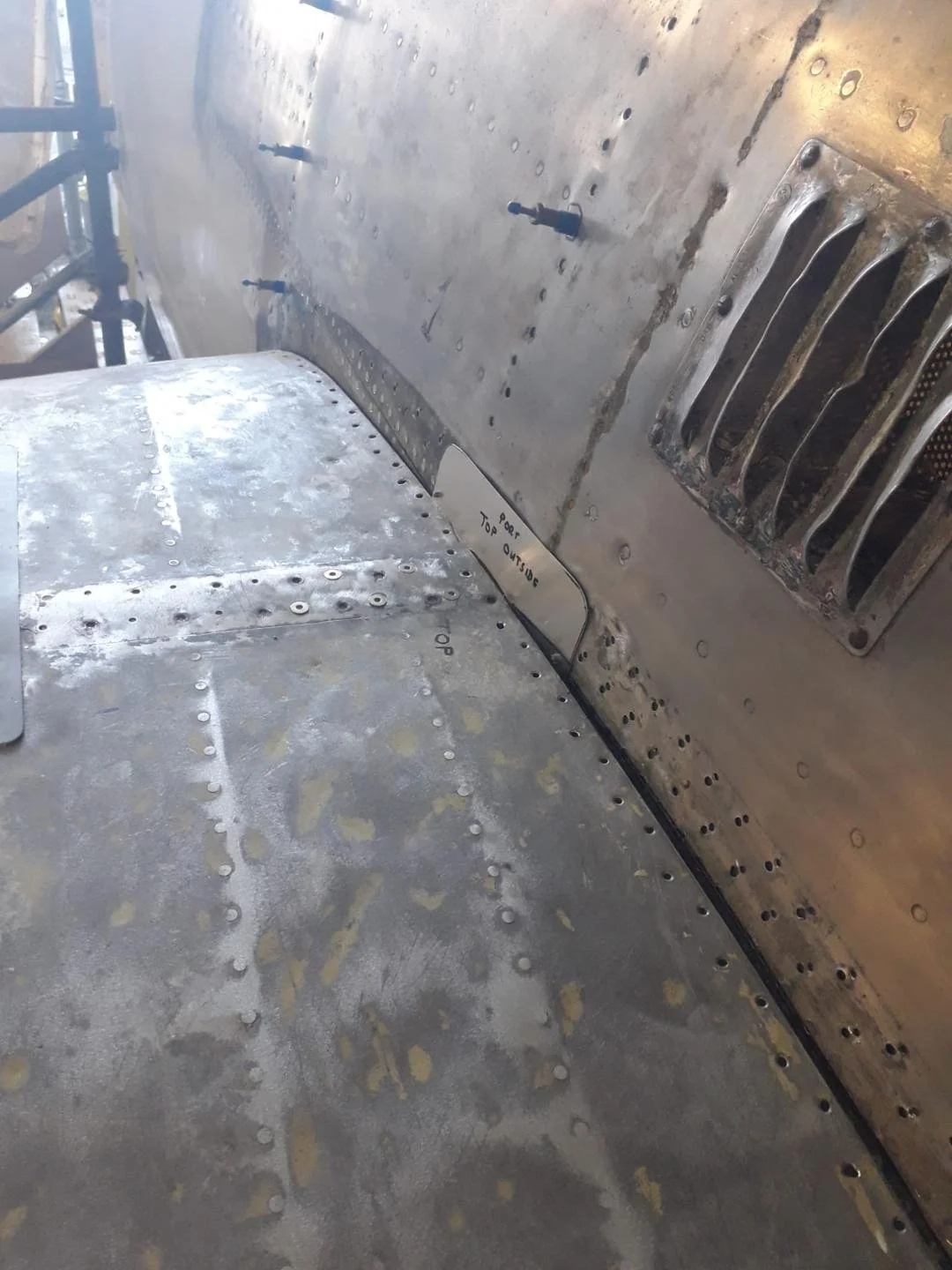
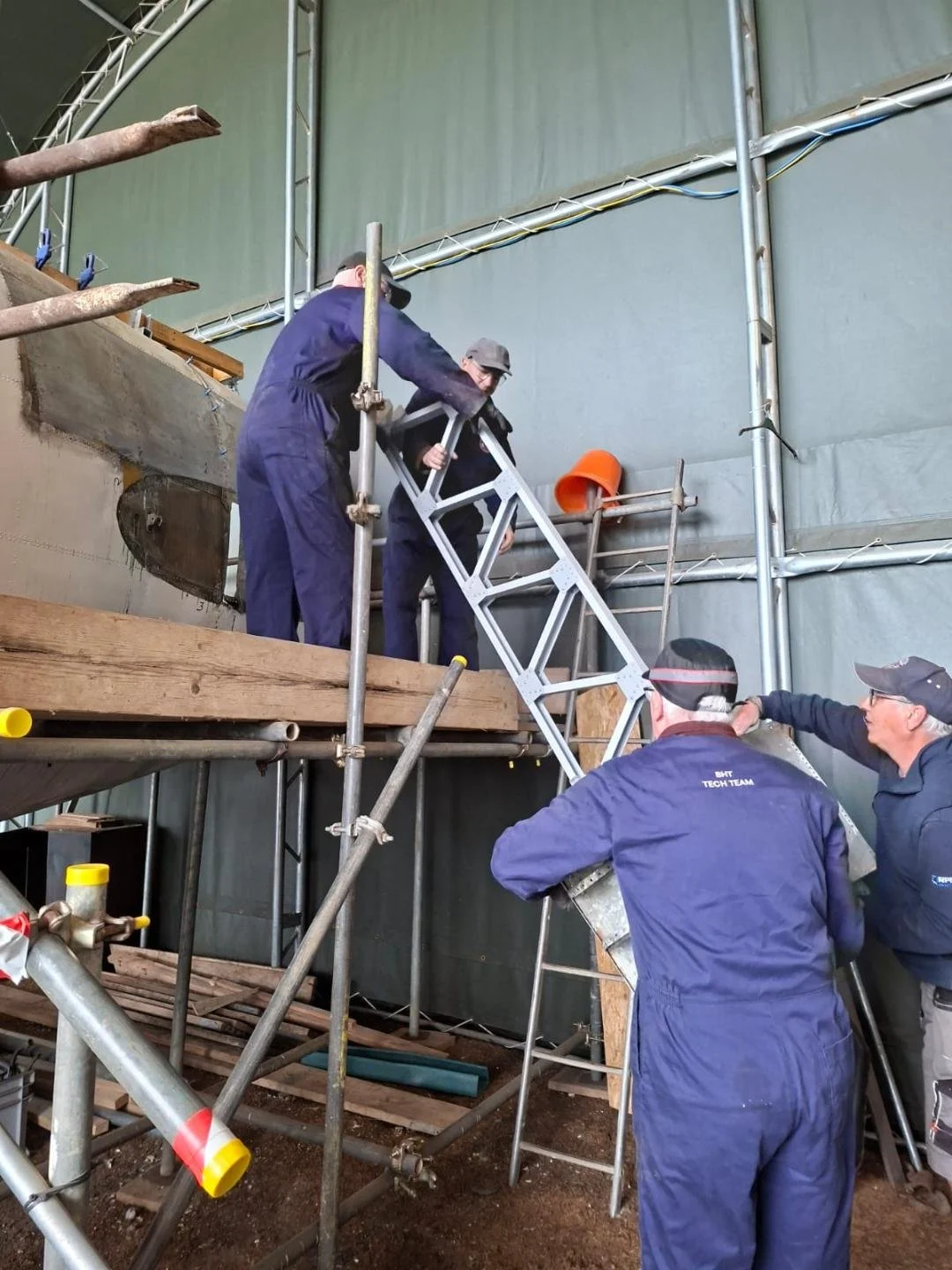
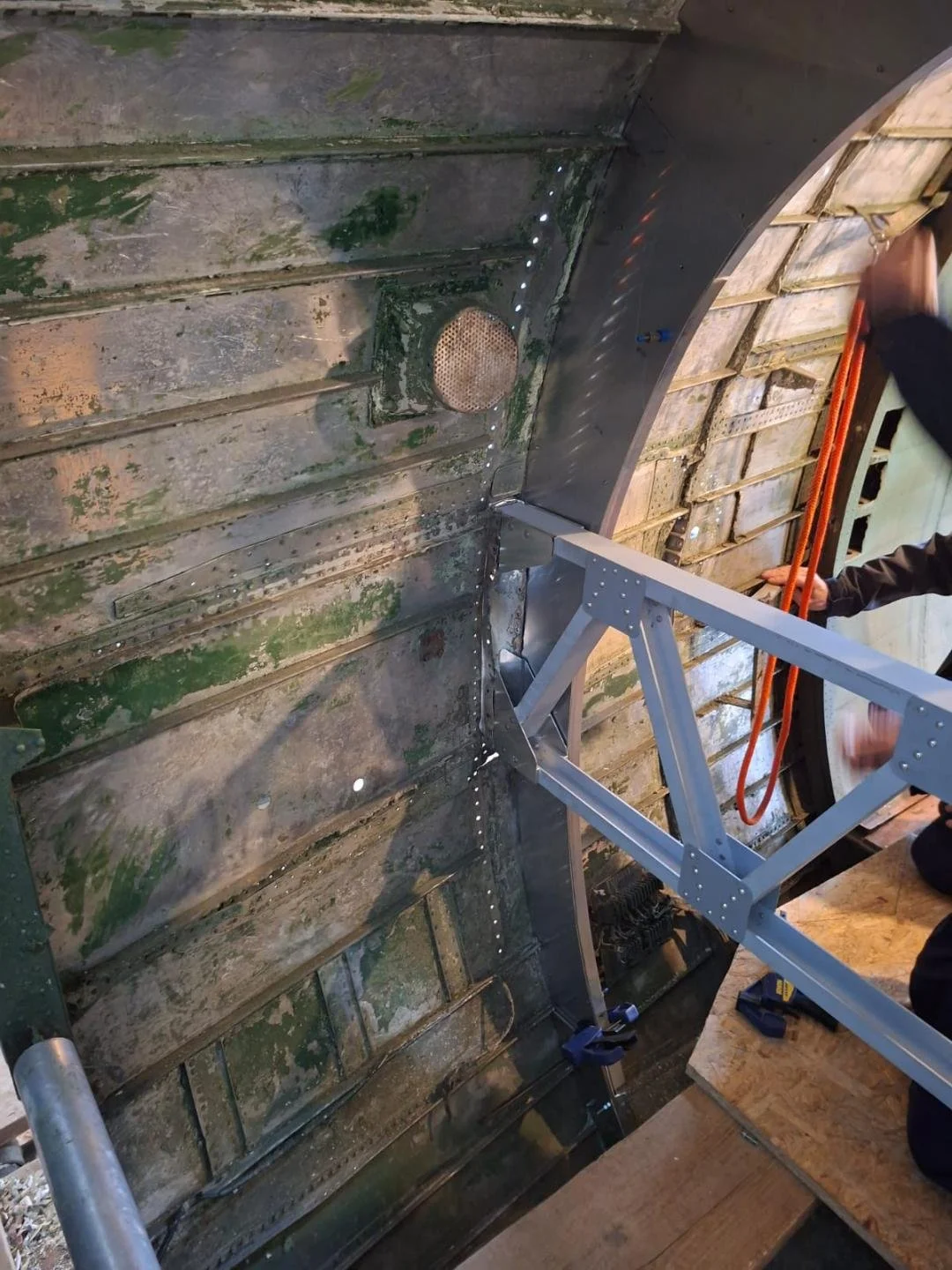
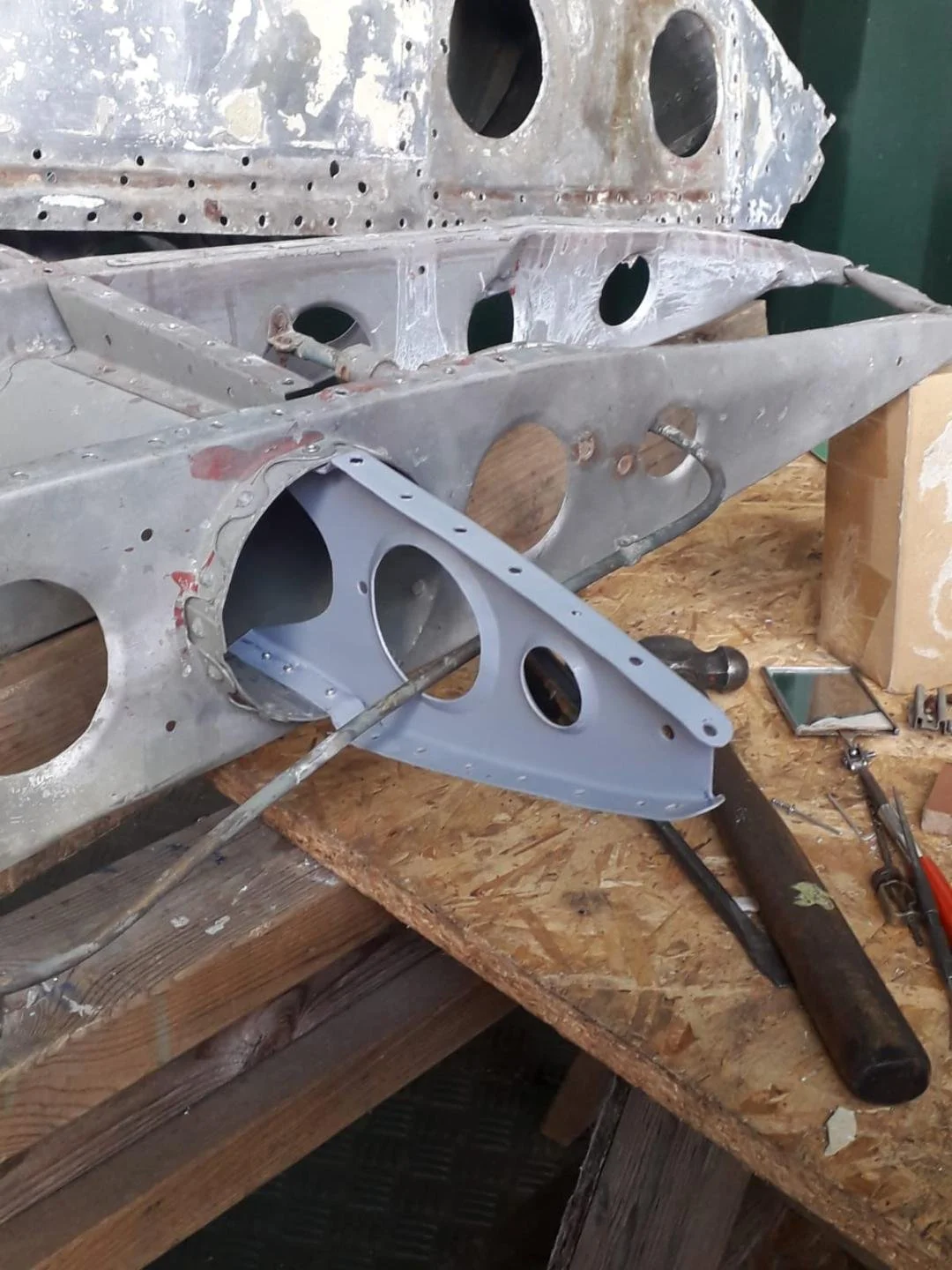
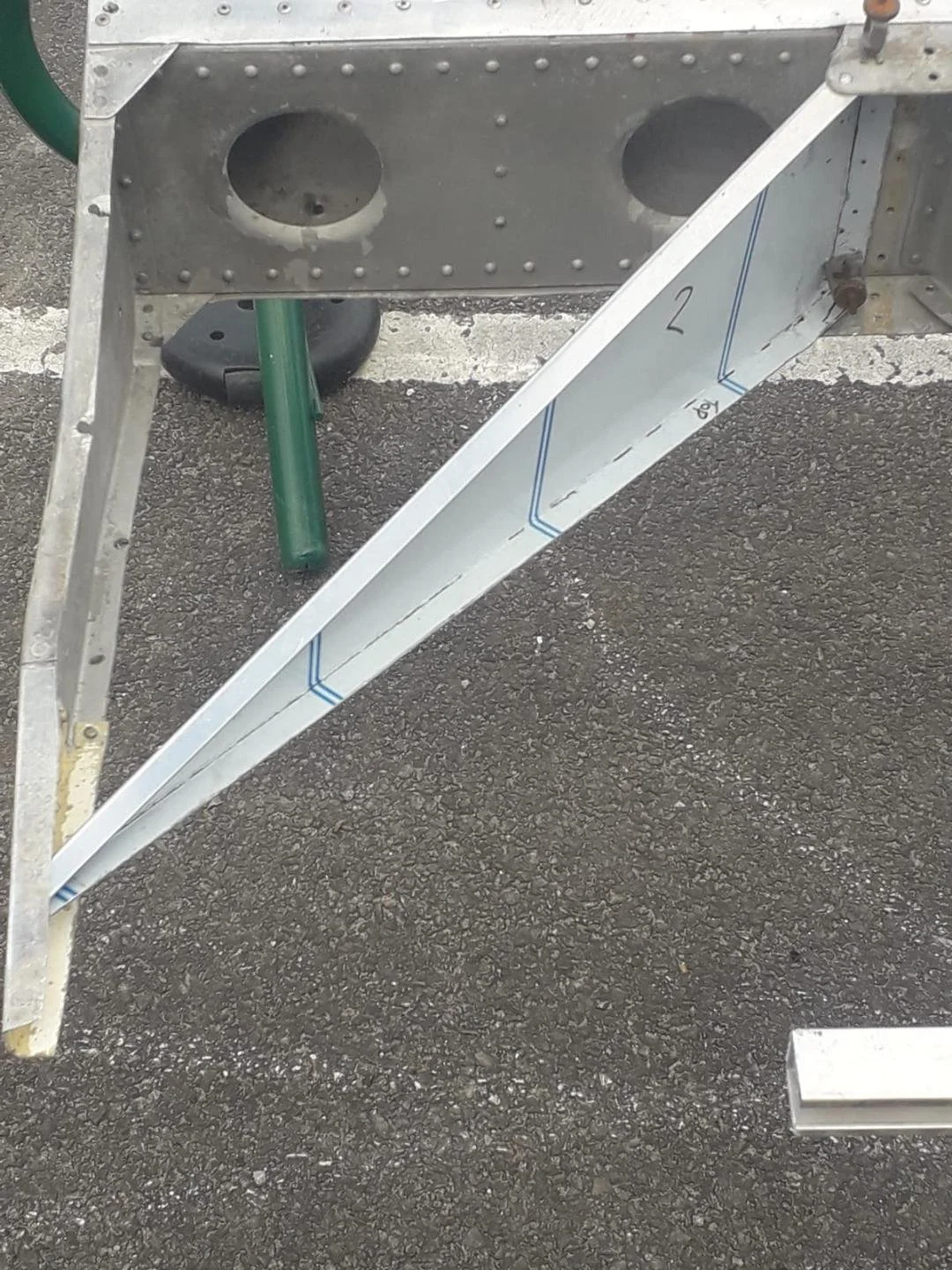
Pic 1 - newly-fabricated rear spar bracing plate
Pic 2 - exterior preparation of rear spar area
Pic 3 - more new bracing plates on the starboard rear fuselage
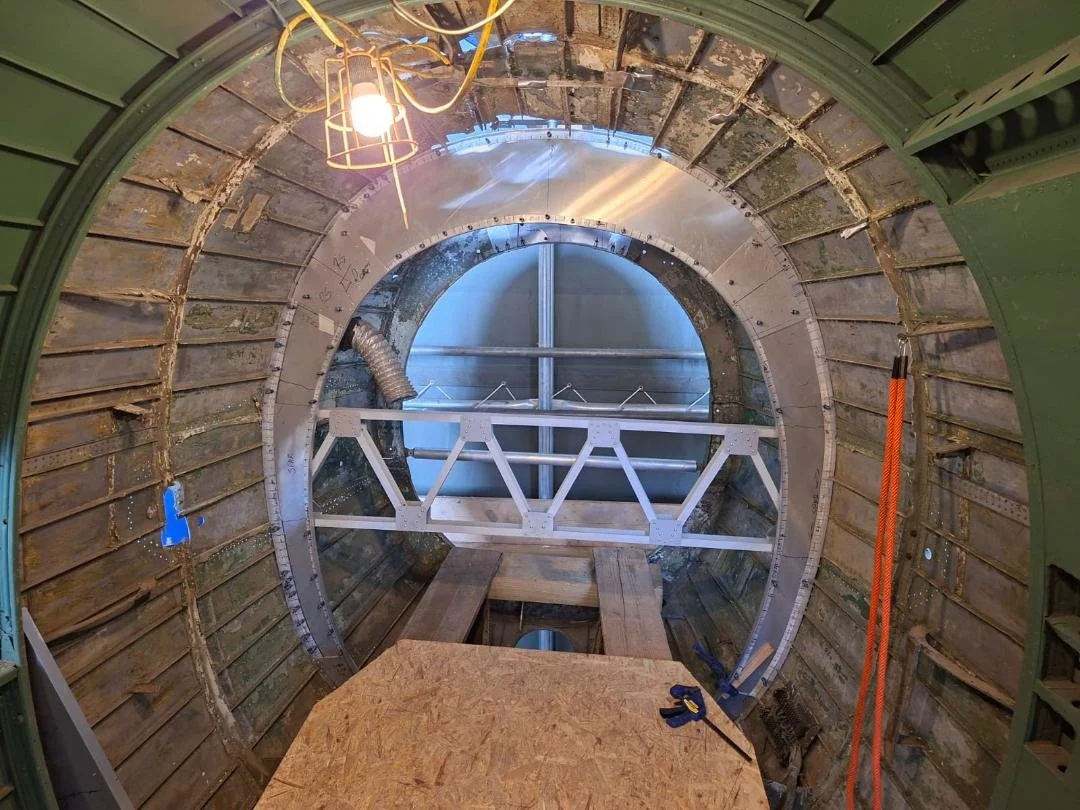
Pic 4 - view of the rear fuselage showing reconstruction progress
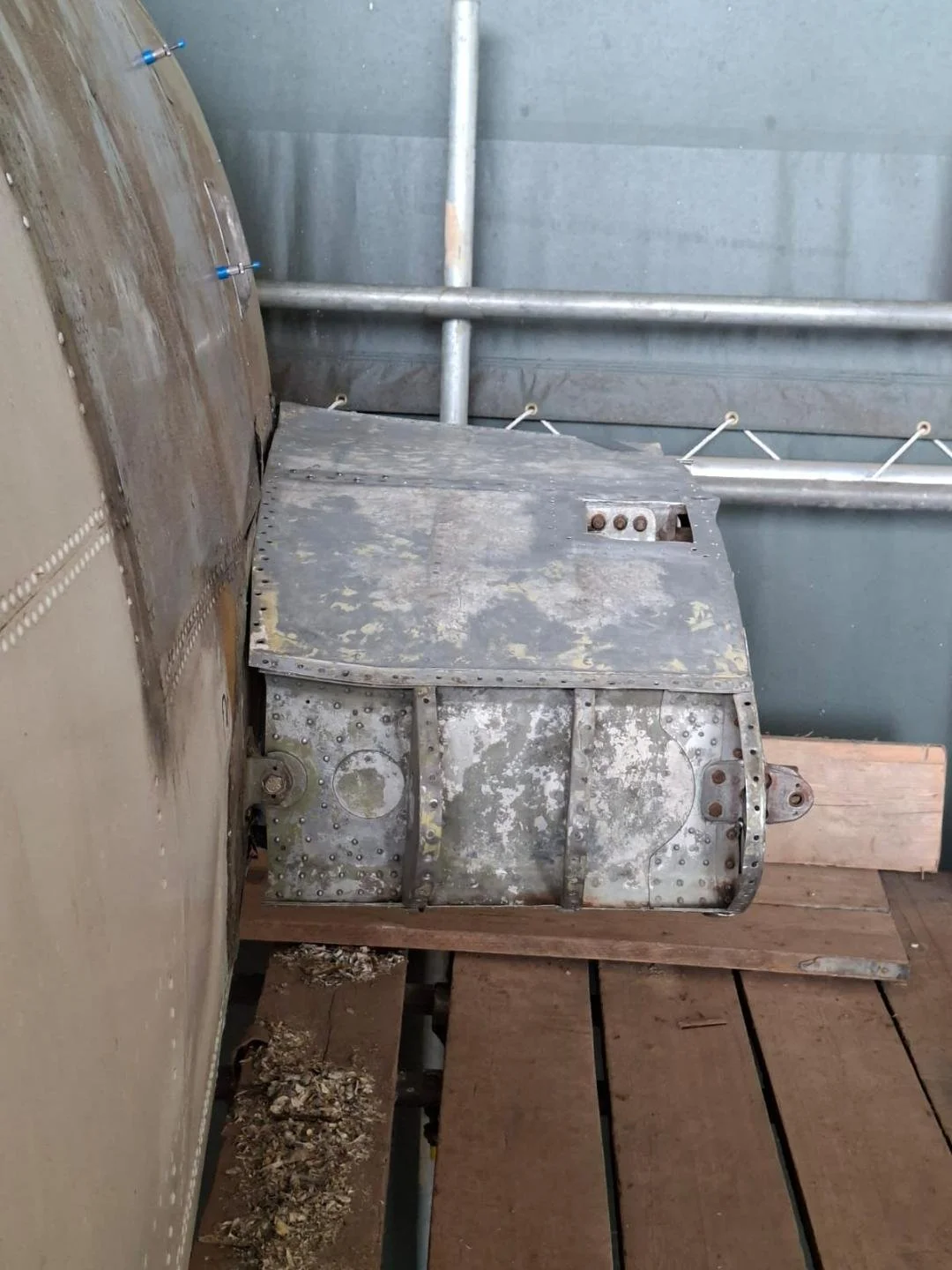
Pic 5 - trial-fit of the port tailplane
Pic 6 - another view of the port tailplane trial-fit
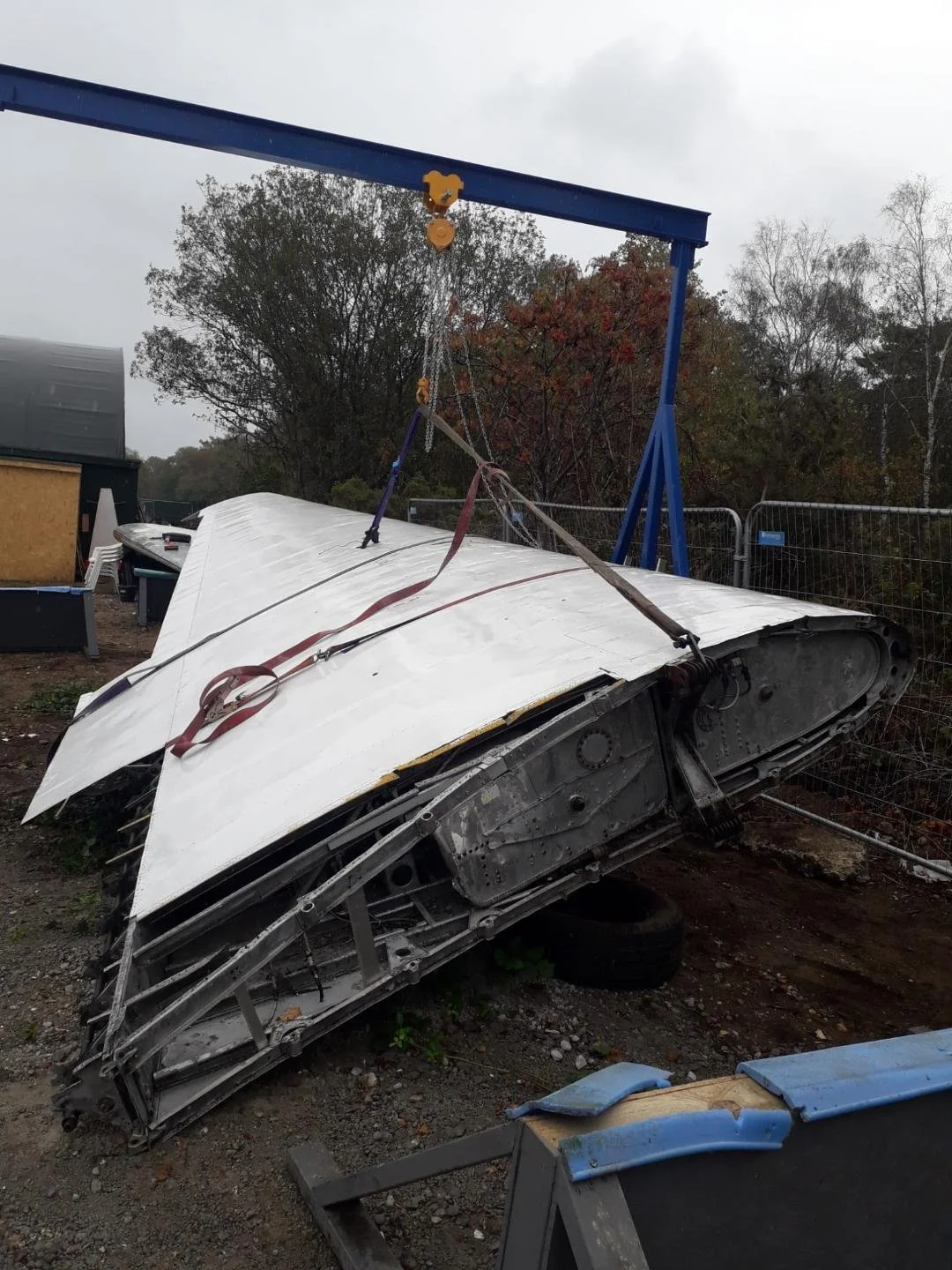
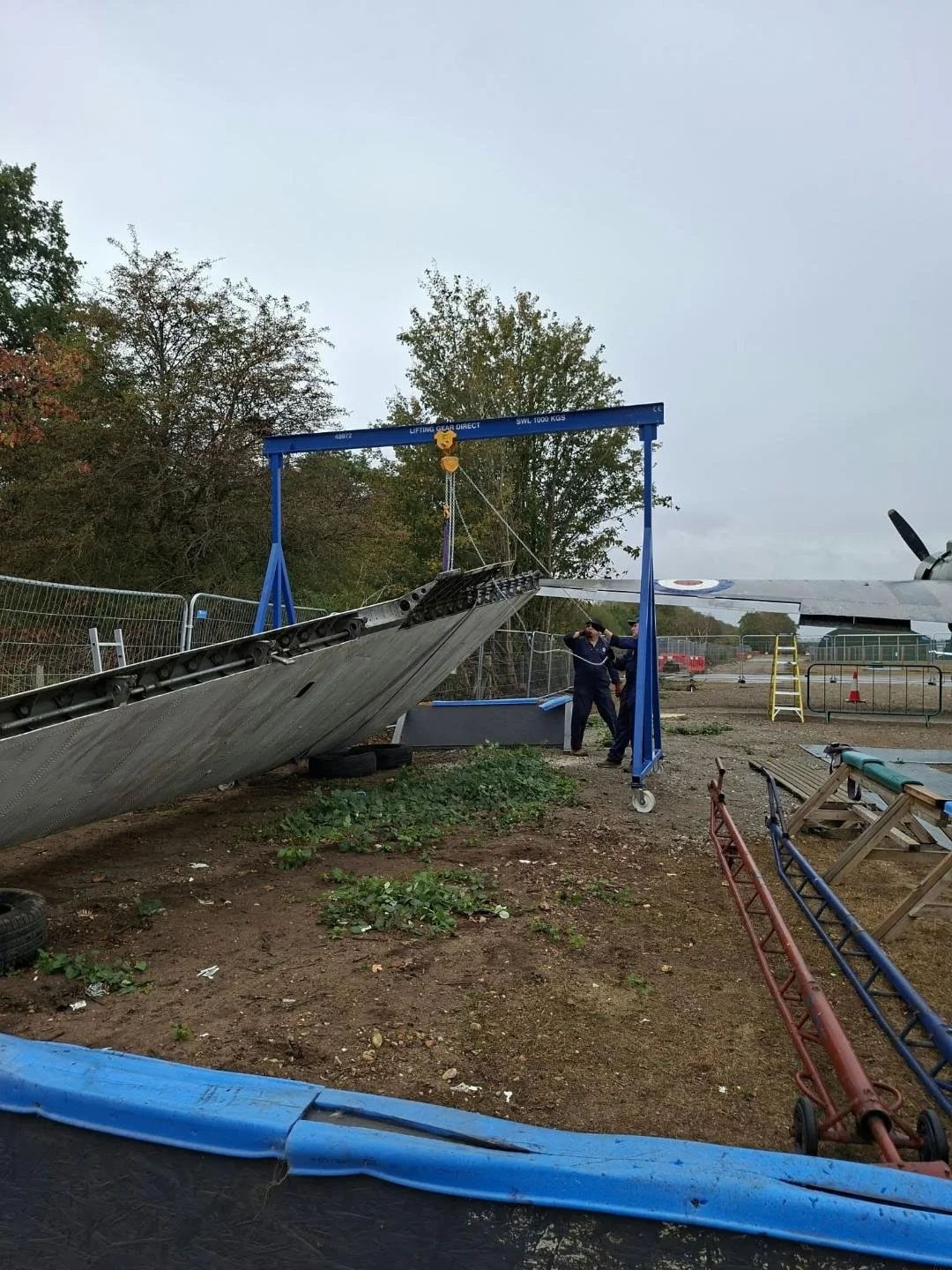
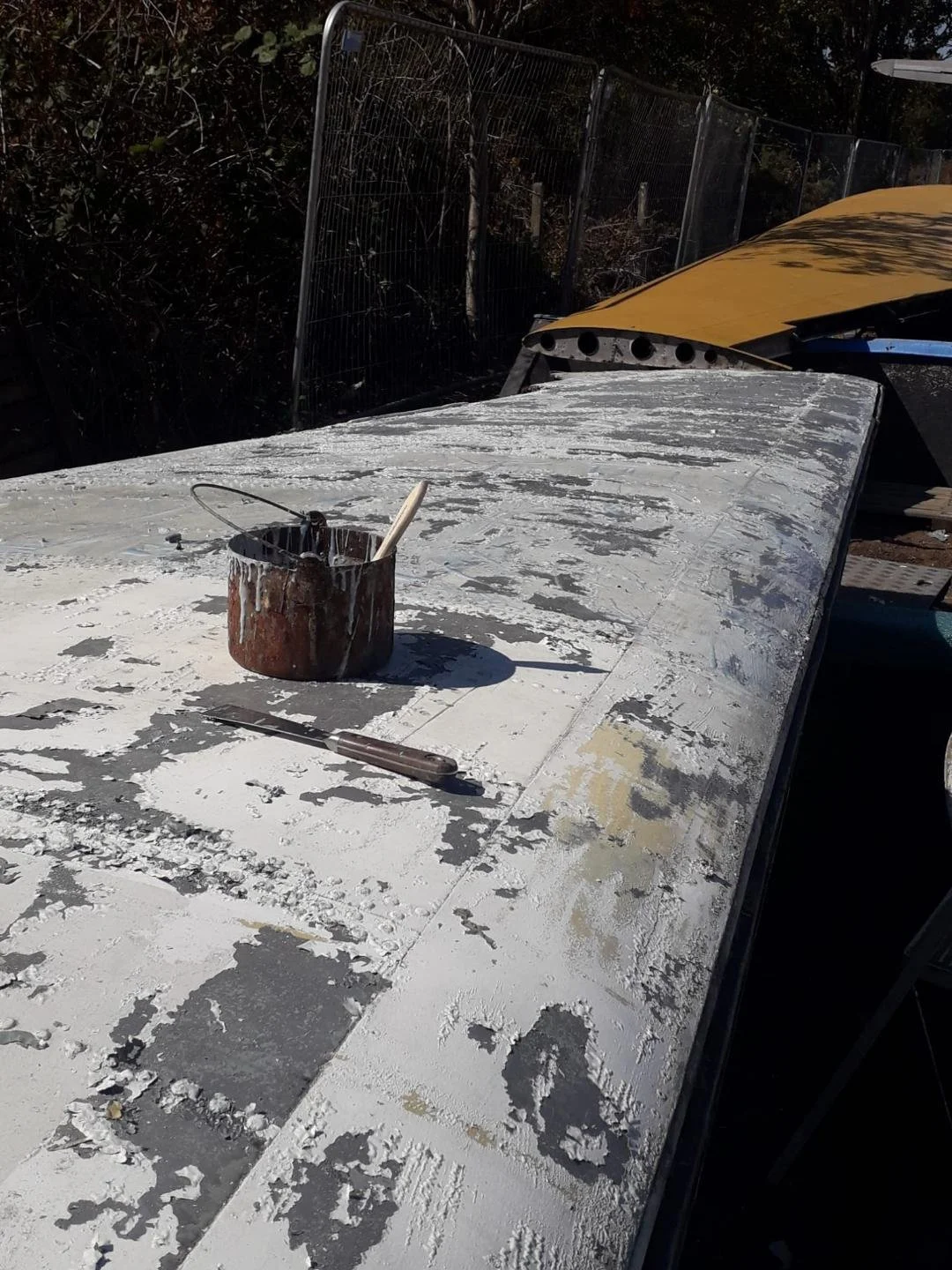
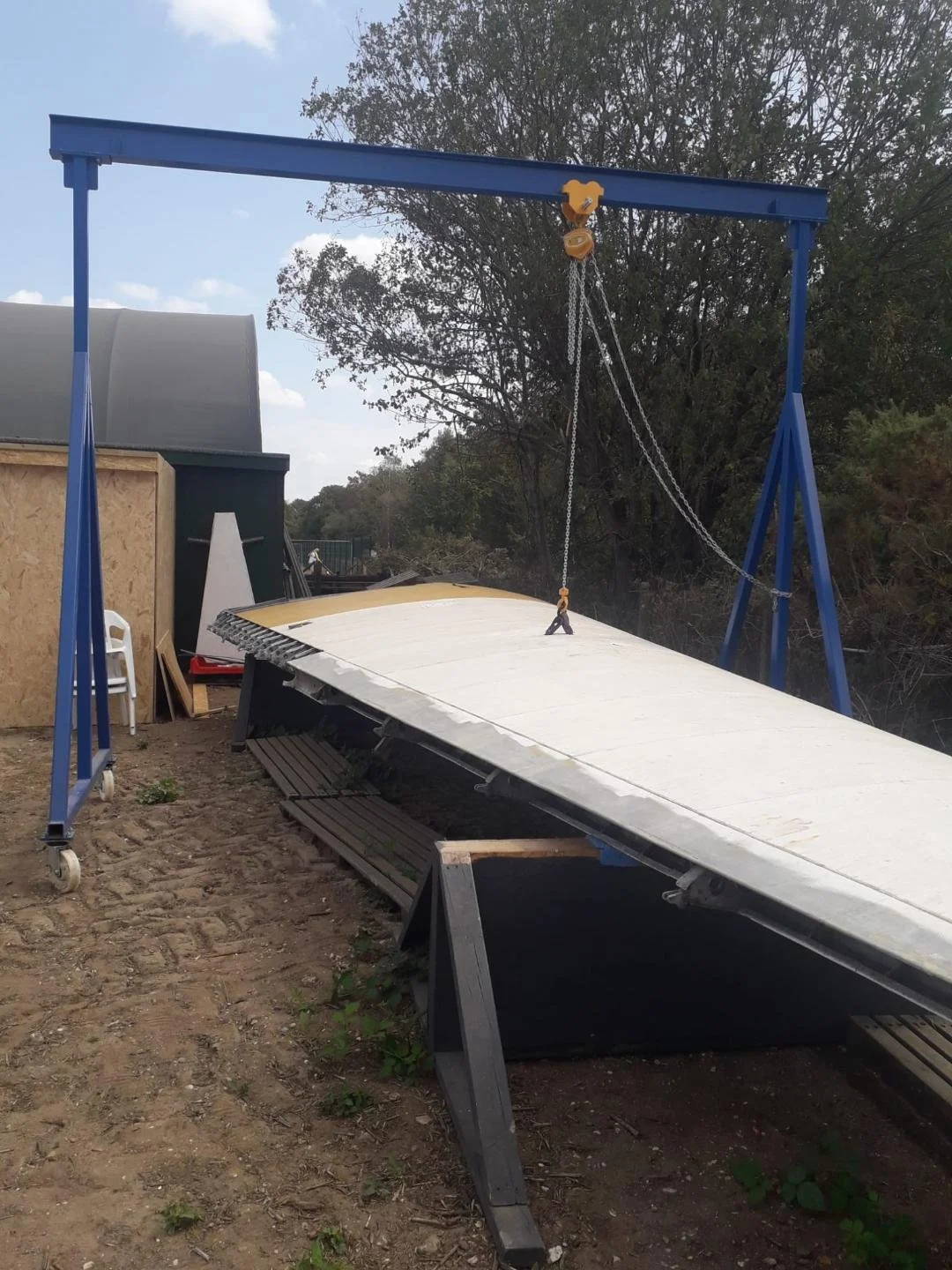
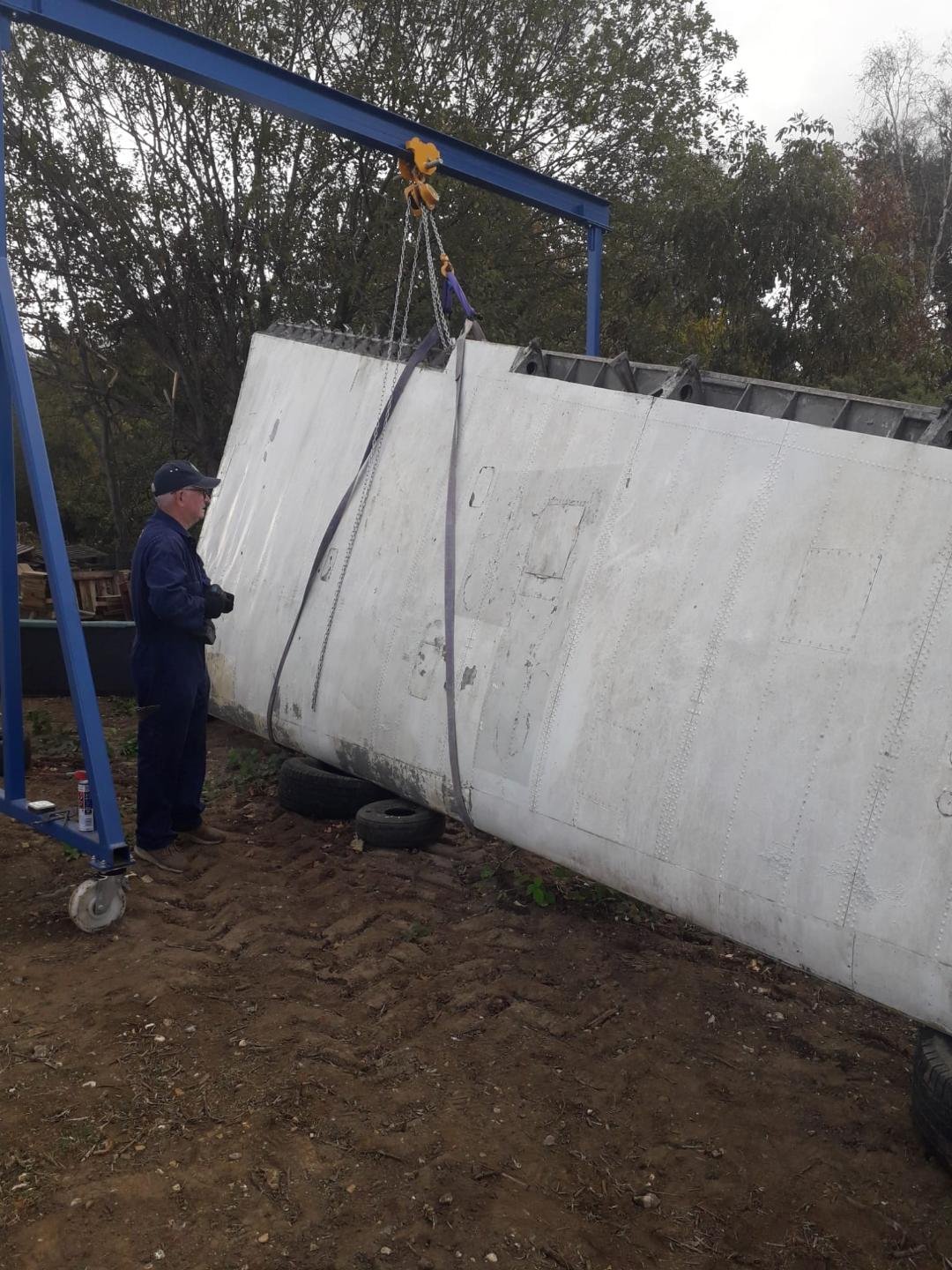
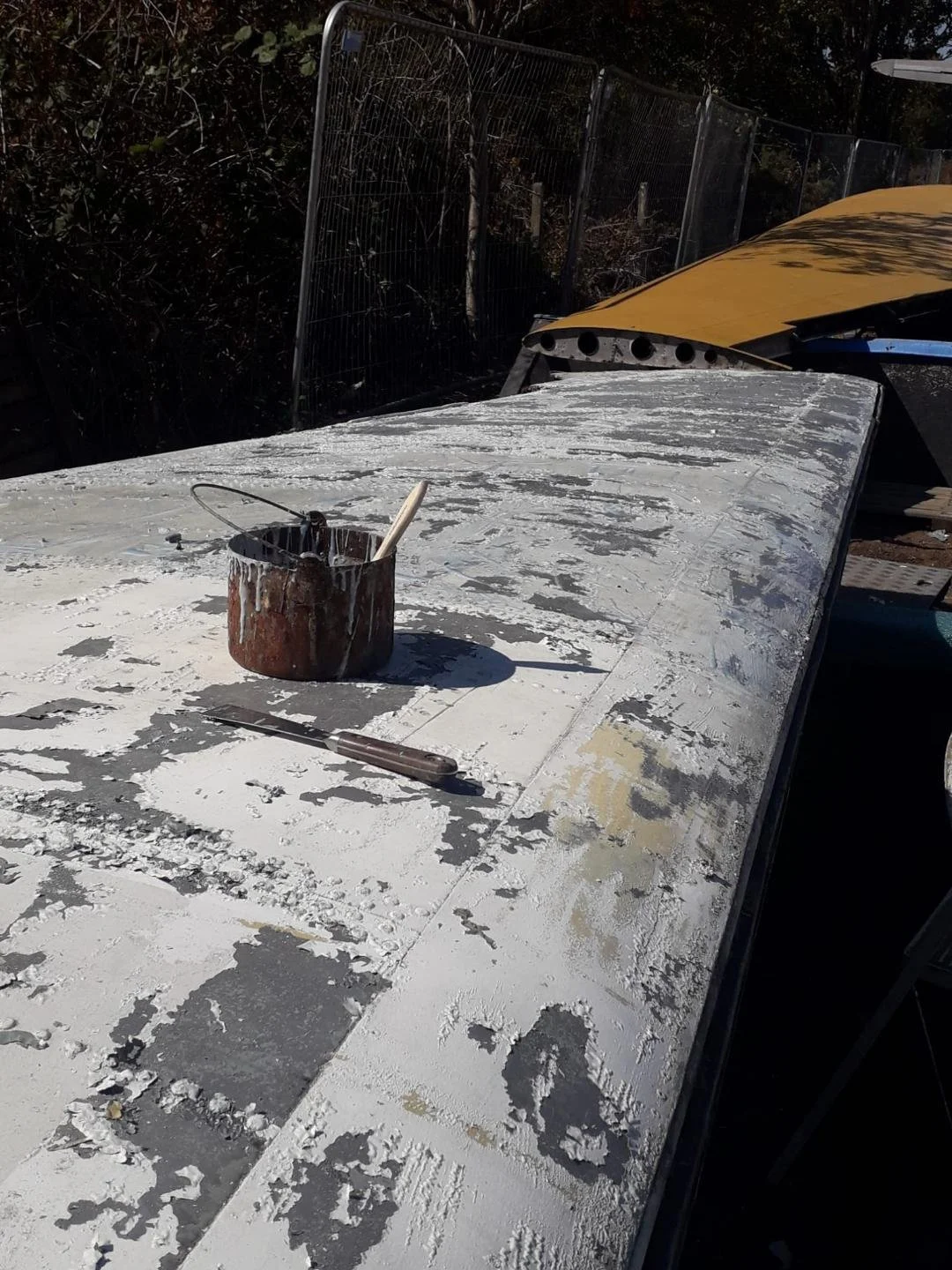
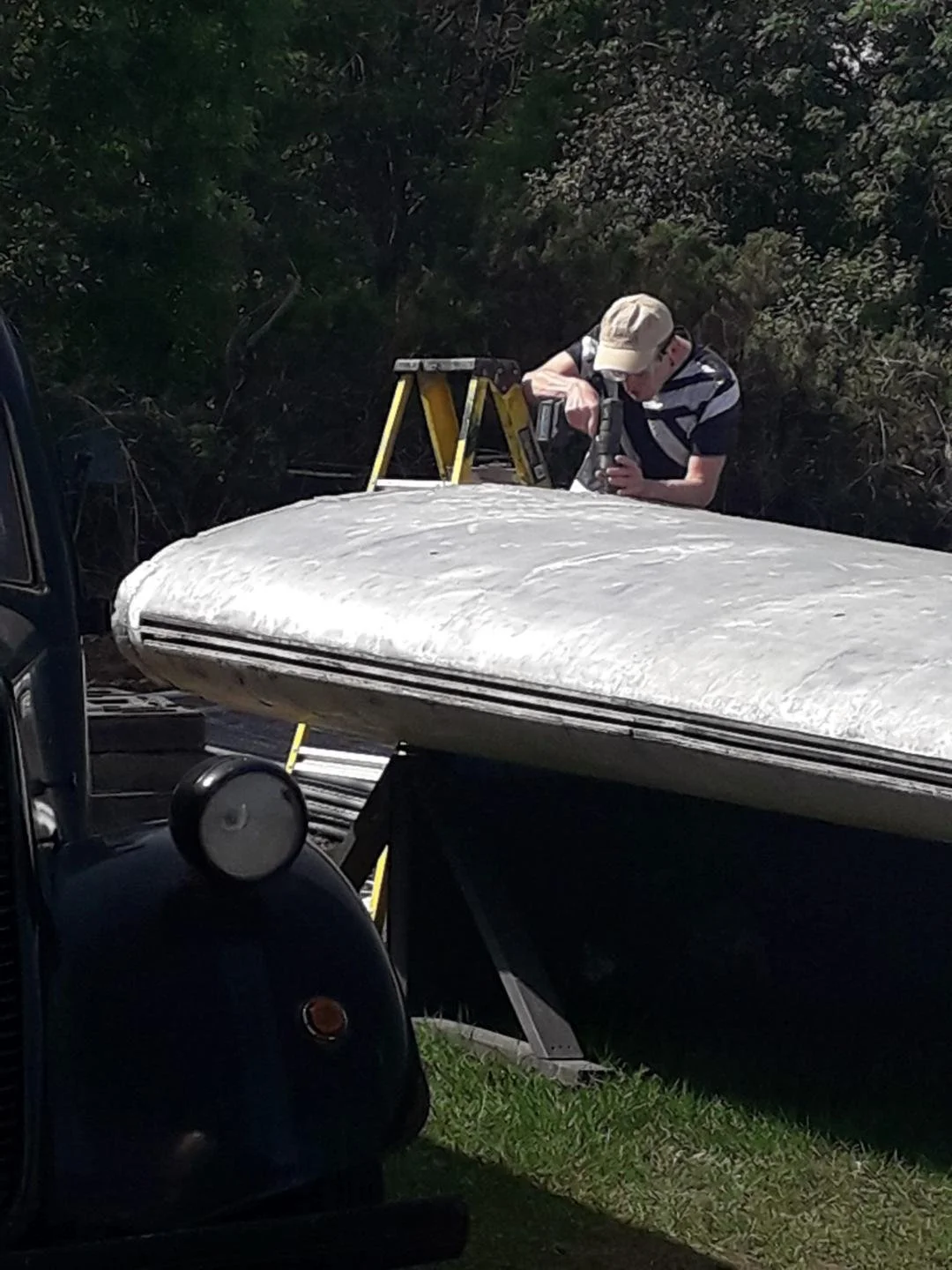
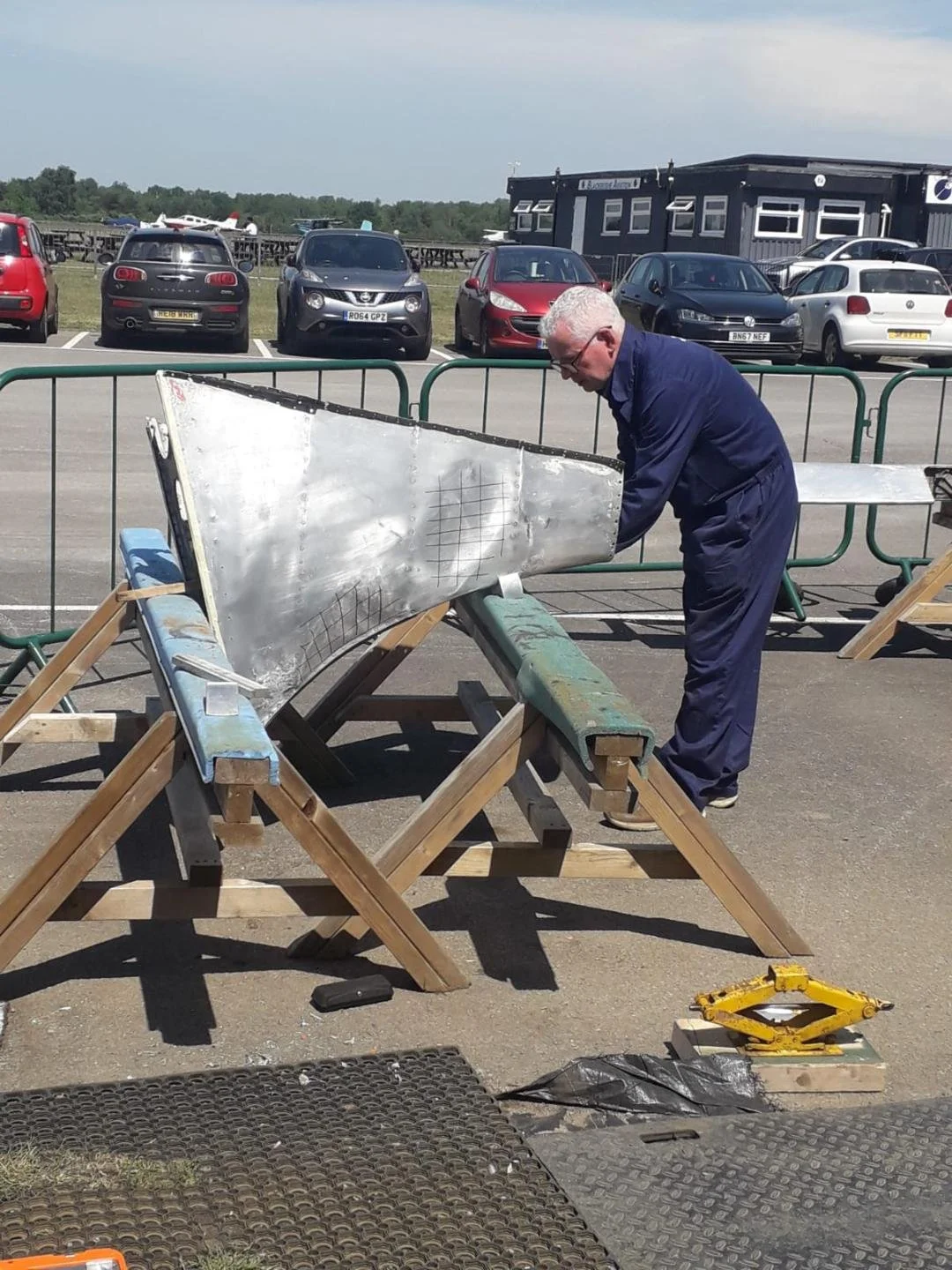
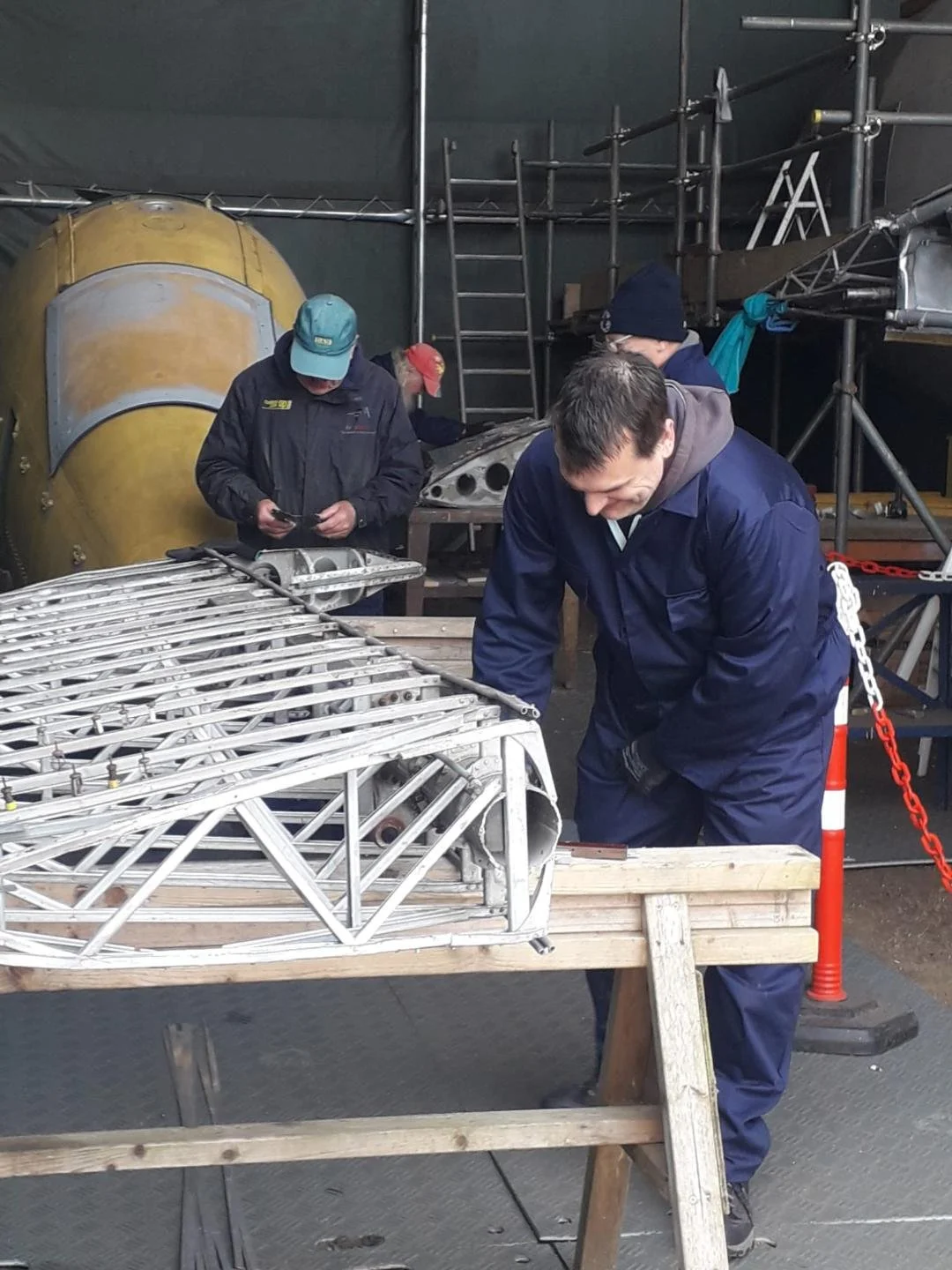
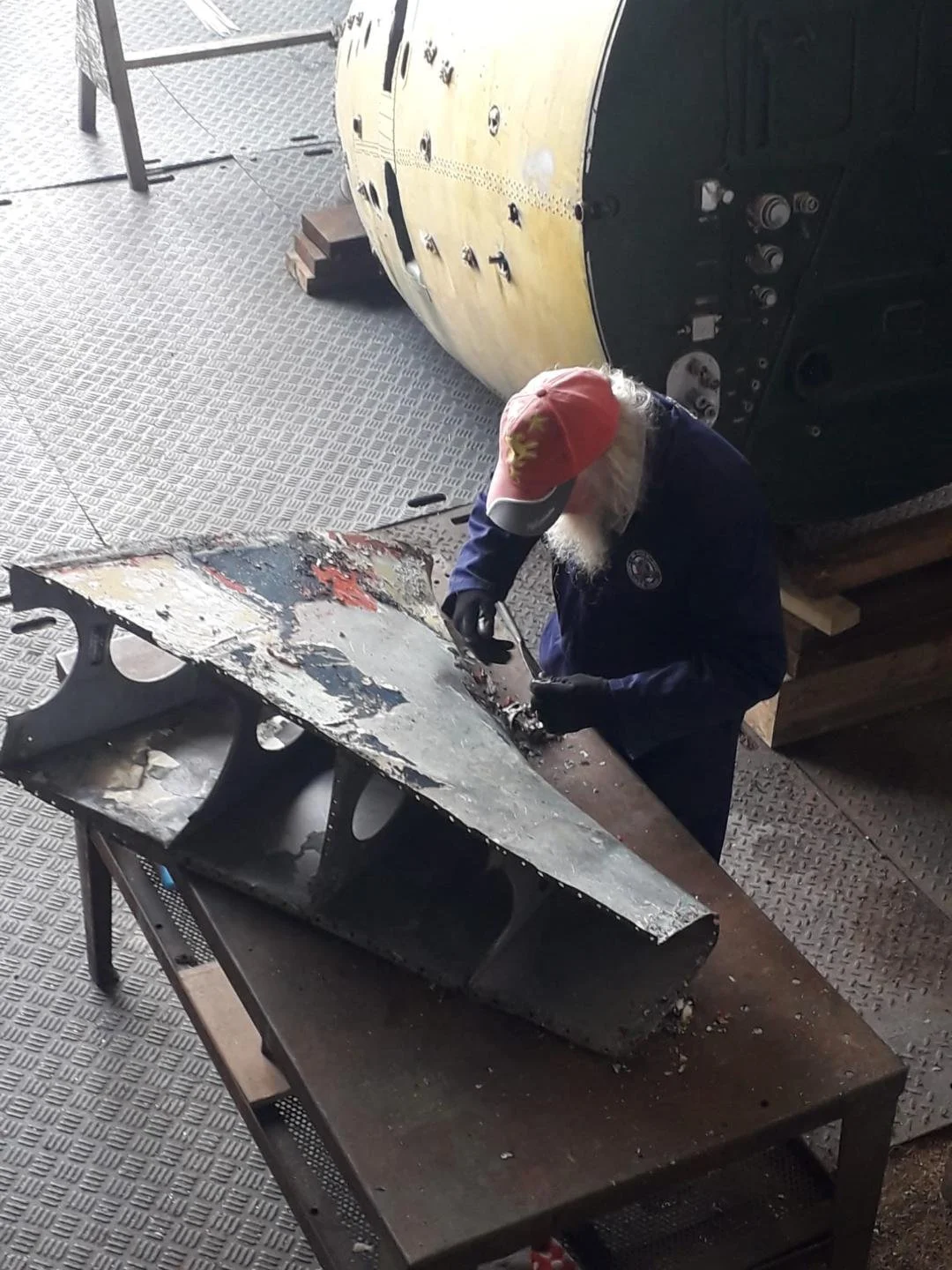
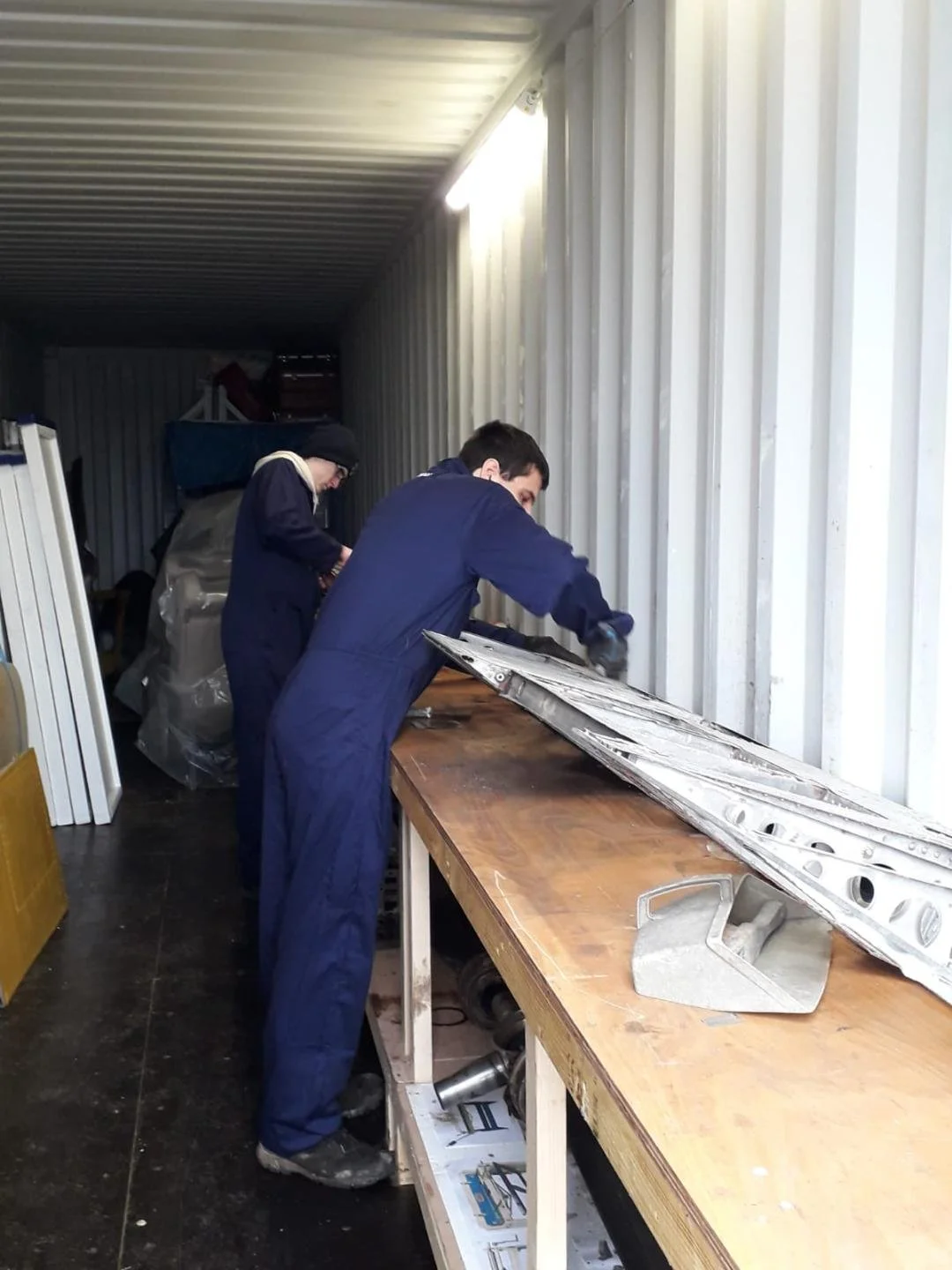
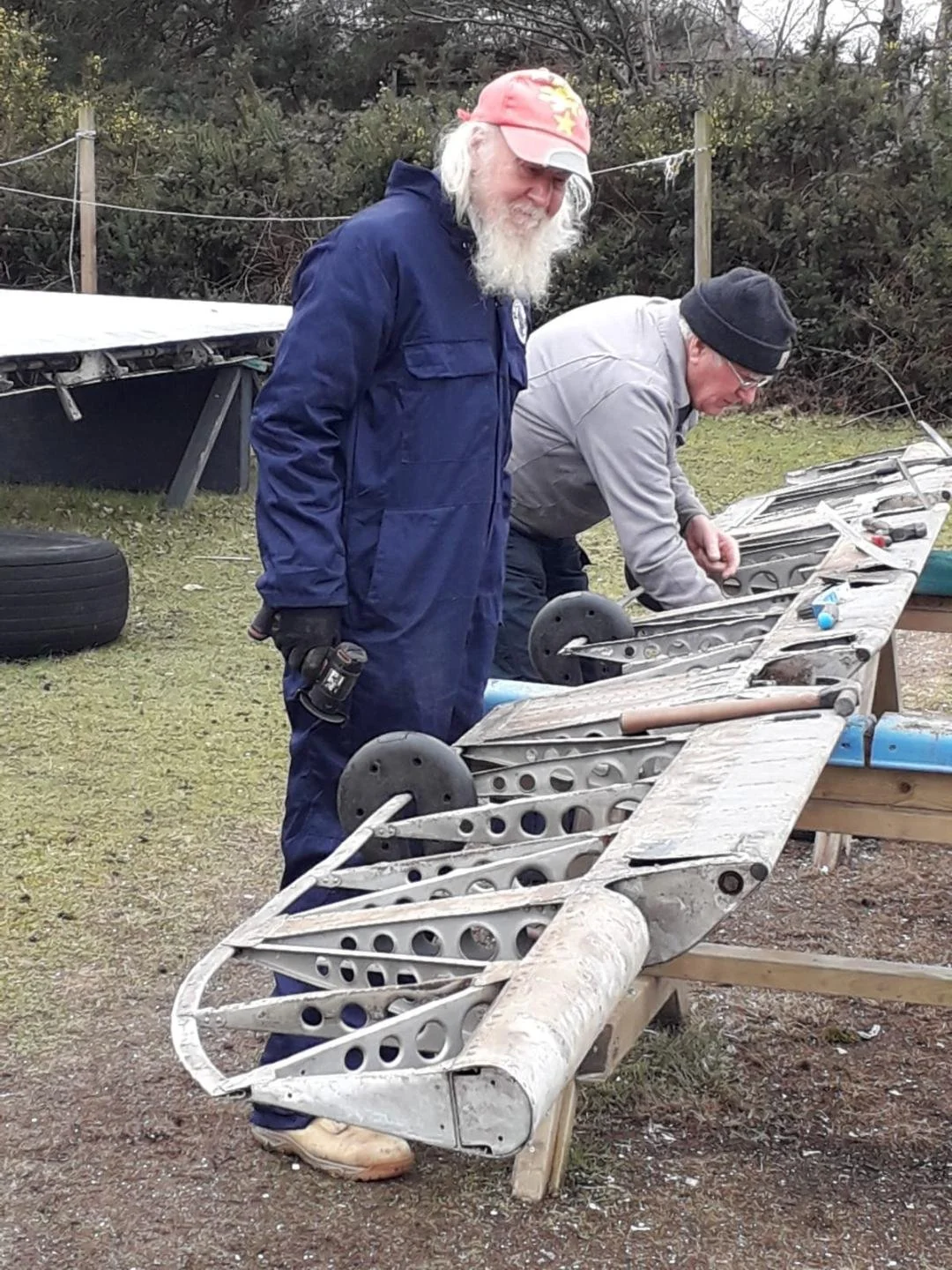
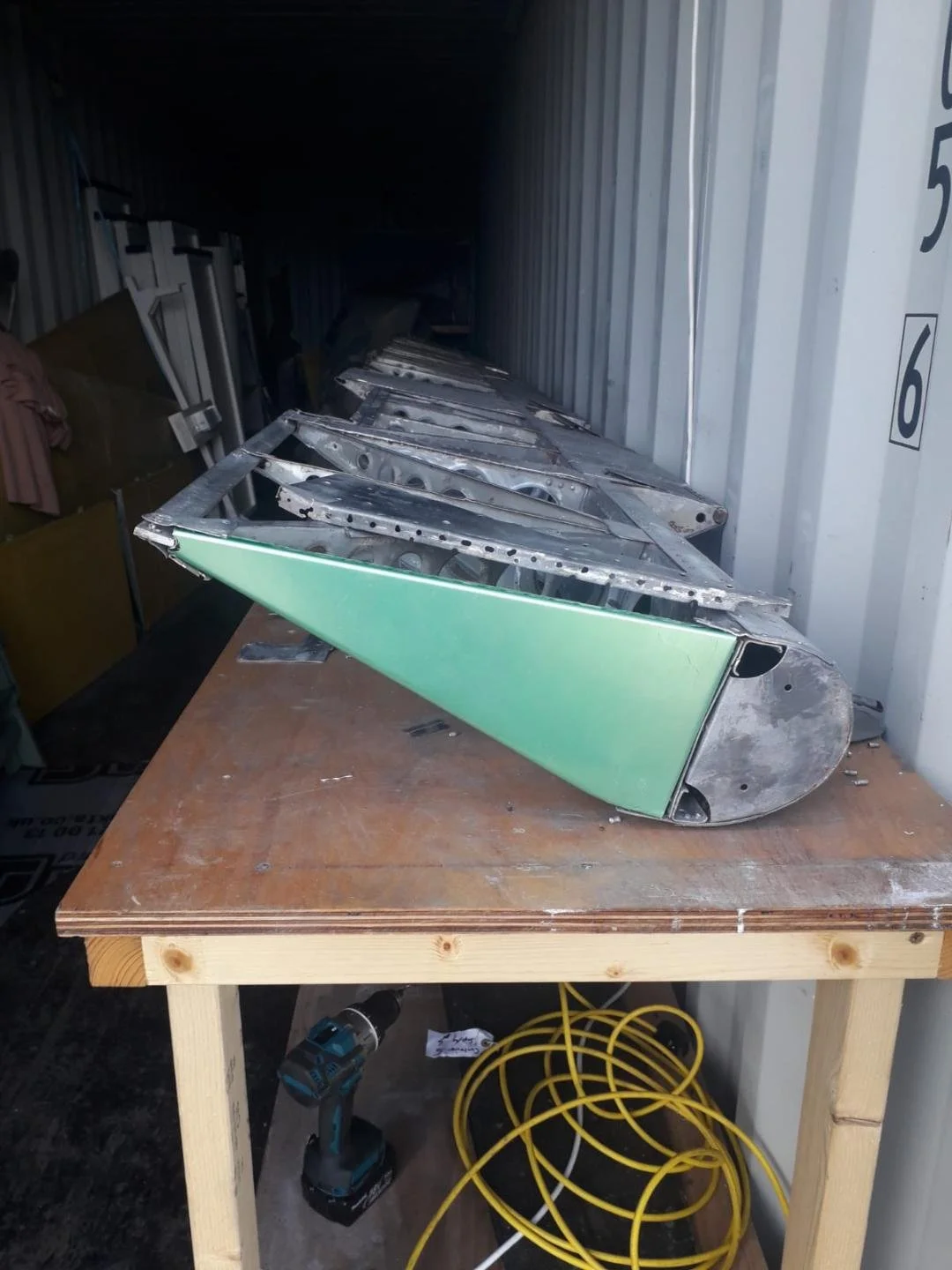
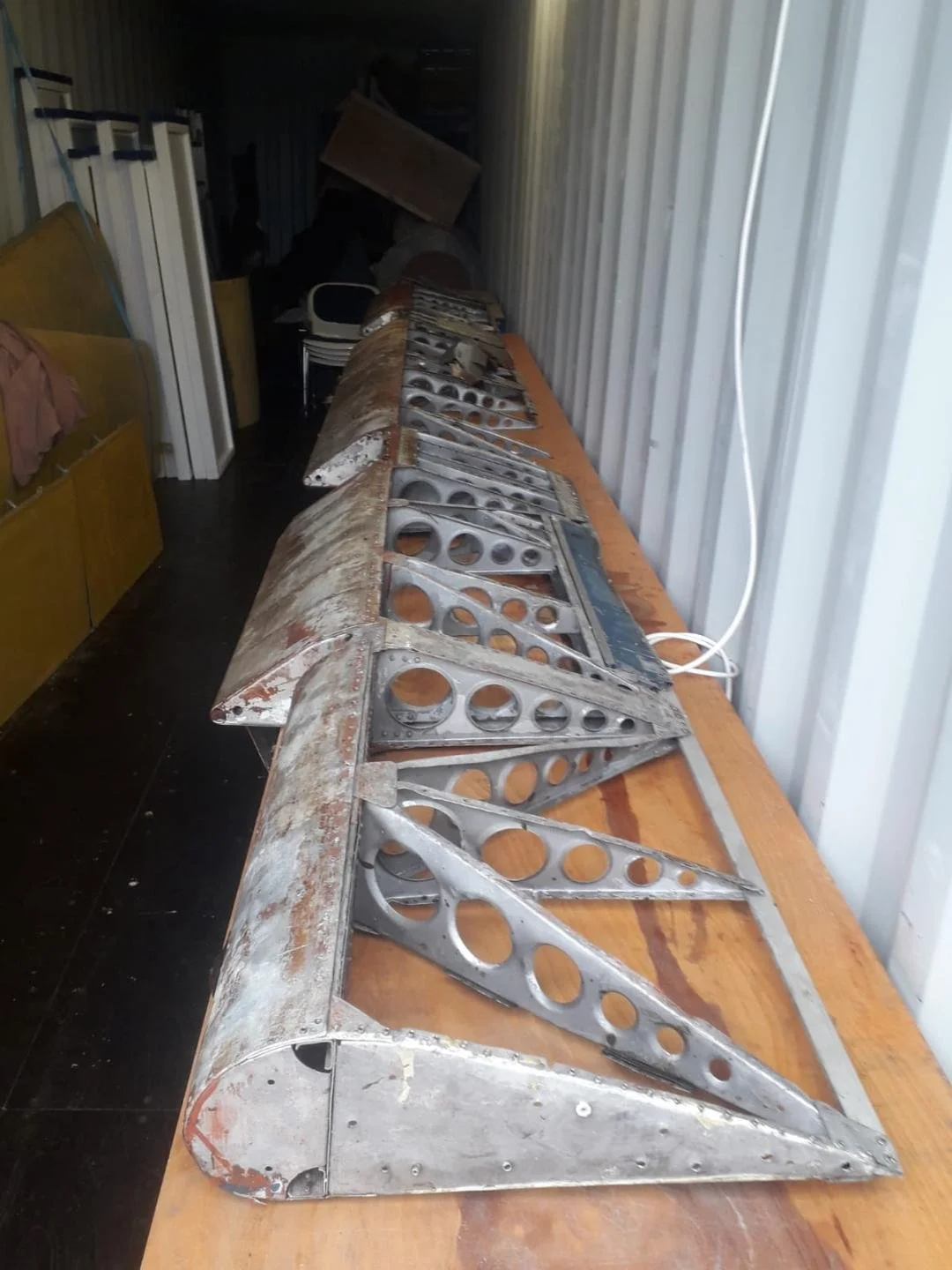
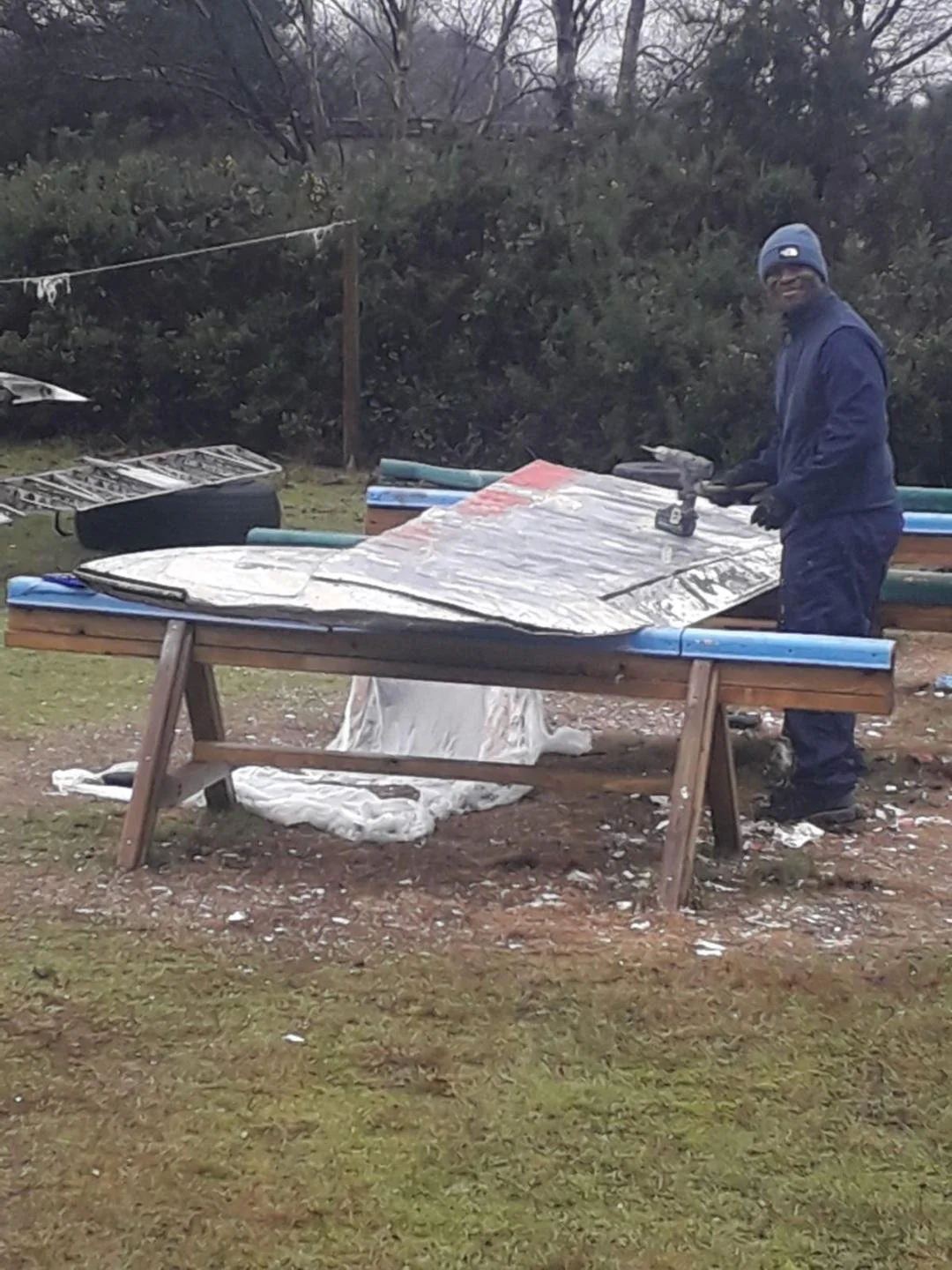
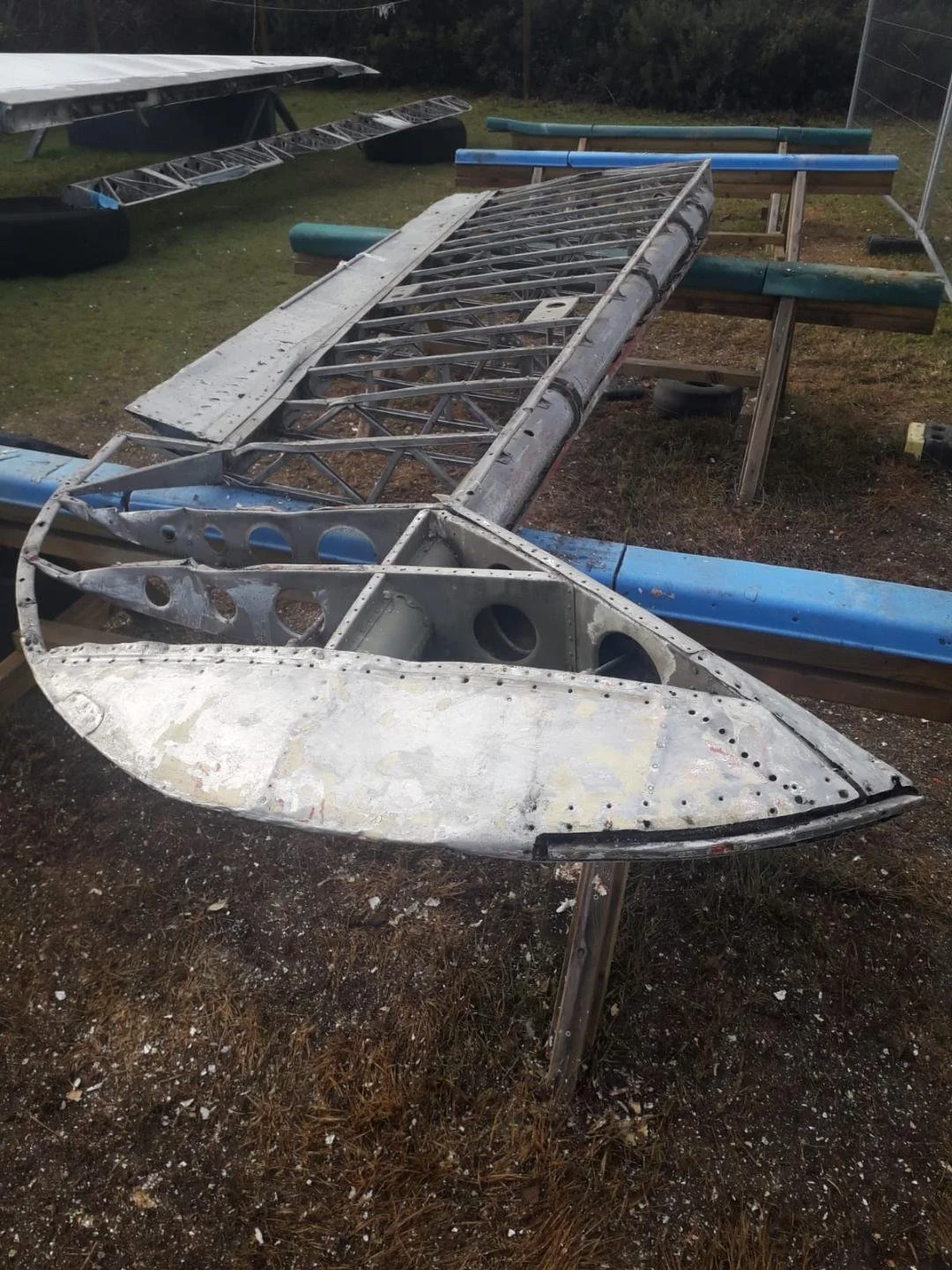
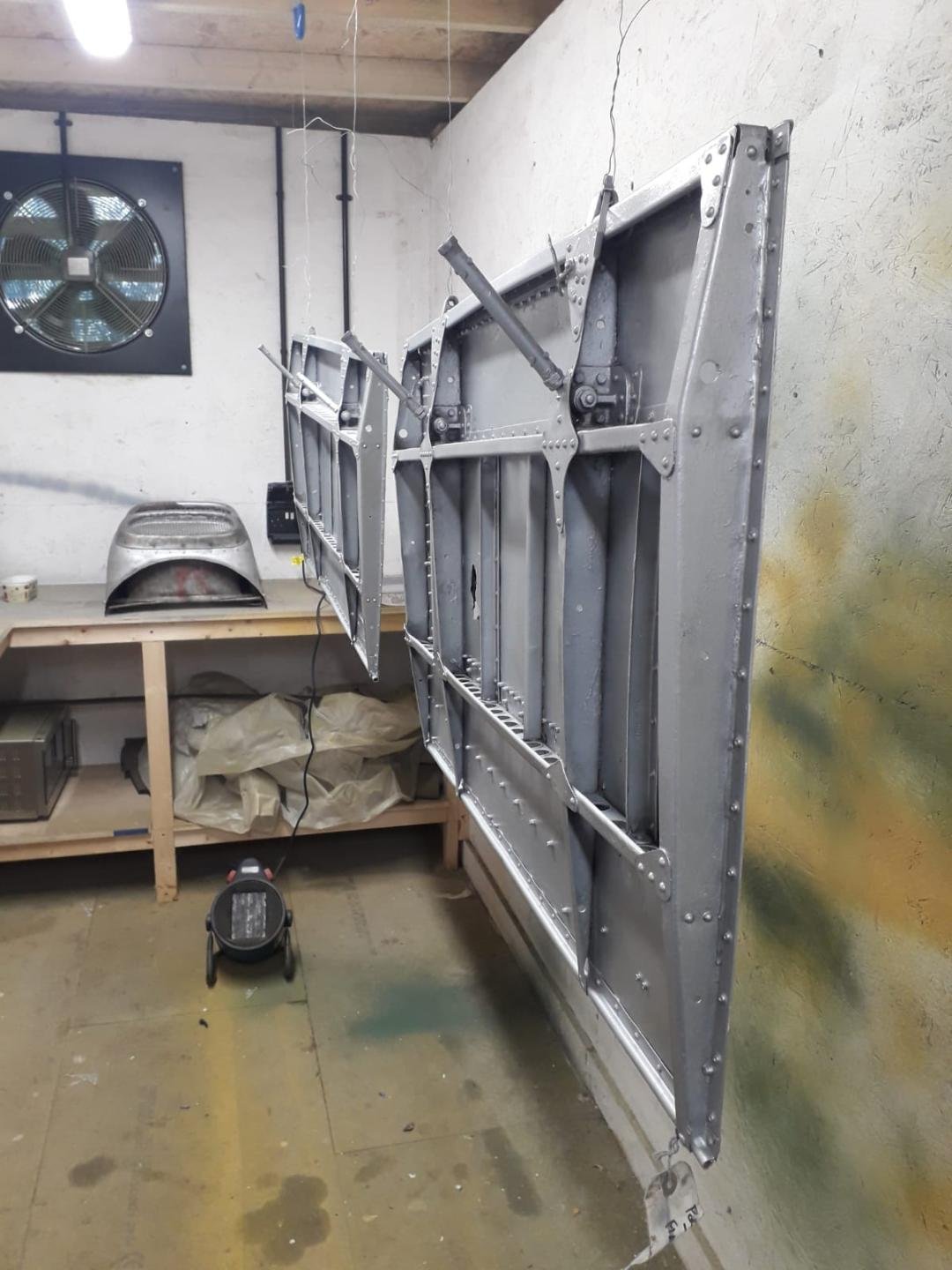
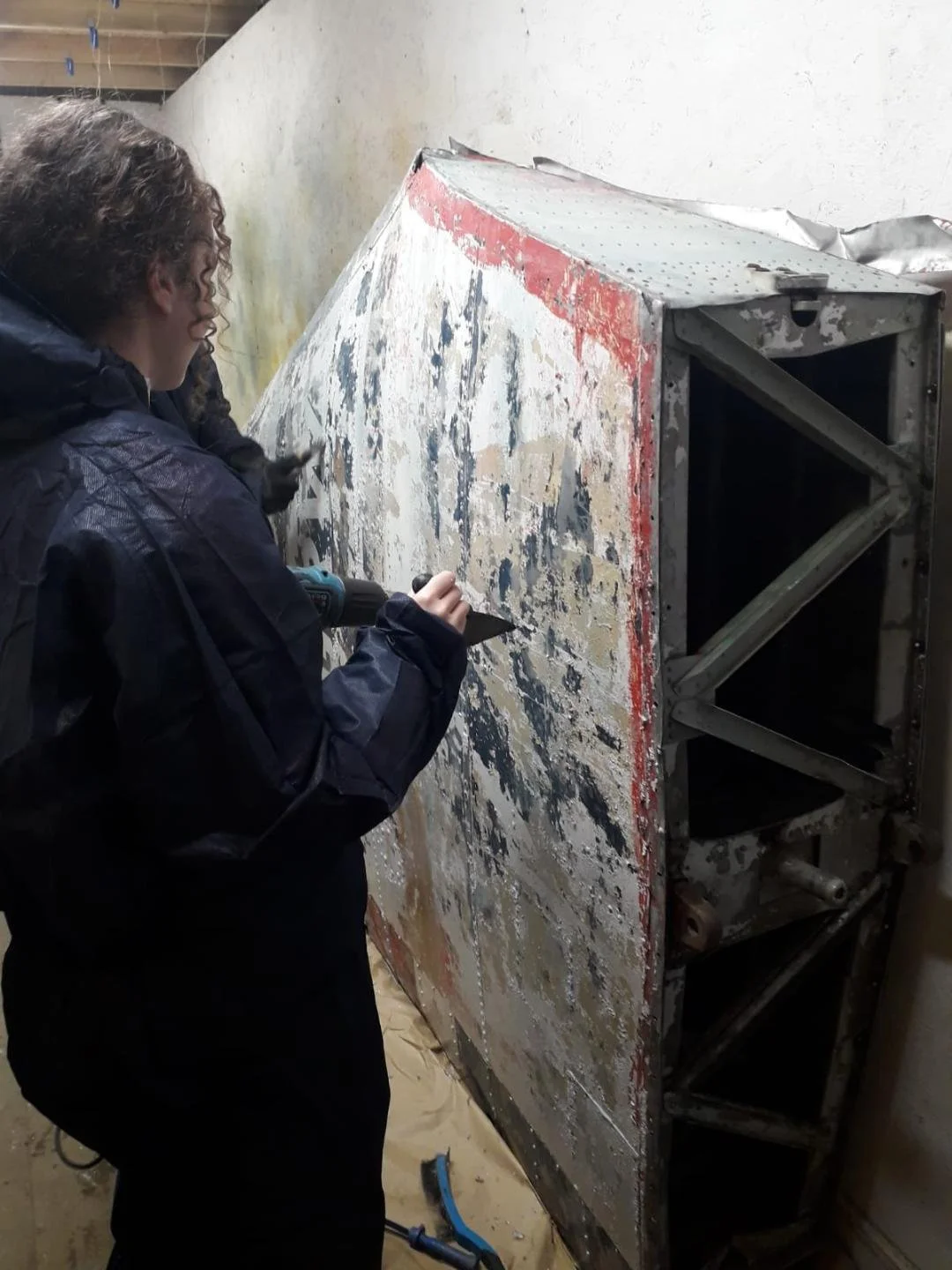
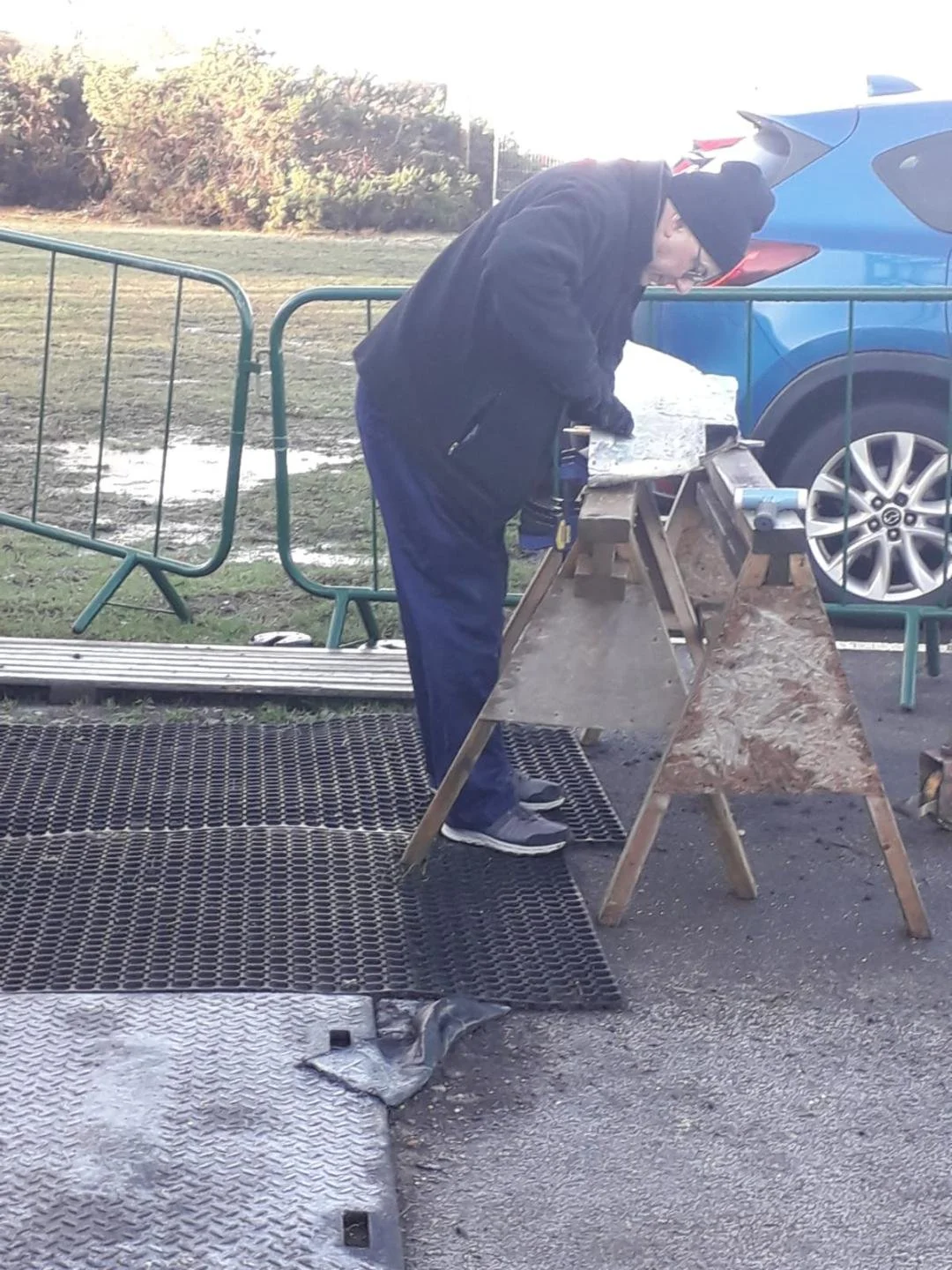
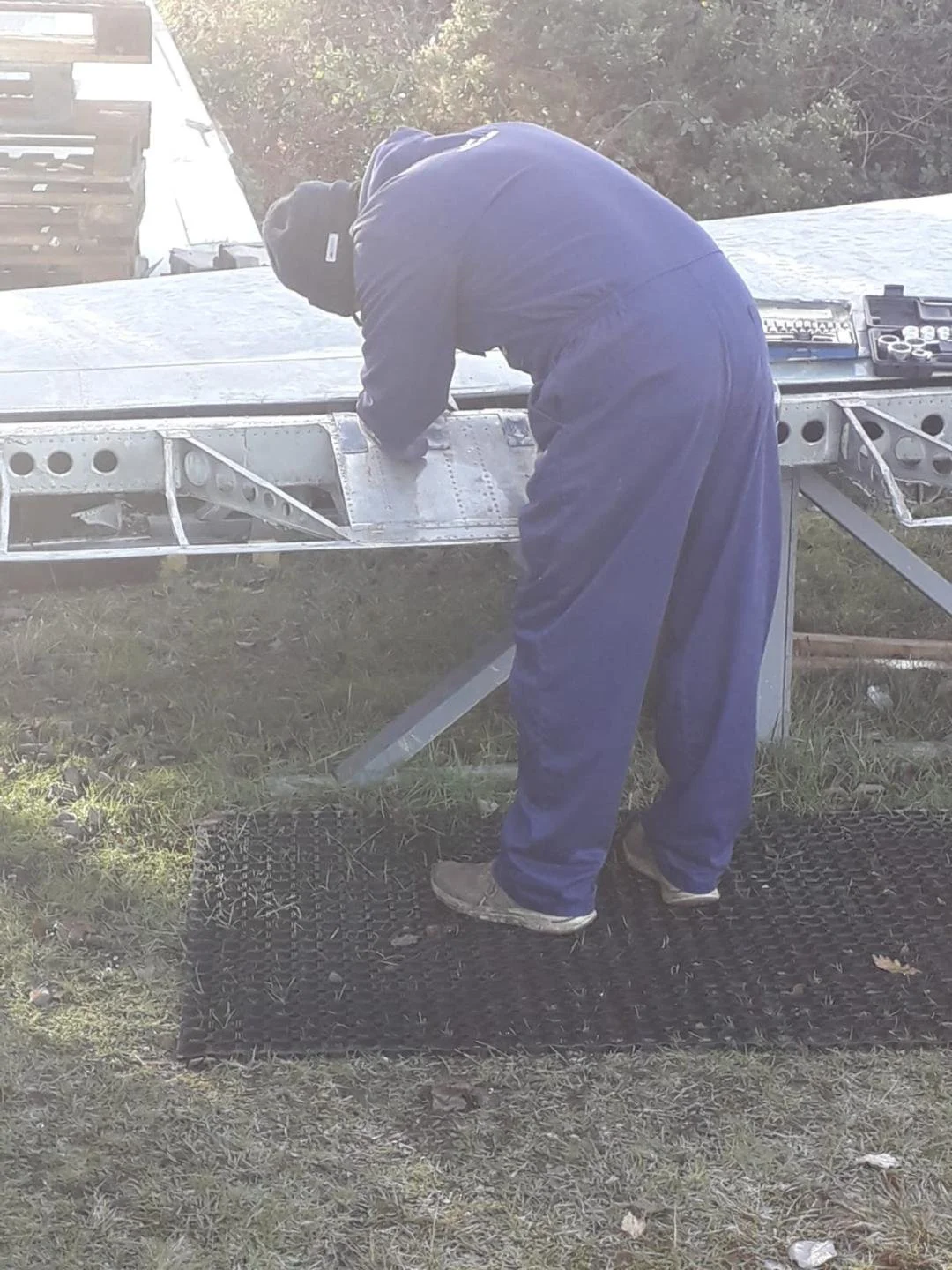
Finally for this update, another area of focus on “Vagabond” have been the outer wings. We have turned over both of the mainplanes so that they can be paint-stripped and then primed, with the turning over and paint-stripping being shown in the photos below.
Late August update
The very hot Summer of 2026 continued, with only minimal rainfall slightly dampening the ground in the BHT compound towards the end of the period covered by this update. Days with temperatures of 30c or more became quite normal!
After the flurry of activity, and many extra days of work put in by members of the “Tech” Team, and other volunteers, following “Loreley’s” arrival on 18th June, the working patterns returned (with a few exceptions) to the more usual Saturday and Wednesday morning turnouts.
Despite most of “Loreley’s” assembly being completed during the period covered by the last update, there was still some work to do to ready the aircraft for viewing by the public on an Open Day, to celebrate “Vagabond’s” 80th Birthday, on 25th July.
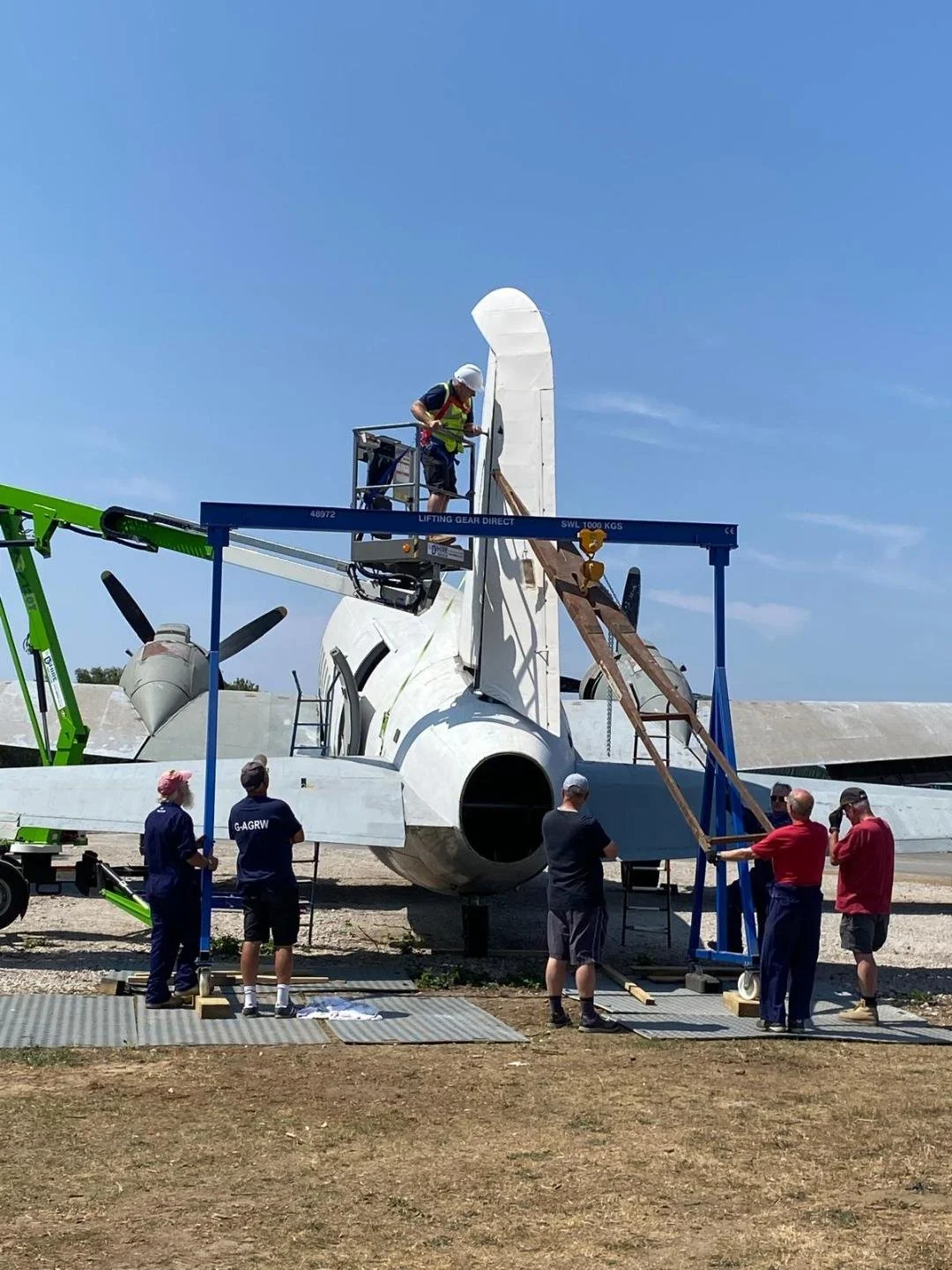
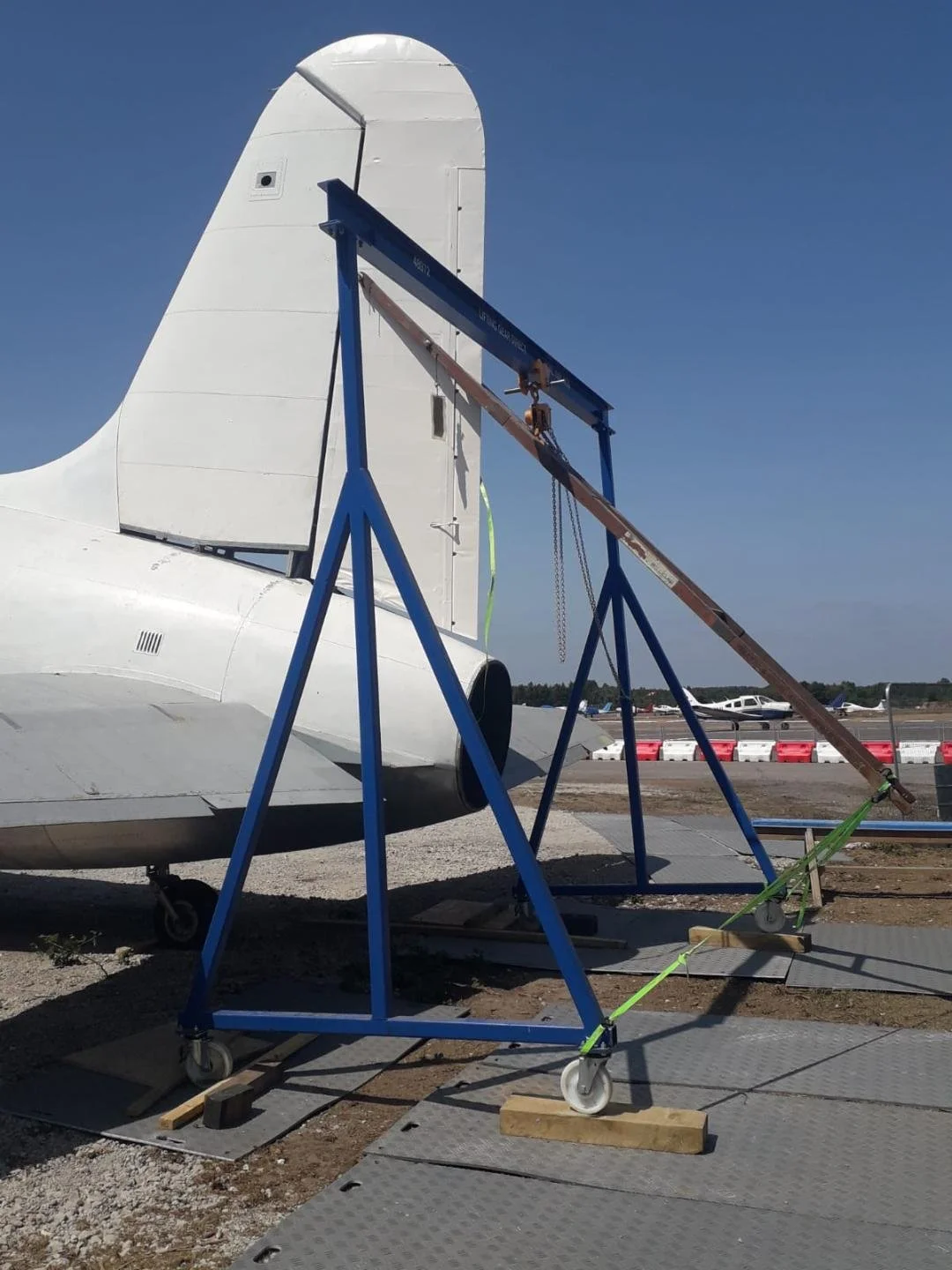
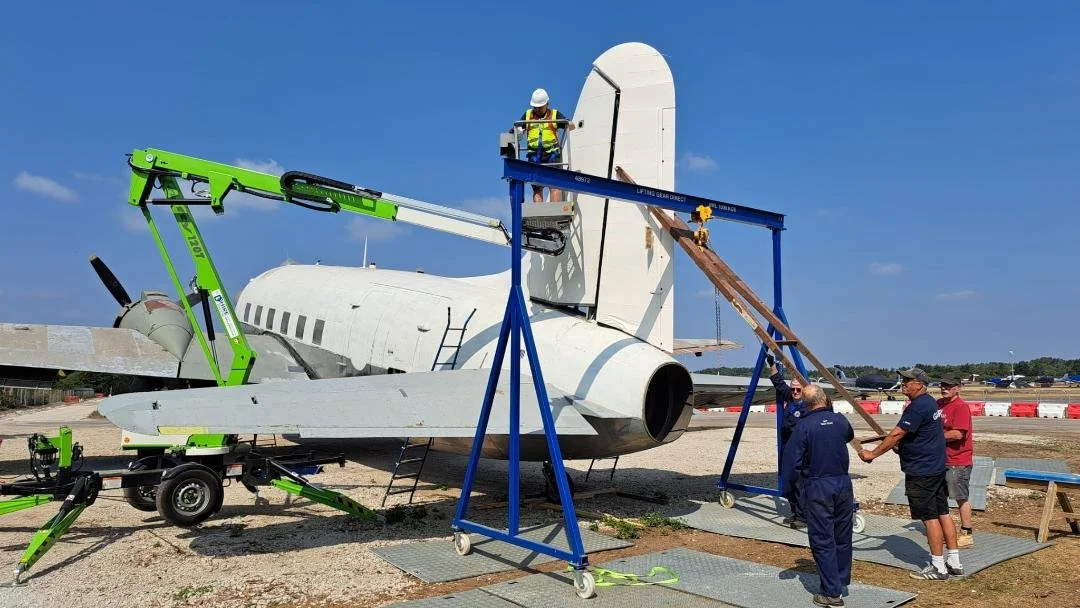
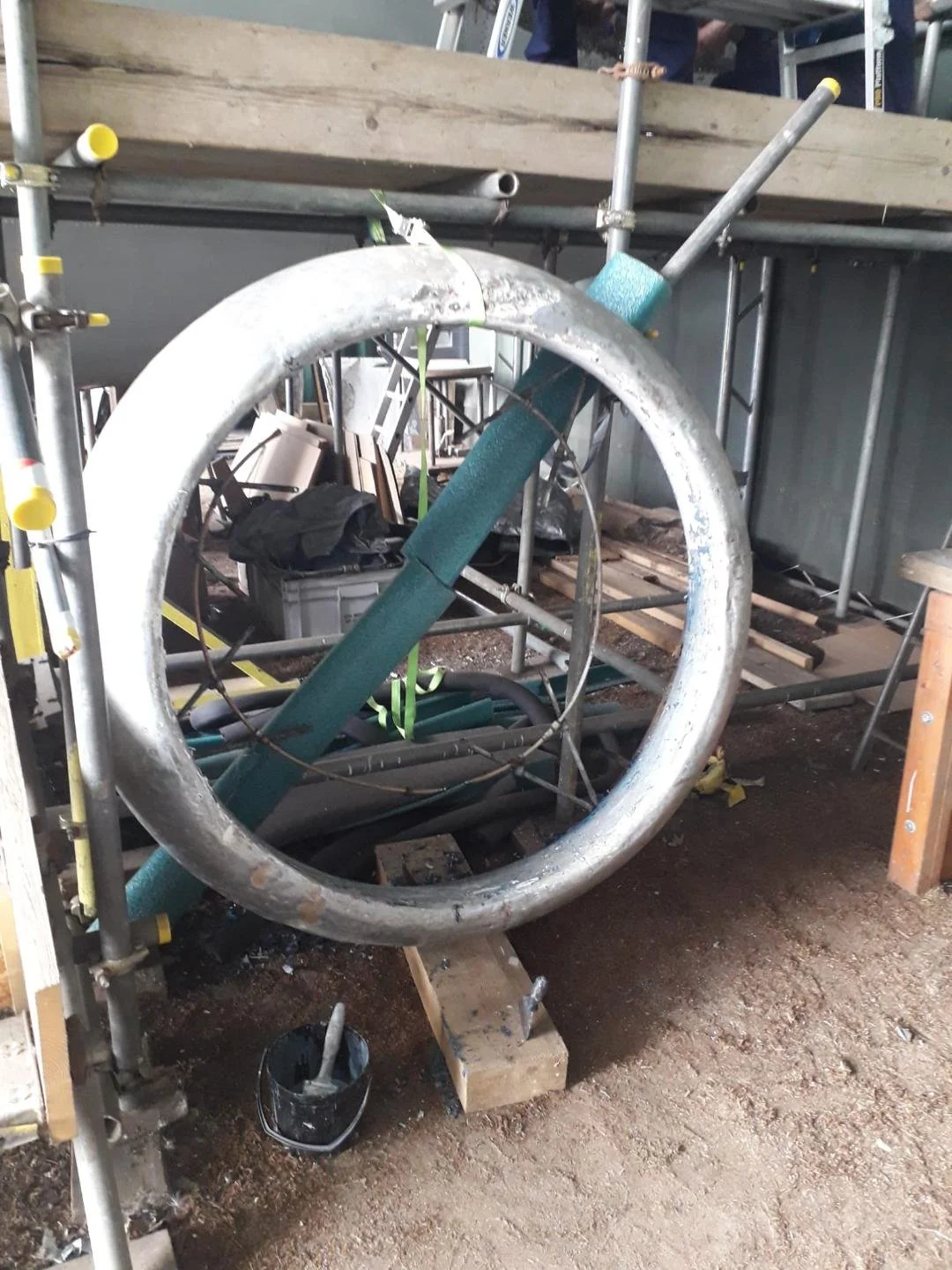
One of the main elements of that work was to get “Loreley’s” rudder back in place, and this proved to be a fiddly and time-consuming job, requiring a few extra work sessions by the Team to get it completed. The pictures below summarise the story….
Pic 1 - several of the Team “observe and discuss” the work as it progresses!
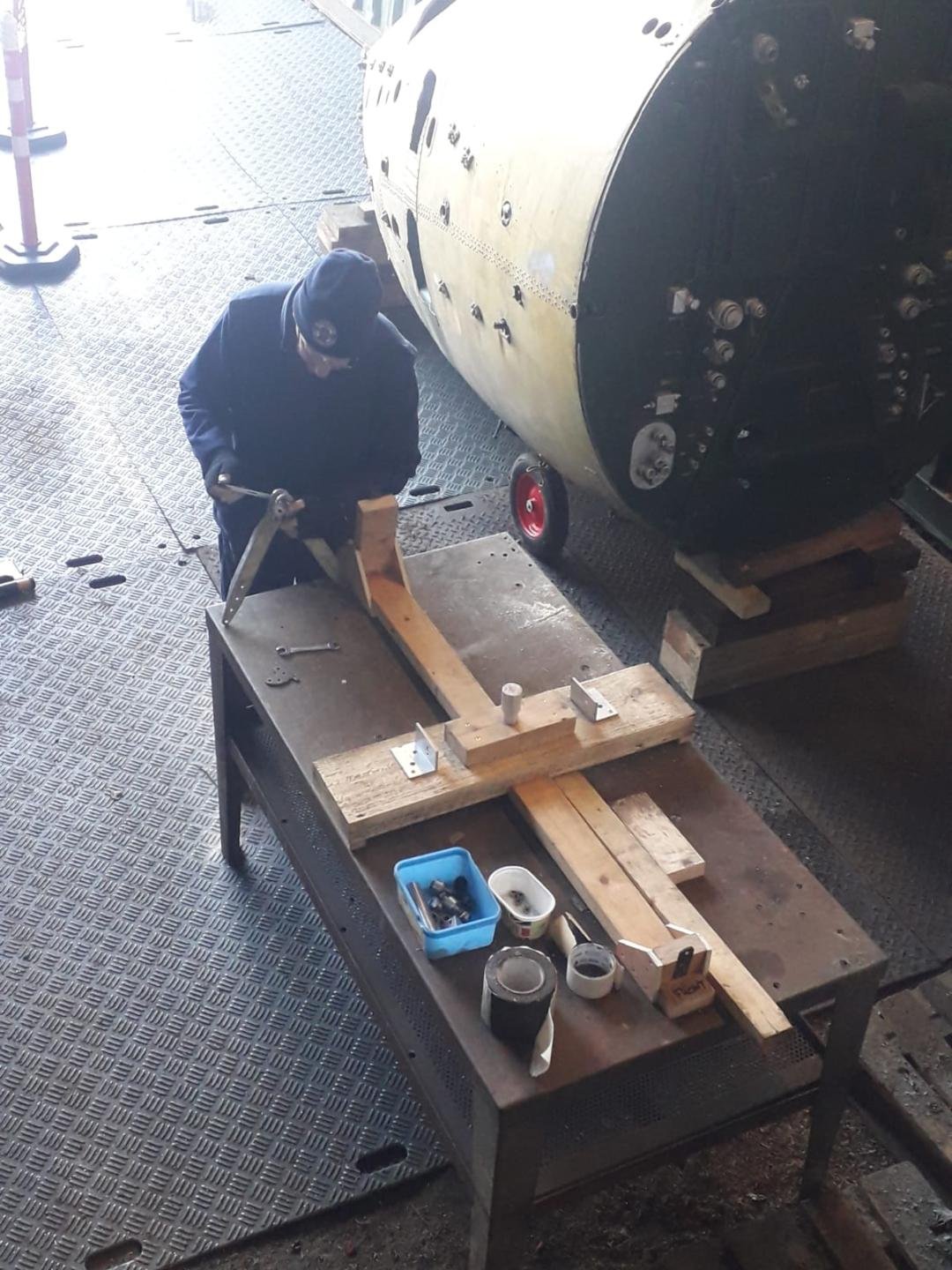
Pic 2 - a method needed to be found to hold the rudder in place between attempts to complete the job! Luckily, the diagonally-positioned wooden support frame that you can see in the picture was given to us with the aircraft, and was fixed in place using two pins through tubes in the fabric-covered rudder, which could then be patched and doped over once the job was complete.
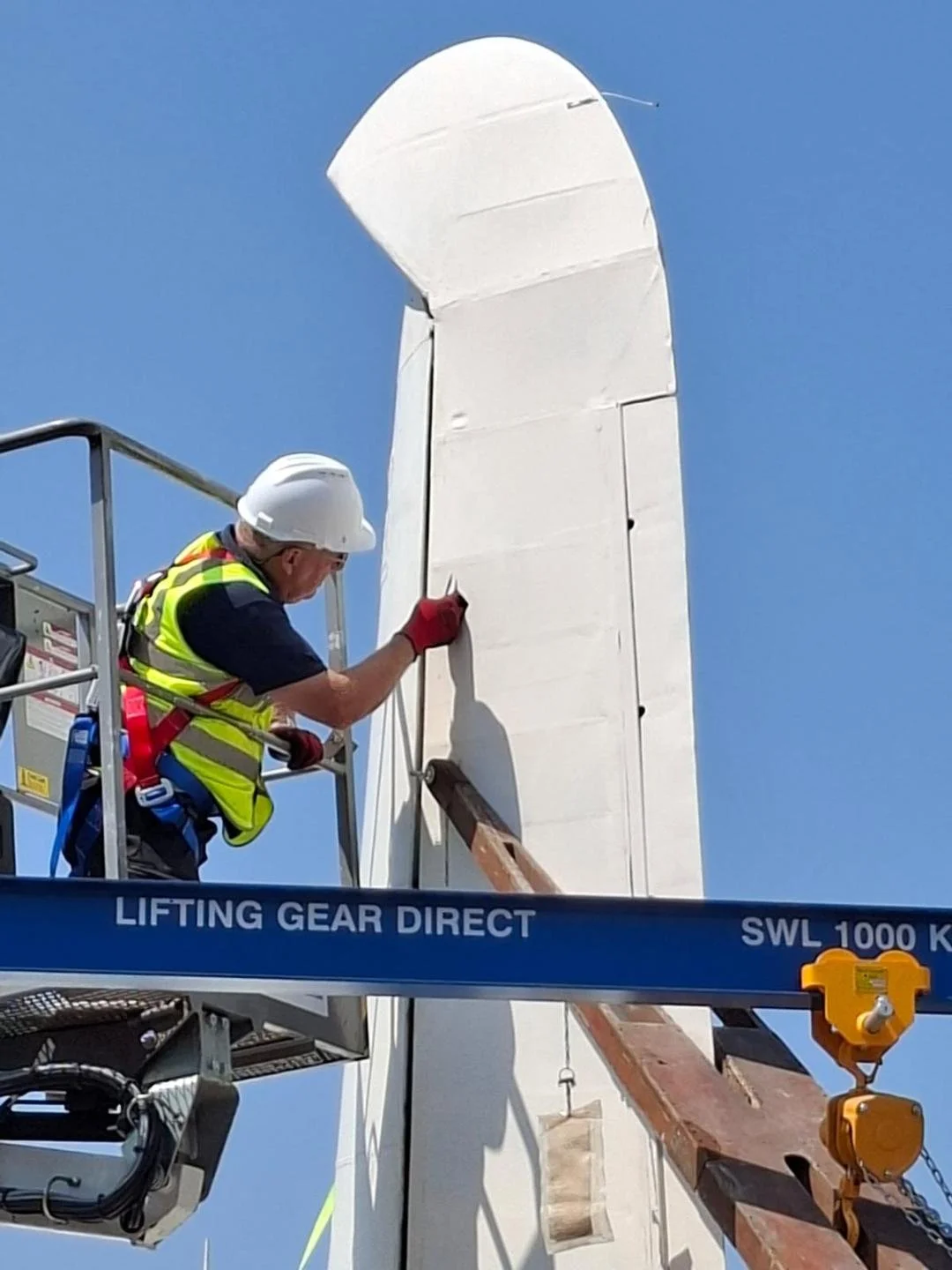
Pics 3 and 4 - volunteer Phil found himself spending extended periods in an elevated position while those finer details of finally securing the rudder in place were completed.
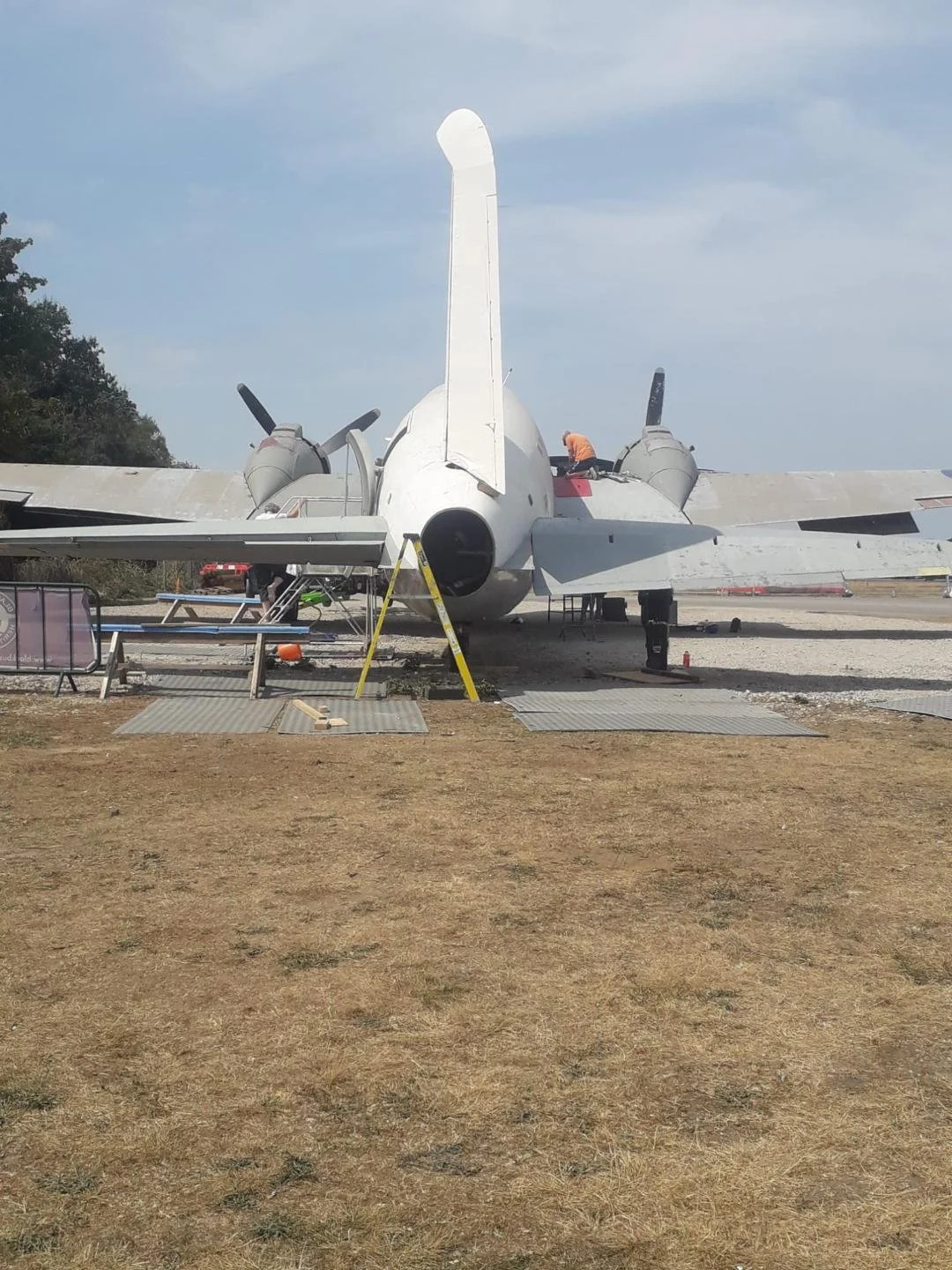
Pic 5 - taken on 22nd July, showing attachment of the rudder complete. The main structure was complete in time for the 25th, but it was quite tight!
Other areas of work on the re-construction and re-equipment (mainly in the cockpit) of “Loreley” are covered in the words and pictures below.
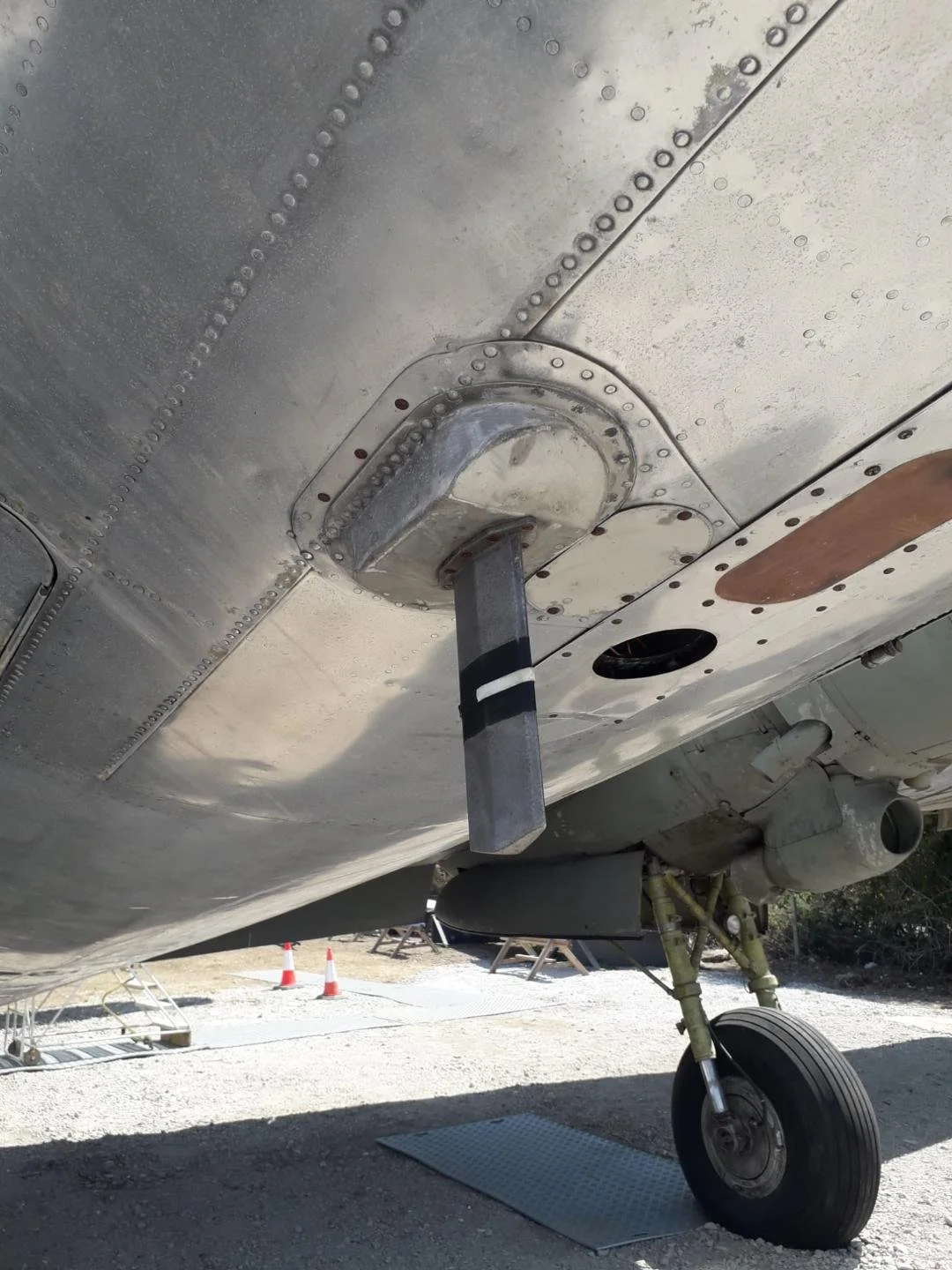
On the exterior of the airframe, aerials (that had been removed for transportation) were re-attached….
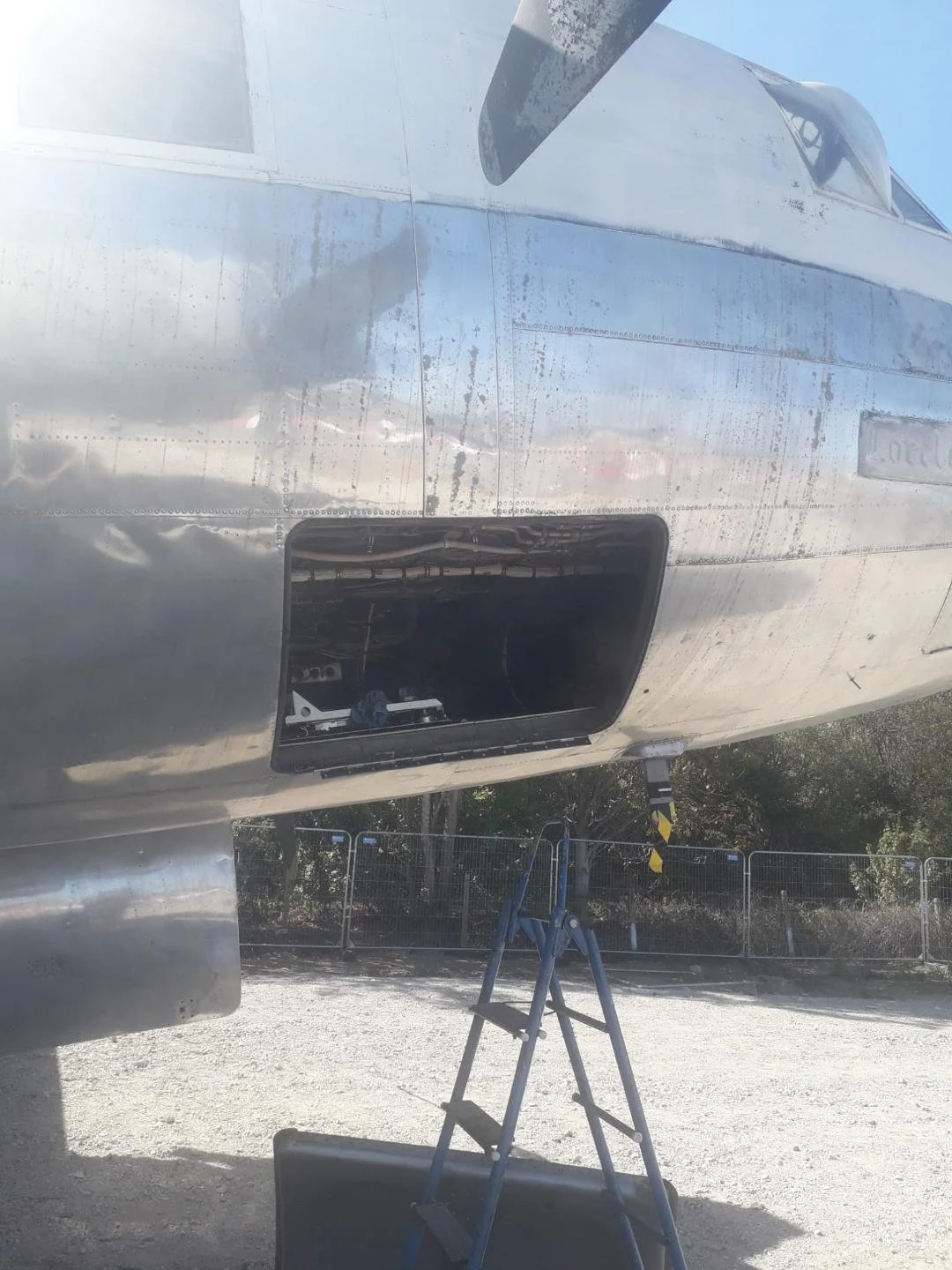
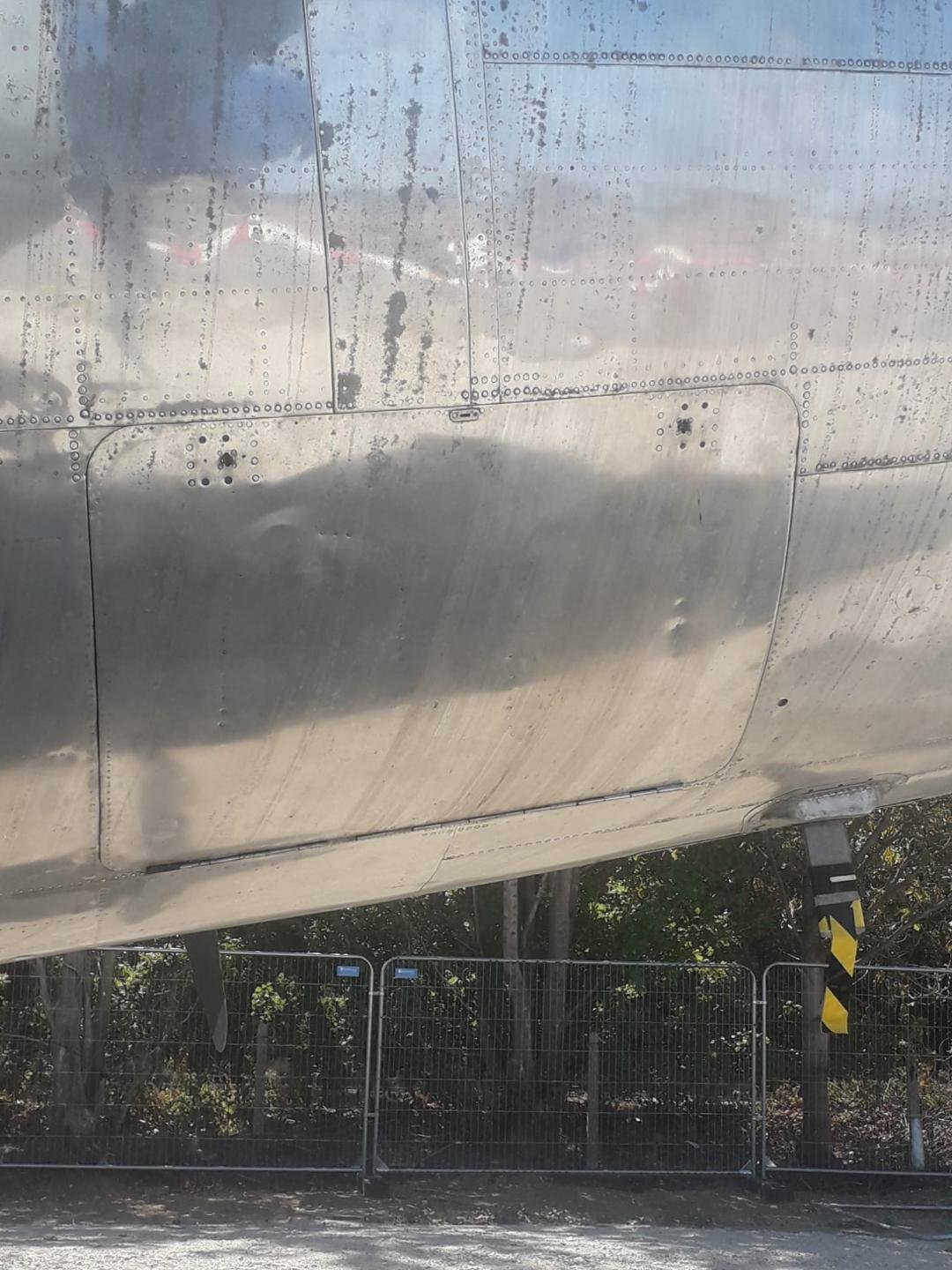
A baggage hold door was removed, to straighten a hinge, then re-fitted…
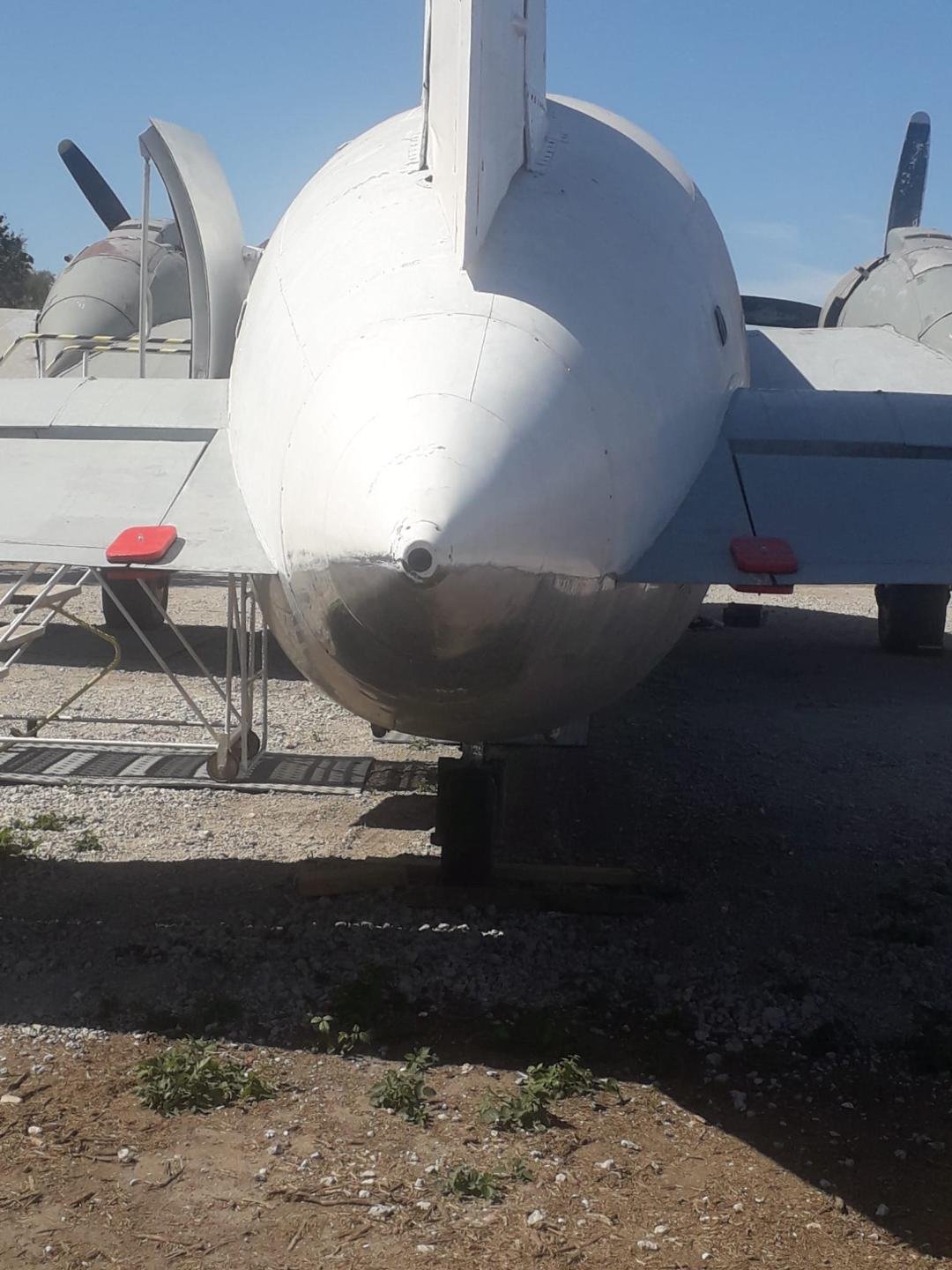
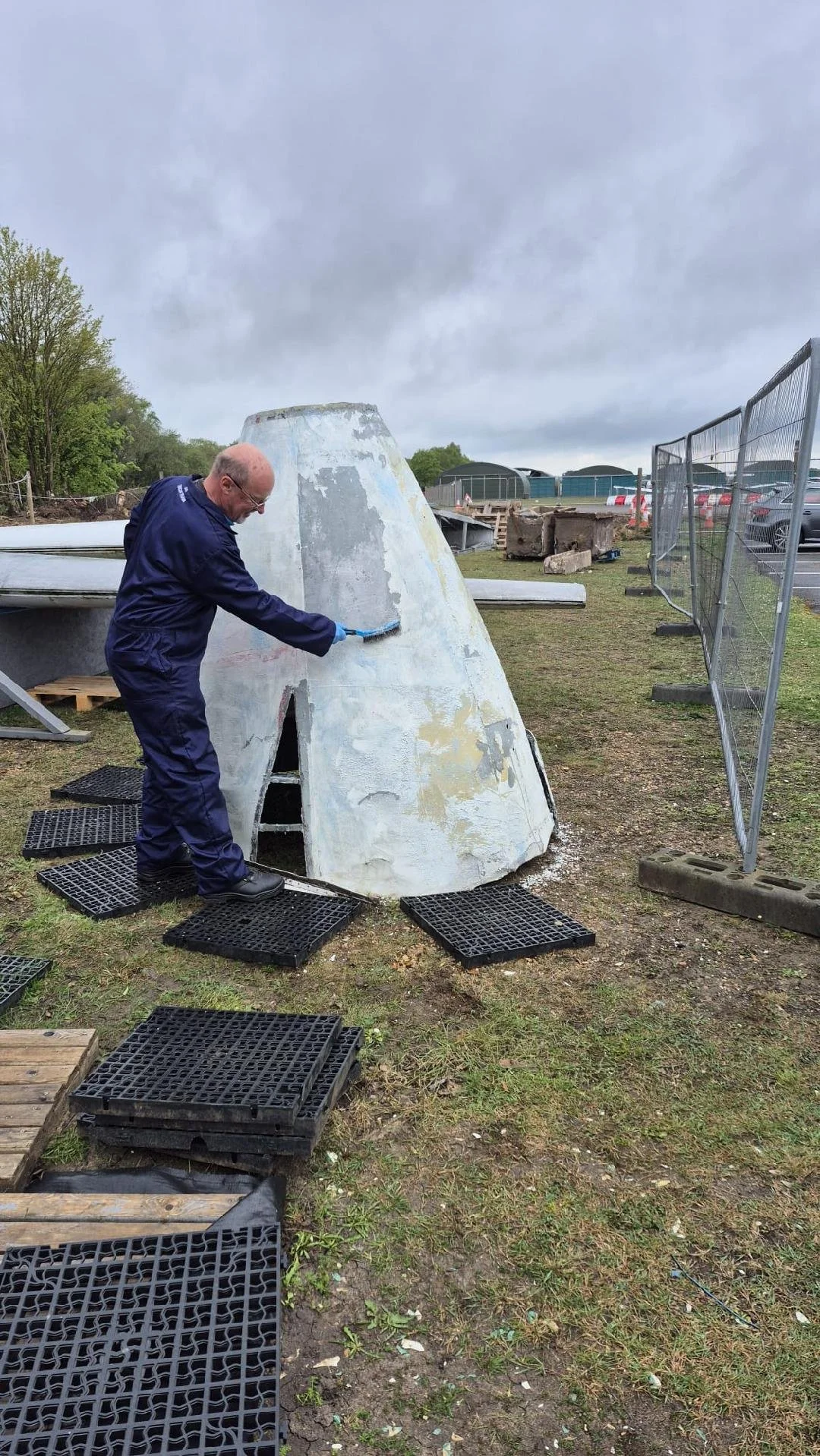
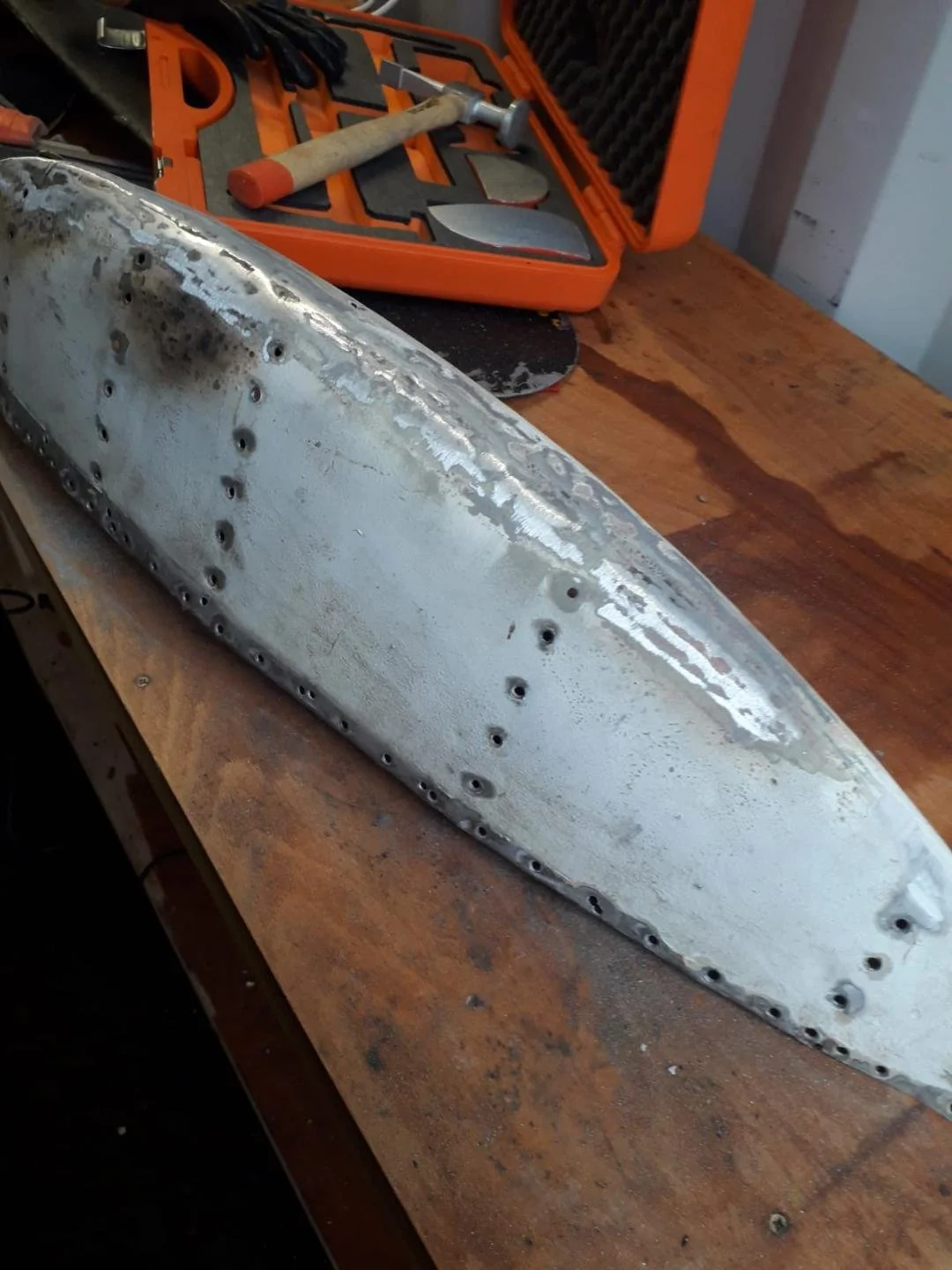
Wing join fairings were repaired and re-fitted, as were various access panel parts and the tailcone….
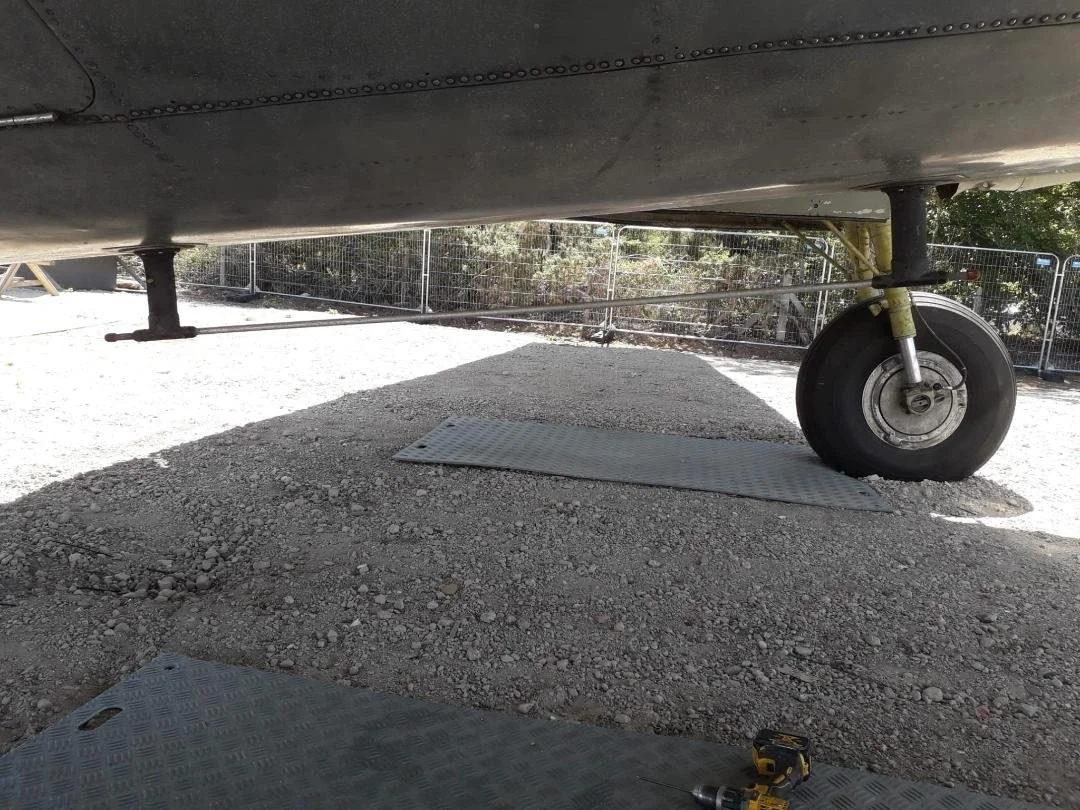
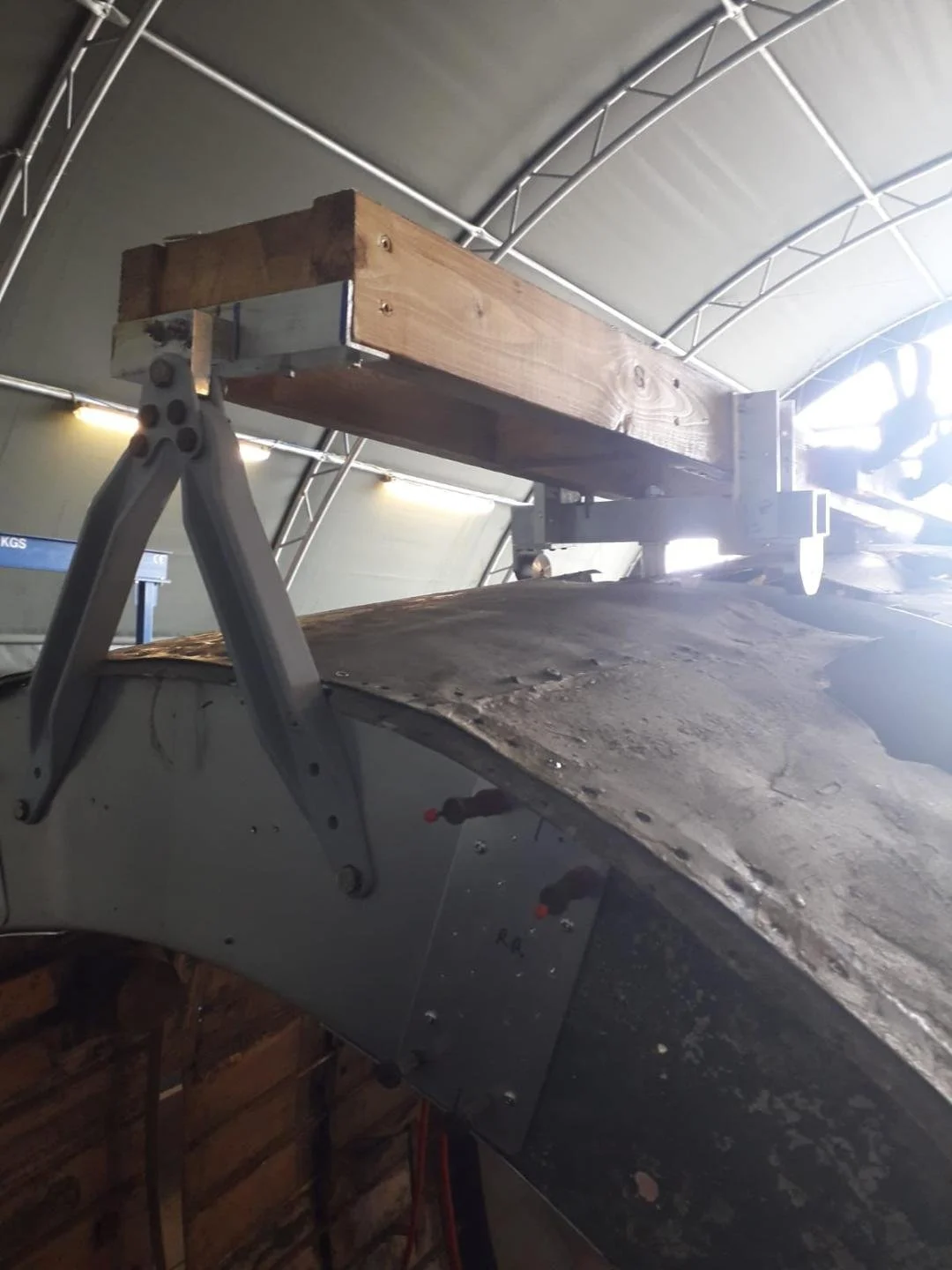
The Team also fabricated and fitted “gust locks” to the aircraft’s control surfaces. These are used to lock these parts of the airframe in position to reduce the chances of movement and posssible damage during windy conditions. The second picture below shows them fitted to the elevators…
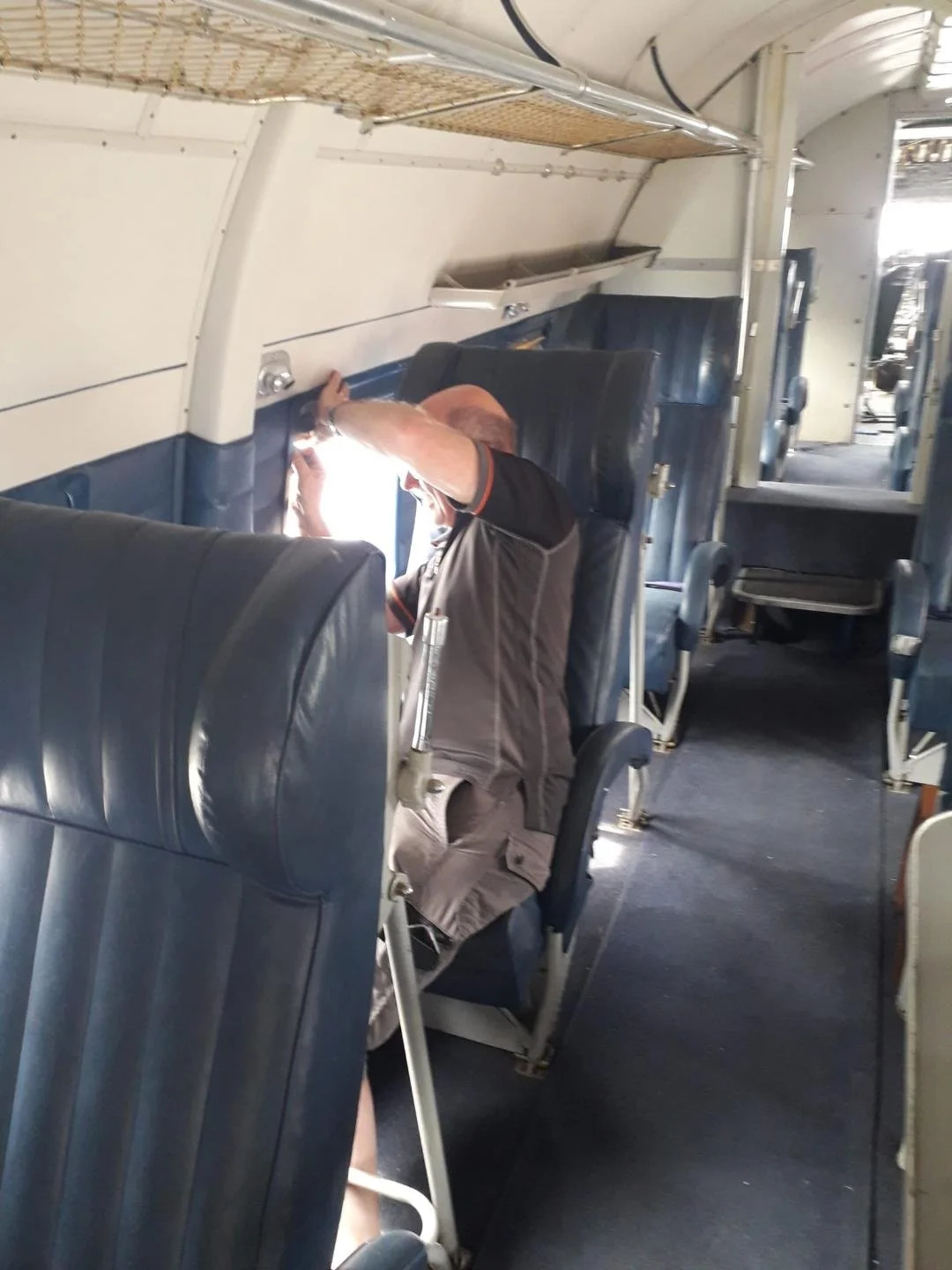
As for the interior, specifically the passenger cabin, of “Loreley”, most of the work involved minor cosmetic repairs and cleaning, the interior being in such great overall condition…..
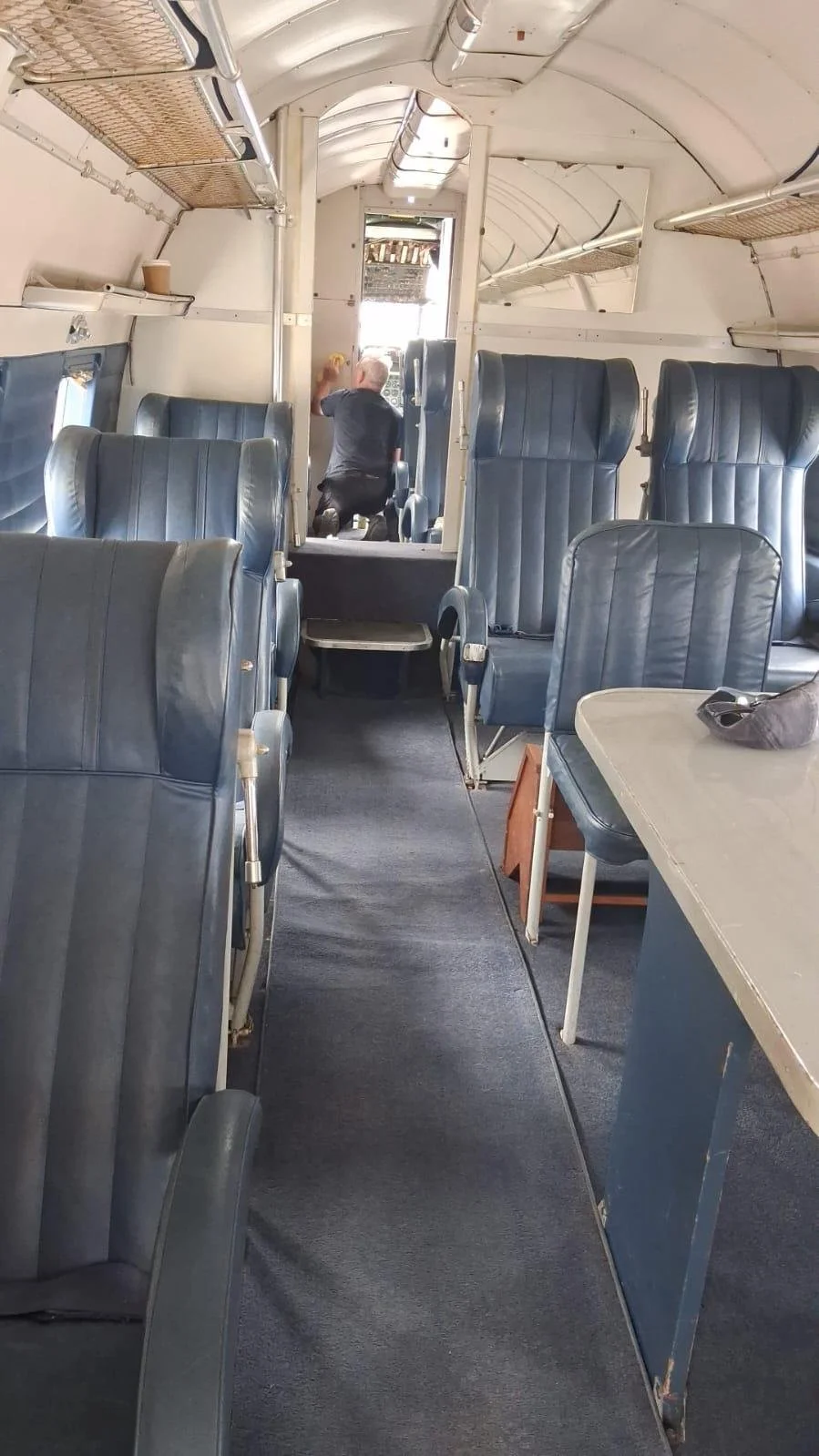
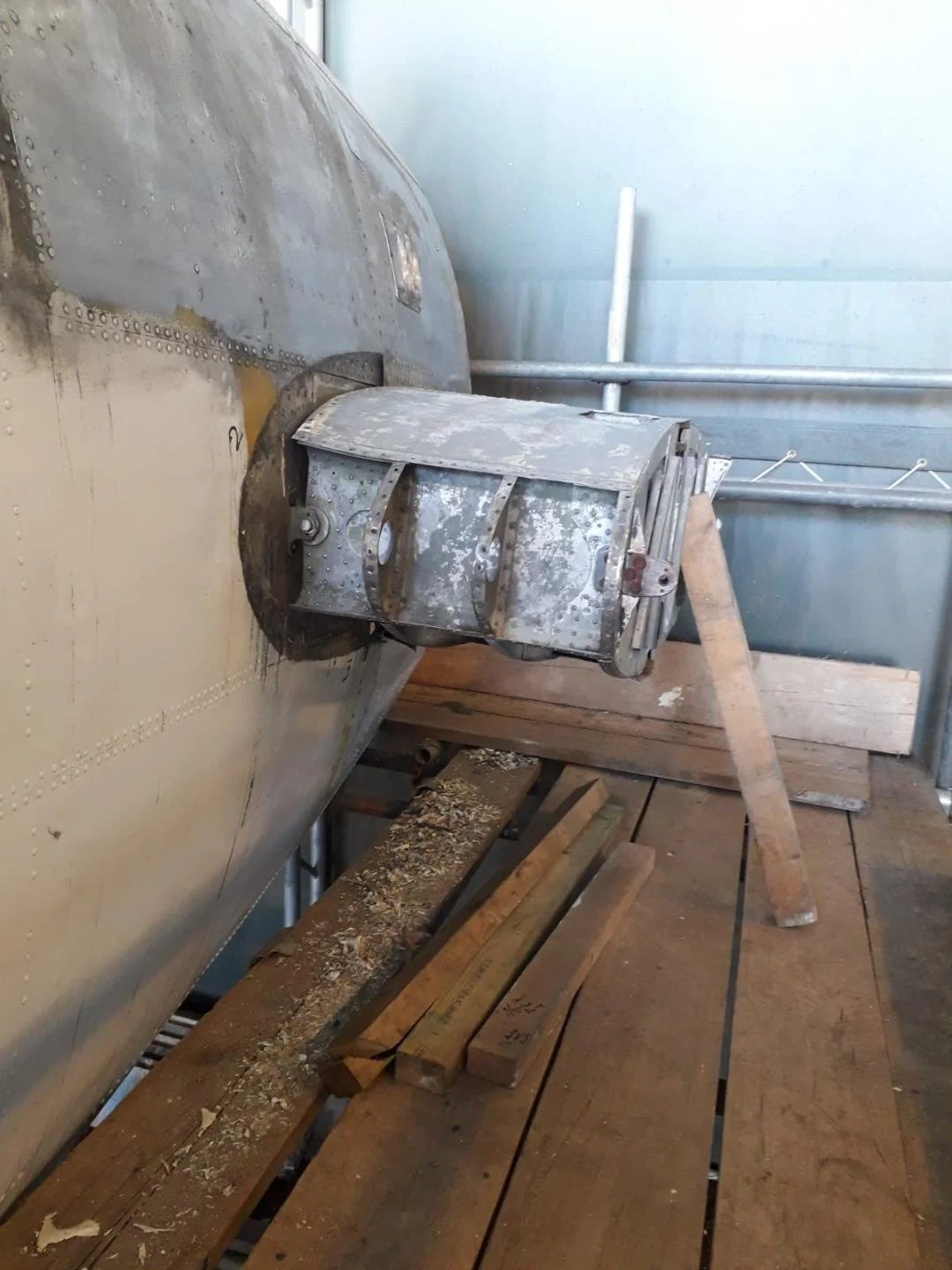
The cockpit of “Loreley” is also largely complete, but there are a few missing elements, notably a “Decca Flight Log Plotter”, an item which would have occupied the empty enclosure in the picture below, and which we are looking to source…..watch this (and that) space!
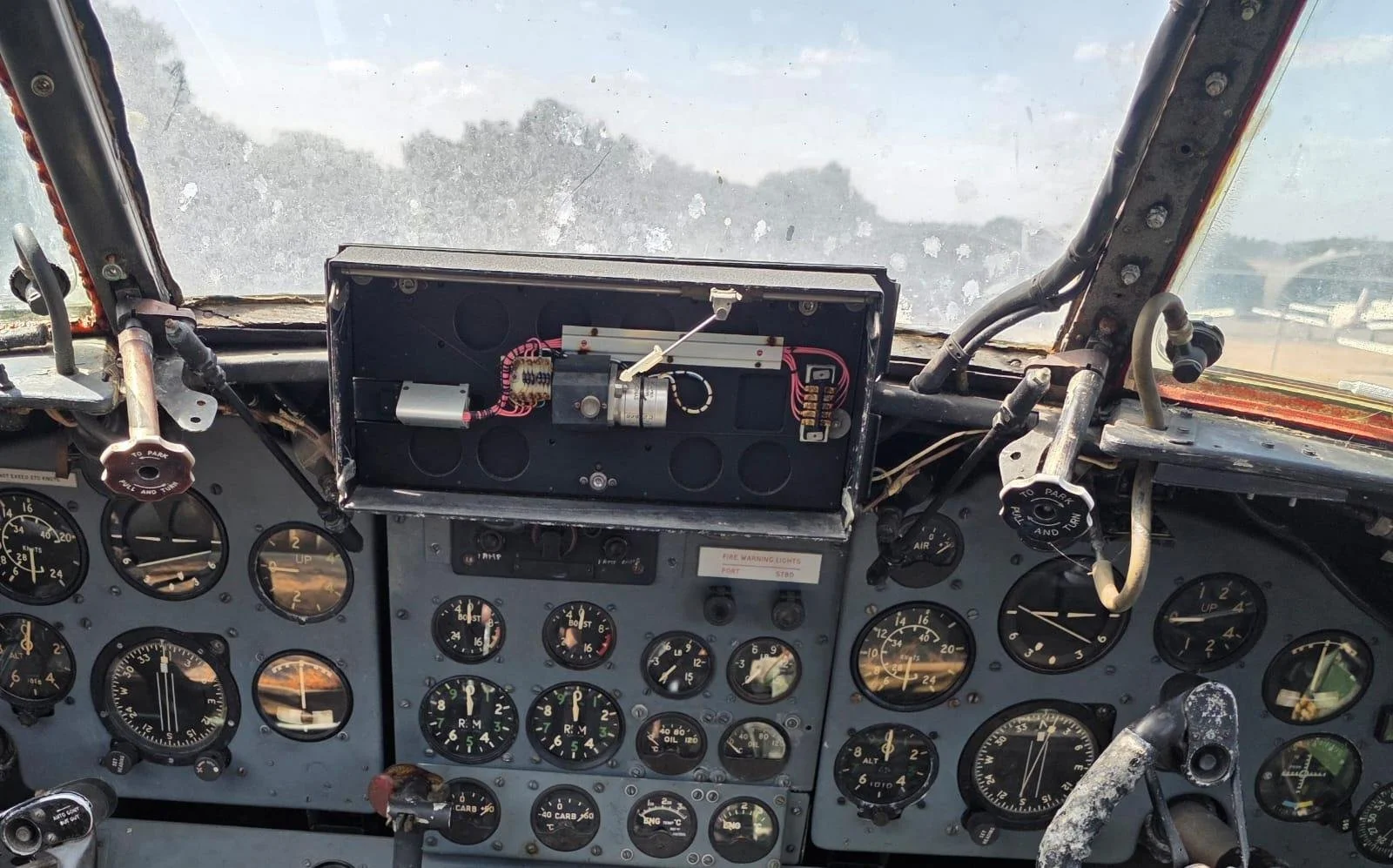
Moving on to “Vagabond”, work has continued on many of the areas of the aircraft that have been in progress for some time, but with some new areas of focus, as detailed in the words and pictures below.
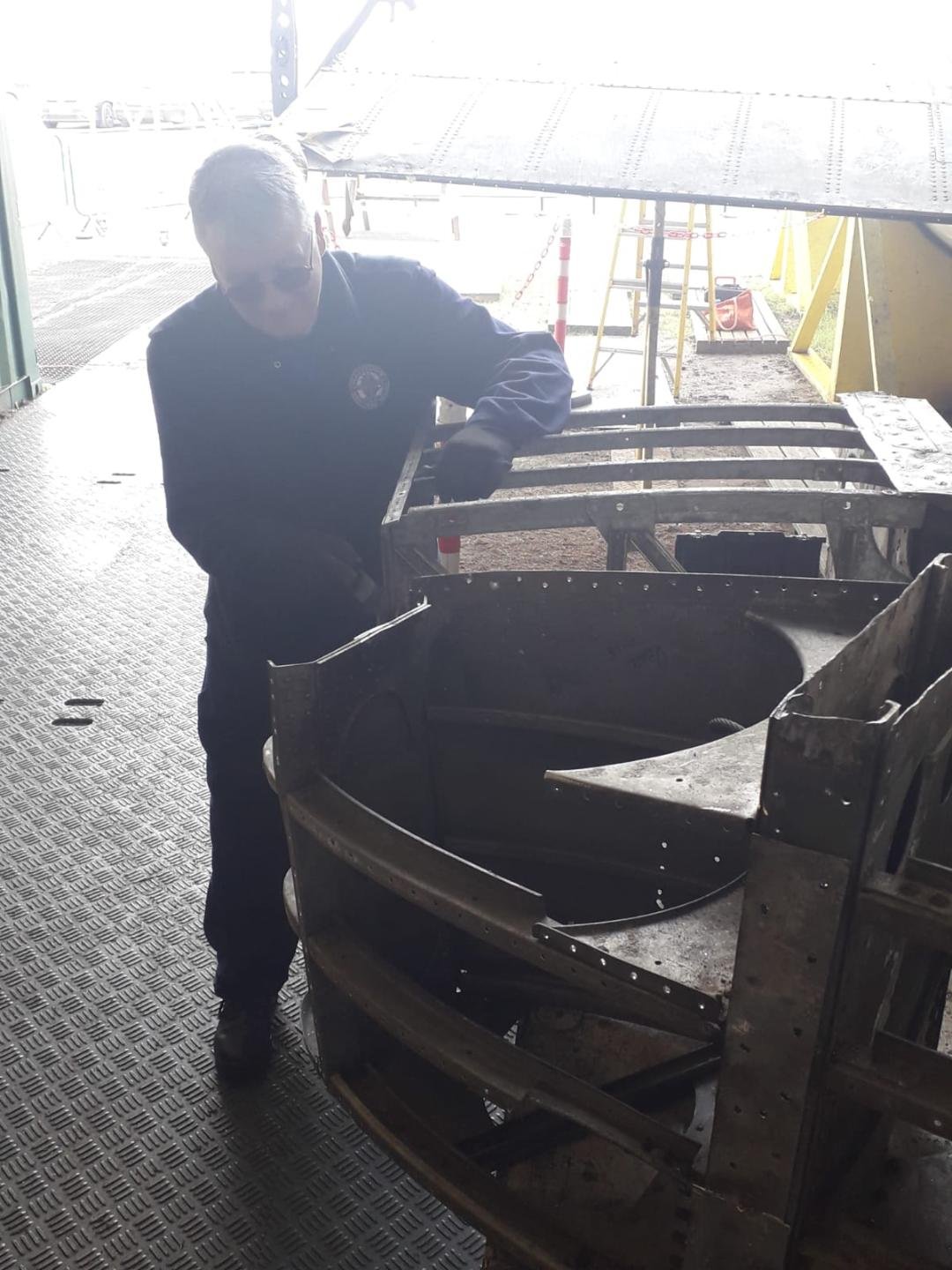
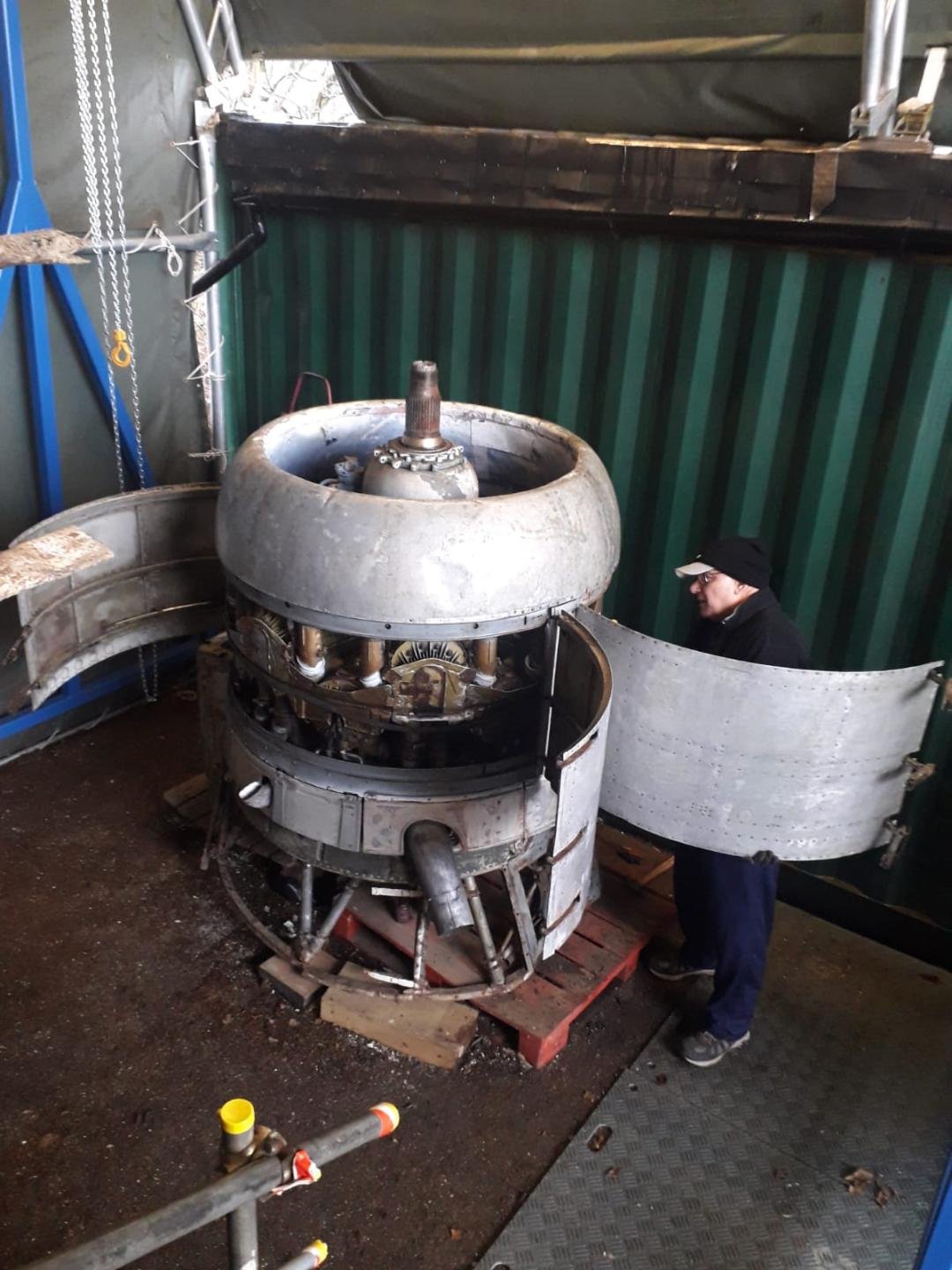
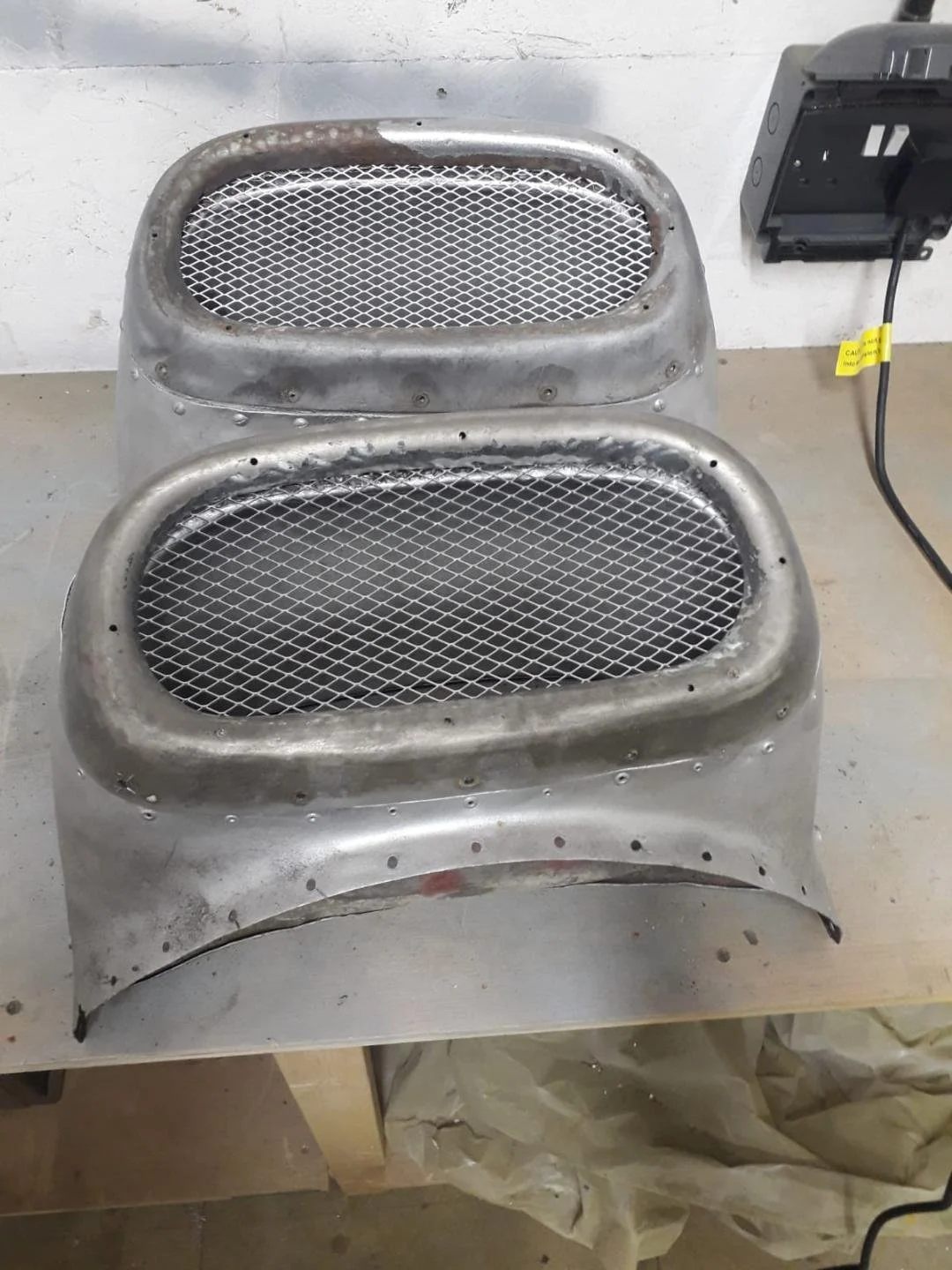
One of the areas of more recent focus is the engine nacelles, which are being removed into their constituent parts for refurbishment….
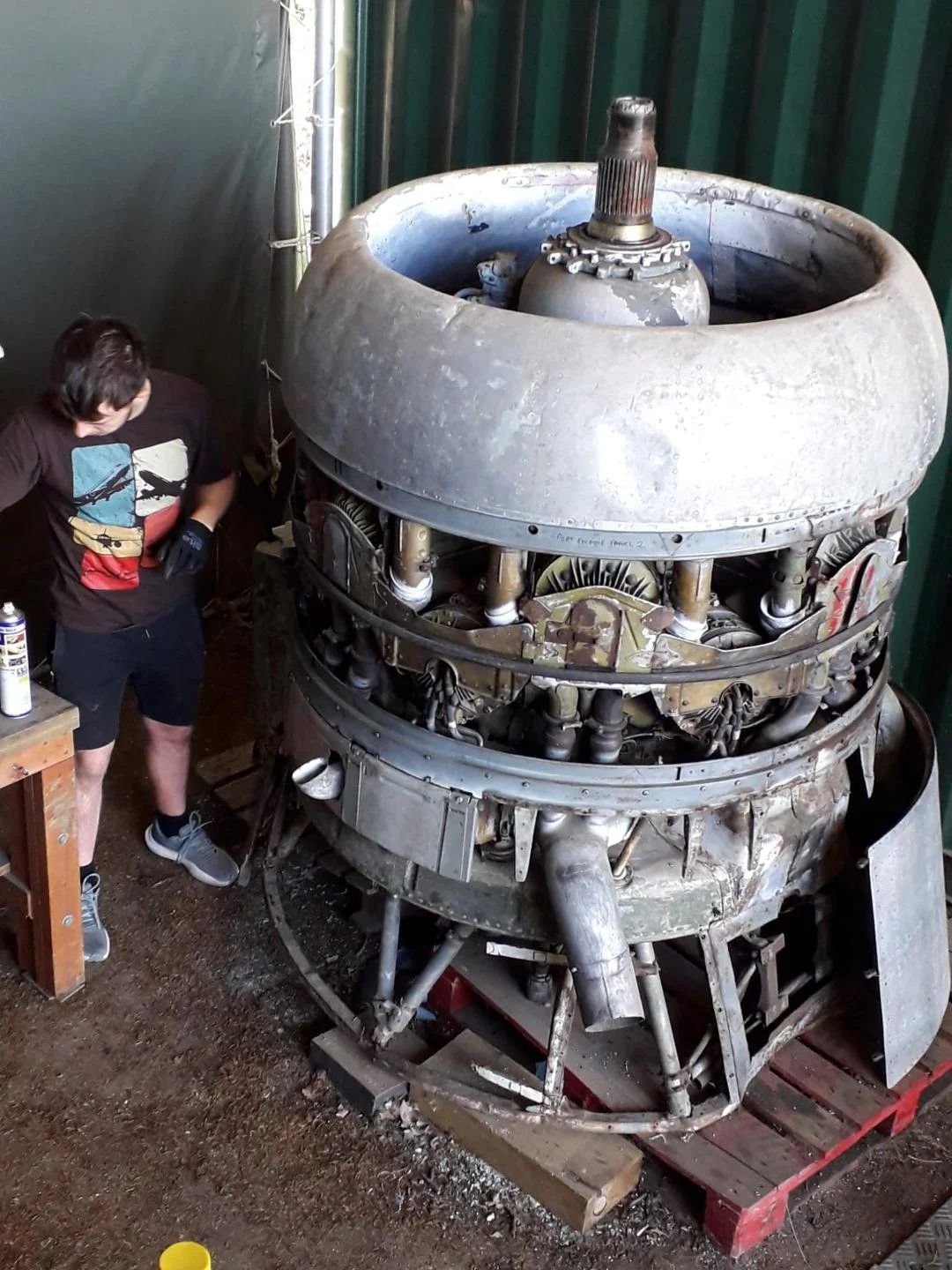
Another major part of the aircraft seeing more attention is the outer wings, which have been turned-over on their trestles so that what was the underside can be paint-stripped, re-treated and re-painted….
As mentioned above, work has continued on other areas of the aircraft that you’ll have seen mentioned often in previous updates, such as the rudder, on which re-skinning has now started, the rear fuselage (which as we’ve mentioned before is being largely re-built), the rear spar (which has been completely rebuilt) and fillets, in the case shown in the final picture below, around the nacelles.
Mid-July update
Temperatures that were fairly often well into the 30’s centigrade continued through the rest of June and into July, but there wasn’t any slowing of activity at the “Heritage Hangar” - in fact it was a very busy period, during which we took delivery of our second aircraft, a Vickers Valetta C.2 VX573 named “Loreley”, from the RAF Museum at Cosford.
More of that later in this update, but earlier in June the Team were also busy continuing work on some familiar parts of “Vagabond”, as shown in the pictures below….
the fin dorsal fairing was restored and trial-fitted to the aircraft (pics 1 & 2)
work continued on restoration of the tailcone, which needed a lot of work, and the restoration of the rudder, which was completely stripped-down for rebuild, continued (pics 3 & 4)
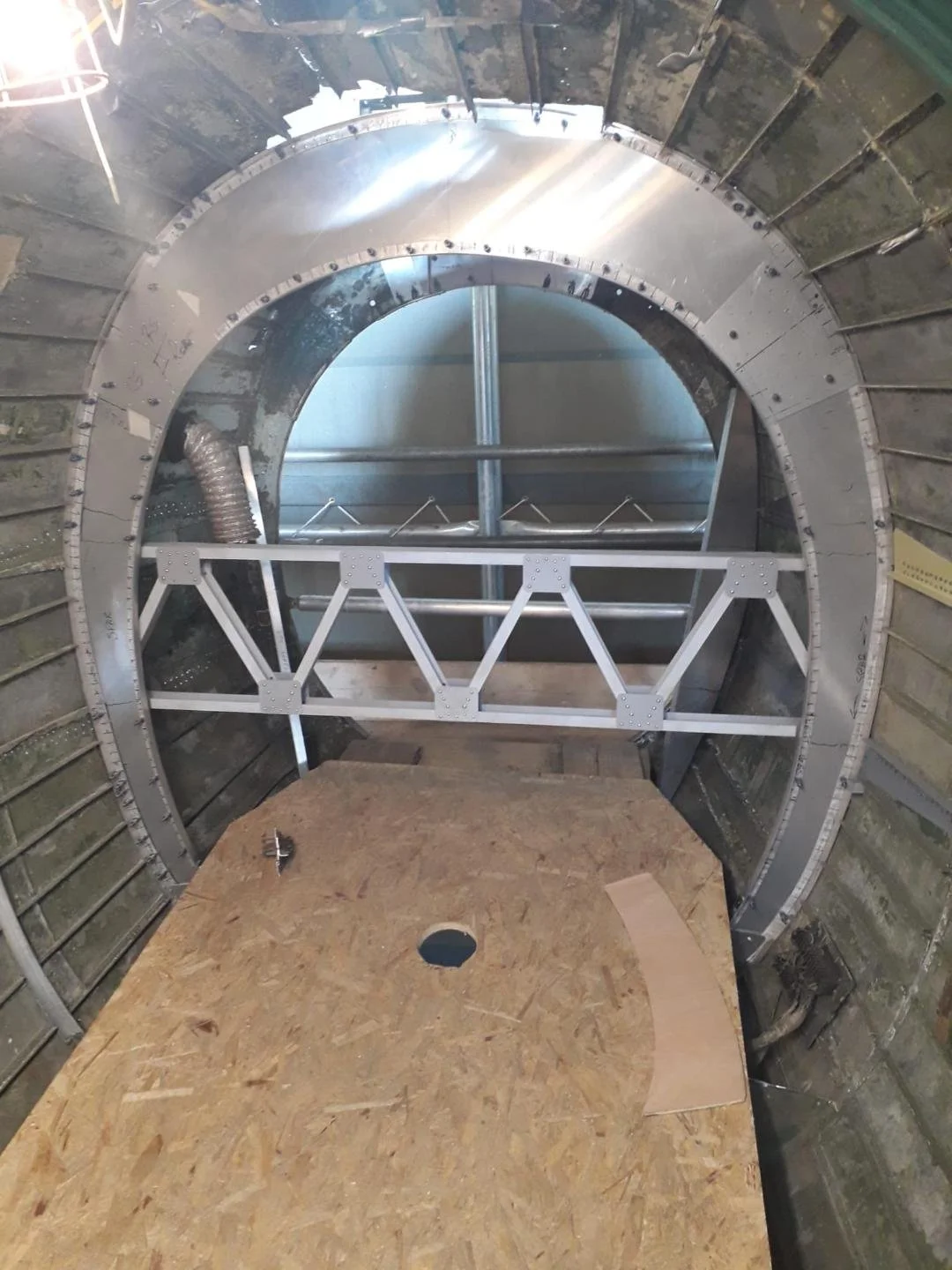
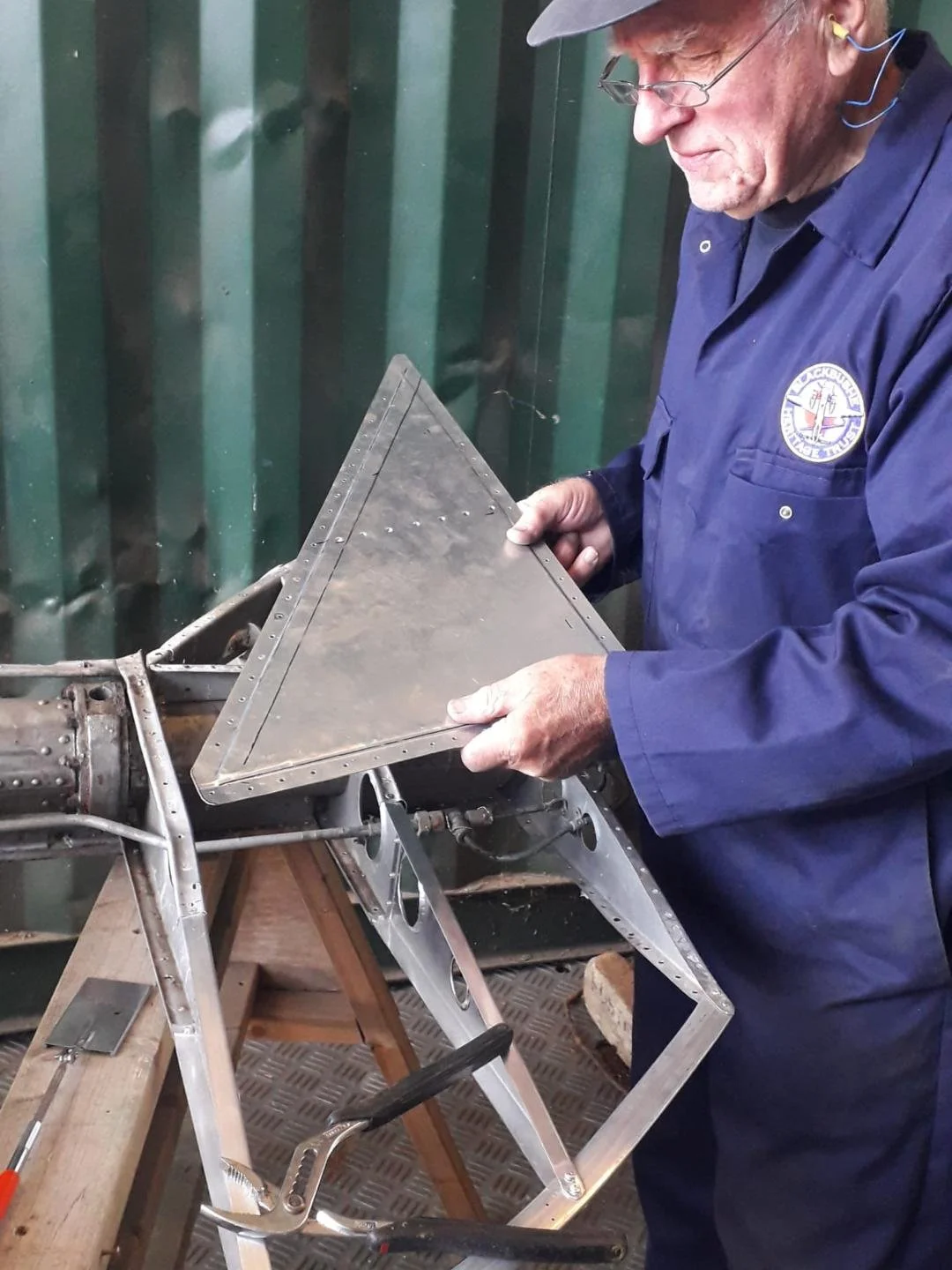
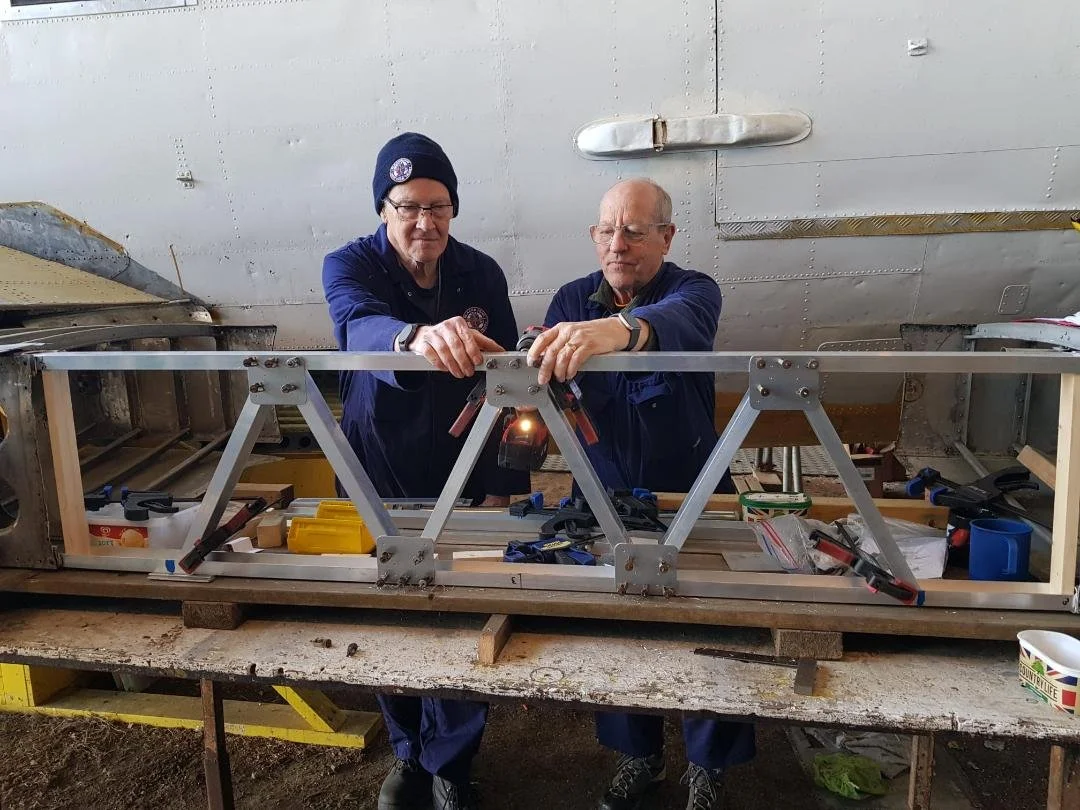
work also continued on the fabrication of a new forward bulkhead and the restoration of the rear fuselage….a lot of the rear structural elements have been re-manufactured from scratch (pics 5 & 6)
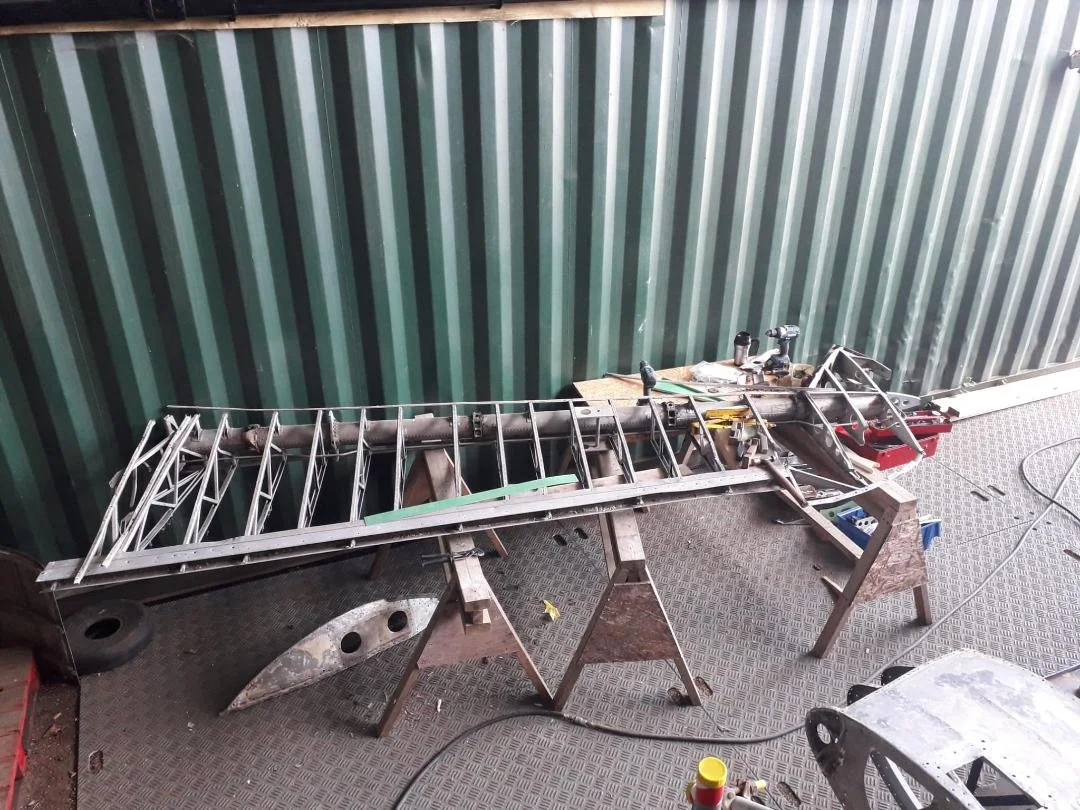
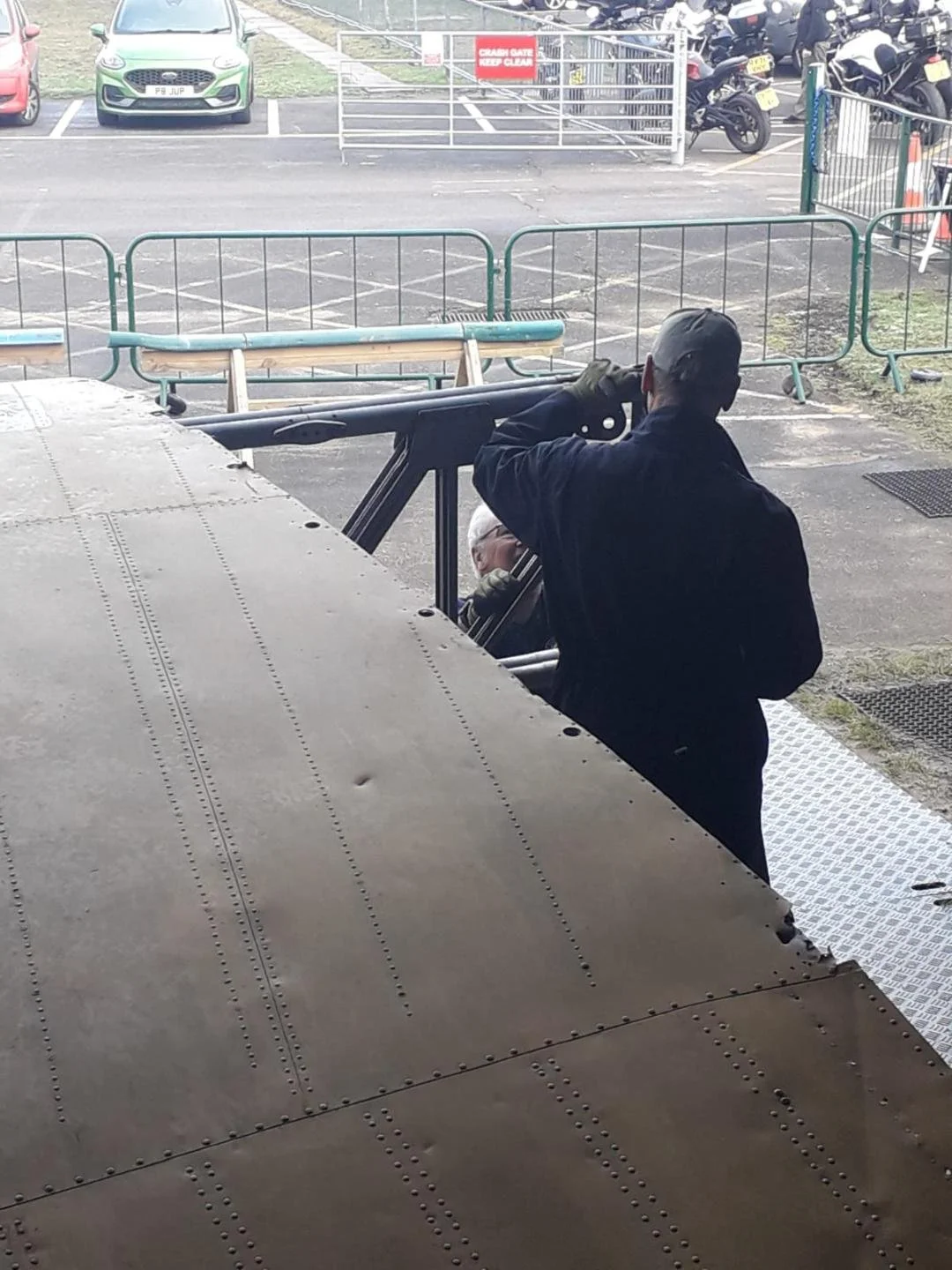
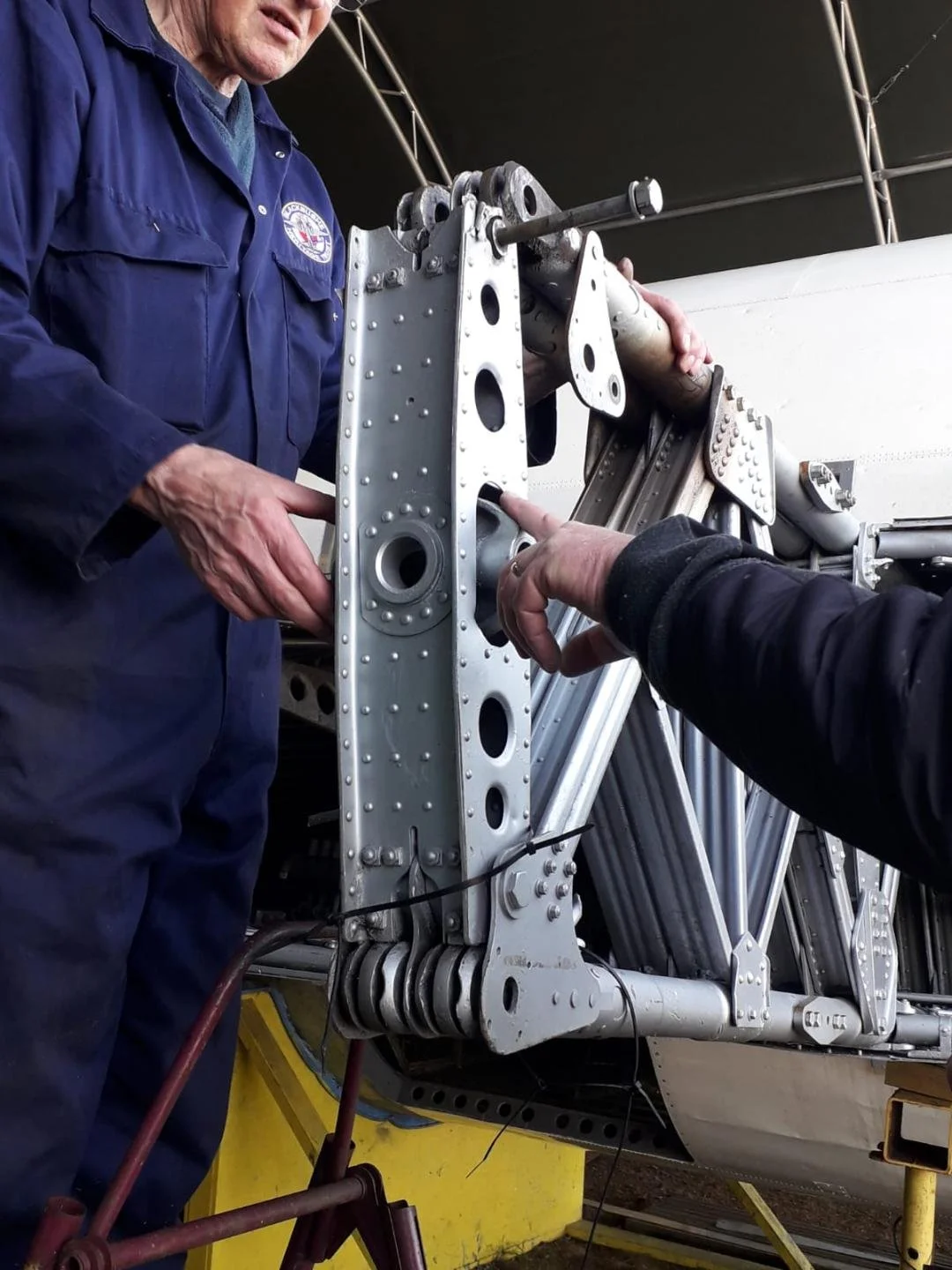
On 10th June another signifcant milestone was reached when the rear spar (which as mentioned in our May update has also been re-built from scratch) and the tailplanes which it holds in place were trial-fitted through the rear fuselage, as shown in the pictures and video below….
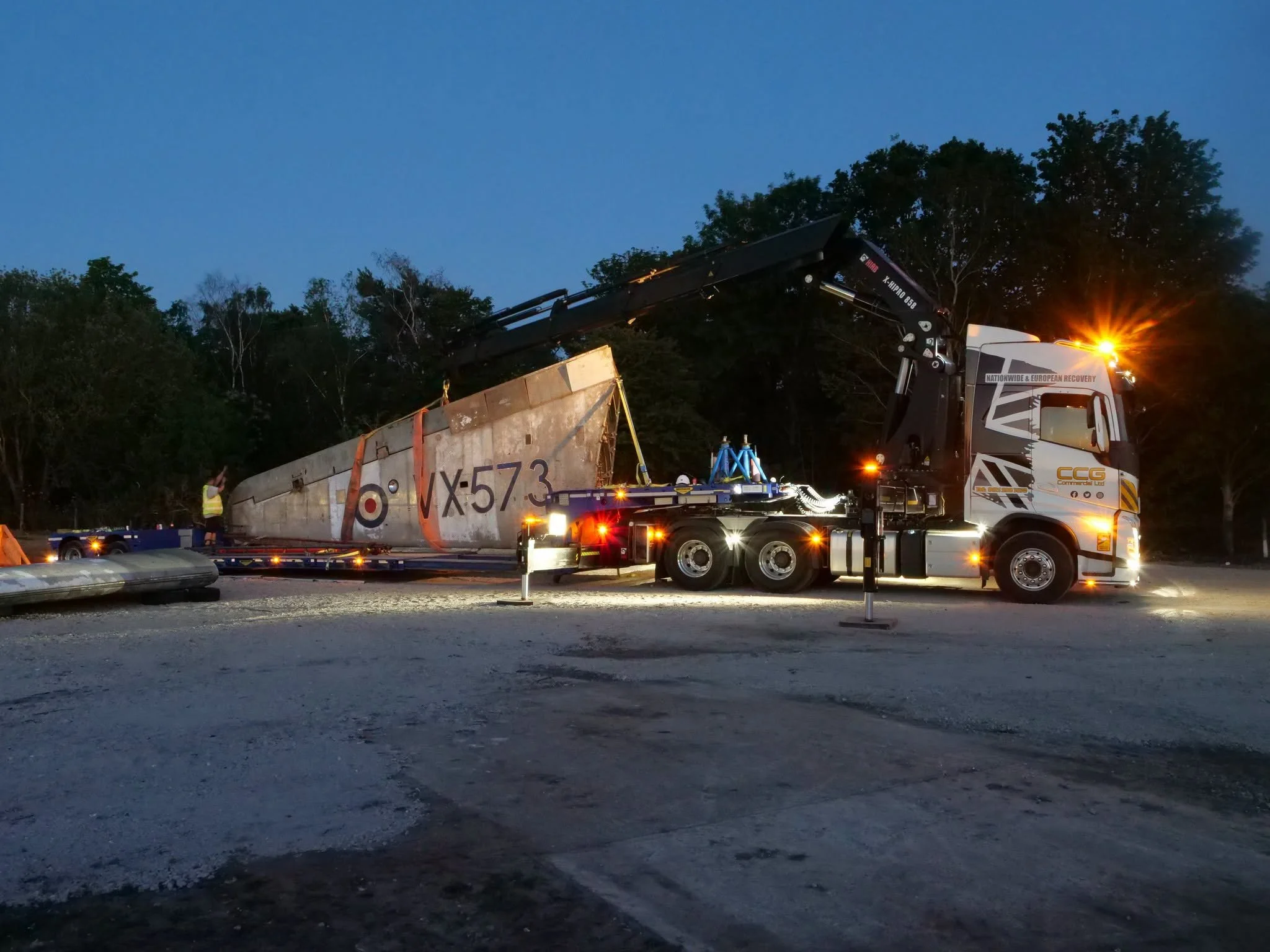
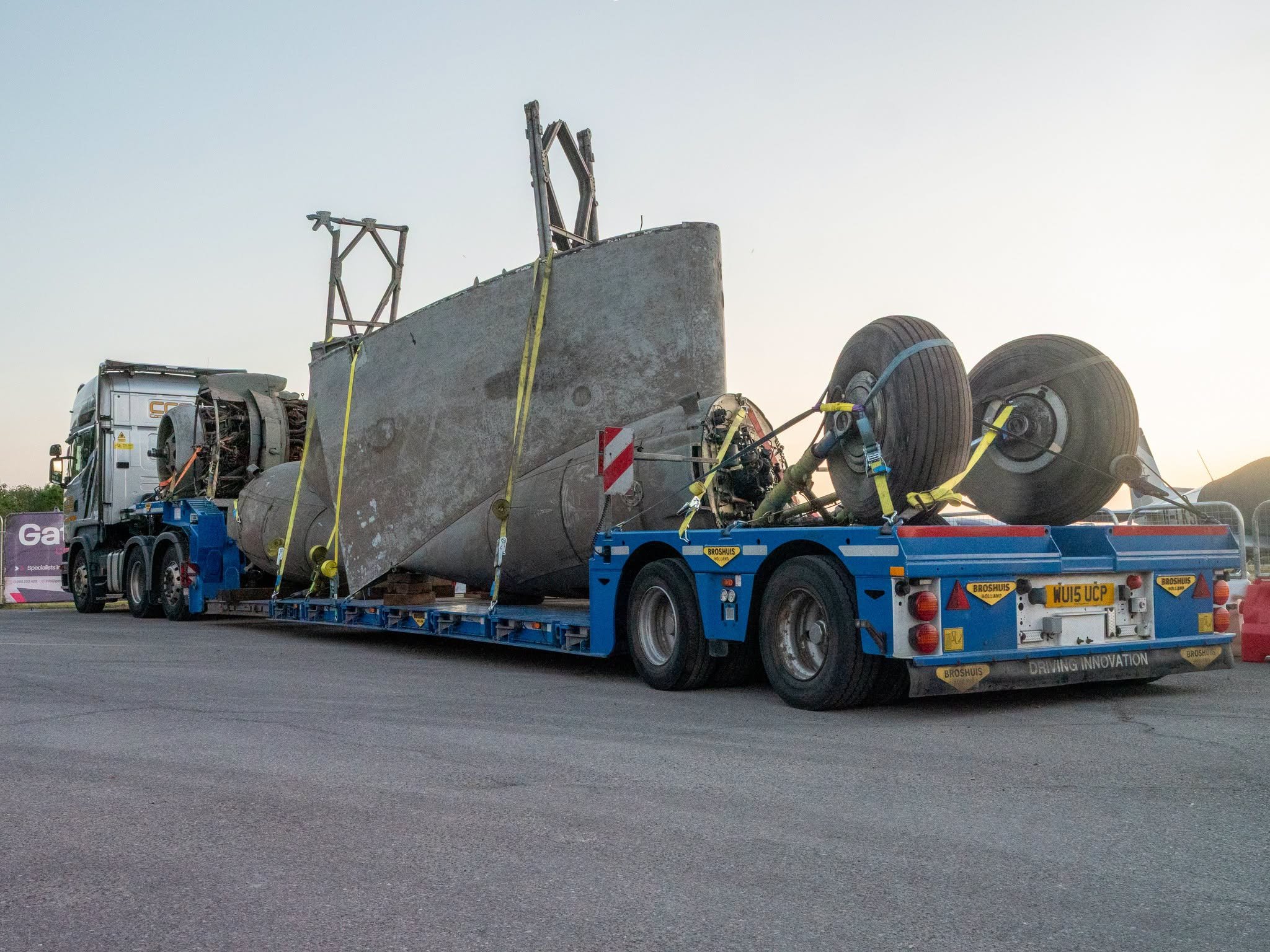
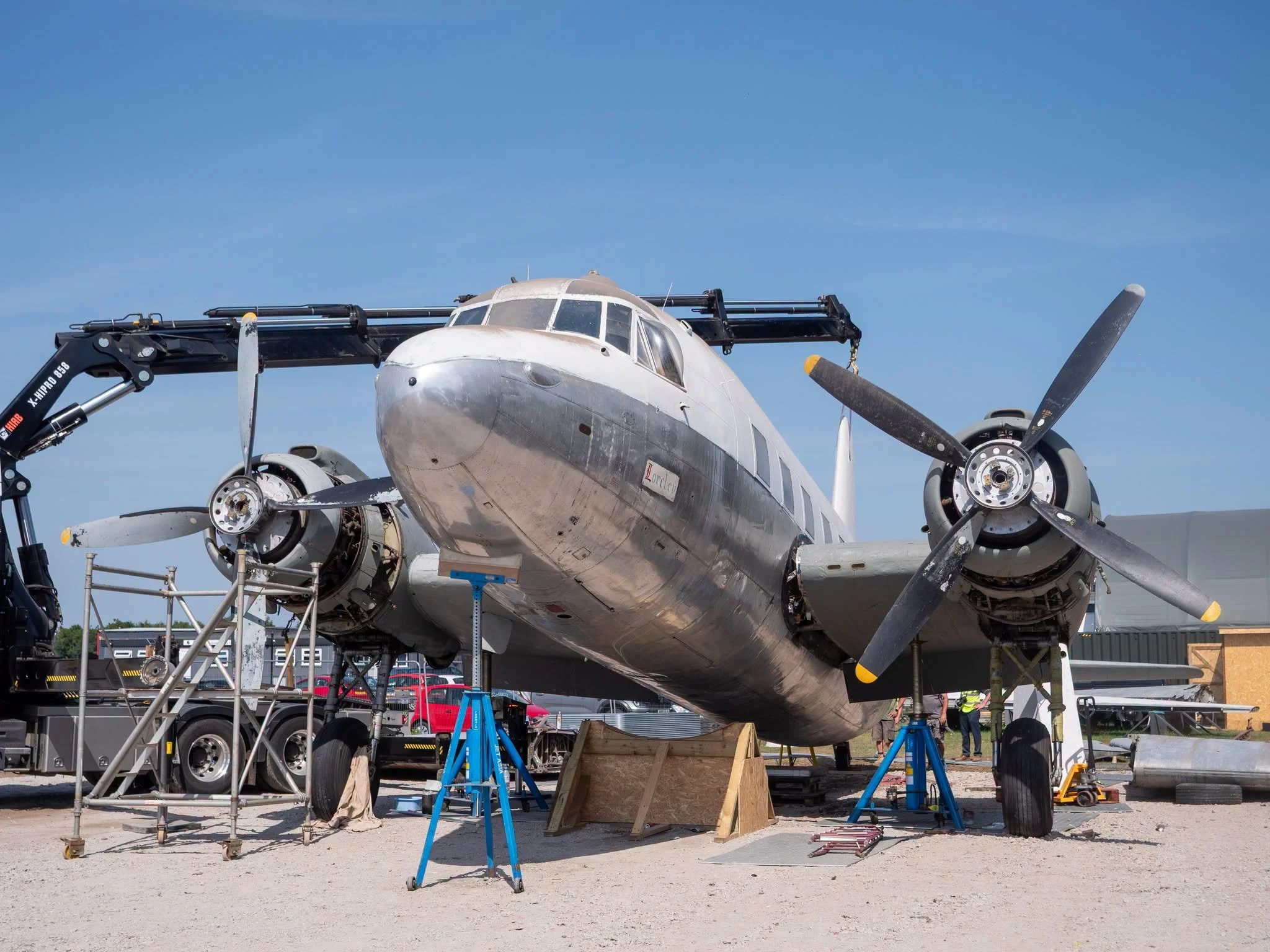
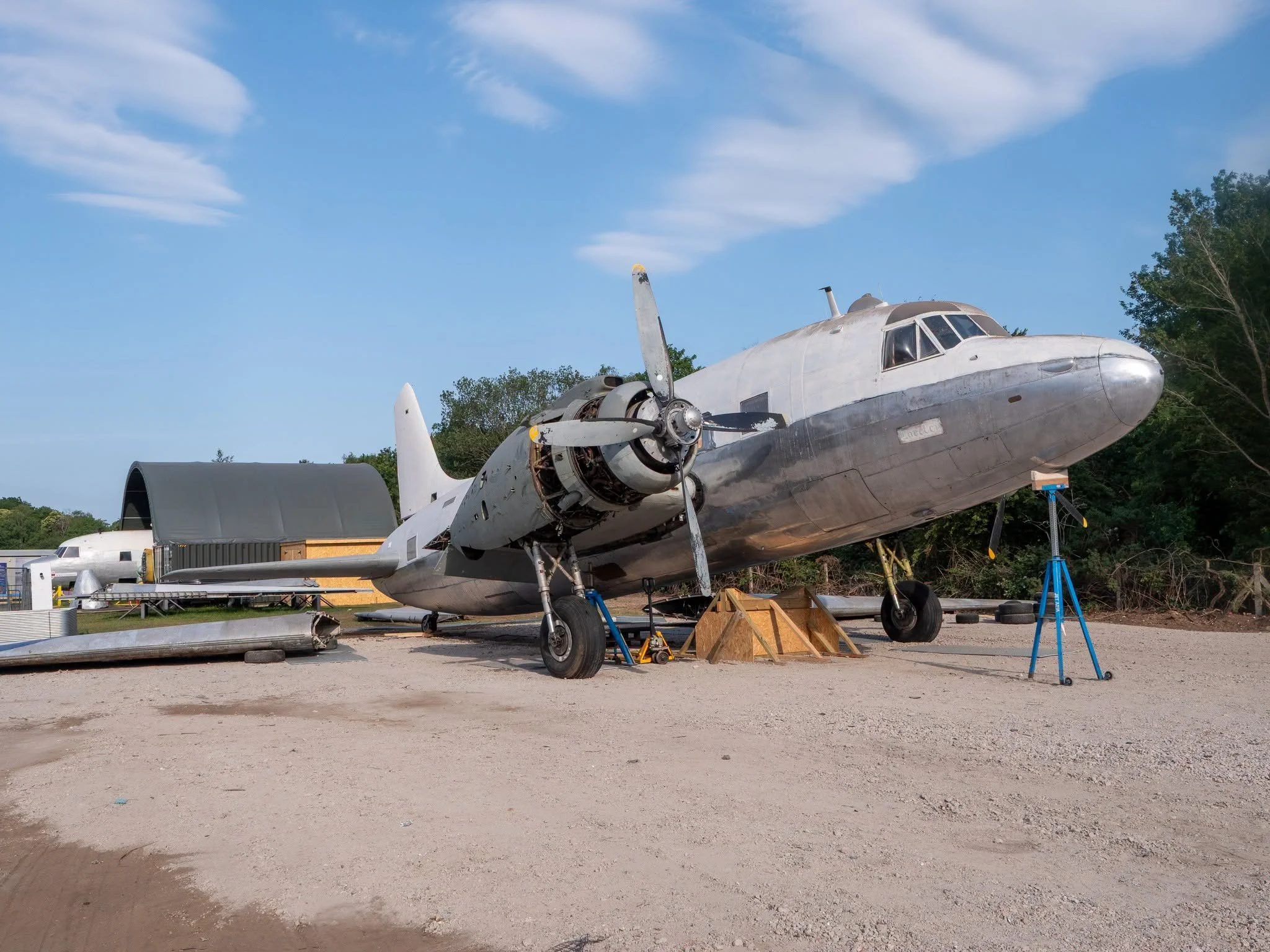
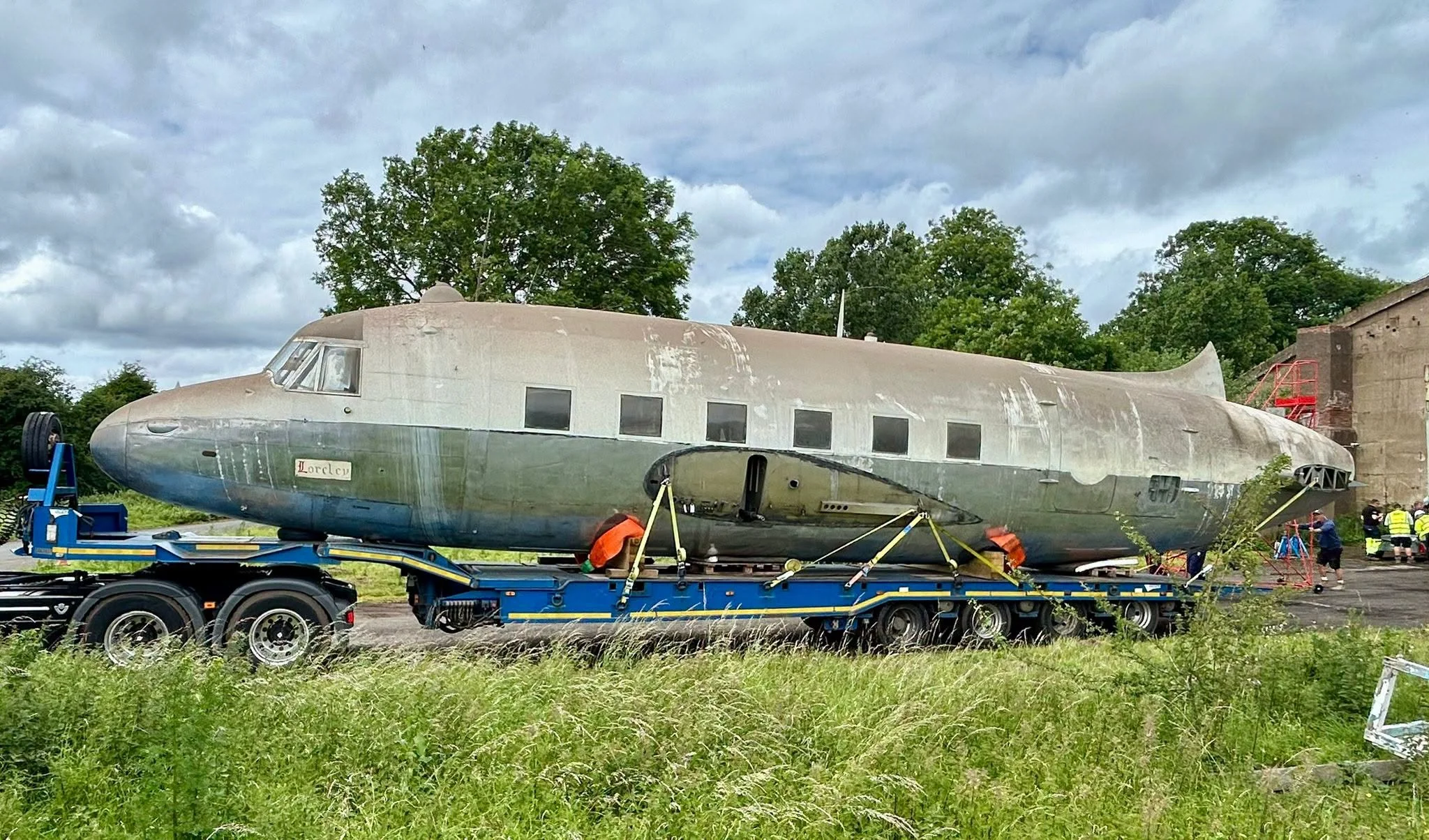
Then, the evening of 18th June saw the biggest news of the last month, when “Loreley” arrived at Blackbushe, on a convoy of 3 low-loader trucks from Cosford.
Here’s a video of the arrival at around 9pm….
With fantastic co-operation from the folks at CCG Commercial and RPM Aviation, and the usual dedication of members of our Tech Team , work to unload the trucks continued on what was thankfully and dry, balmy summers evening into the early hours…
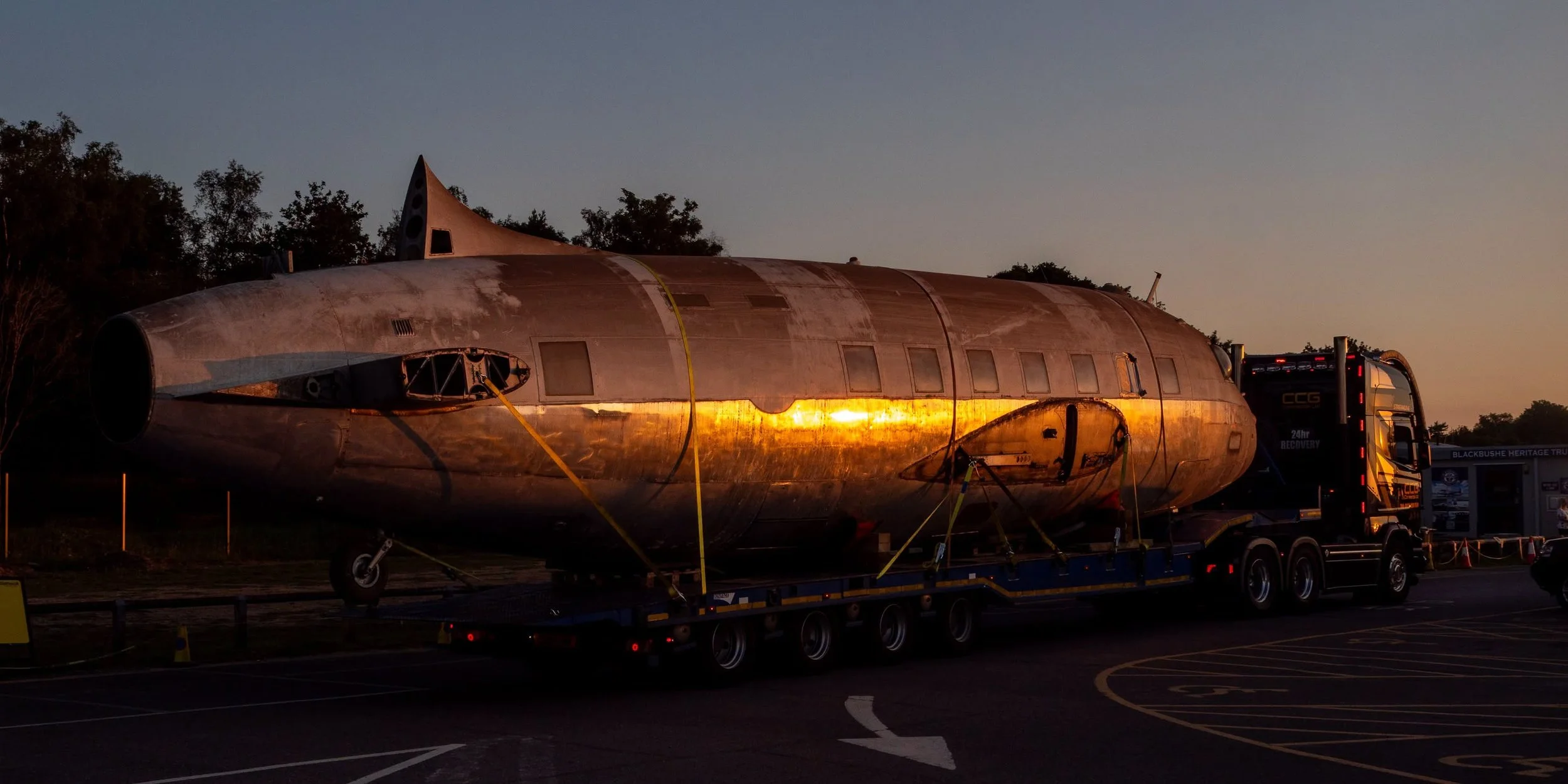
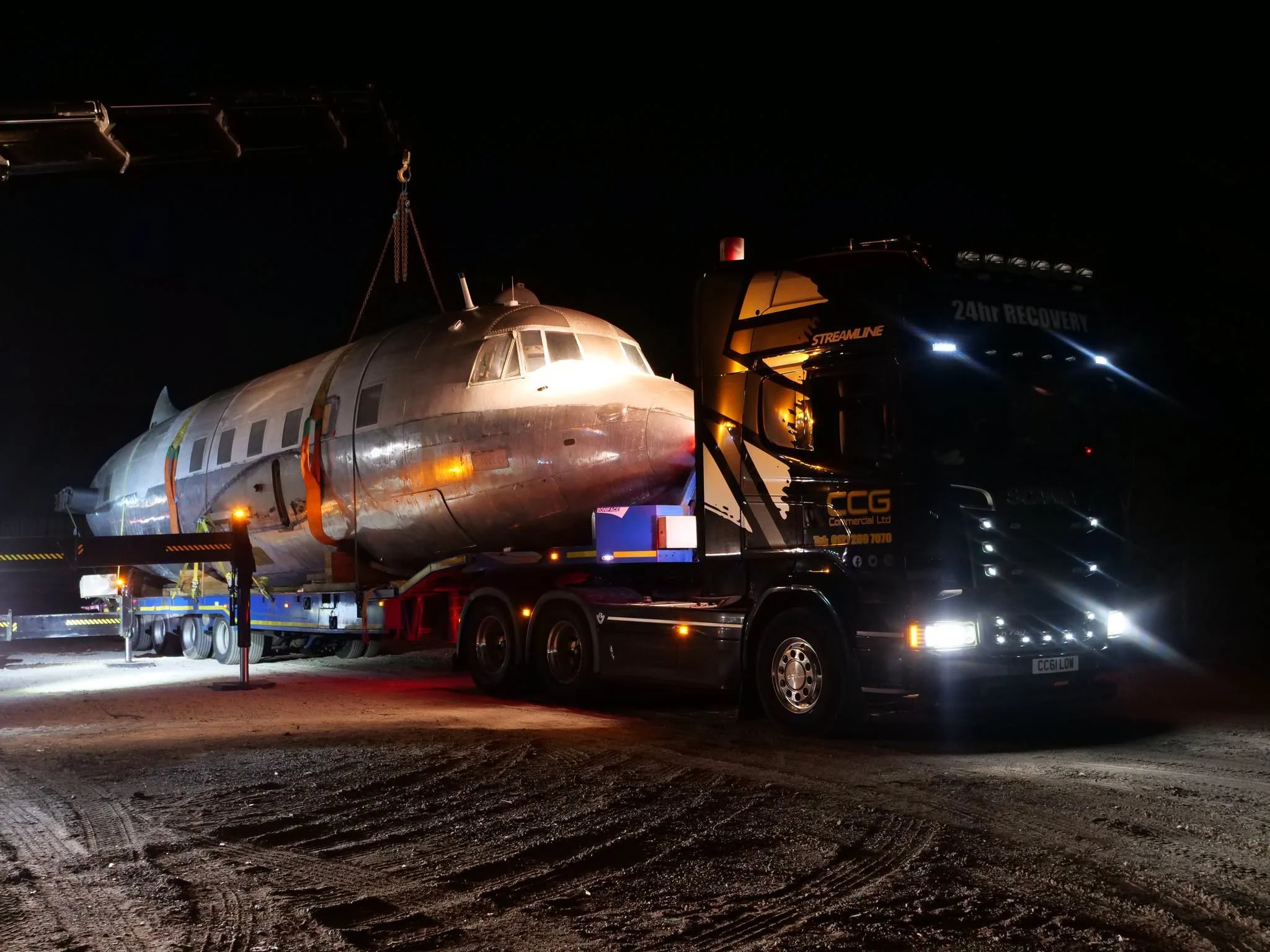
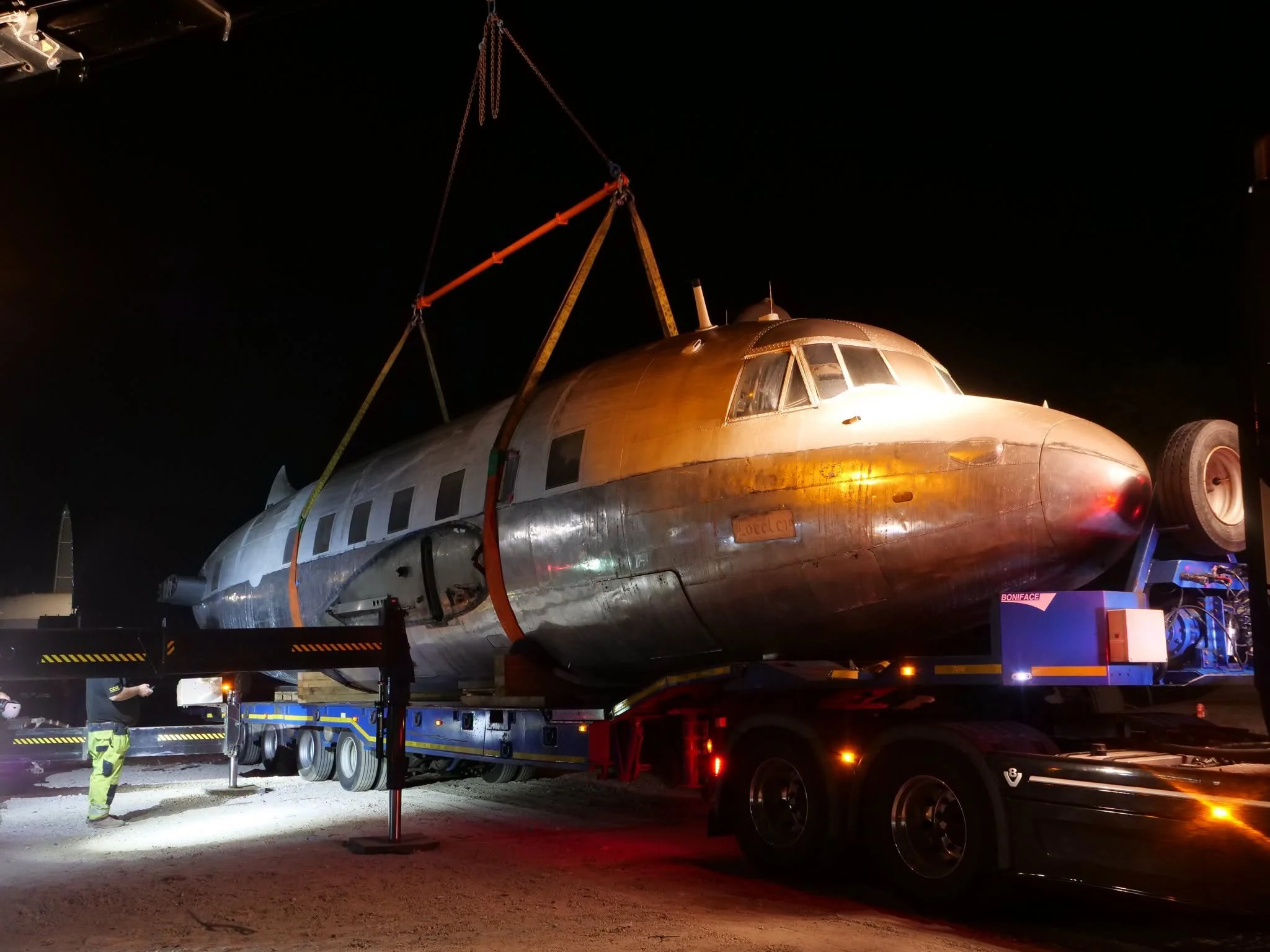
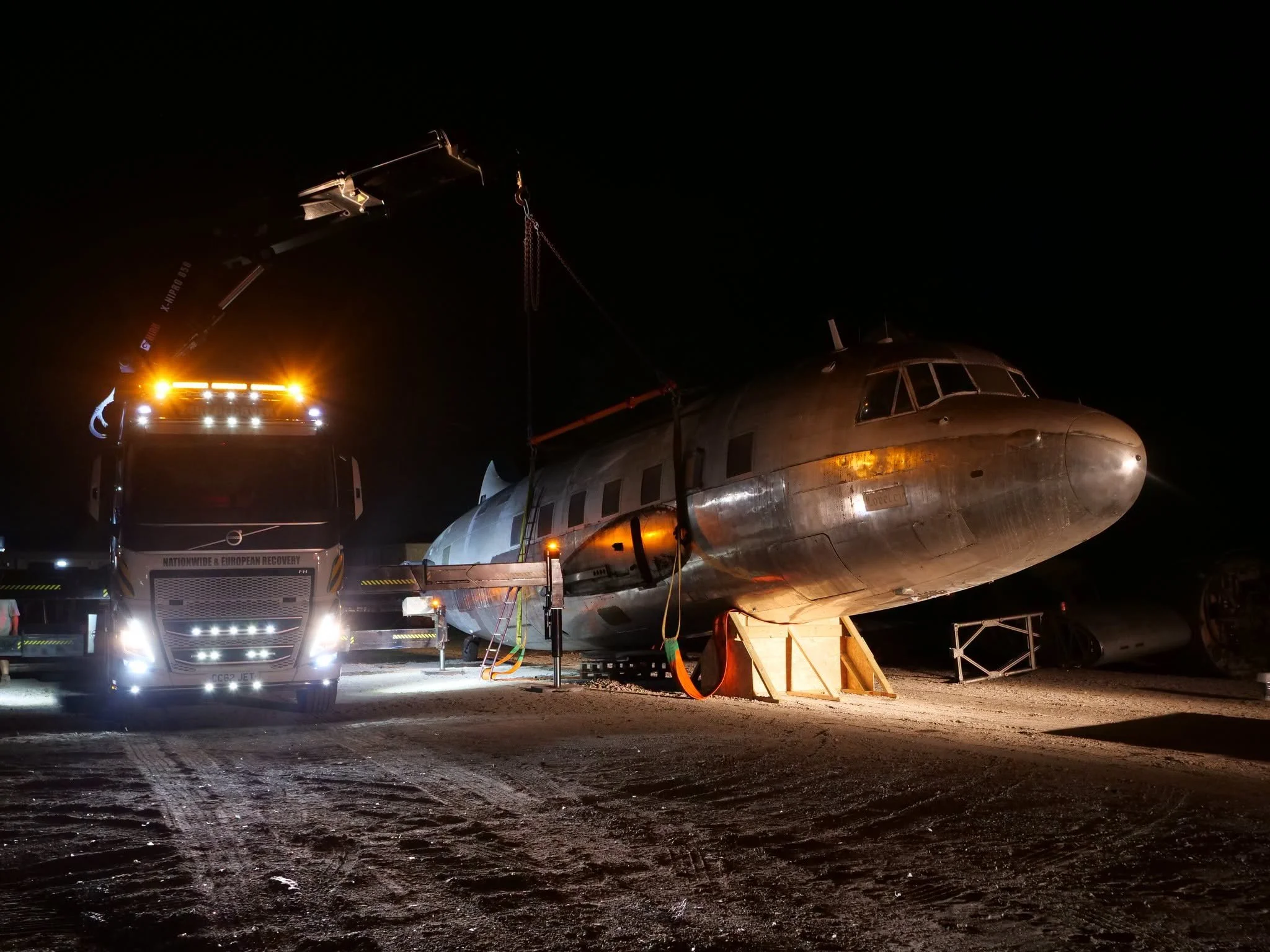
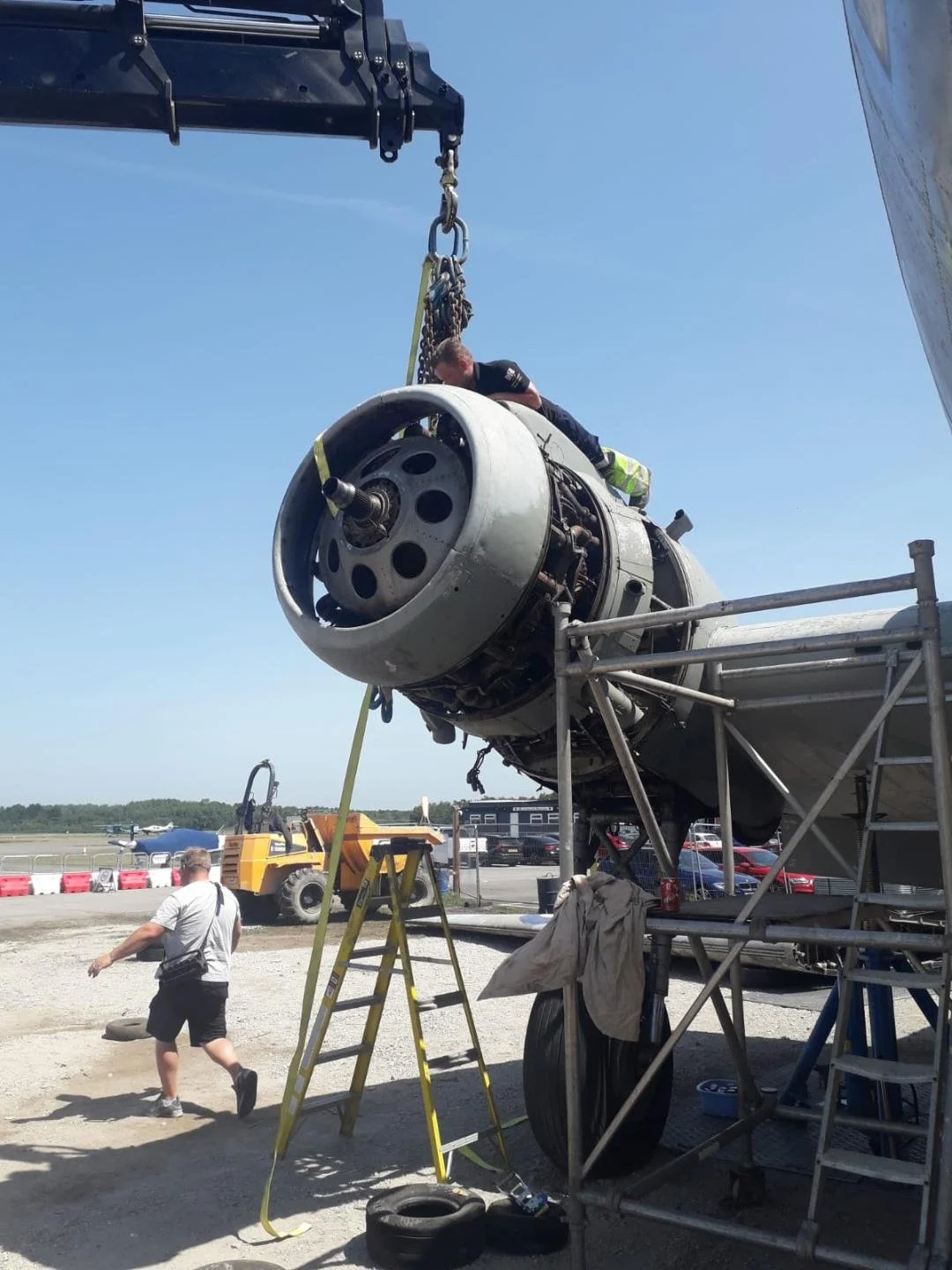
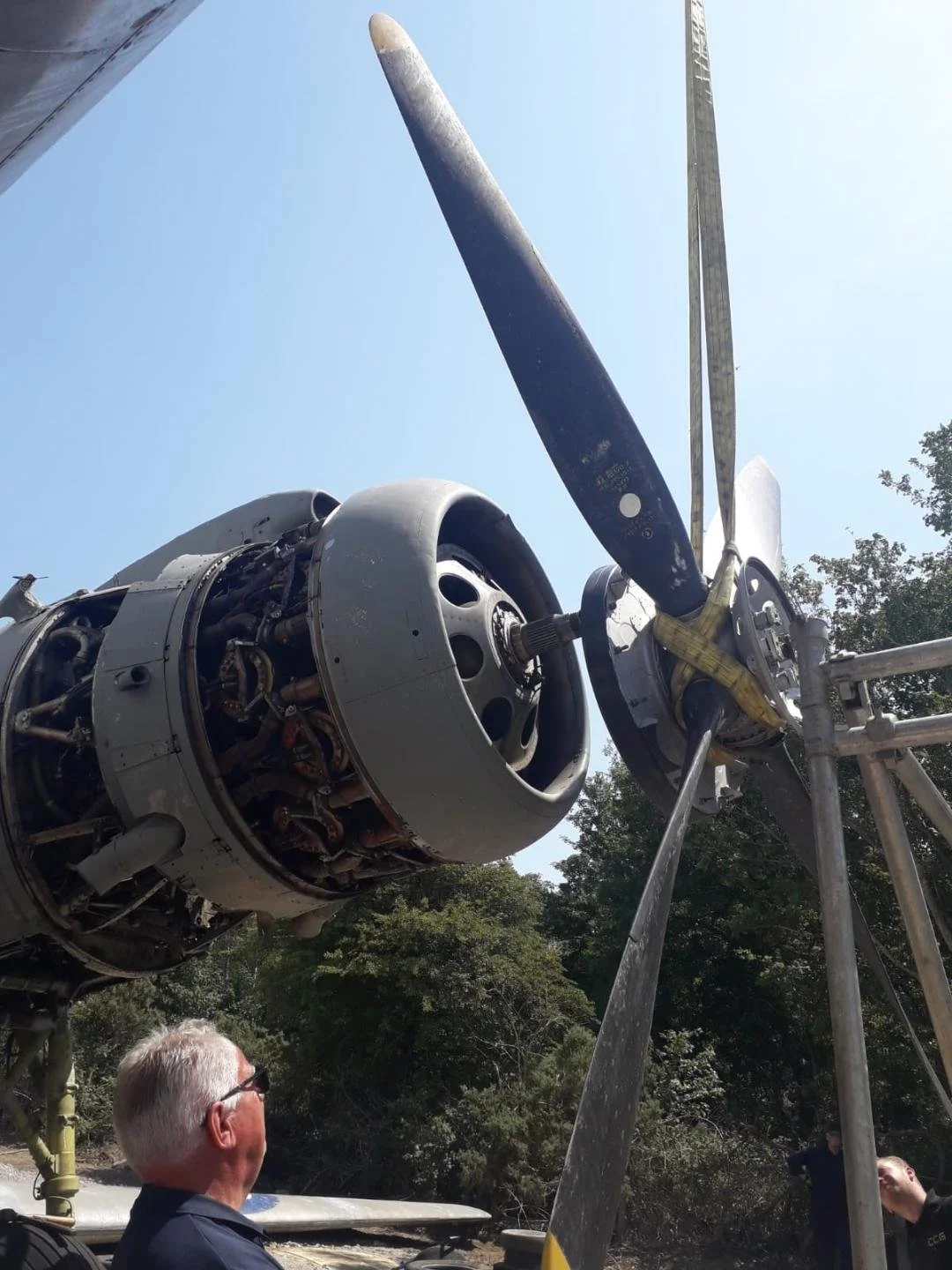
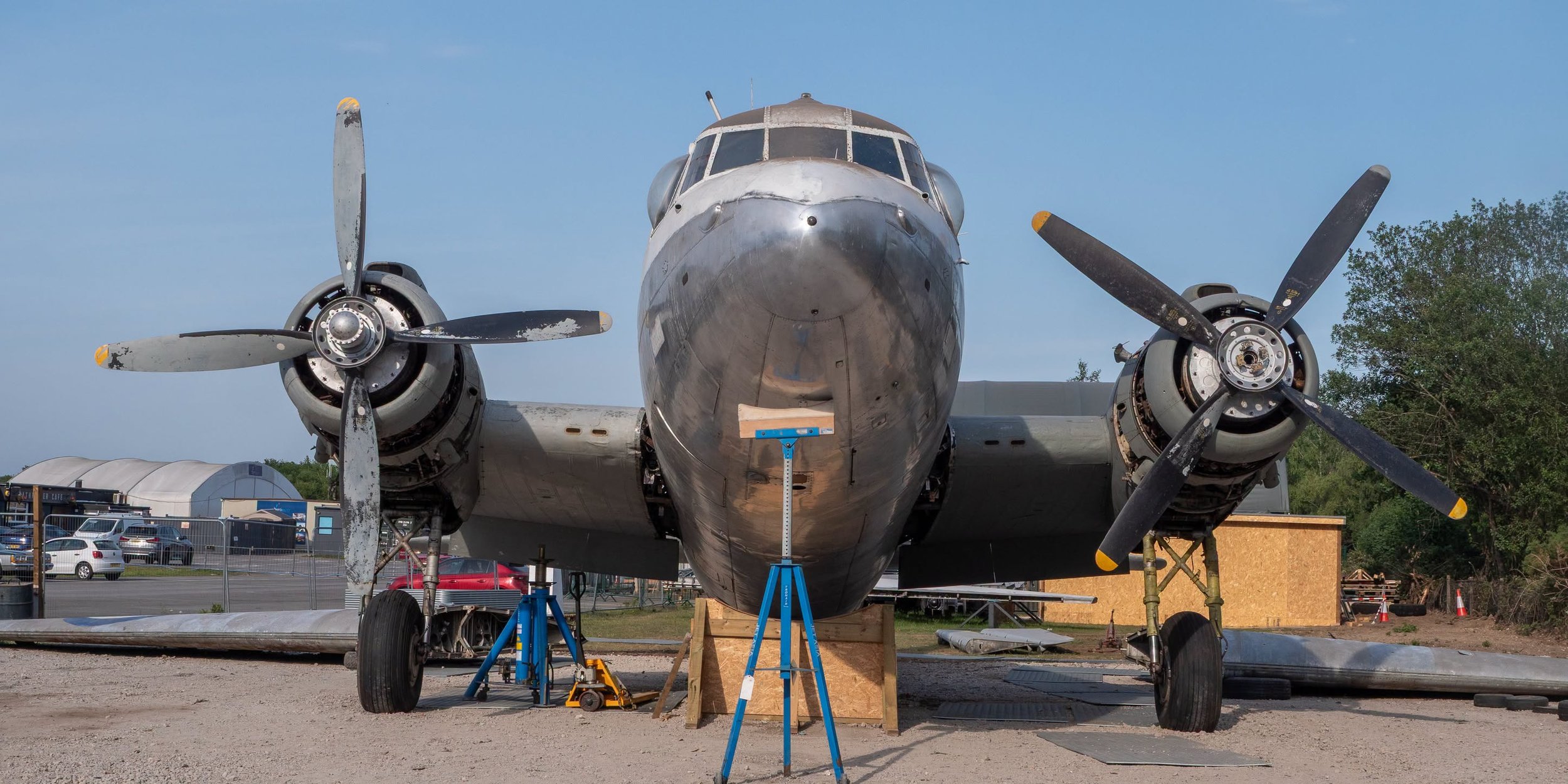
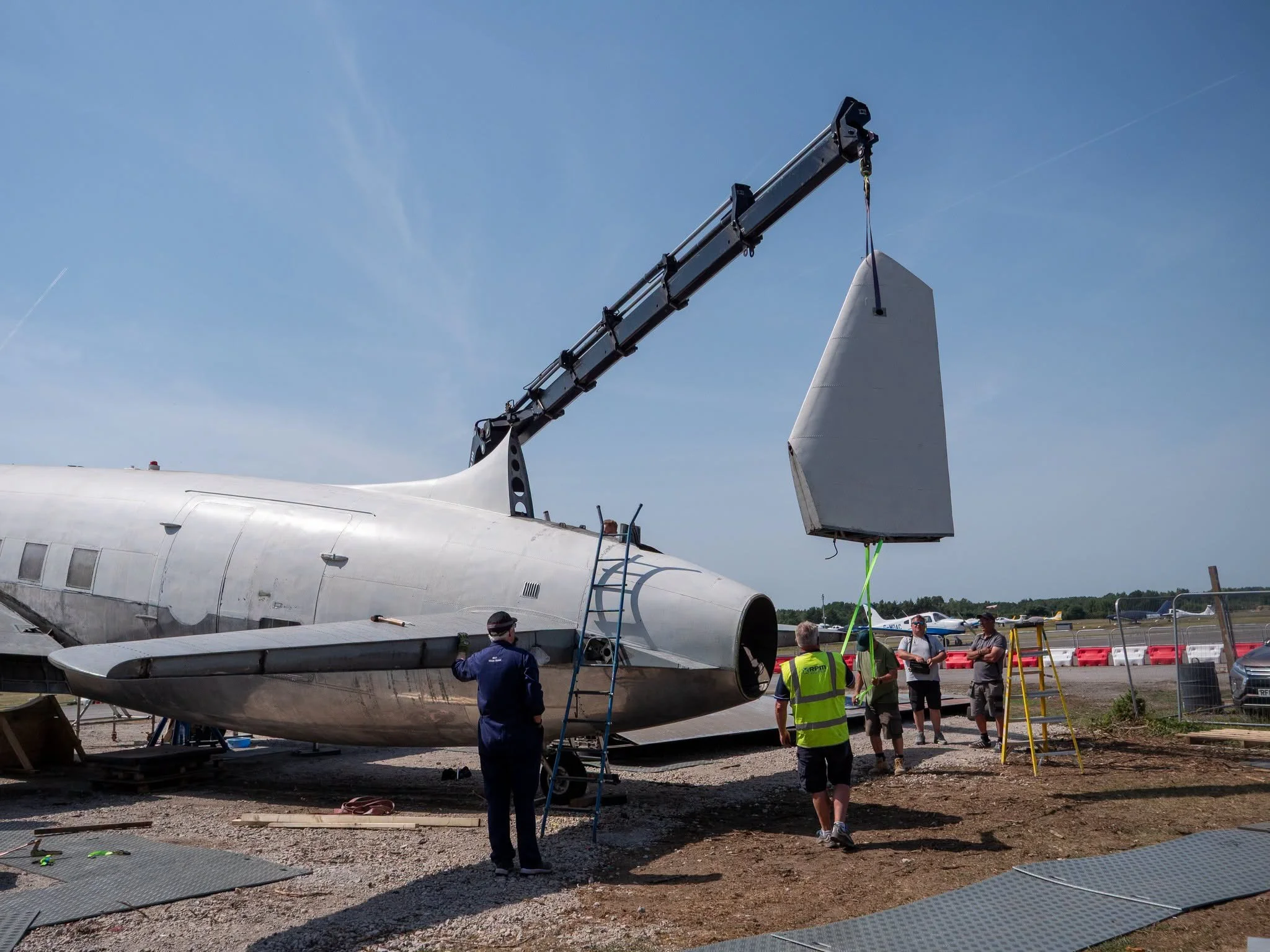
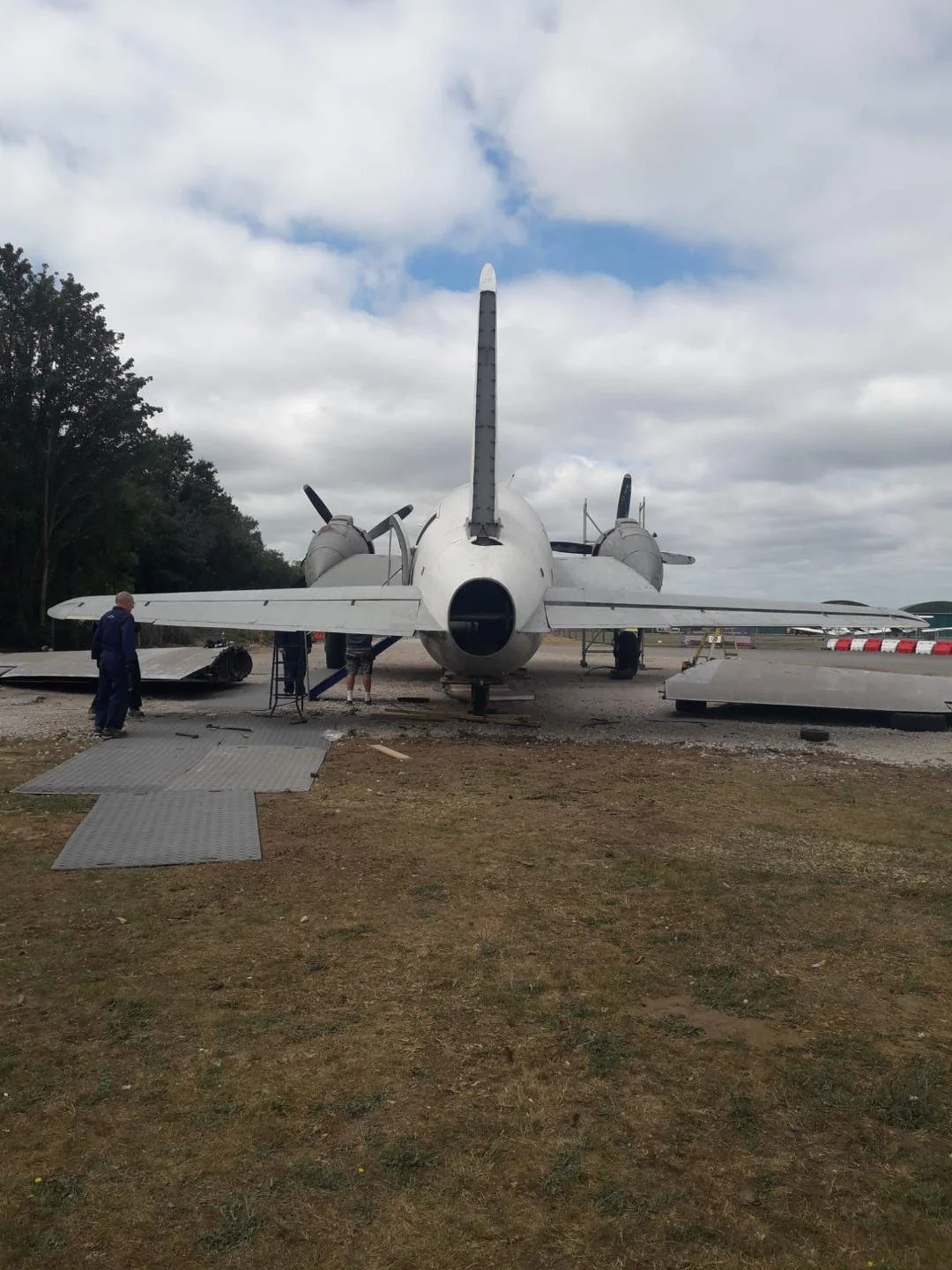
With the aim to have “Loreley” re-assembled as quickly as possible, the next few days saw a period of intensive activity (based largely around when CCG and RPM were available to assist) with the re-assembly of the aircraft, as depicted in the pictures below….
In pictures 1 and 2 we see the engines and propellers being lifted into place and re-attached
Picture 3 shows the detail of re-connections made between the starboard stub-wing and the fuselage
Picture 7 shows one blue propeller spinner re-attached, with one to go
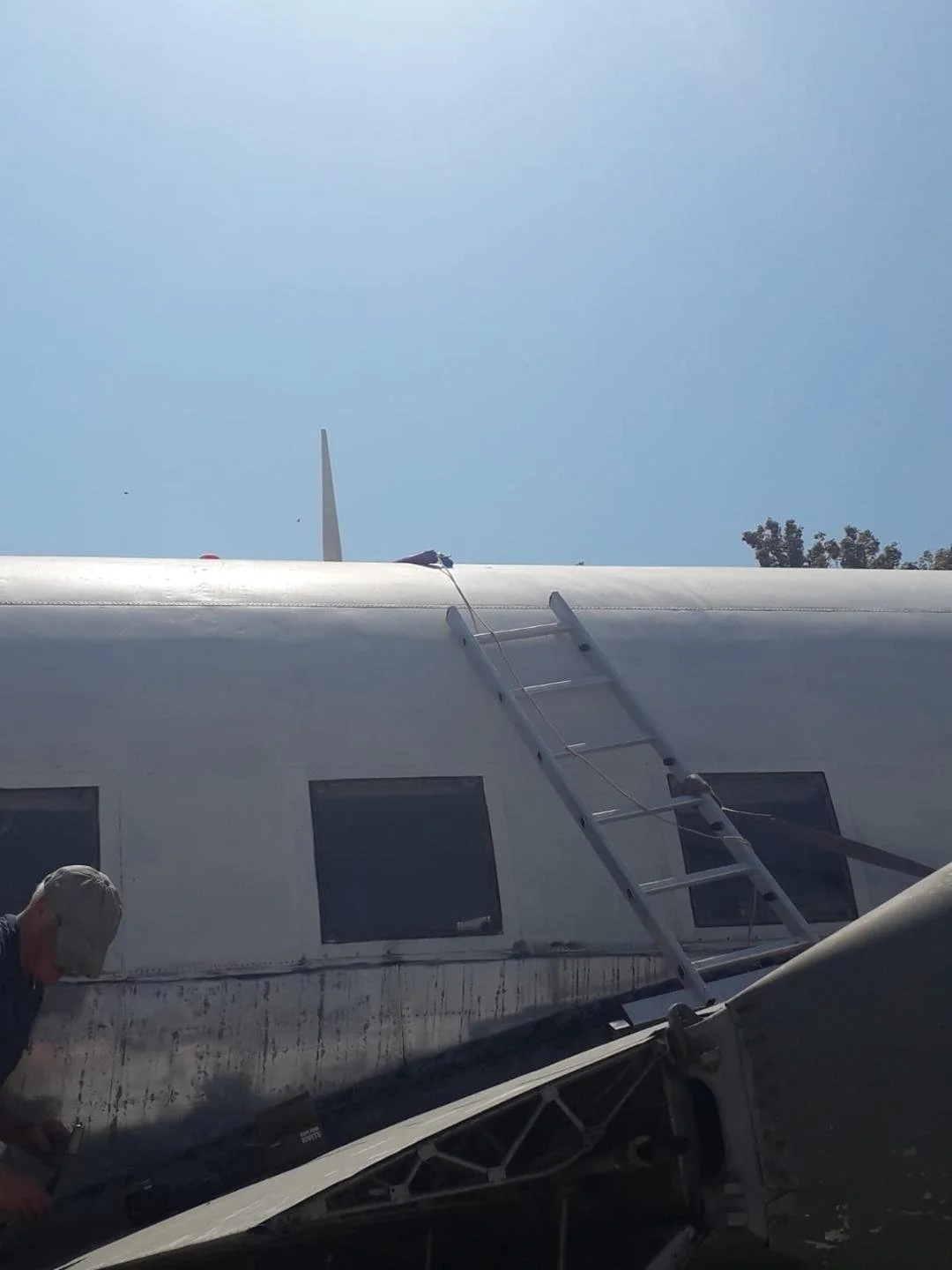
In picture 8 the fin is being hoisted into position, in picture 9 the tail-planes have been re-attached, whilst in picture 10 an aerial that had to be removed for bridge clearance during transportation has been put back in place
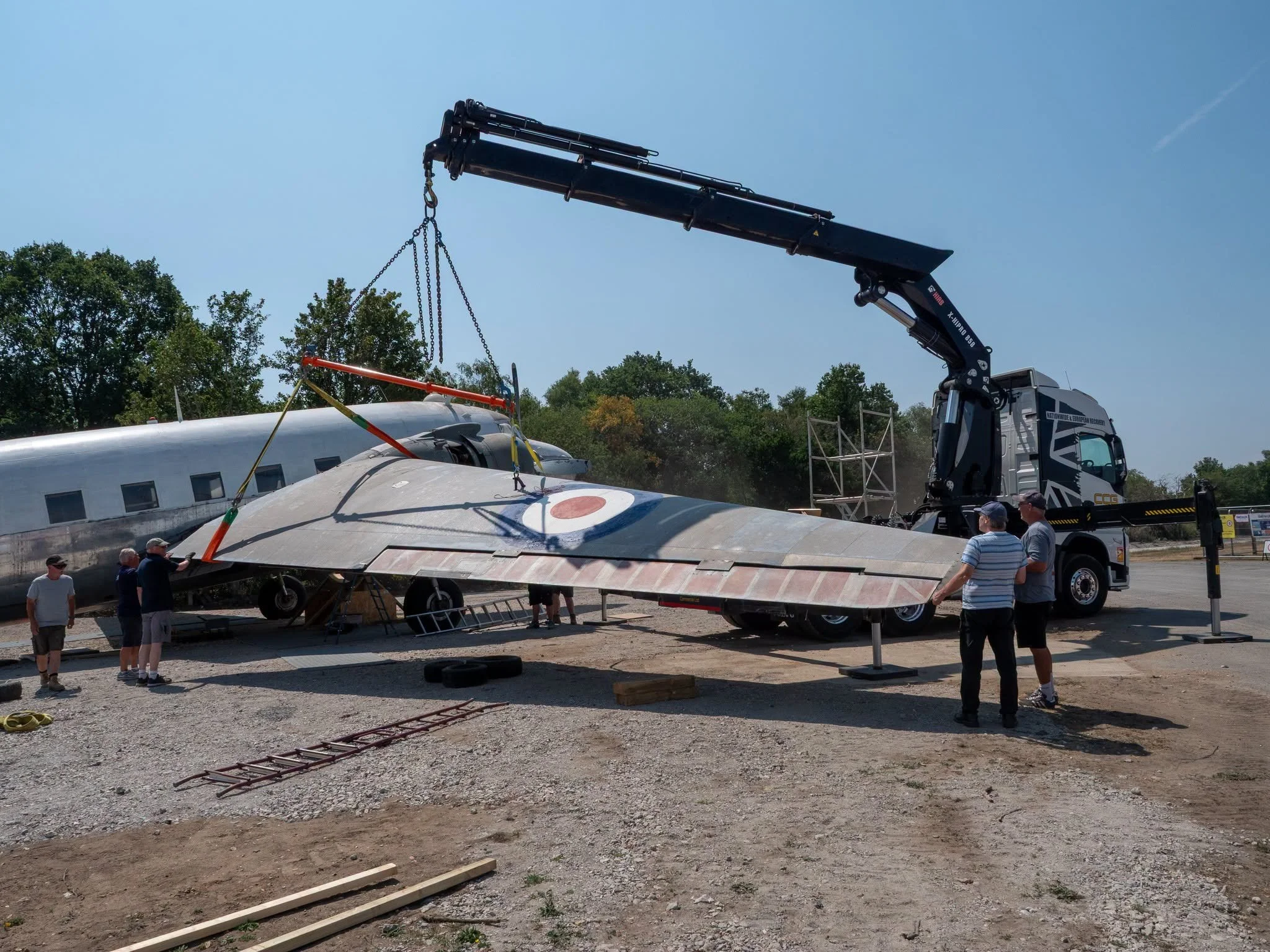
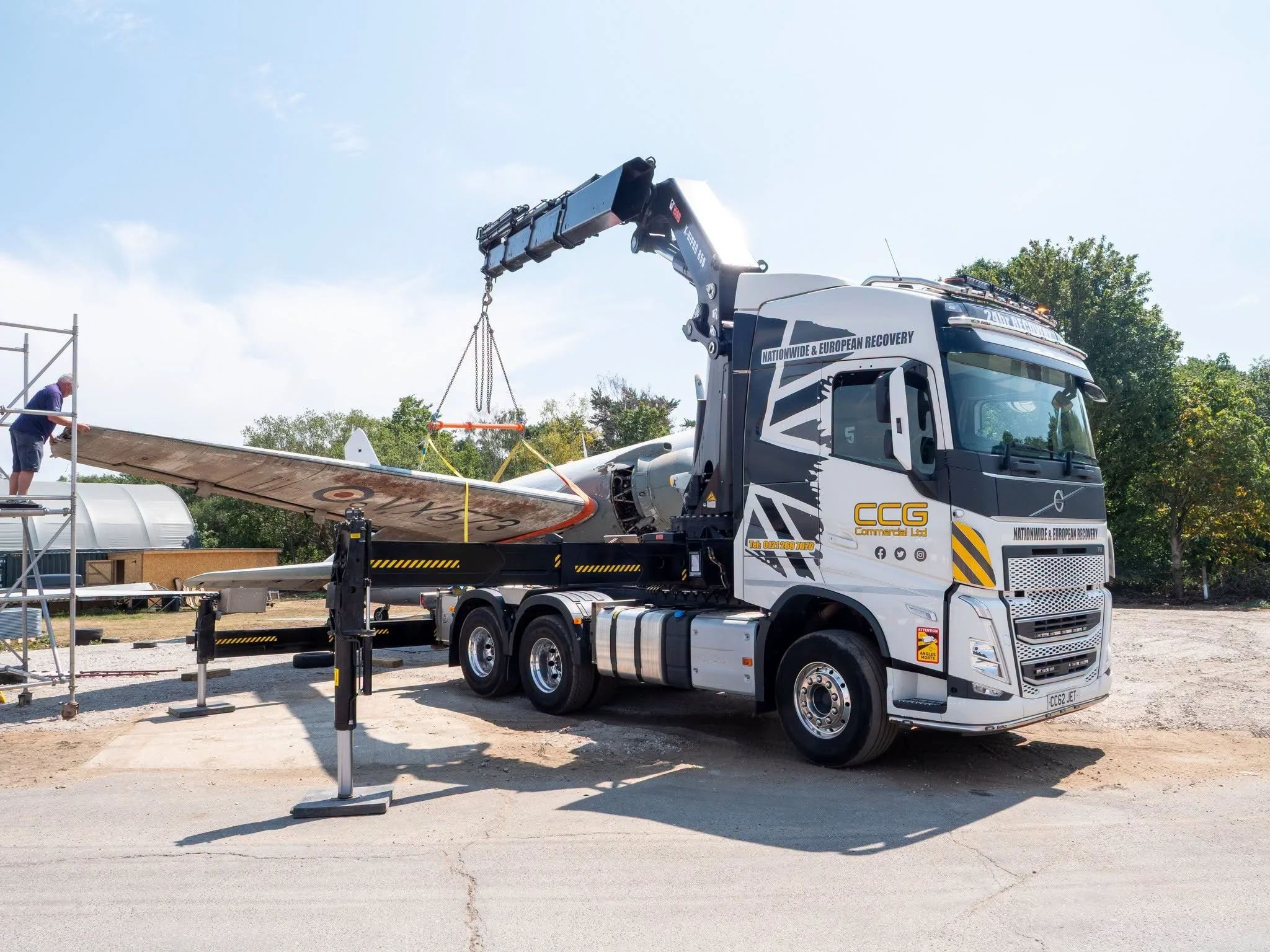
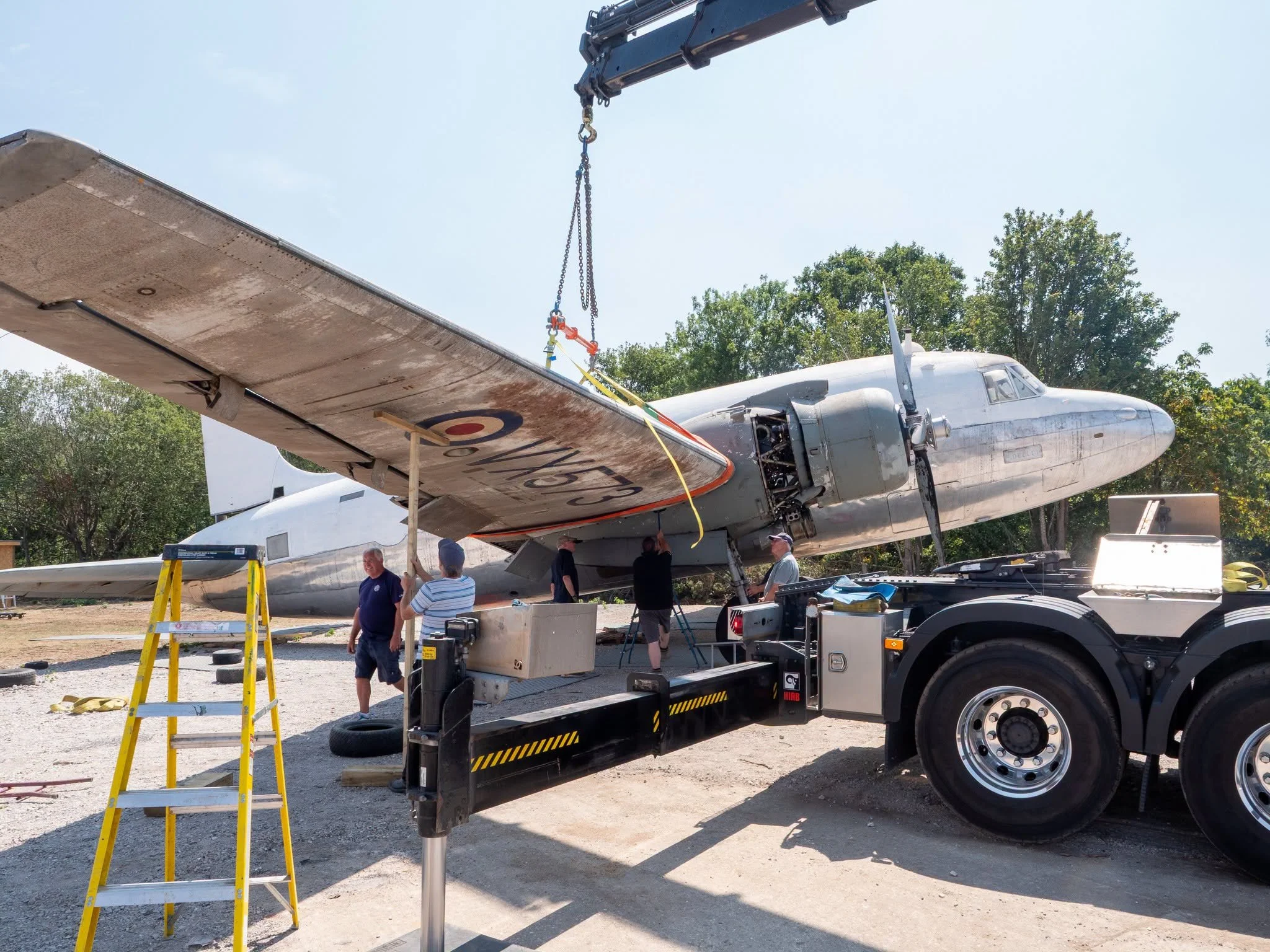
With most of the rest of the major parts of the aircraft re-assembled (the rudder being one outstanding item that will hopefully be covered in the next update), on 9th July, a day on which the truck with crane from CCG Commercial were again available for our use, the outer wings were fitted. It’s worth noting that this was the first time in more than 40 years that they were re-attached to the aircraft, as they had remained separate for all the years that “Loreley” was in storage at RAF Cosford….bearing that in mind, the job was completed with no major issues!
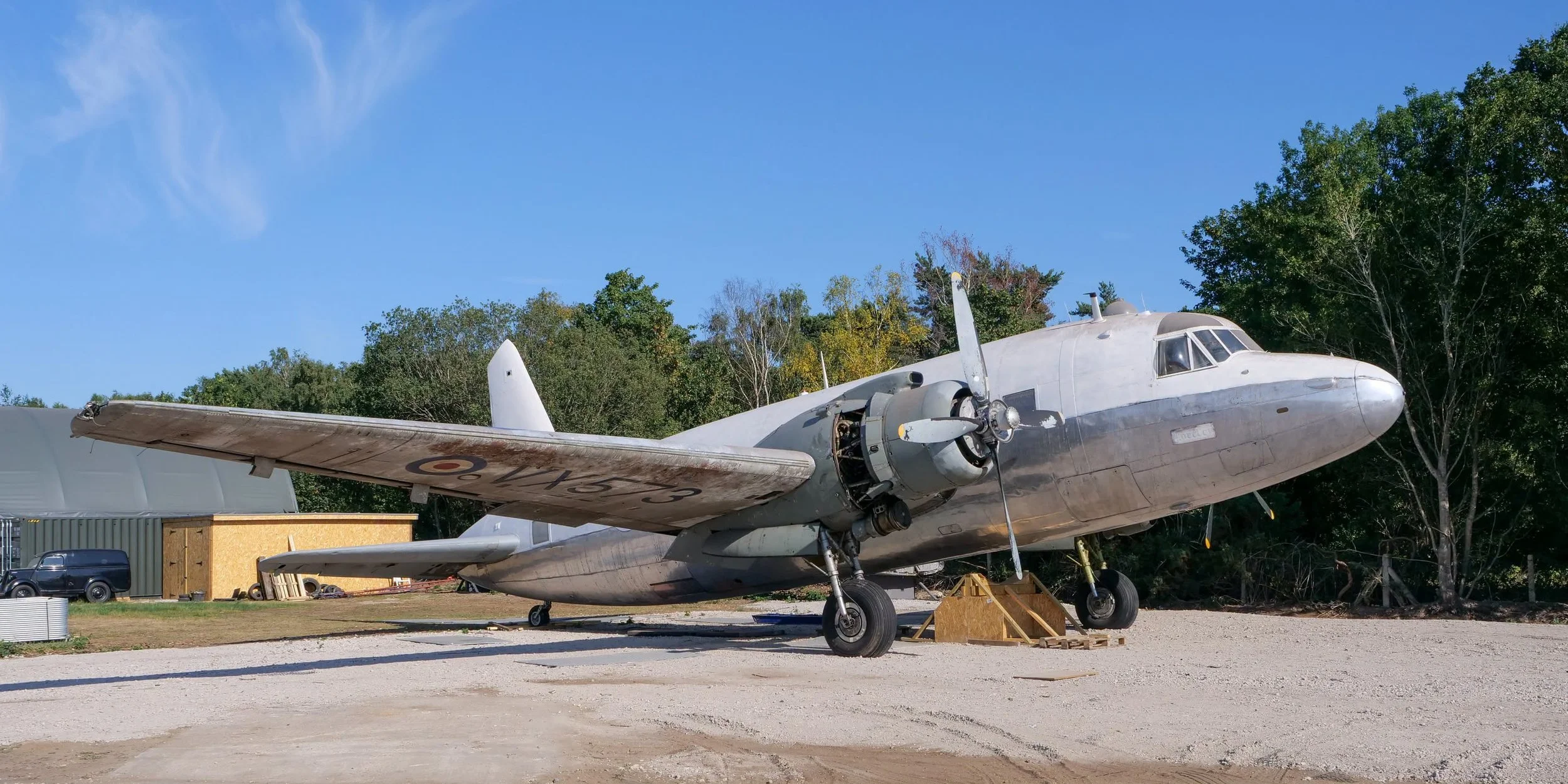
Once the remaining re-construction is complete, “Loreley” will be handed-over to a “Care and Maintenance” Team who are tasked with making sure that she is looked-after, kept clean and, in the not-to-distant future, available for public viewing.
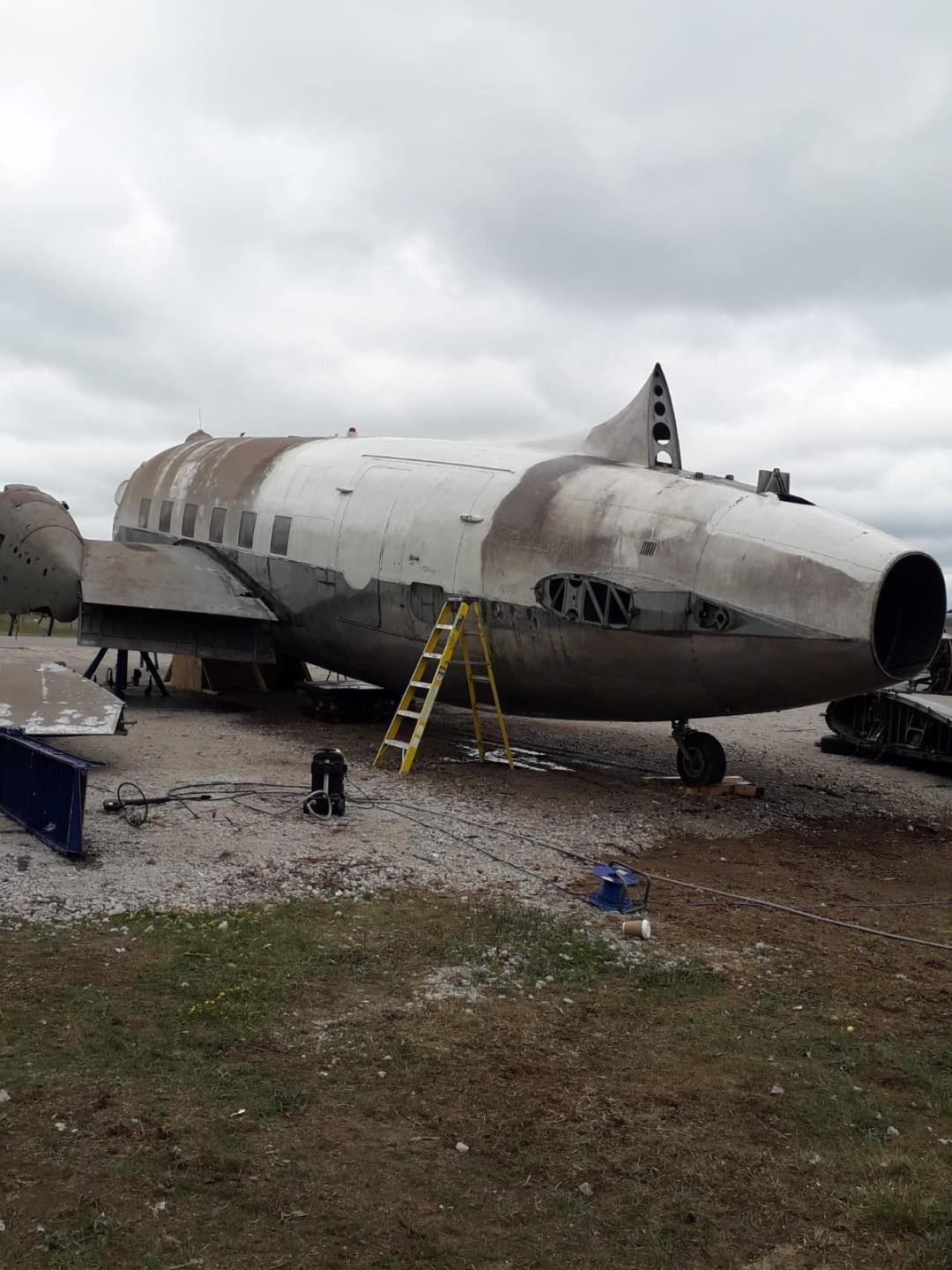
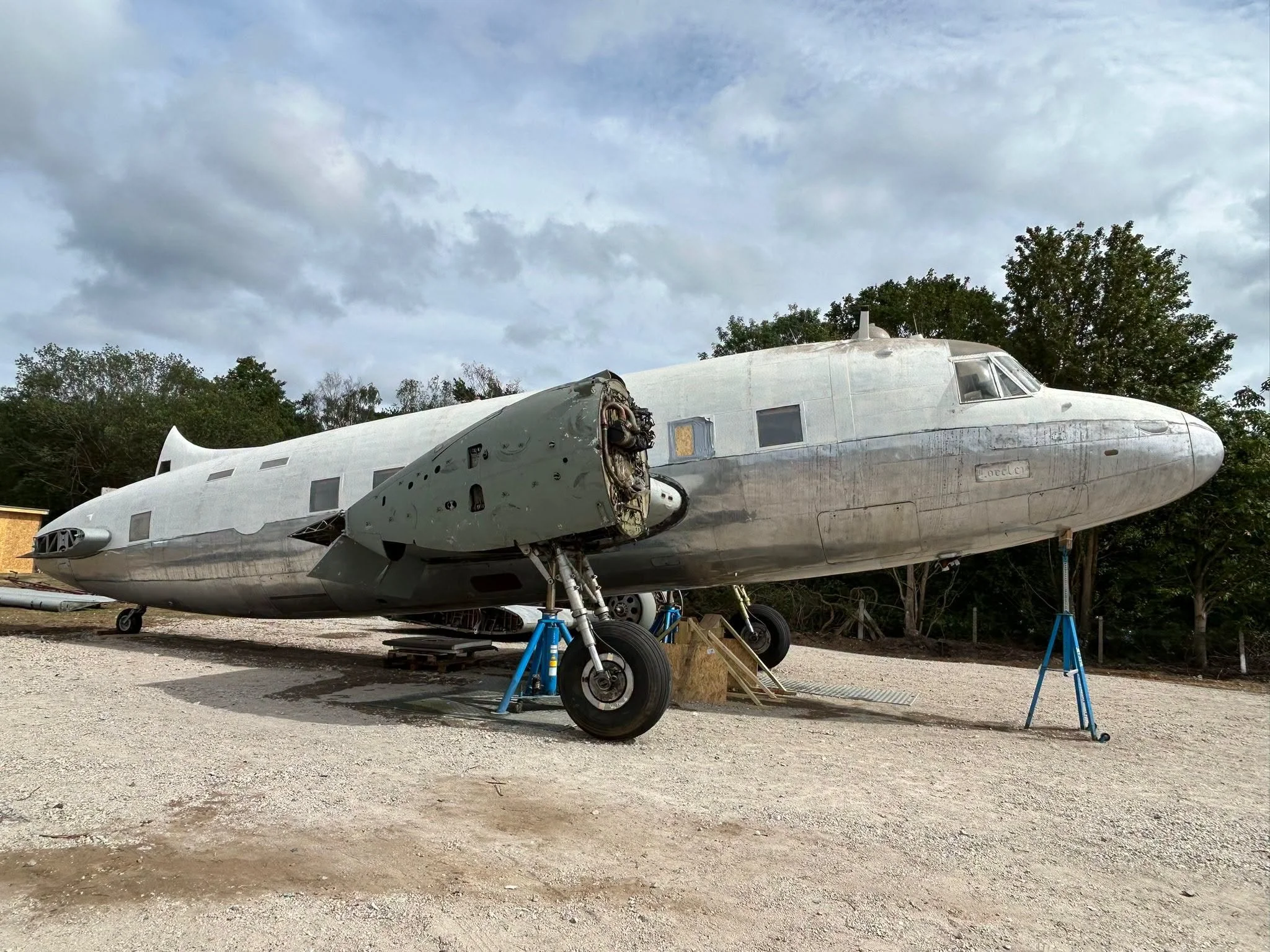
The final few pictures for this update are “before, during and after” views of how much cleaning has already been done….the first picture showing the (very dirty and dusty) fuselage as she was leaving RAF Cosford, the second “work-in-progress” and the third how much cleaner she looks already! (taken before the engines and wings were re-attached)
In the next update, we’ll cover the remaining re-assembly of “Loreley” and the latest developments on “Vagabond”.
June 4th update
Summer seemed to arrive a bit prematurely at Blackbushe during May and saw our volunteers working in almost tropical conditions on their usual Wednesday and Saturday turnouts, with temperatures well into the 30’s centigrade at times.
Work and progress has continued on many parts of “Vagabond” that will be familiar to those of you who’ve been following this story as it develops. The words and pictures below look to convey some of the most recent activity.
Before we look at that, and going back to the end of April, Euan Bentley, who regularly attends biker meets at Blackbushe, generously donated us the “English Wheel” seen in the picture below. These are used for metal forming, and it’s a great addition to the facilities we already have onsite for this type of work.
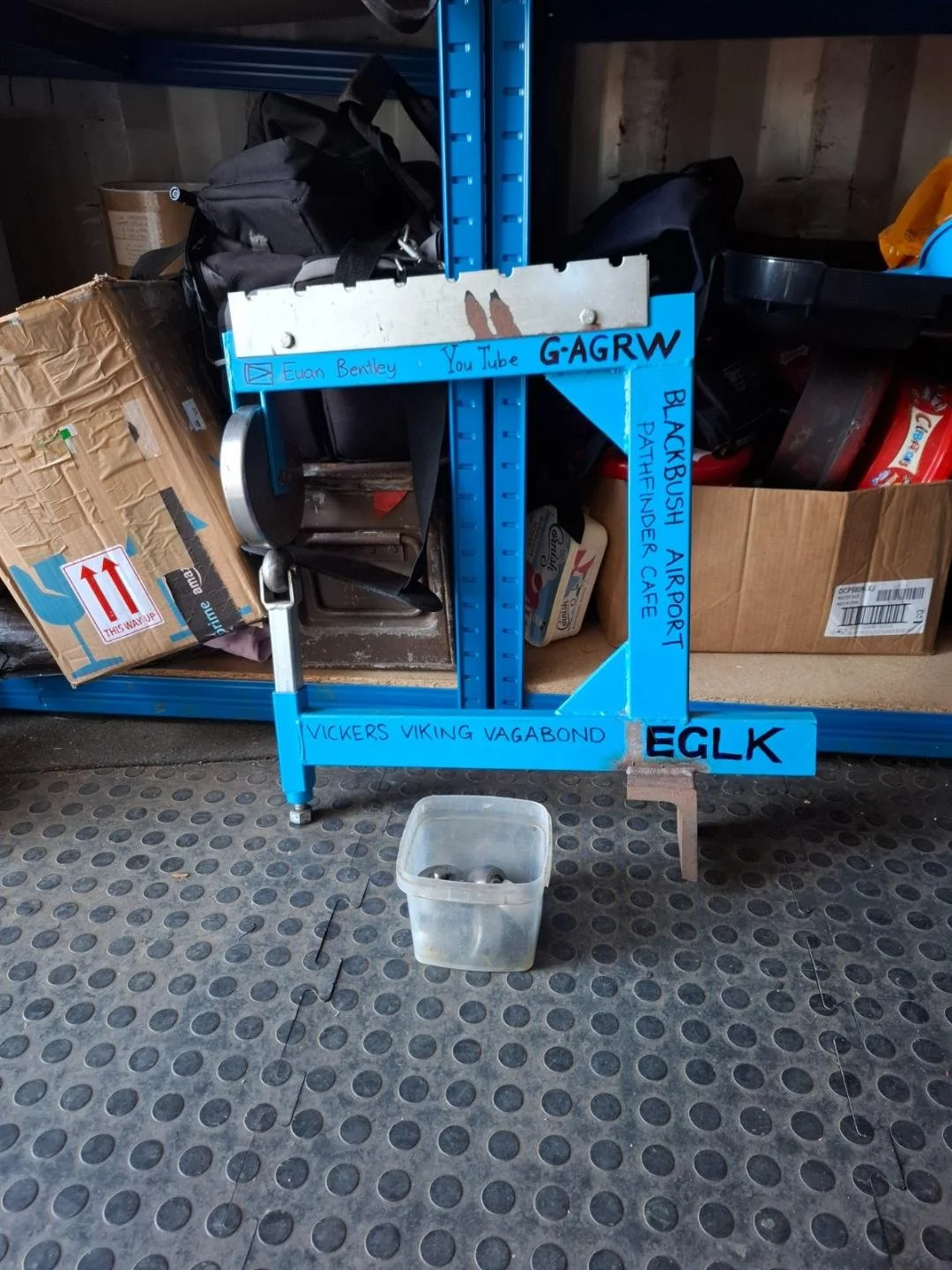
The “English Wheel” donated by Euan Bentley
In terms of the update on ongoing work, some of the highlights of recent activity have been as follows….
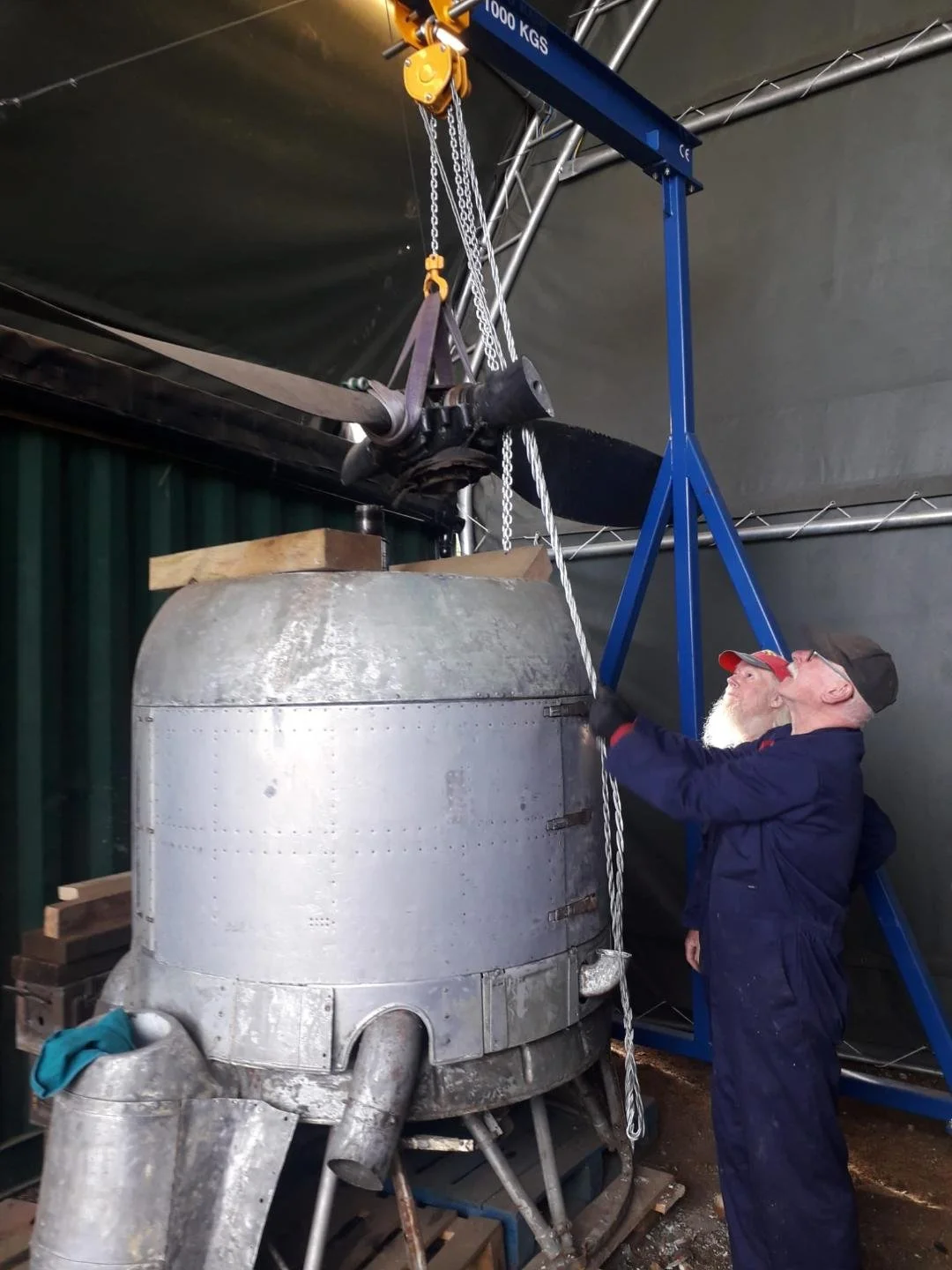
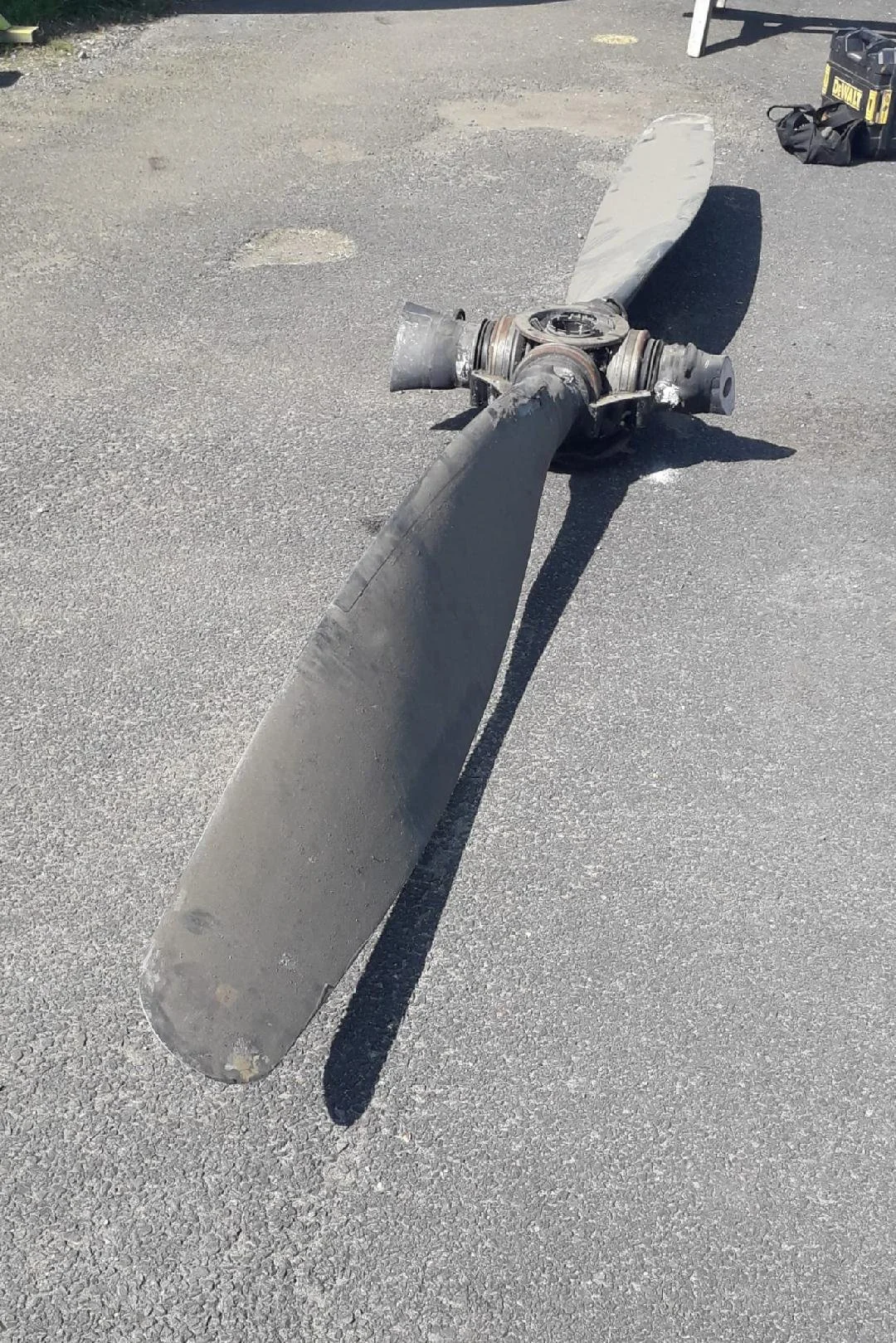
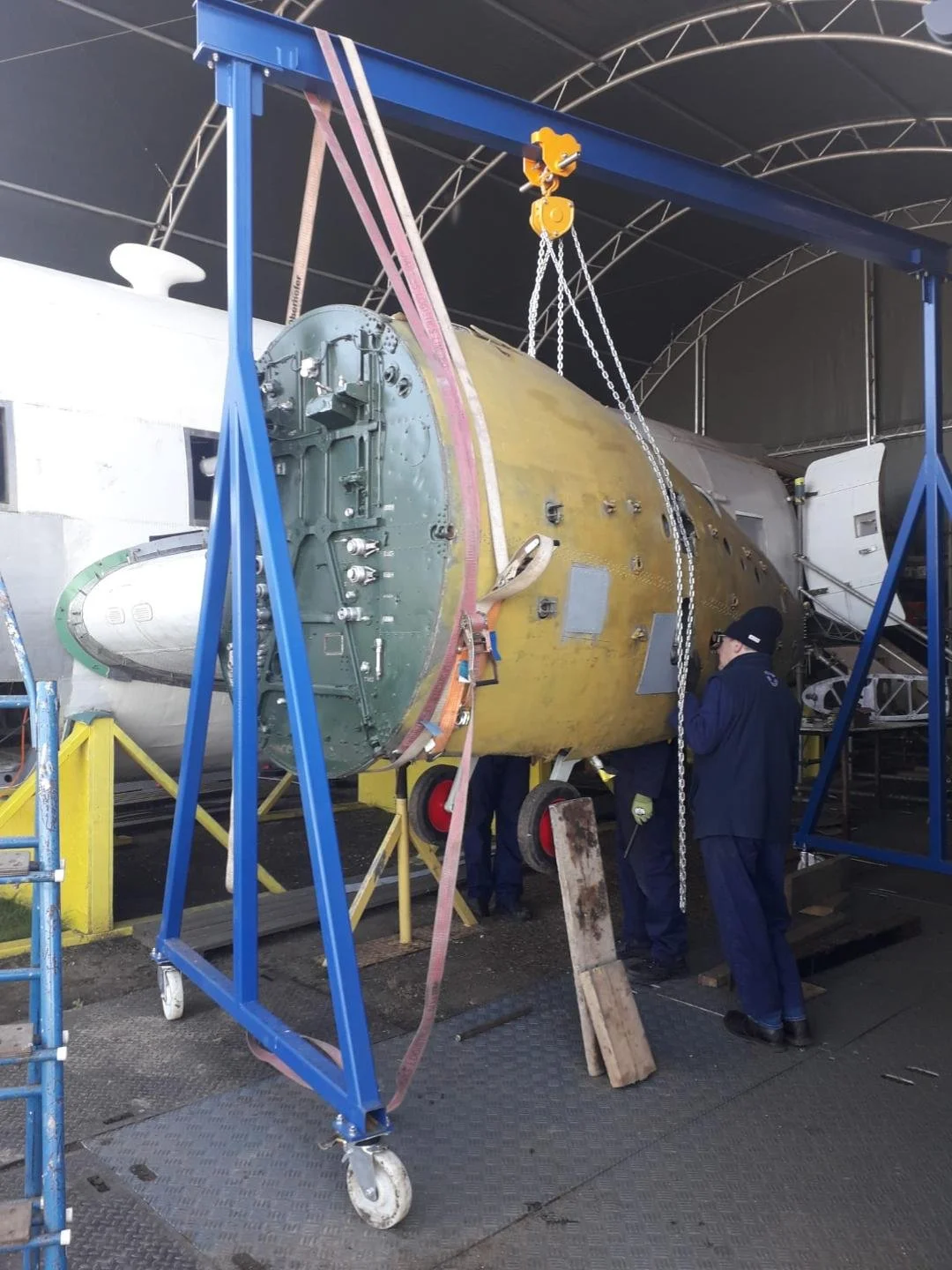
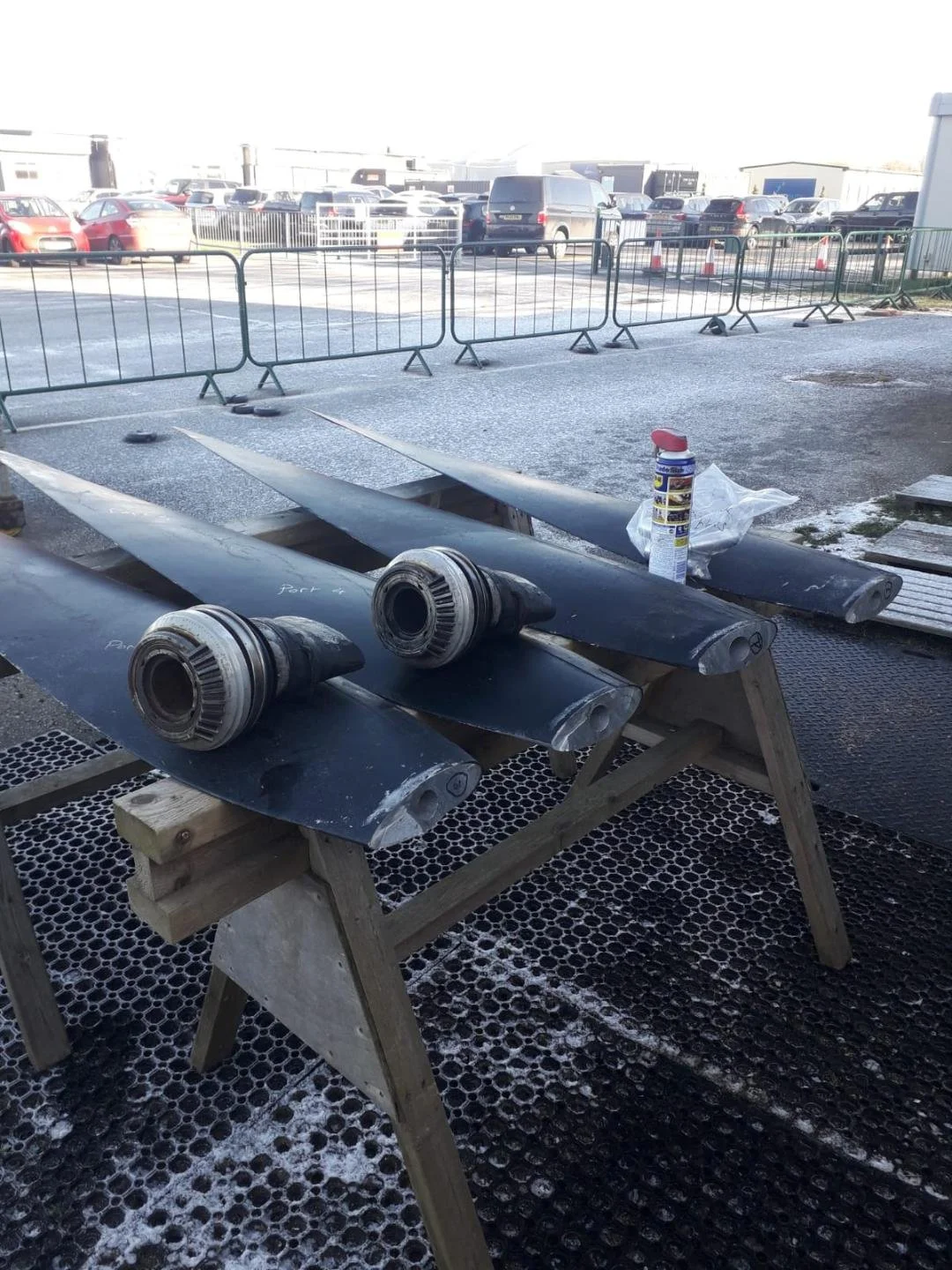
A potentially tricky job was the disassembly of the starboard propeller, so that the blades that were cut in Austria so that we could get them onto the transport back to the UK could be welded back together. A plan was made and, in the end, the job was perhaps not as problemmatic as expected!
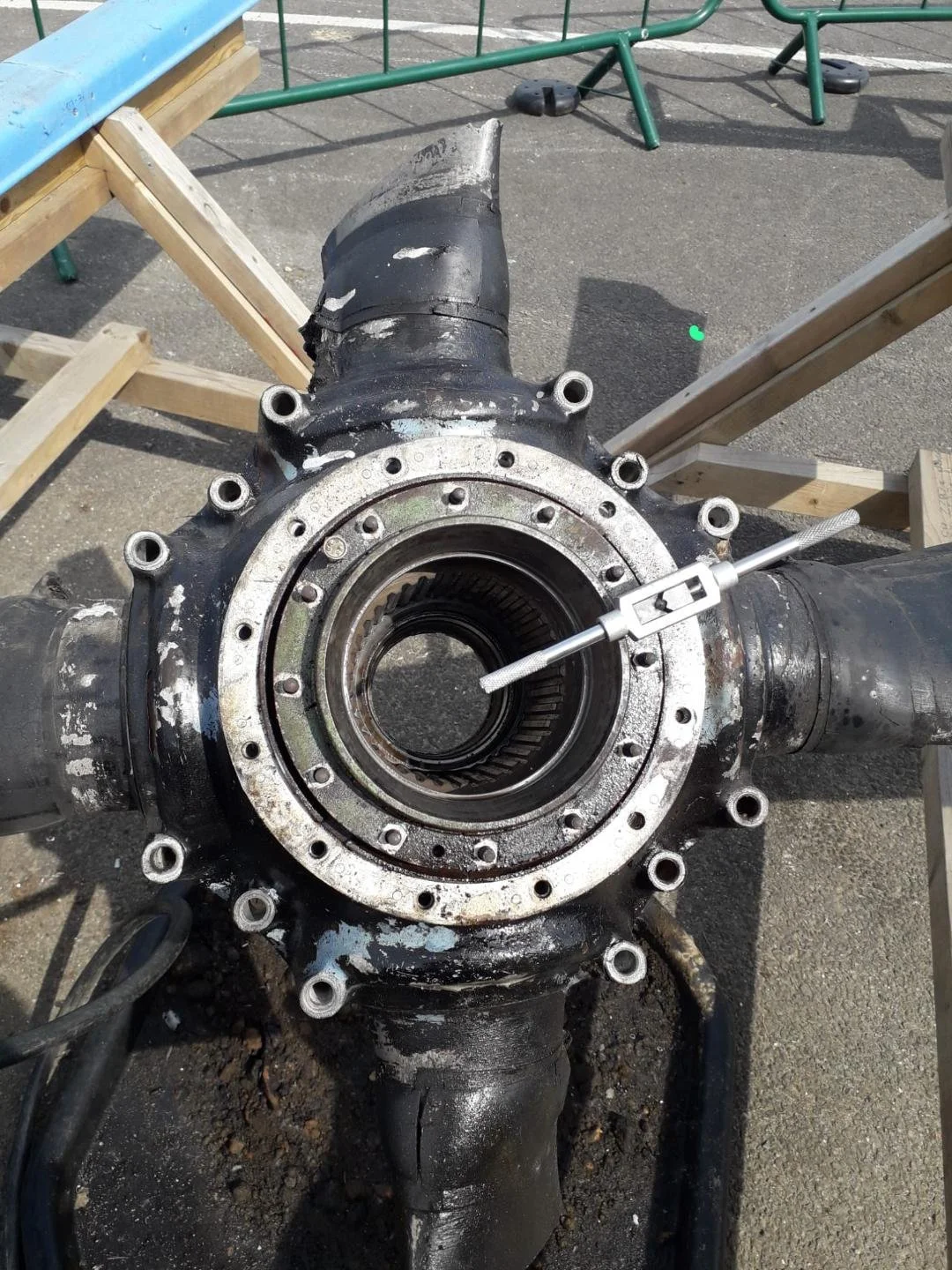
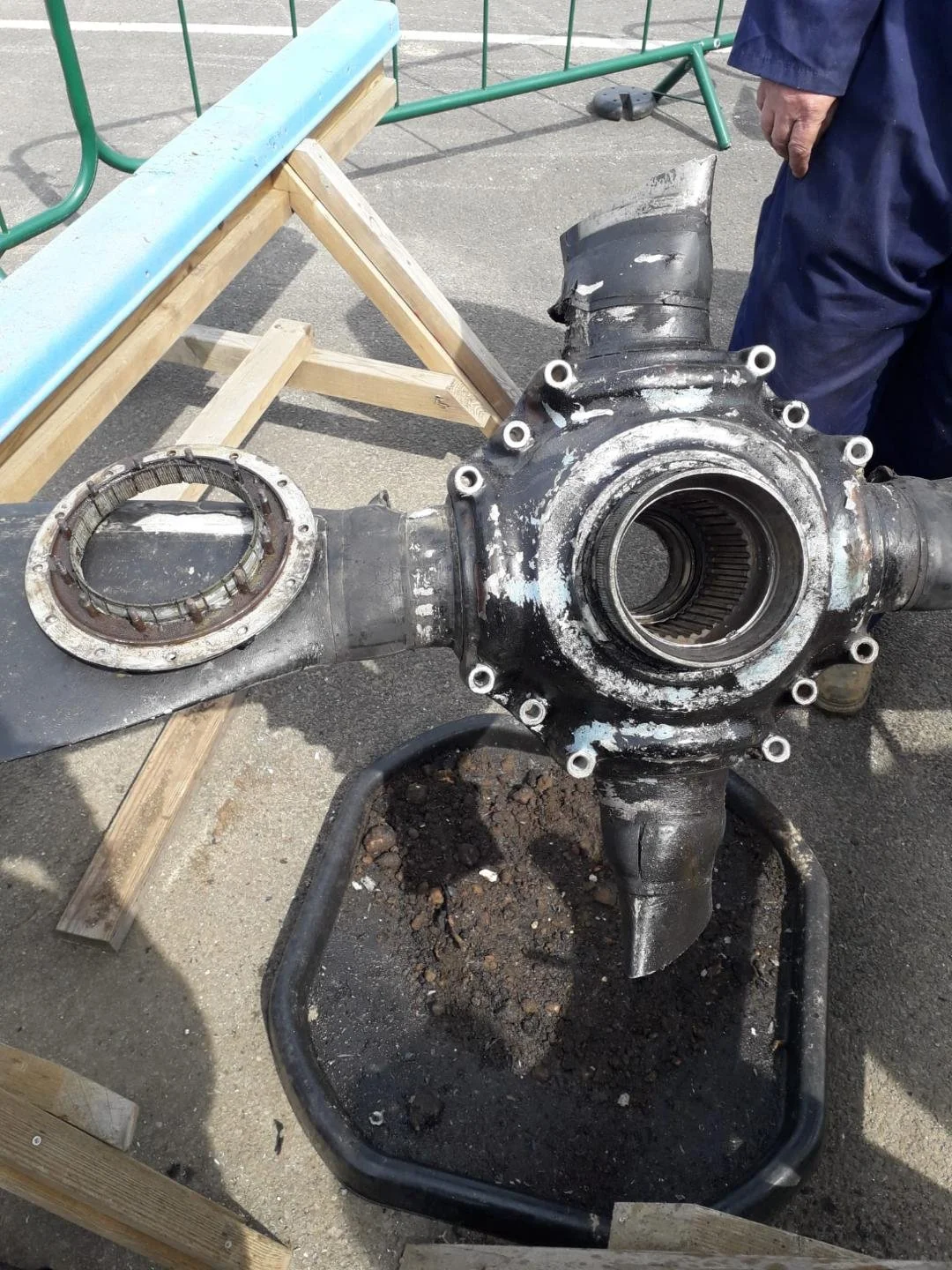
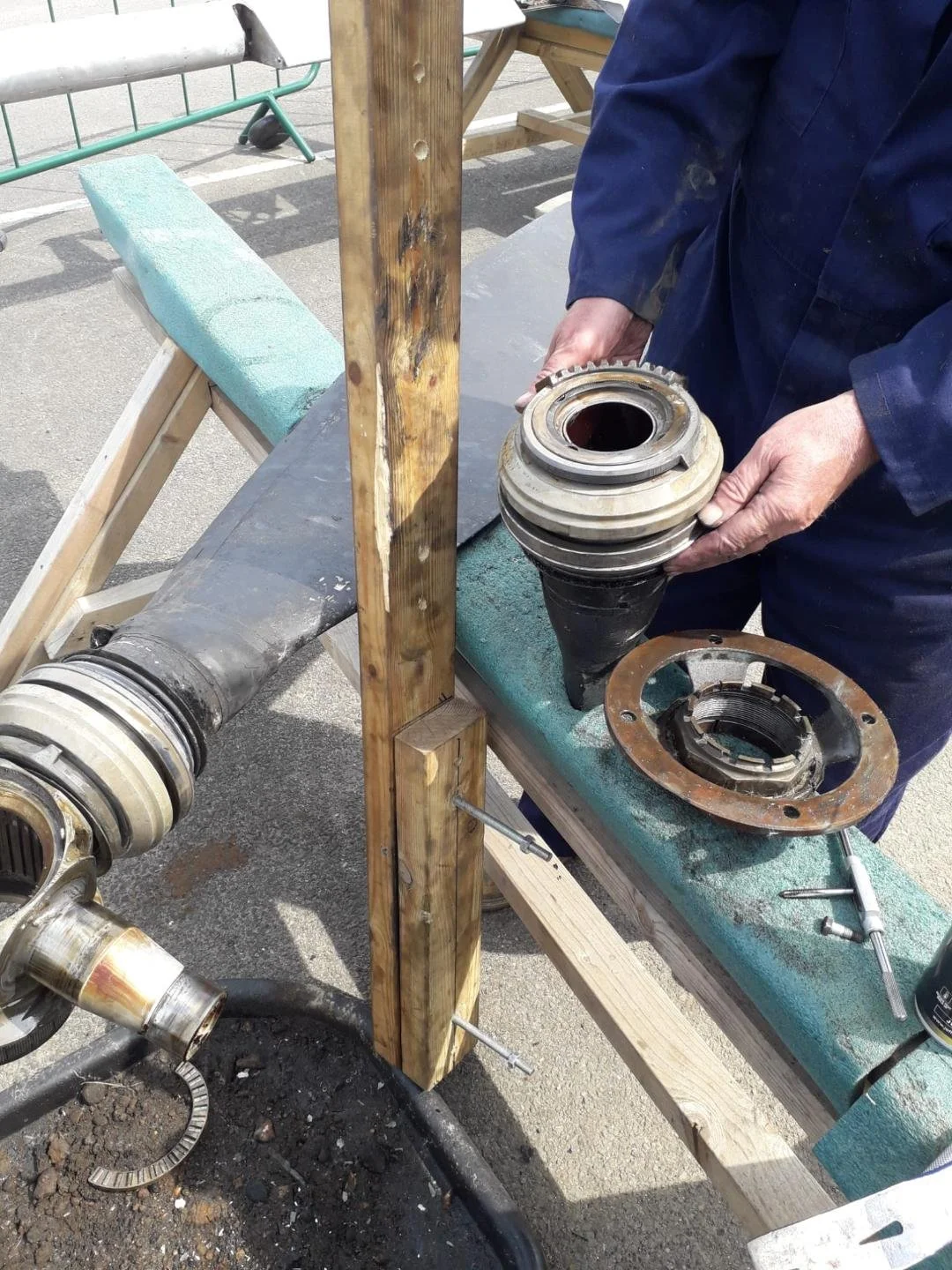
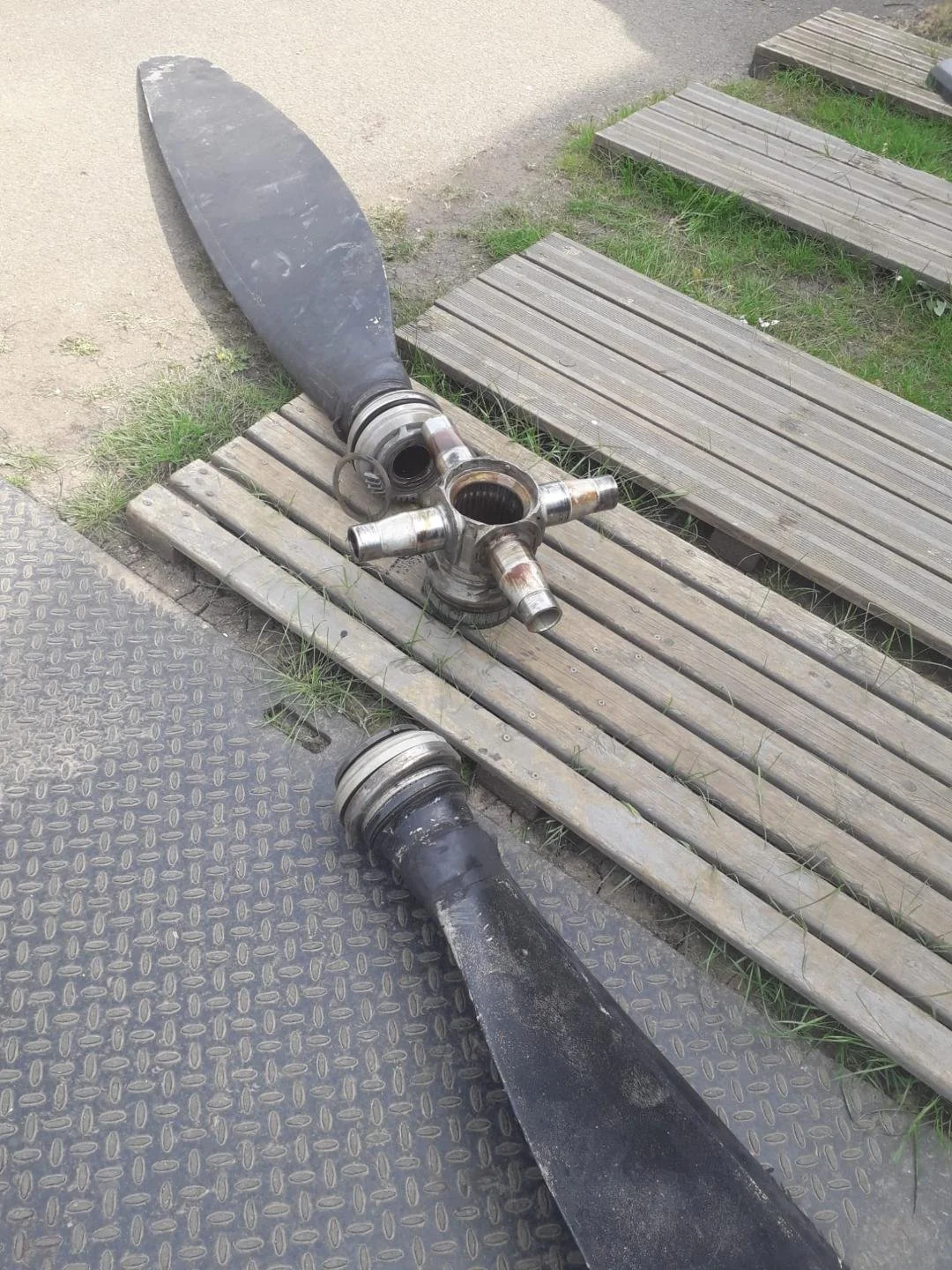
The above pictures show:
The locking ring being removed using “BSF” (British Standard Fine) bolts
The backing ring having been removed
There was less corrosion than expected and blade removal was easier than expected
At the end of the job, the last 2 (still complete) blades almost “fell off”!
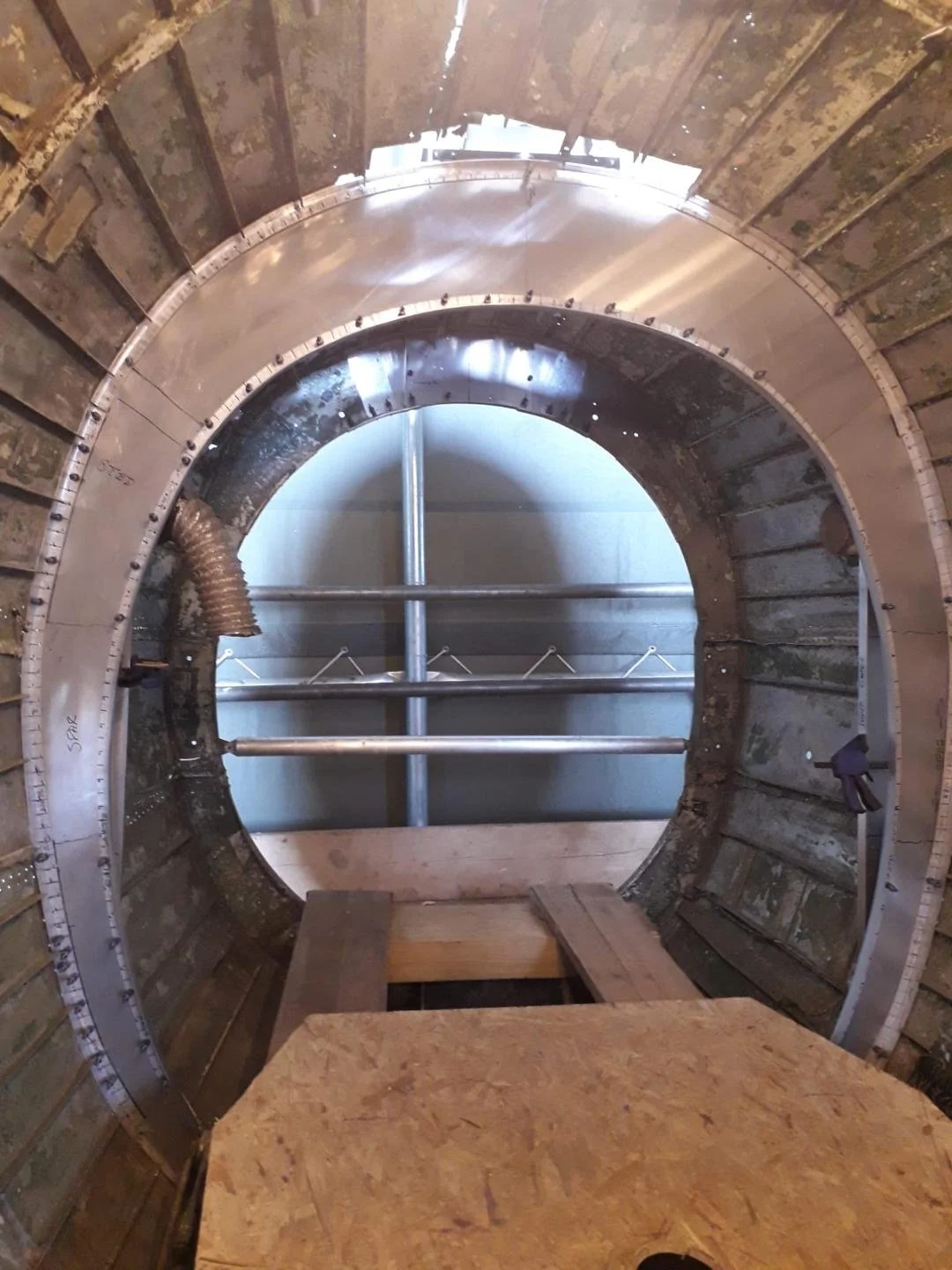
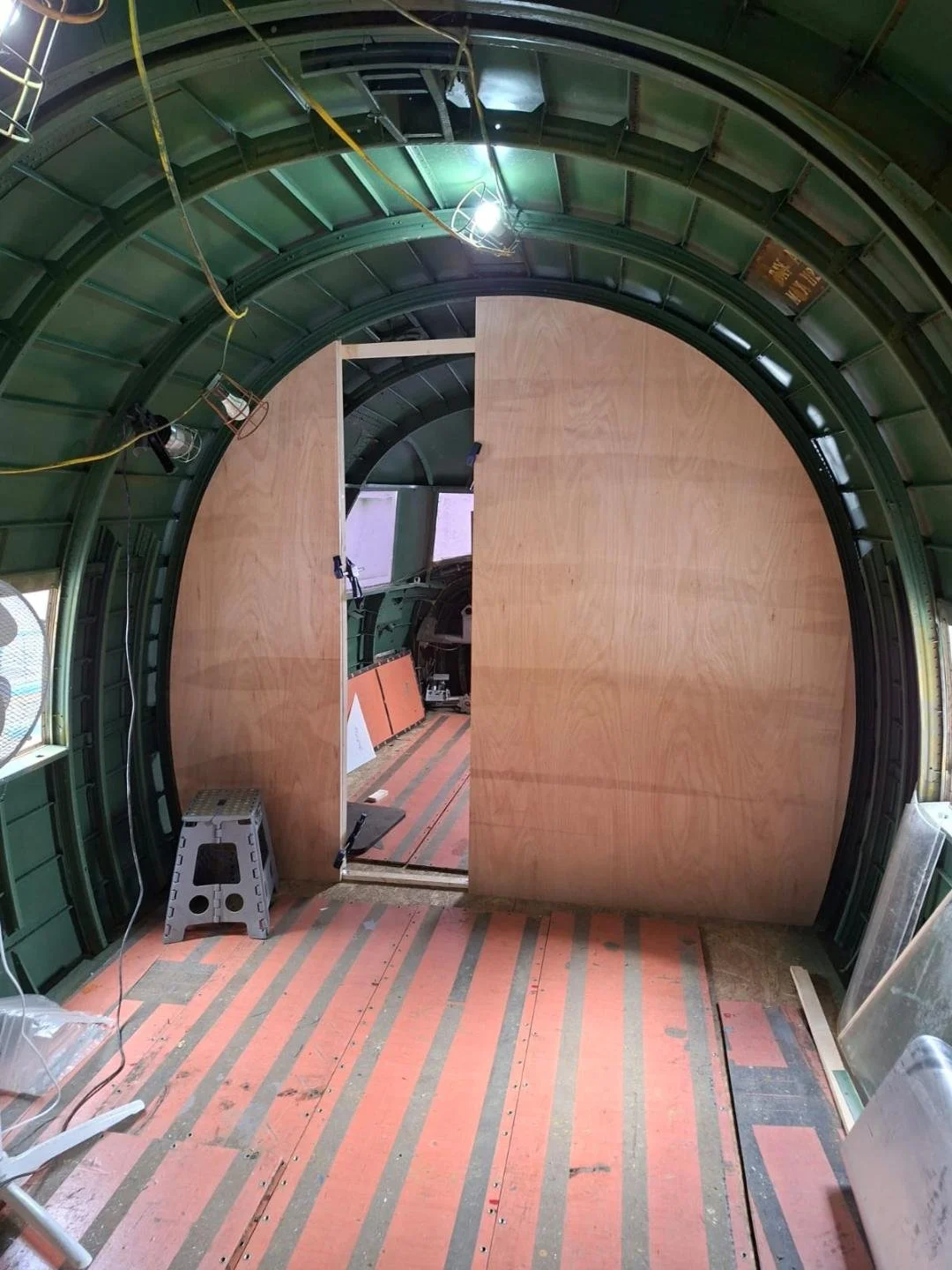
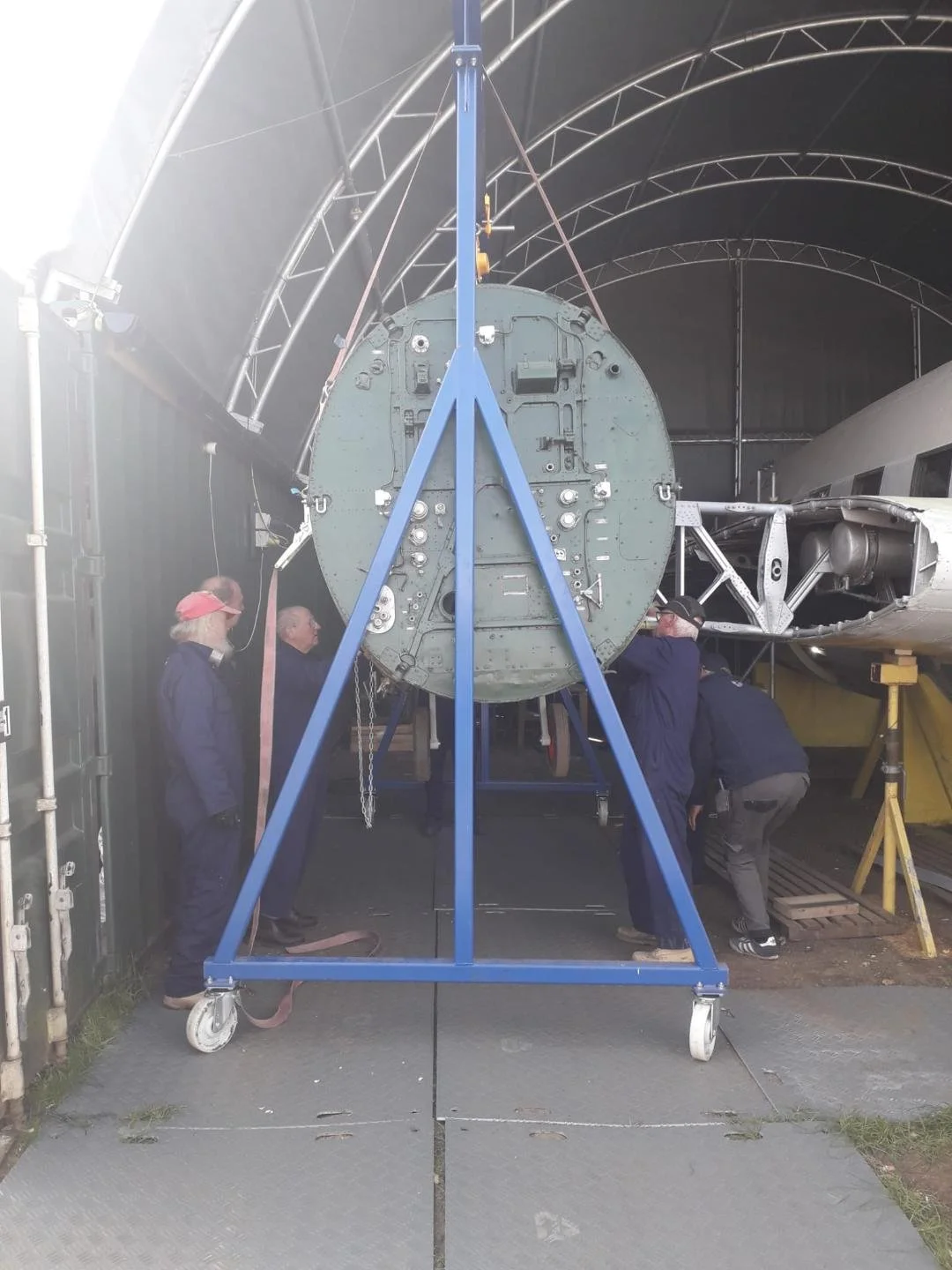
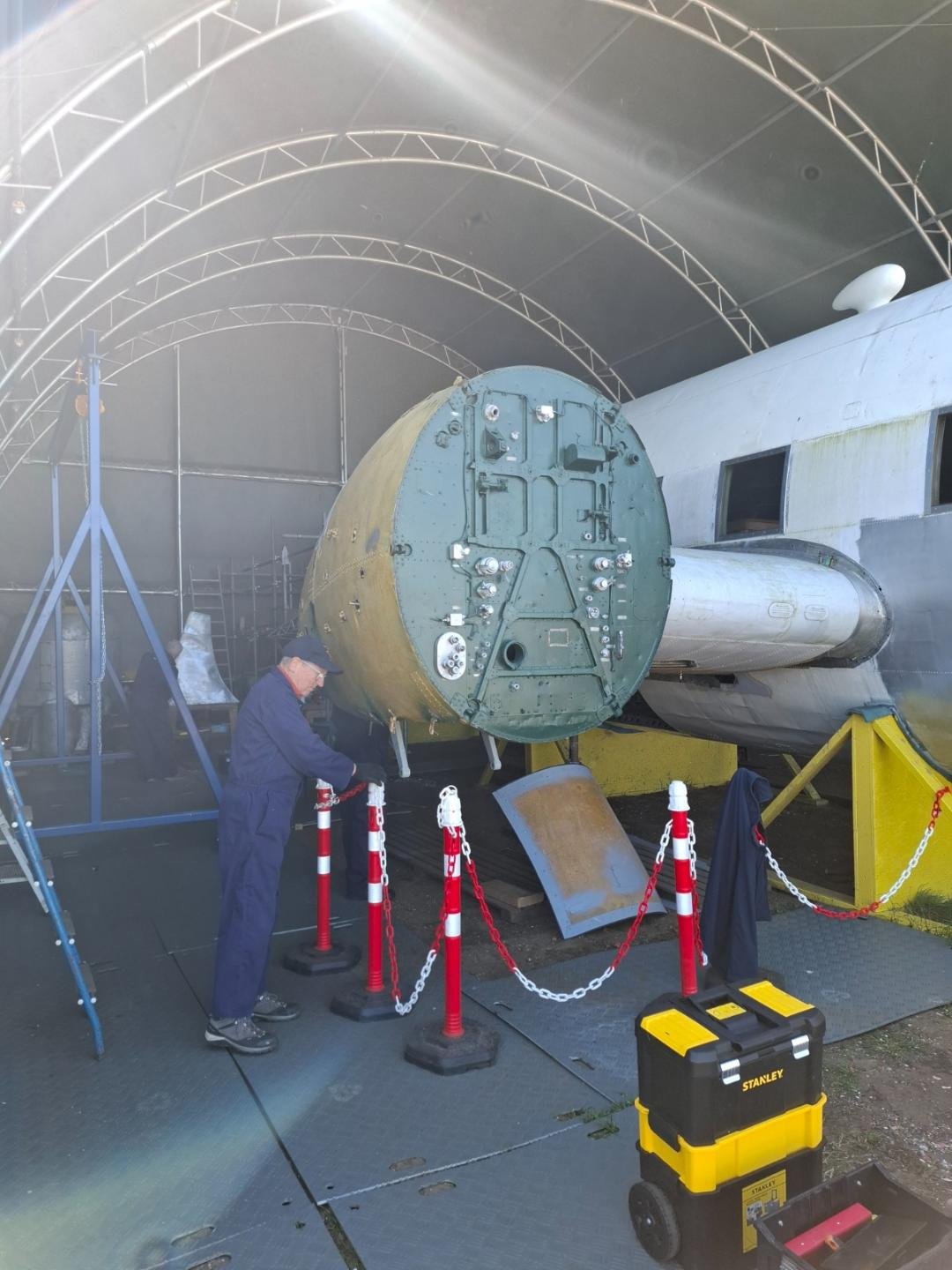
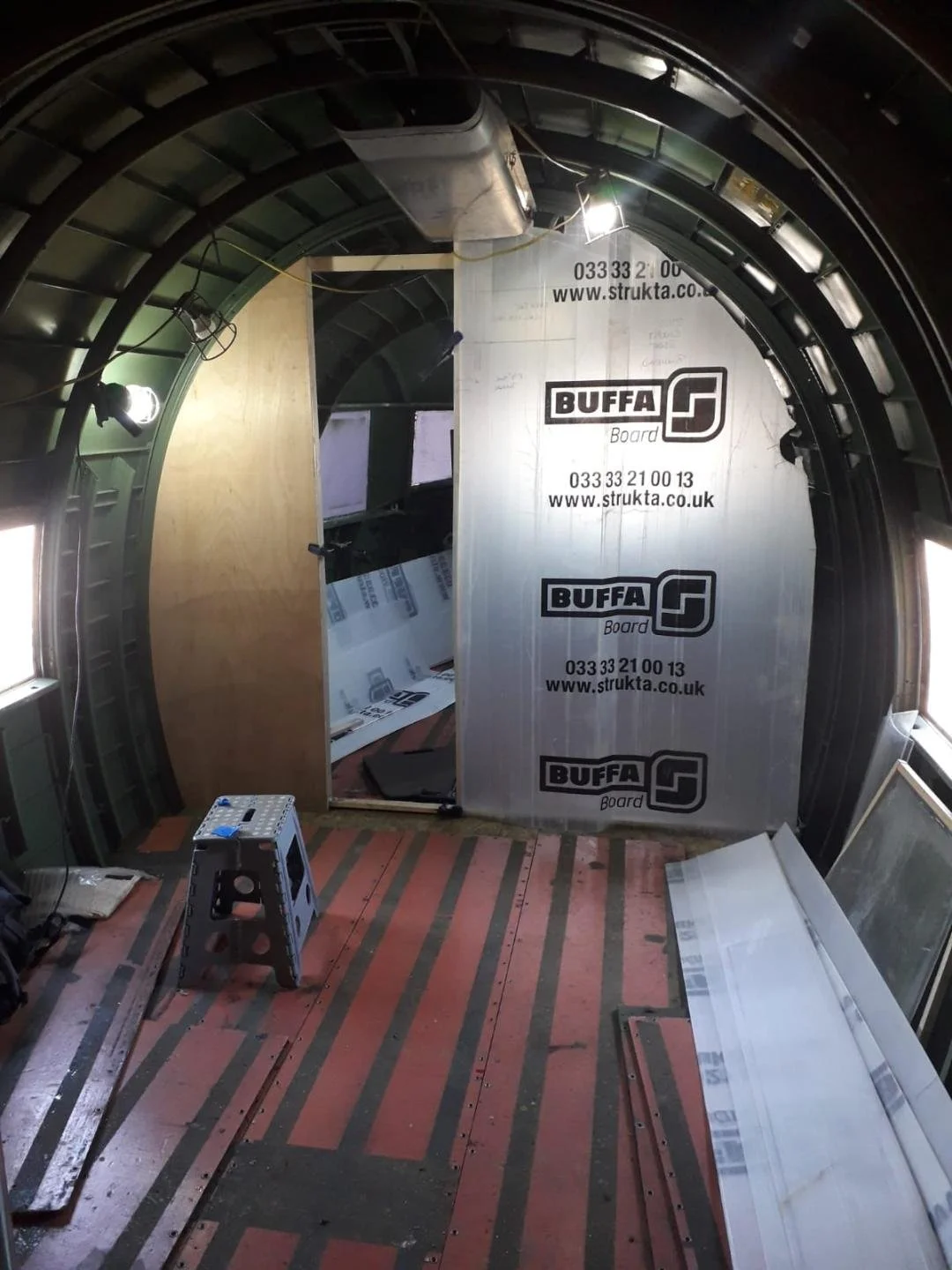
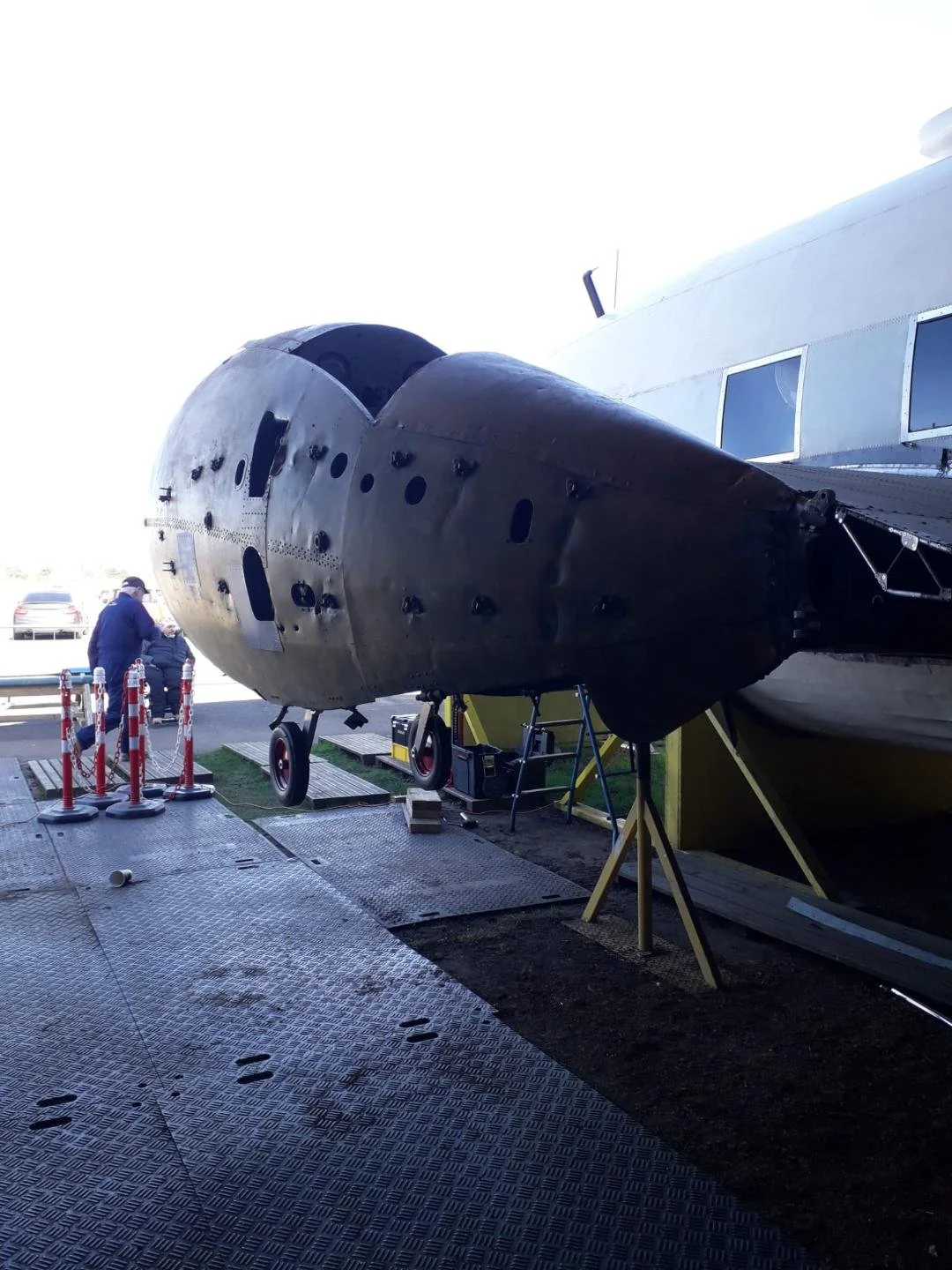
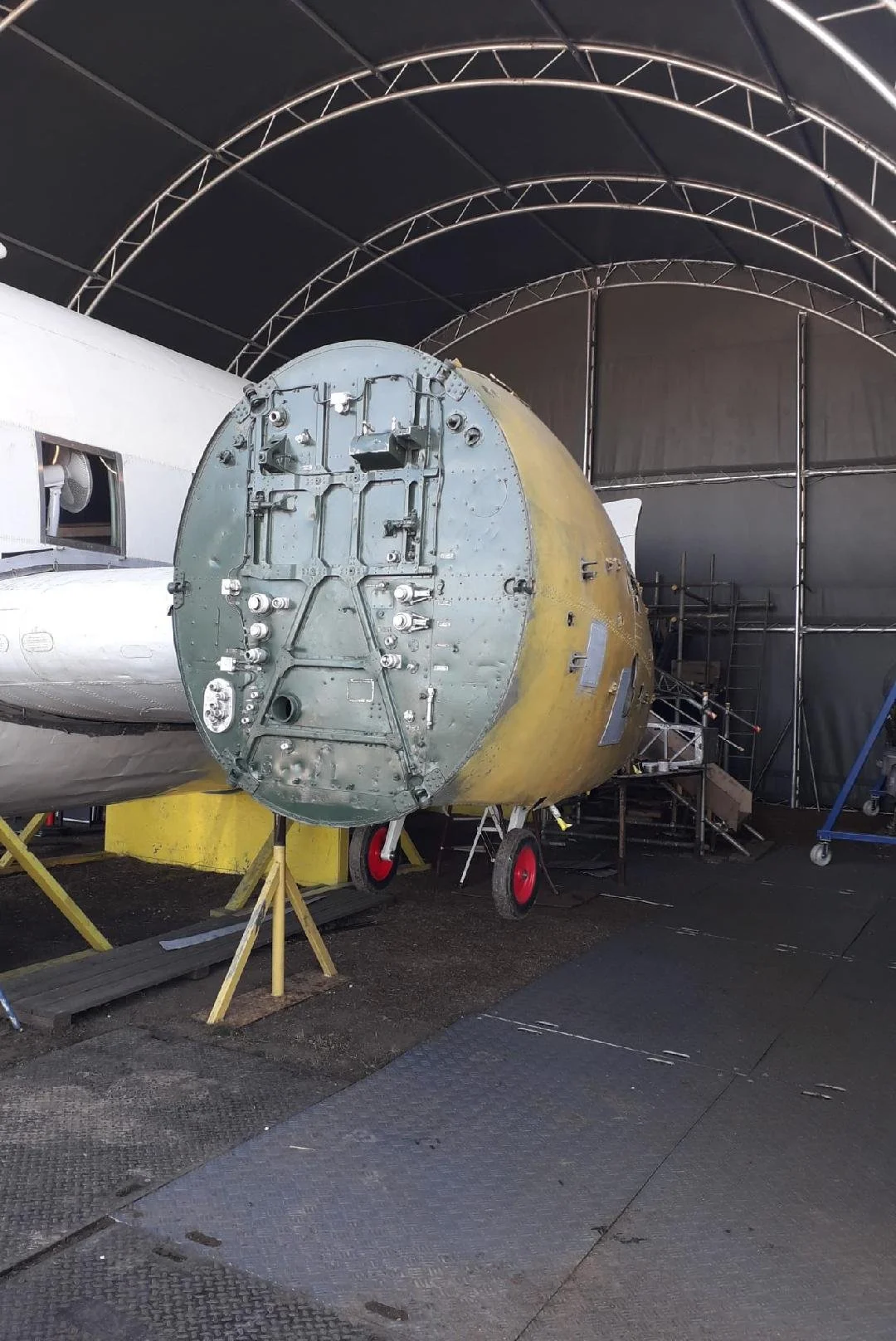
Moving to the inside of the fuselage, great progress continues at the front and rear, with the re-construction at the rear continuing to take shape, as is the forward bulkhead and cockpit rebuild, as shown below.
In terms of the wings and other flying surfaces, the next set of pictures show some of the recent work on those areas….
The pictures above show:
Drilling skin rivets on damaged wing section
Dent removal on the fin fairing
Contined work to refurbish and rebuild the rudder
Further work on the re-constructed tailplane spar
At an extra level of the detail on the work being done to refurbish the rudder, the 2 pictures below show a newly fabricated rudder rib, and how that fits into the rudder structure….
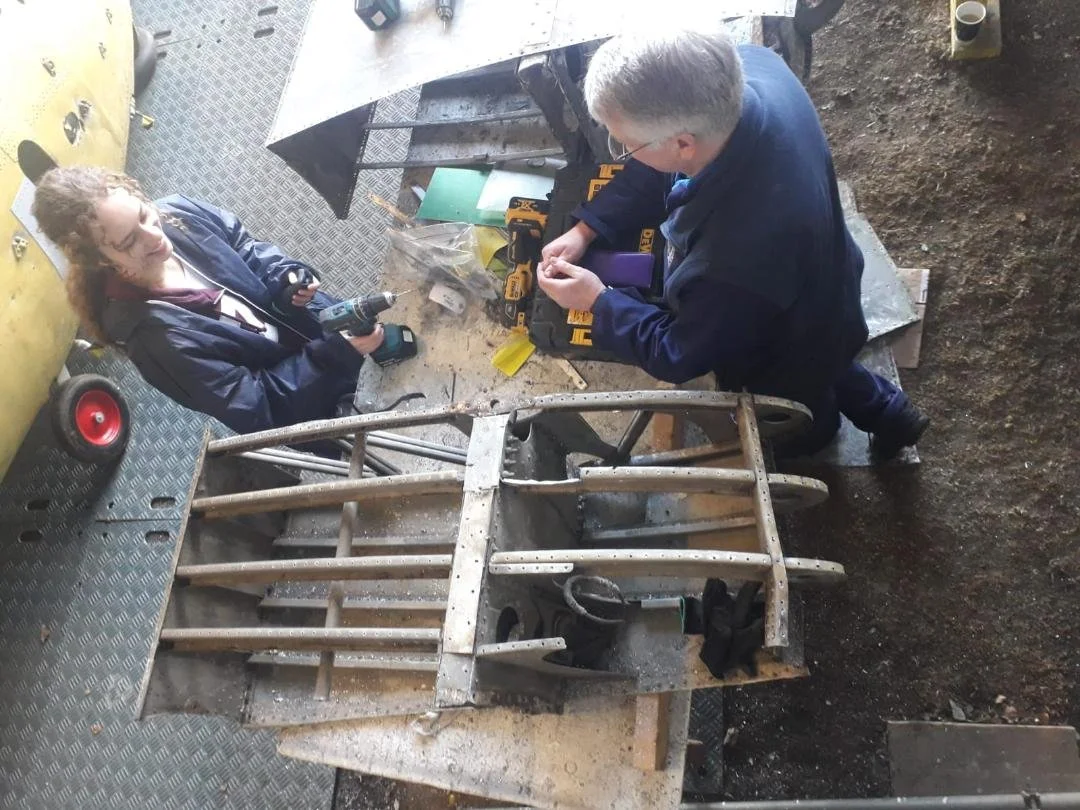
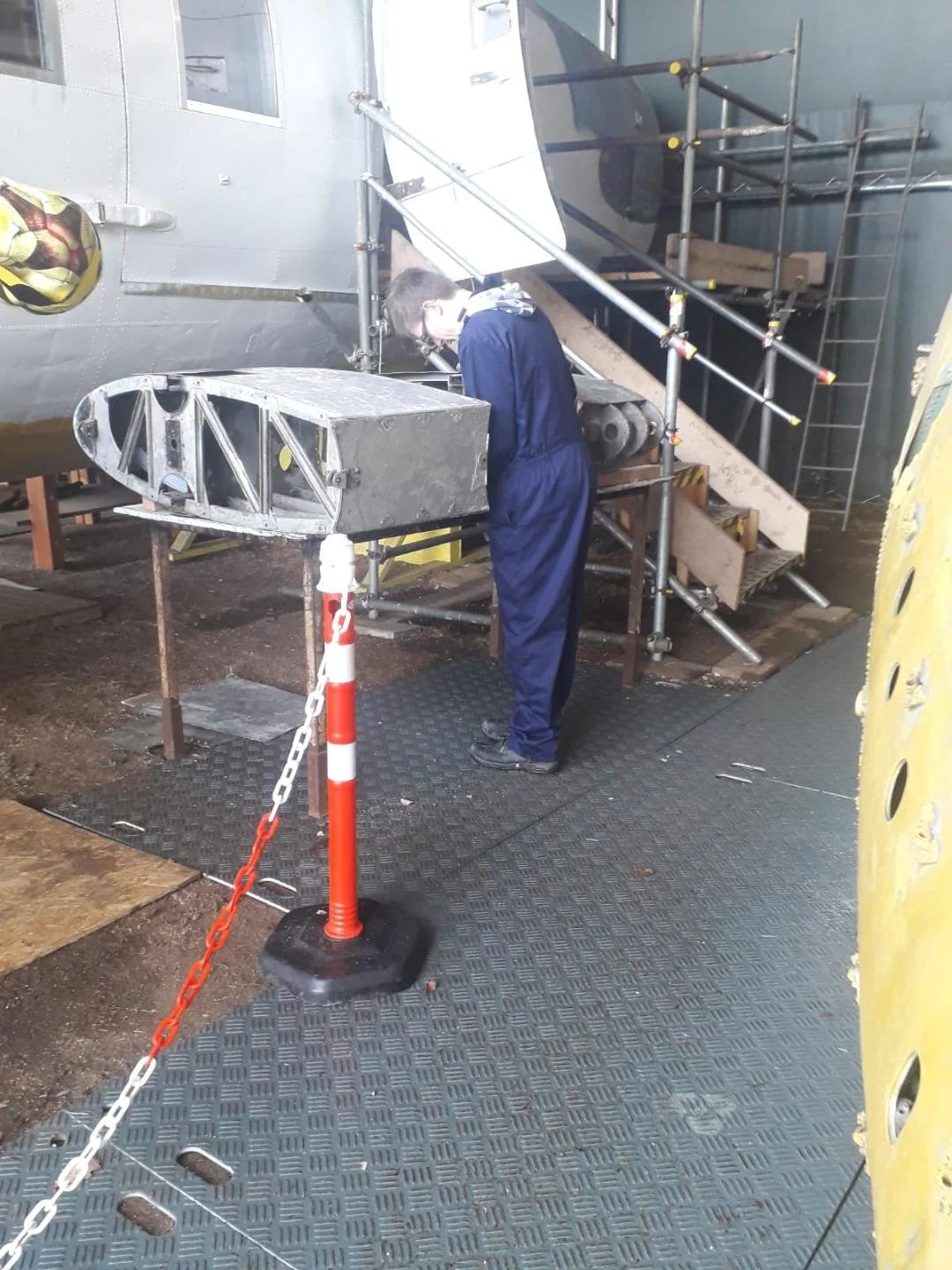
Finally for this update, we think that the picture below shows what we are all about at BHT, the experienced sharing their skills with the next generation of aspiring engineers….
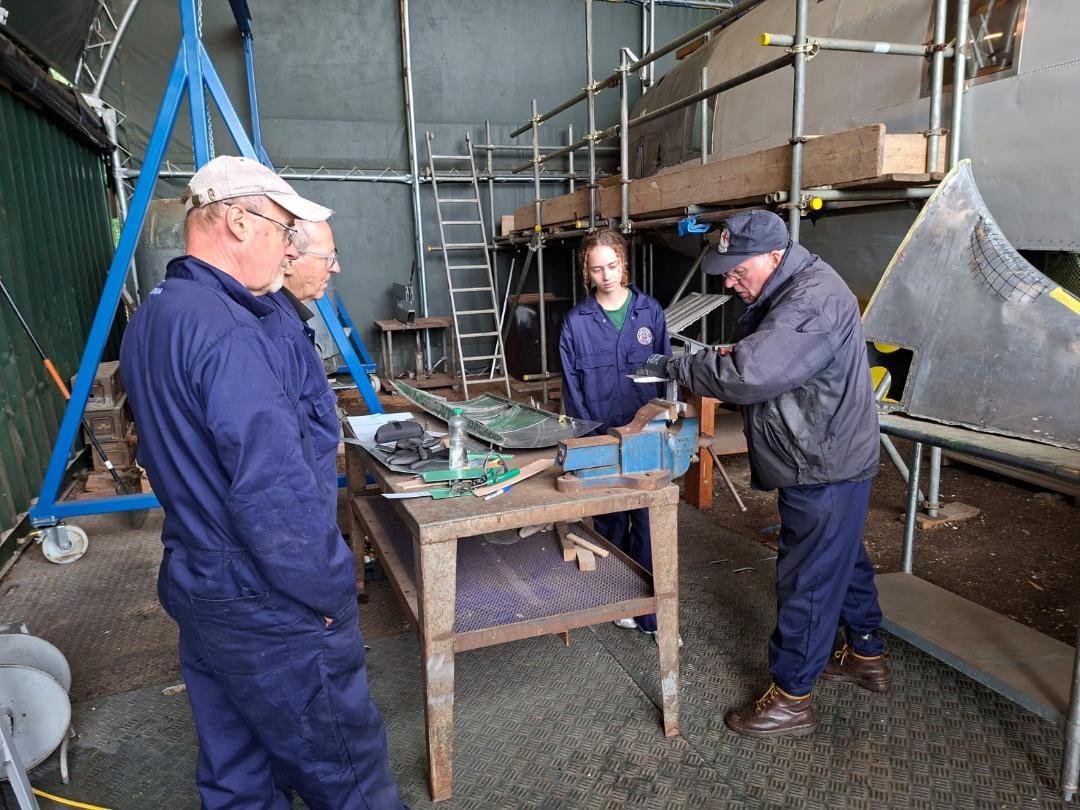
Great to see!
5th May update
There’s been a lot going on over the period of just under a month since the last update, the key elements of which we again hope to convey to our growing readership in the words and pictures below.
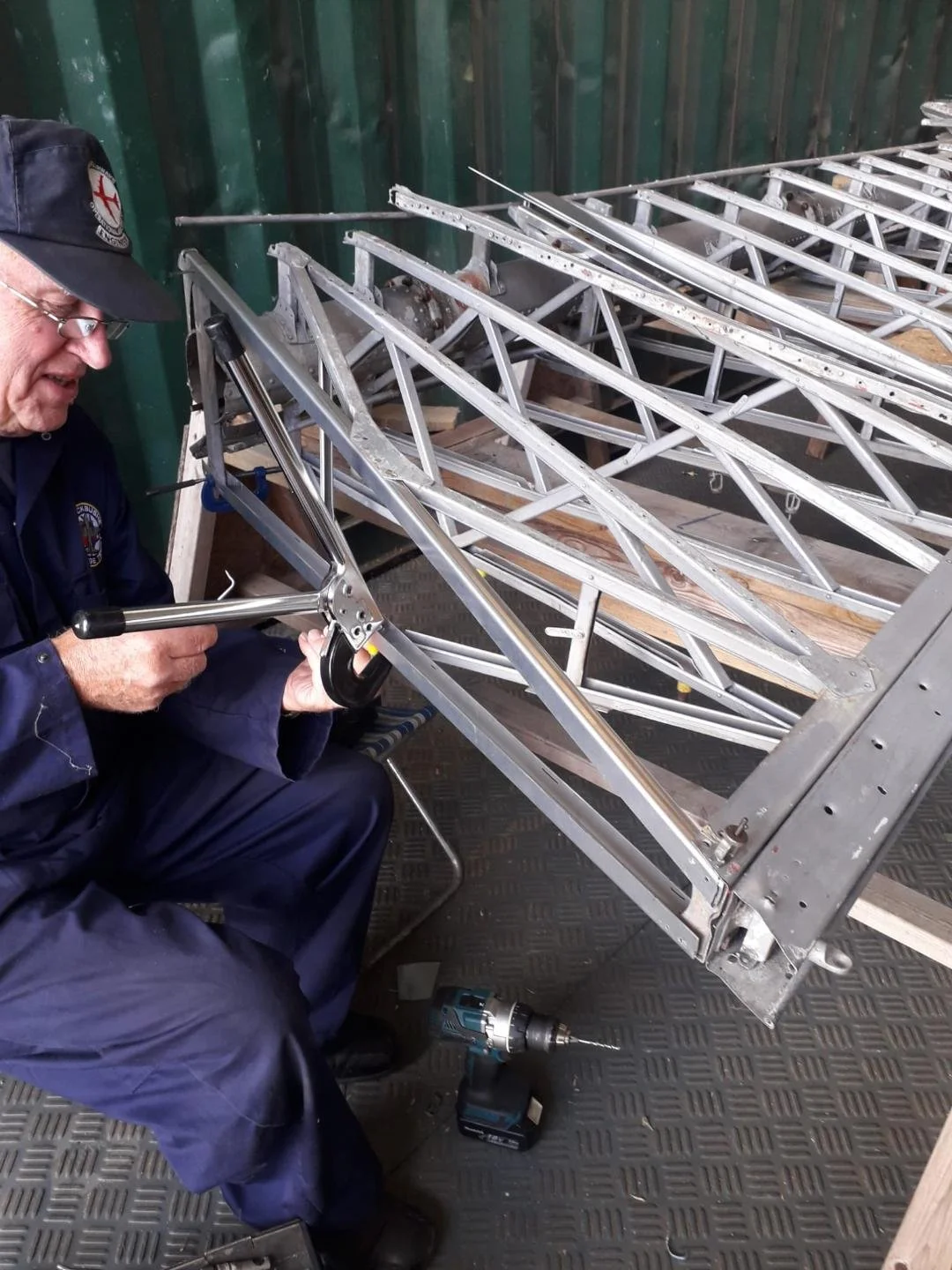
Several areas of the aircraft have seen attention, including some where a lot of work has been done already, and others where it’s just starting. Examples of the former are the inside of the rear fuselage, where new ribs continue to be fabricated and fitted (as shown in the first picture below), the rudder, which has been completely stripped for refurbishment (see second pic) and the tailplane stubs which now have a new spar to hold them together through the rear fuselage (see third and fourth pics). This was completely missing when we brought the aircraft back from Austria, as MacDonalds had removed it in order to fit an air conditioning unit!
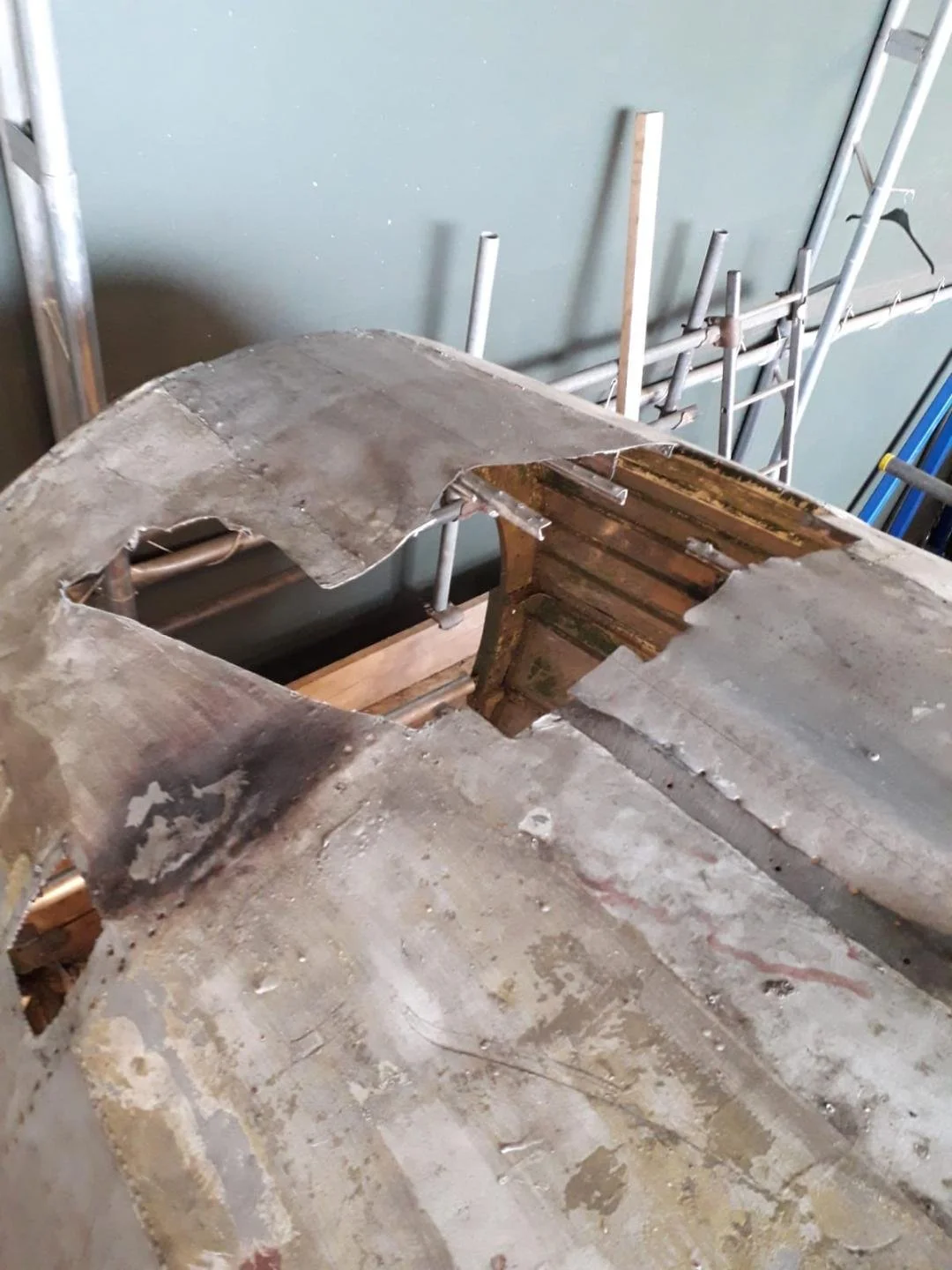
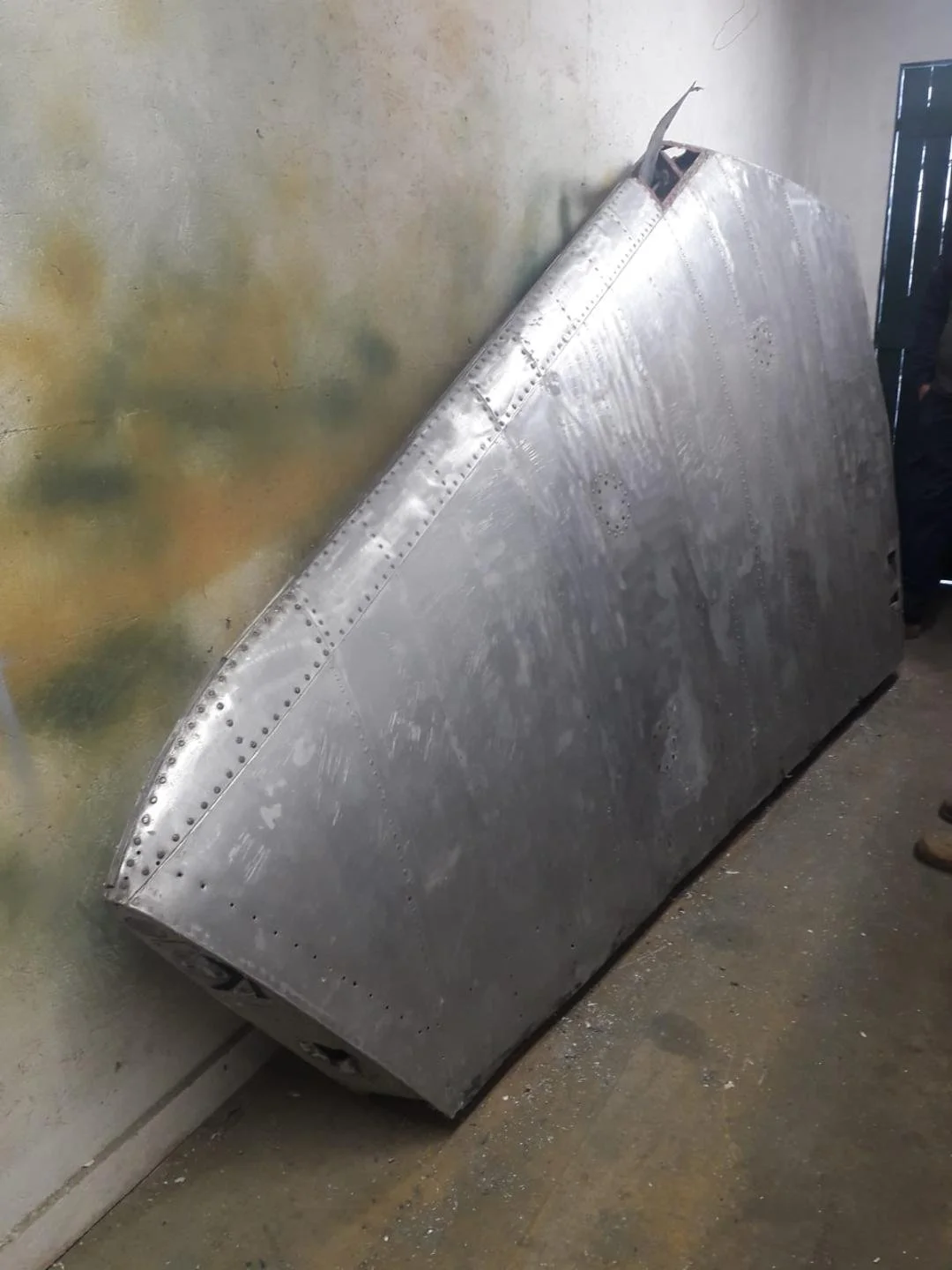
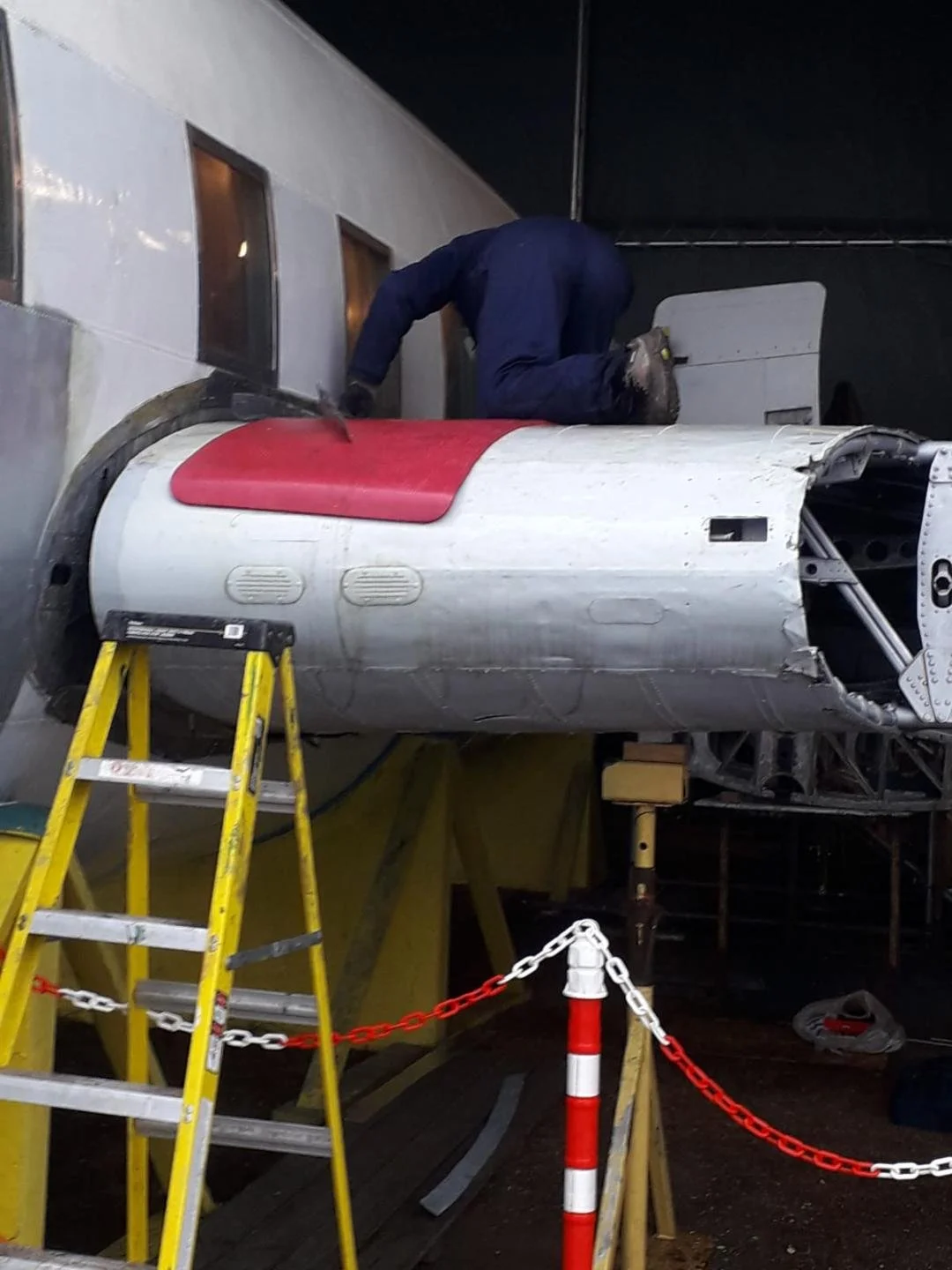
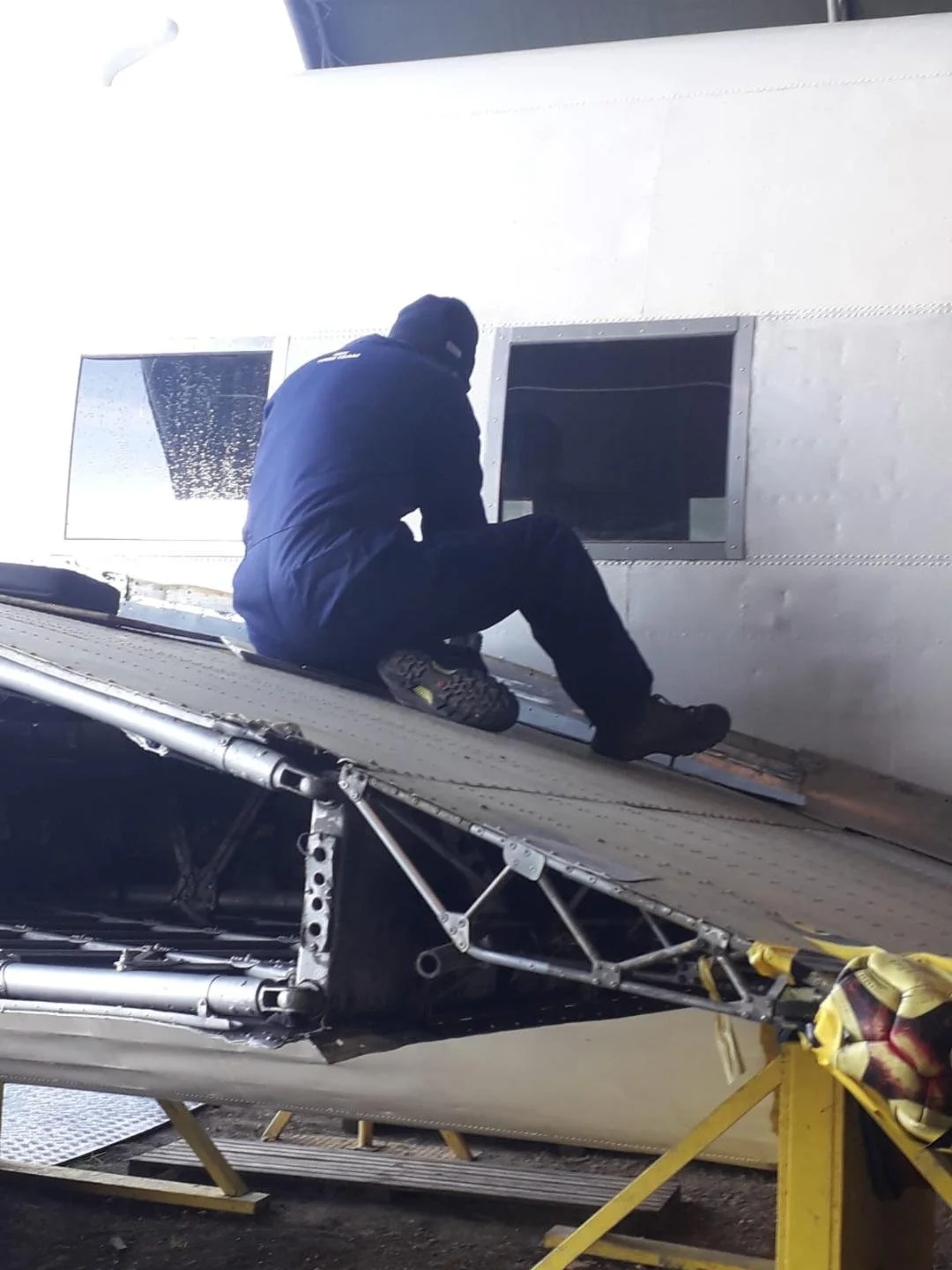
In terms of parts of the exterior of the aircraft where new work has started, these include the tail cone and the dorsal fin, both of which can be seen below with paint-stripping work underway.
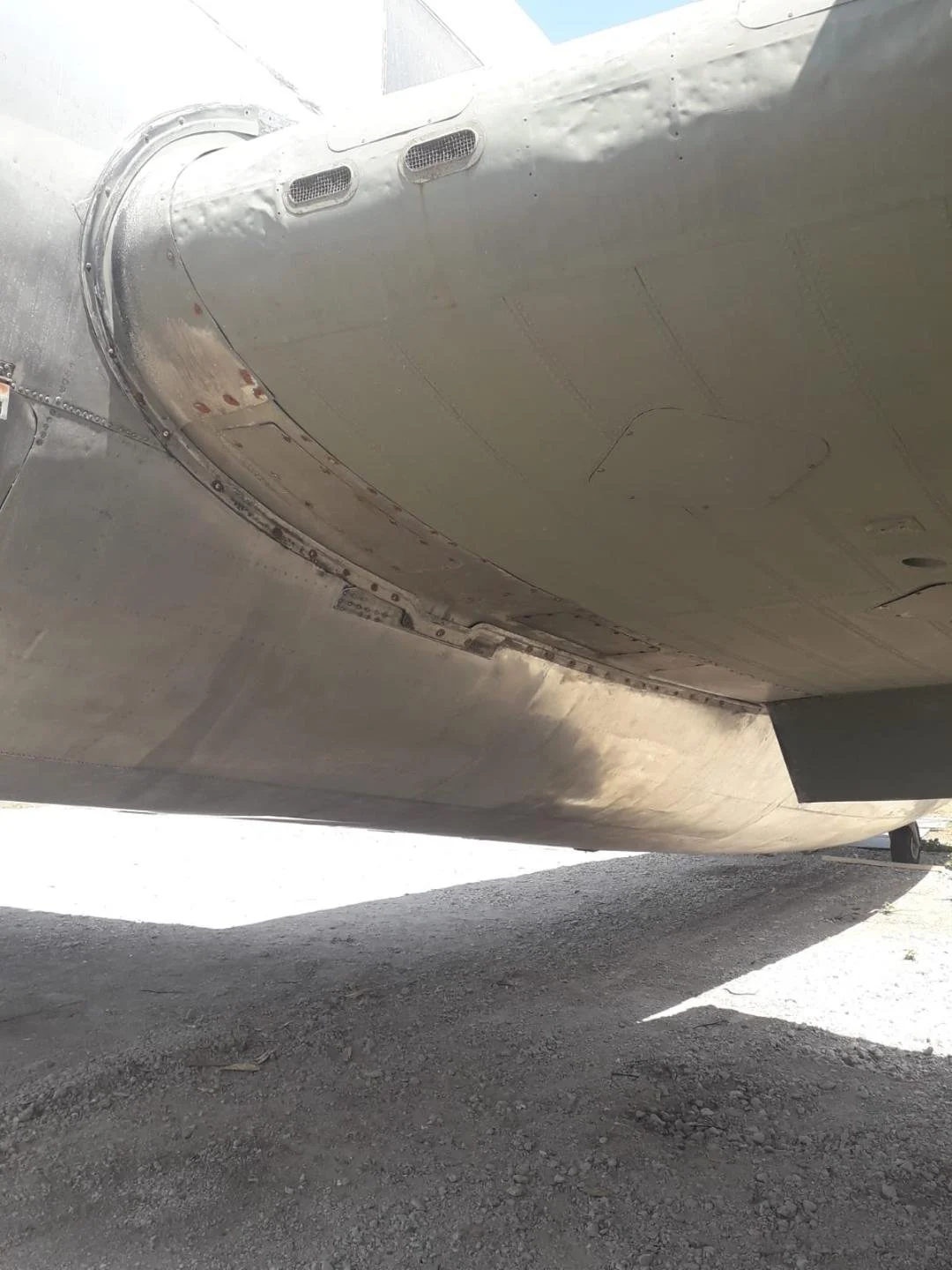
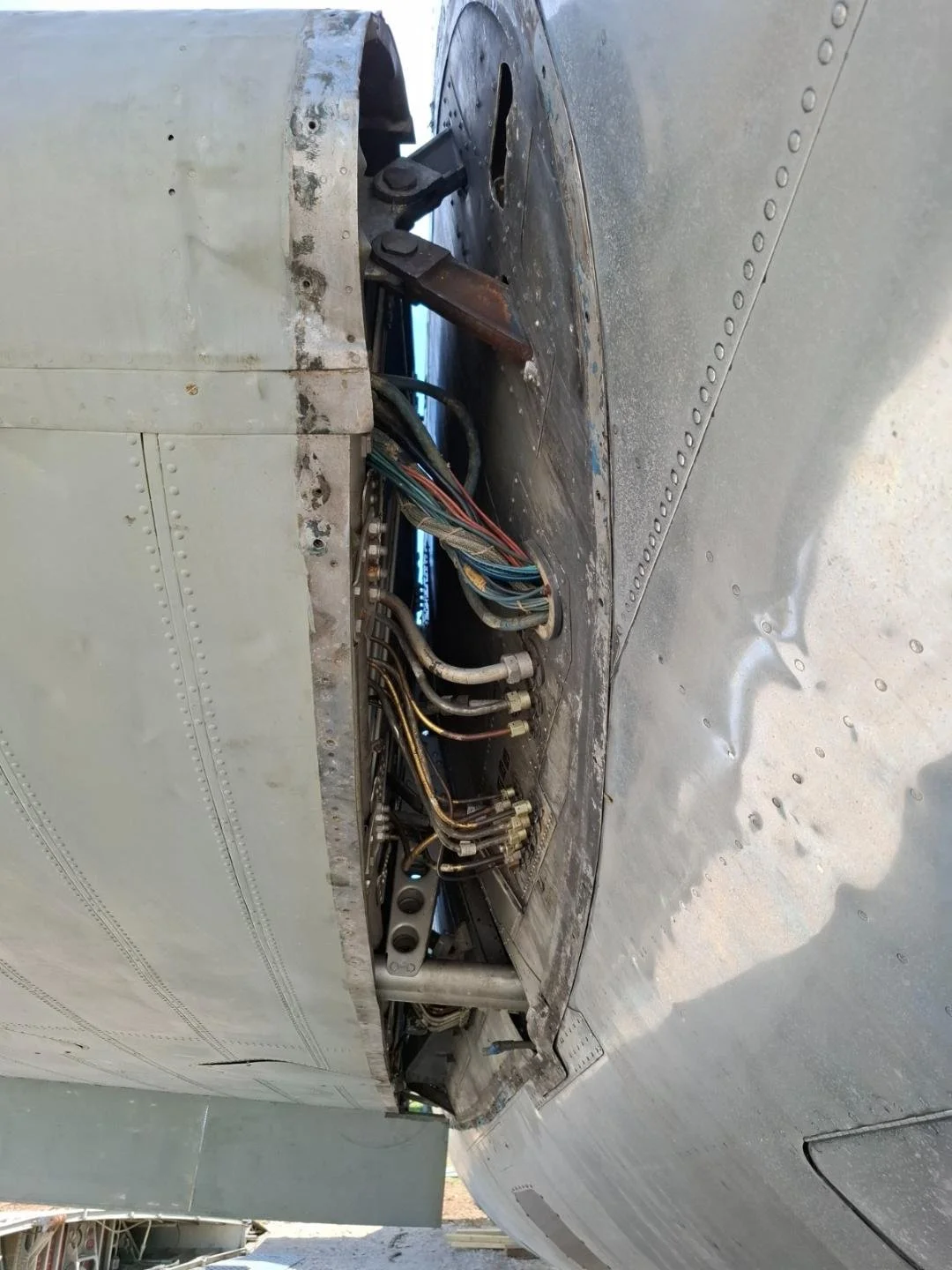
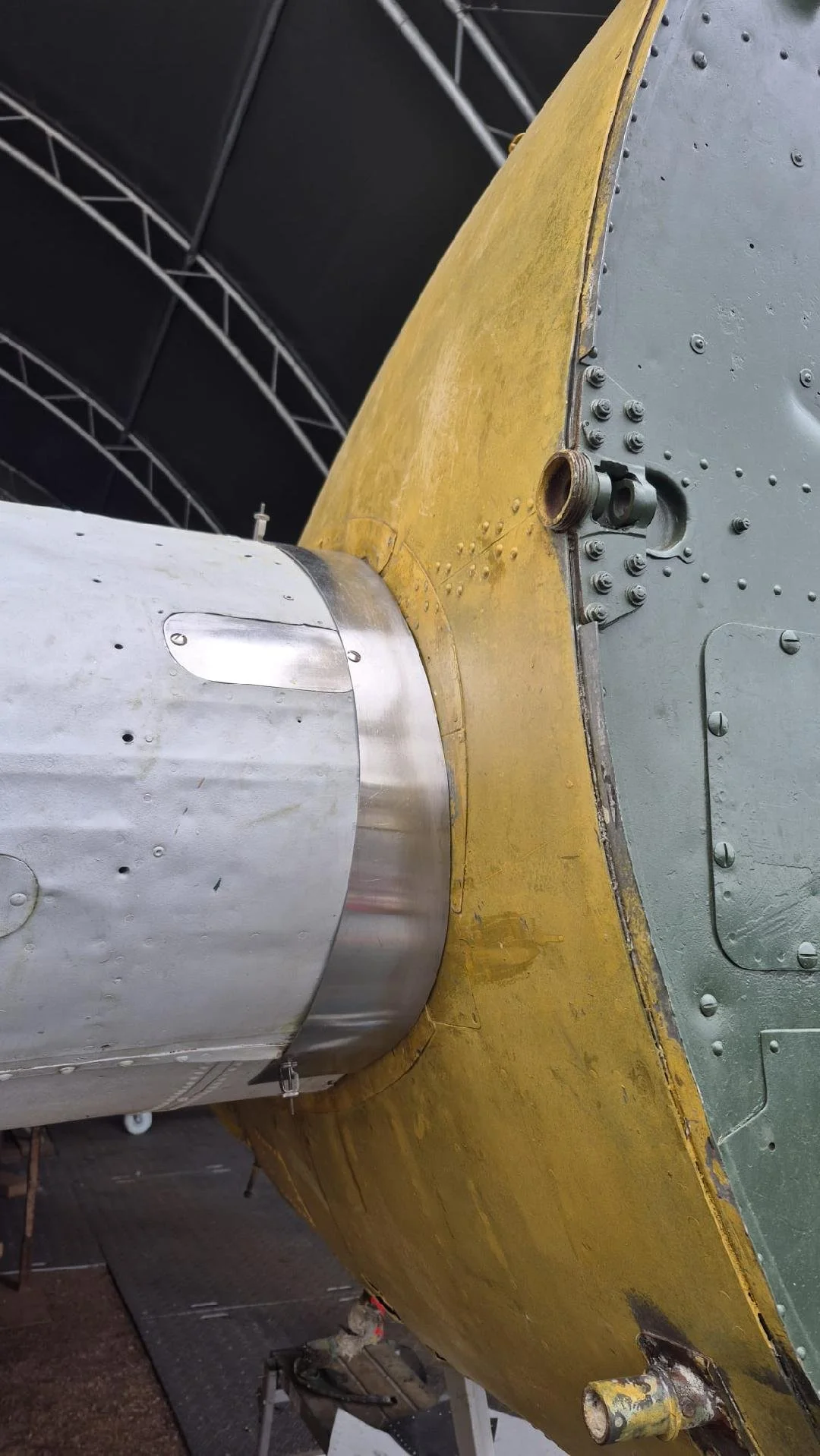
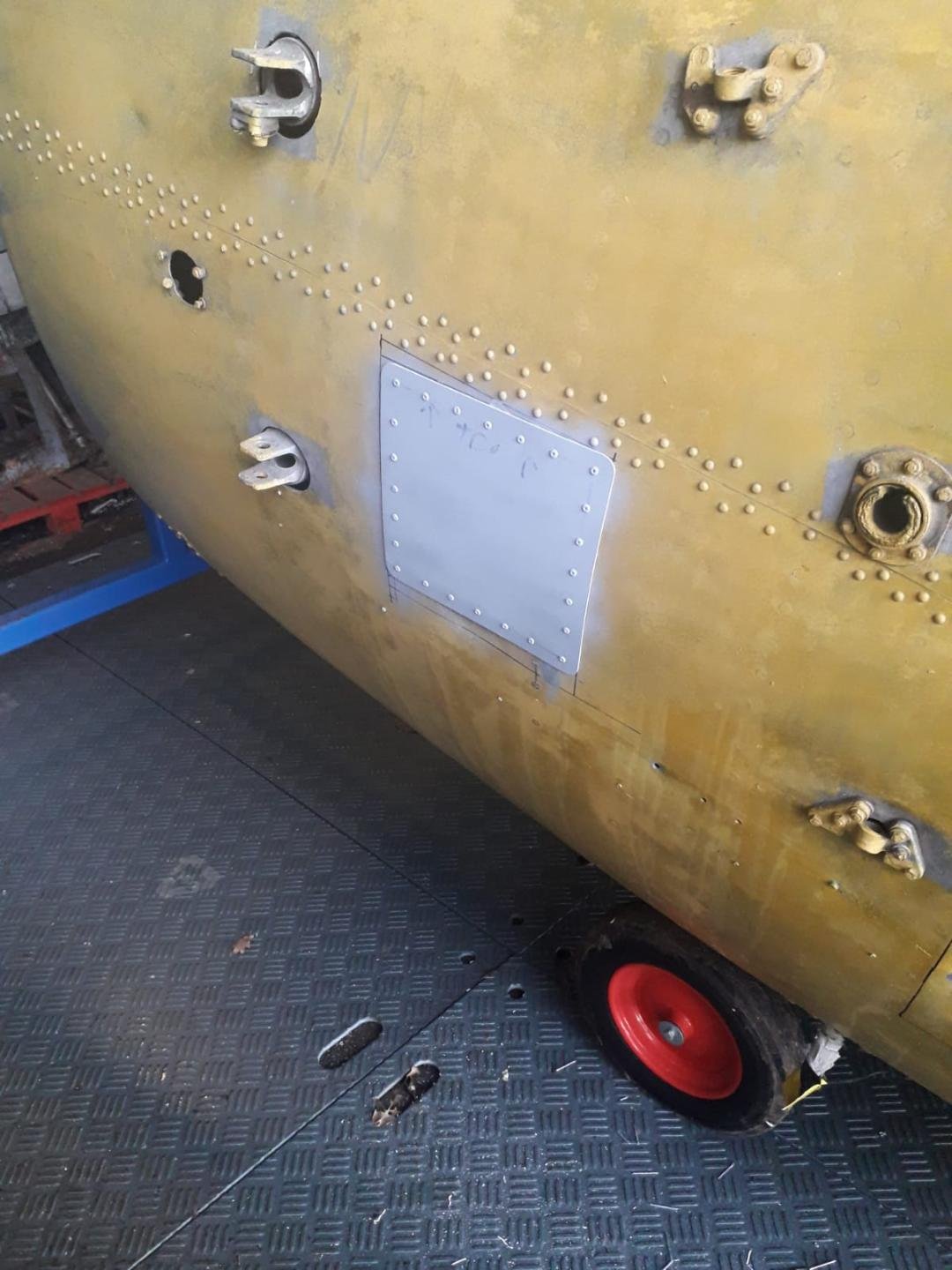
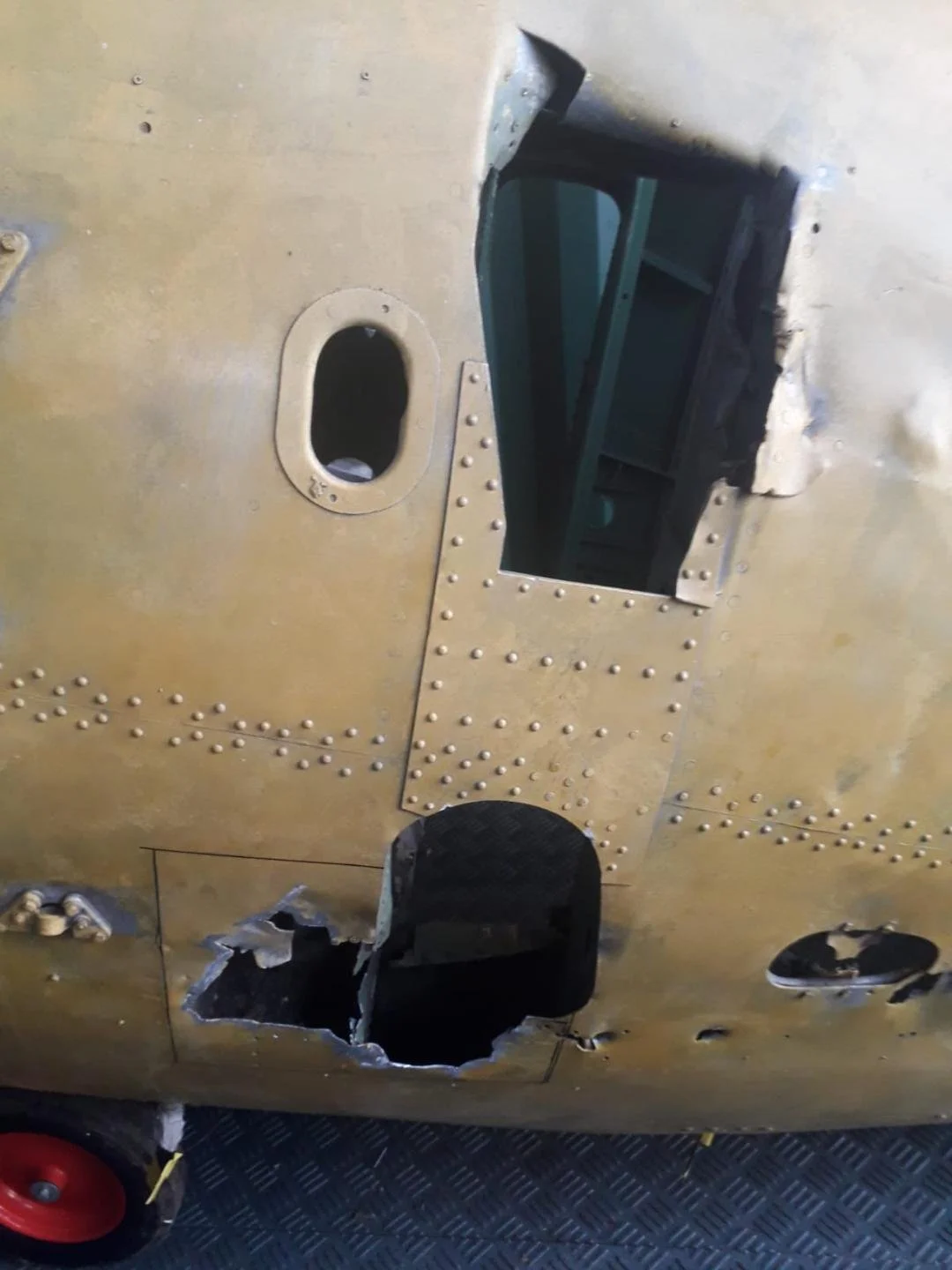
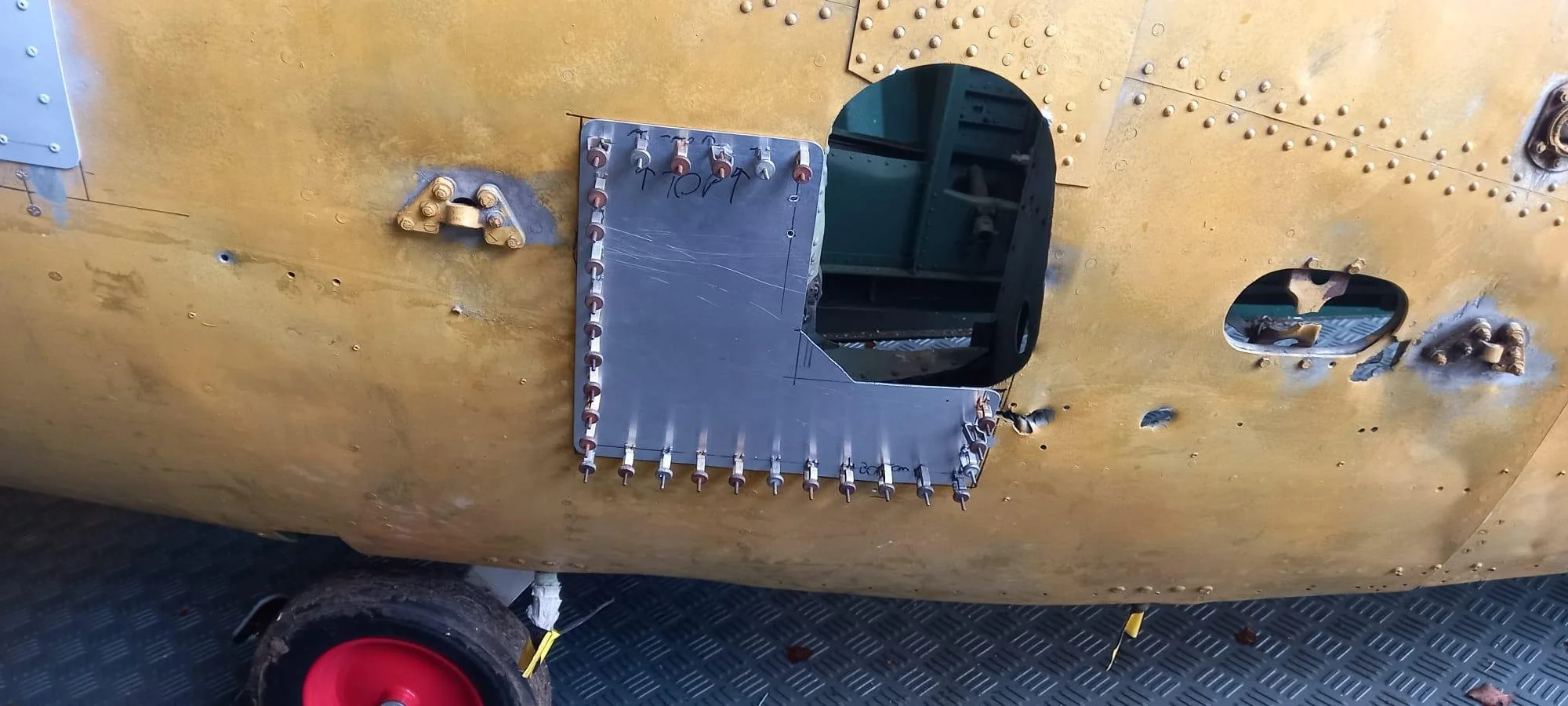
The engine nacelles and the stub wings that join them to the fuselage continue to receive attention, with fairings being fabricated and fitted to the areas where they meet, and a trial fit of refurbished main landing gear doors being undertaken.
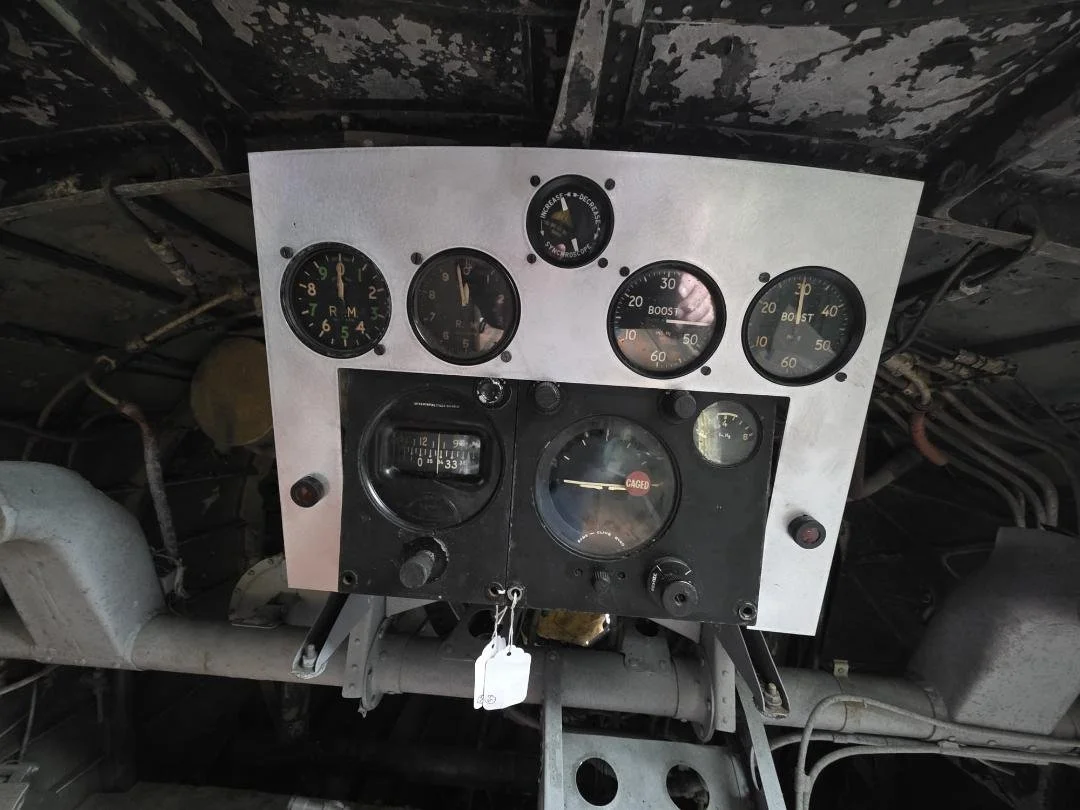
Back inside the aircraft, great strides are being made with the complete rebuild of the cockpit, mostly thanks to fantastic work by our volunteer Rich. Various parts of the instrument panels are being fabricated, fitted with the instruments that we’ve acquired and trial-fitted inside the cockpit. Shown below is the progress made with the centre instrument panel, the second picture below showing it trial-fitted into the cockpit. The third picture shows another of the acrylic templates that have been fabricated for us by Max Blood. We’re very grateful for his support.
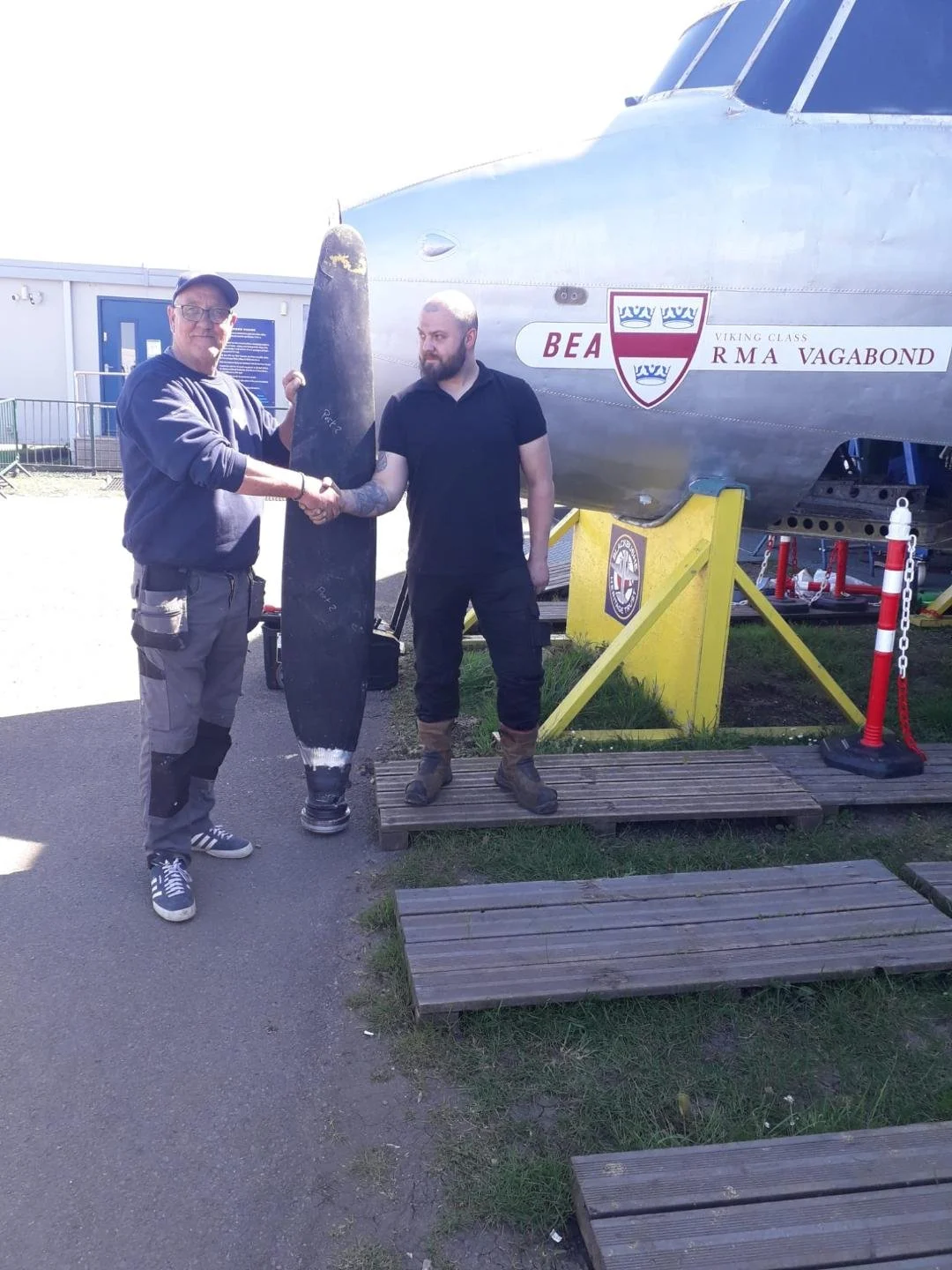
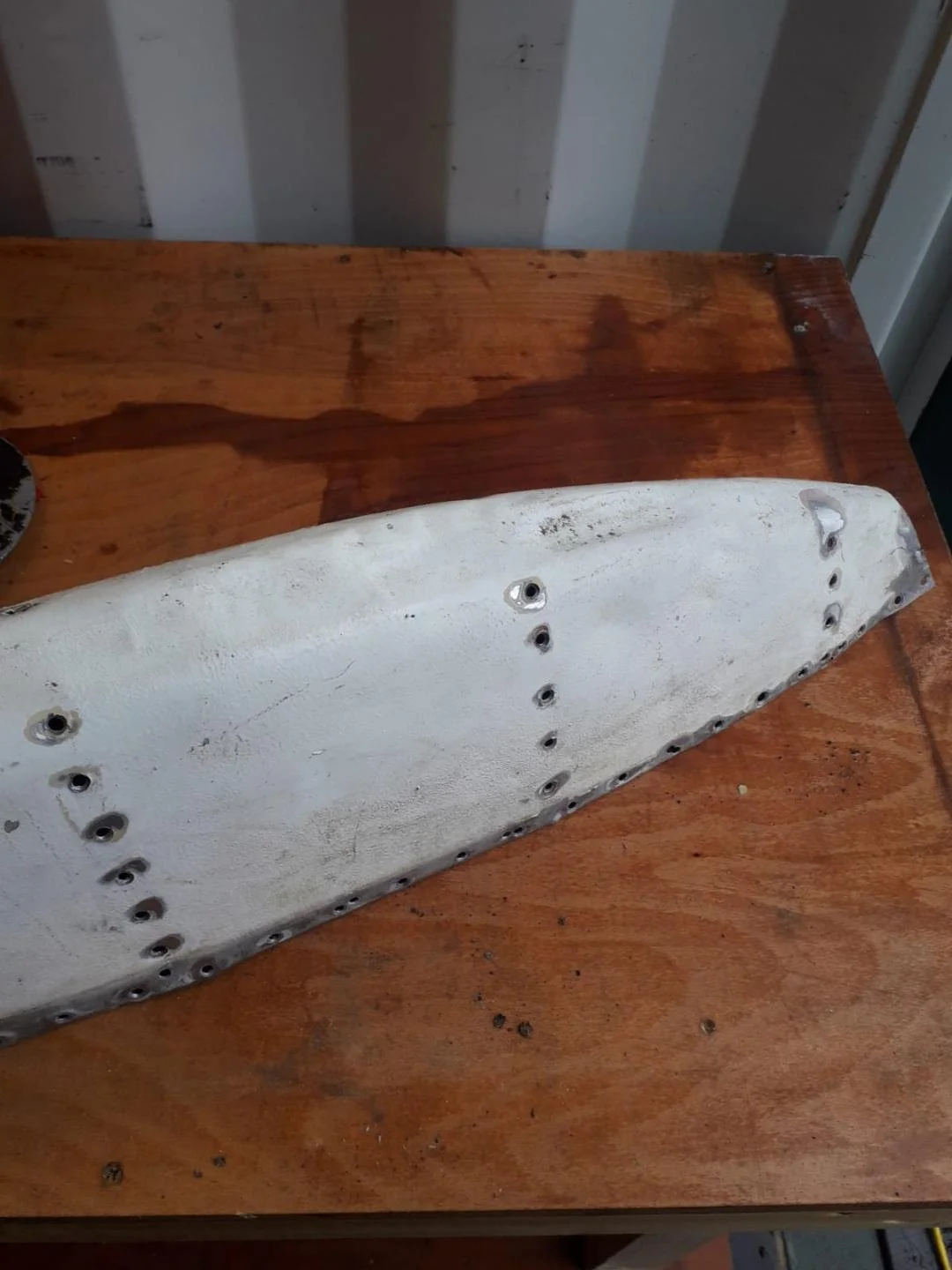
Speaking of support, we are also grateful to Dom from “Public Enemy Customs” of Ewshot, who are helping us by welding back together the propeller blades that we had to cut in order to transport the engines back to the UK from Bad Voslau. The pictures below show an “after and before” view of a port propeller blade that’s been welded back together with the other one that hasn’t yet, and our Tech Lead and Trustee Paul accepting the first completed one back from Dom.
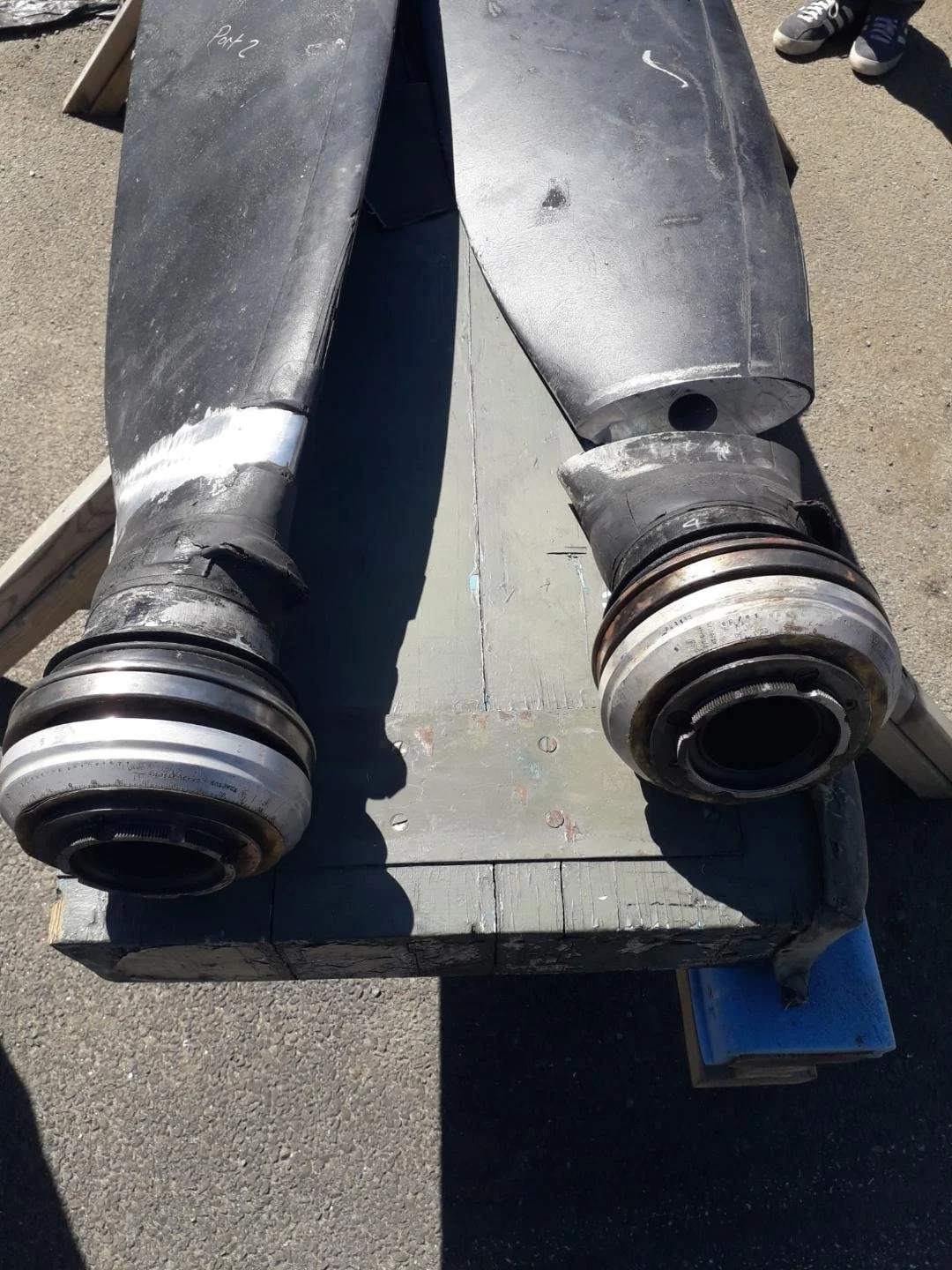
In order to re-attach the repaired blades to the propeller assemblies, we needed to remove them from each engine. The pictures below show that in progress on the starboard engine, and then the starboard propeller following removal, prior to the stubs of the 2 blades that were cut being removed for repair.
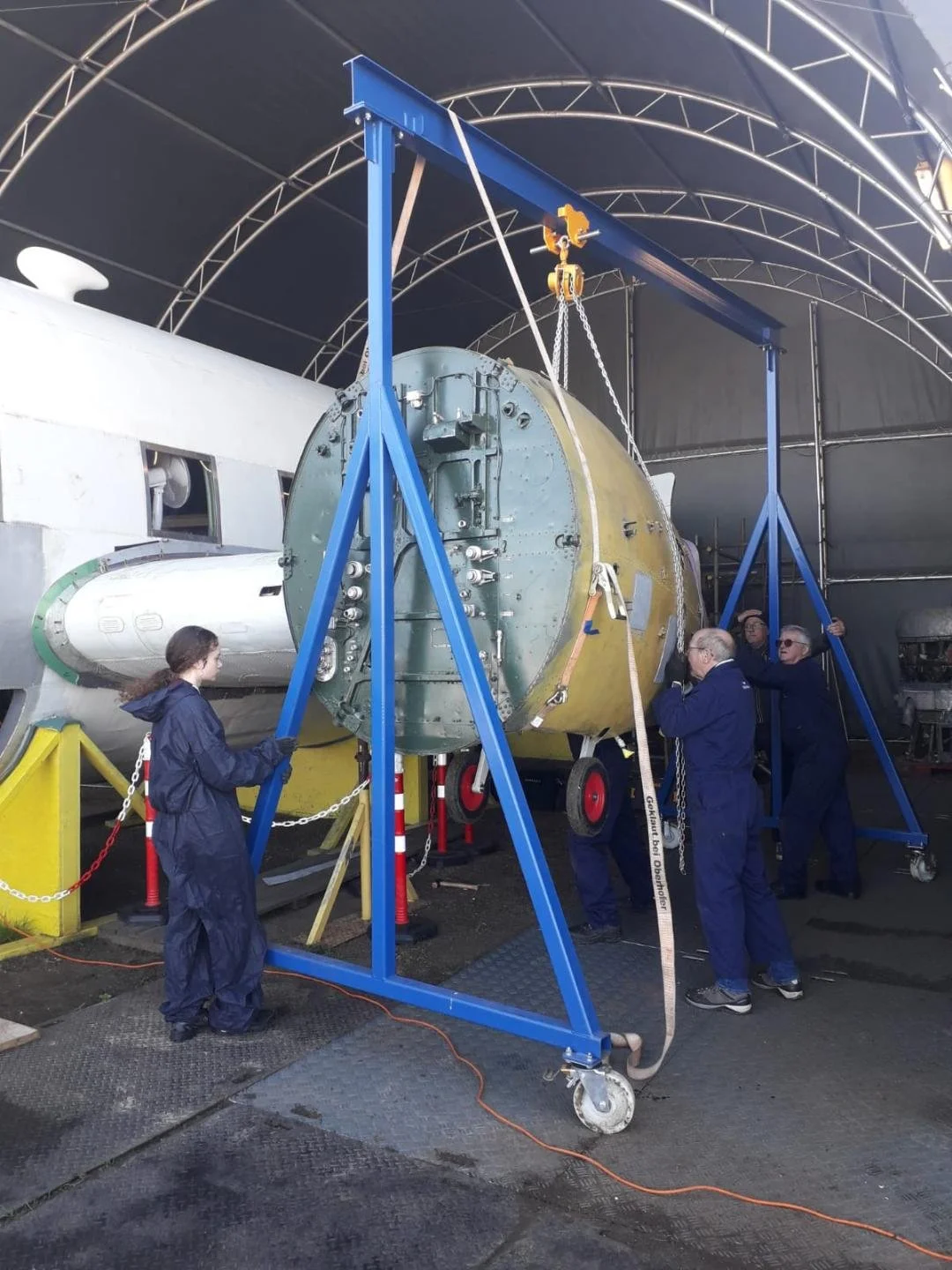
Finally for this update, on 25th April the starboard engine nacelle was raised and attached to the stub wing. As with the previous effort for the port one, some hours of effort was required, but barring some minor adjustments the task was completed!
—————————————————————
8th April update
With apologies for the break of around 7 weeks since the last update, we’re back in early April with a comprehensive update on the parts of “Vagabond” that have been the focus of work in the weeks since the end of February.
They have been as detailed below….
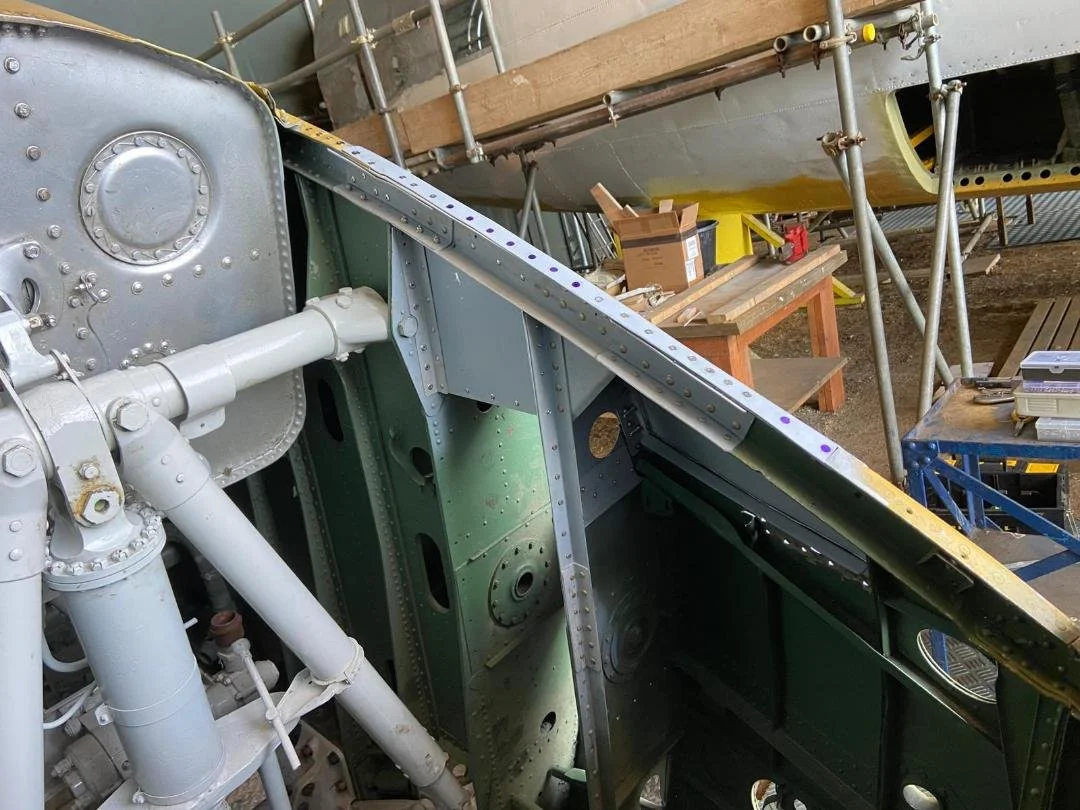
The rebuild of the rear of the fuselage, the fin and the horizontal stabilisers (tailplanes) was, as previous updates show, intended to be one of the main work areas of work during 2026, and that work has continued. The pictures below show the fabrication of various parts of the rear structure, as follows
Fabrication and trial fitment of rear fuselage repair pieces
The stubs of the horizontal stabilisers (also part of the tail section of the aircraft) continued to see more work….
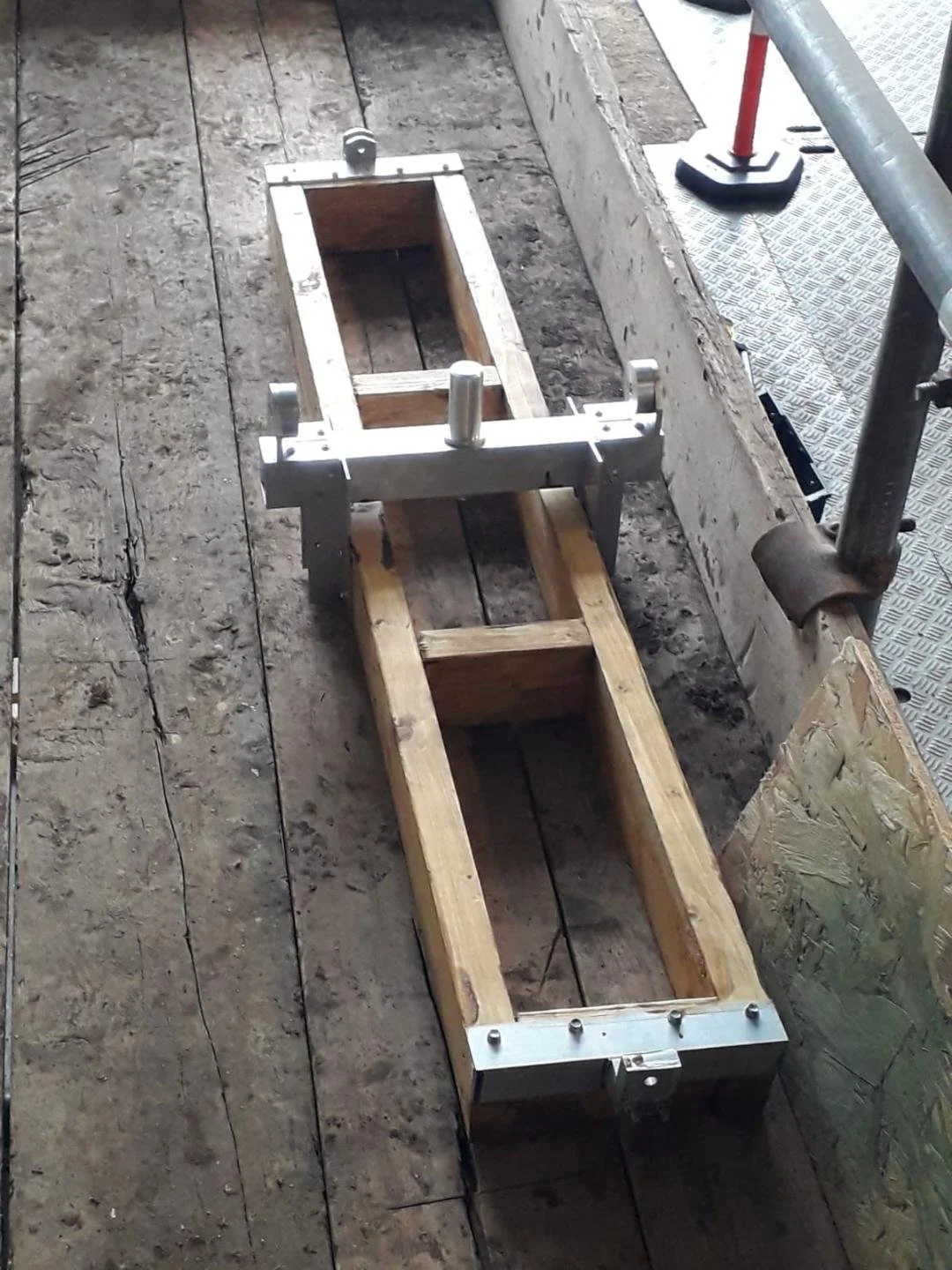
Work also continued on building and then trial-fitting a jig on which to mount the fin. The first picture below shows the fuselage damage that needs to be repaired prior to final mounting of the fin jig. The following pictures show the fin jig itself, a bracket that will be used as part of attaching it on top of the fuselage, and a trial fit to where it will finally be located (the bracket from picture 3 can be seen in place in picture 5)….
Another area of continuing work has been the ailerons, which have seen more work on fabricating new pieces to replace damaged parts. Some of this work is shown below, with newly-fabricated parts that can be seen in the 3rd and 4th pictures below:
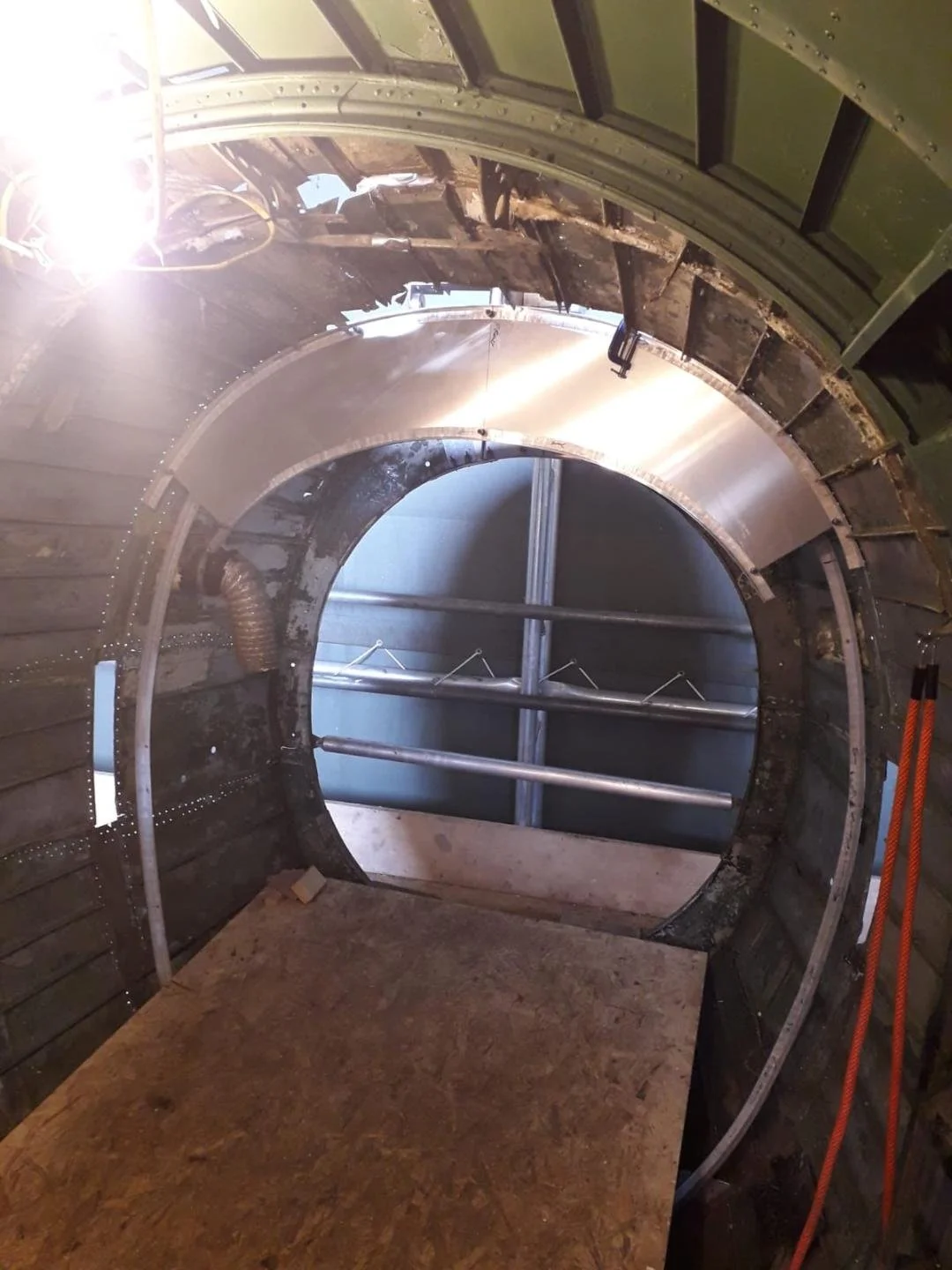
A new area of work within the interior was a front bulkhead (behind the cockpit) that has started to take shape….
….but probably the biggest achievement of the last month has been the final re-mounting of the port engine nacelle. Spar bolts were trial fitted….
….and then, after various trials (and tribulations), it was up….and on!
The port engine nacelle in it’s final position
Finally for this update, the first of the propellers that we had to saw off in order to transport the engines back from Bad Voslau has been pinned (or “dowelled”) together, ready for welding in a local workshop. You can see that it all looks to be in one piece (although the work on it is not yet complete) near to the bottom of the propeller in the picture below:
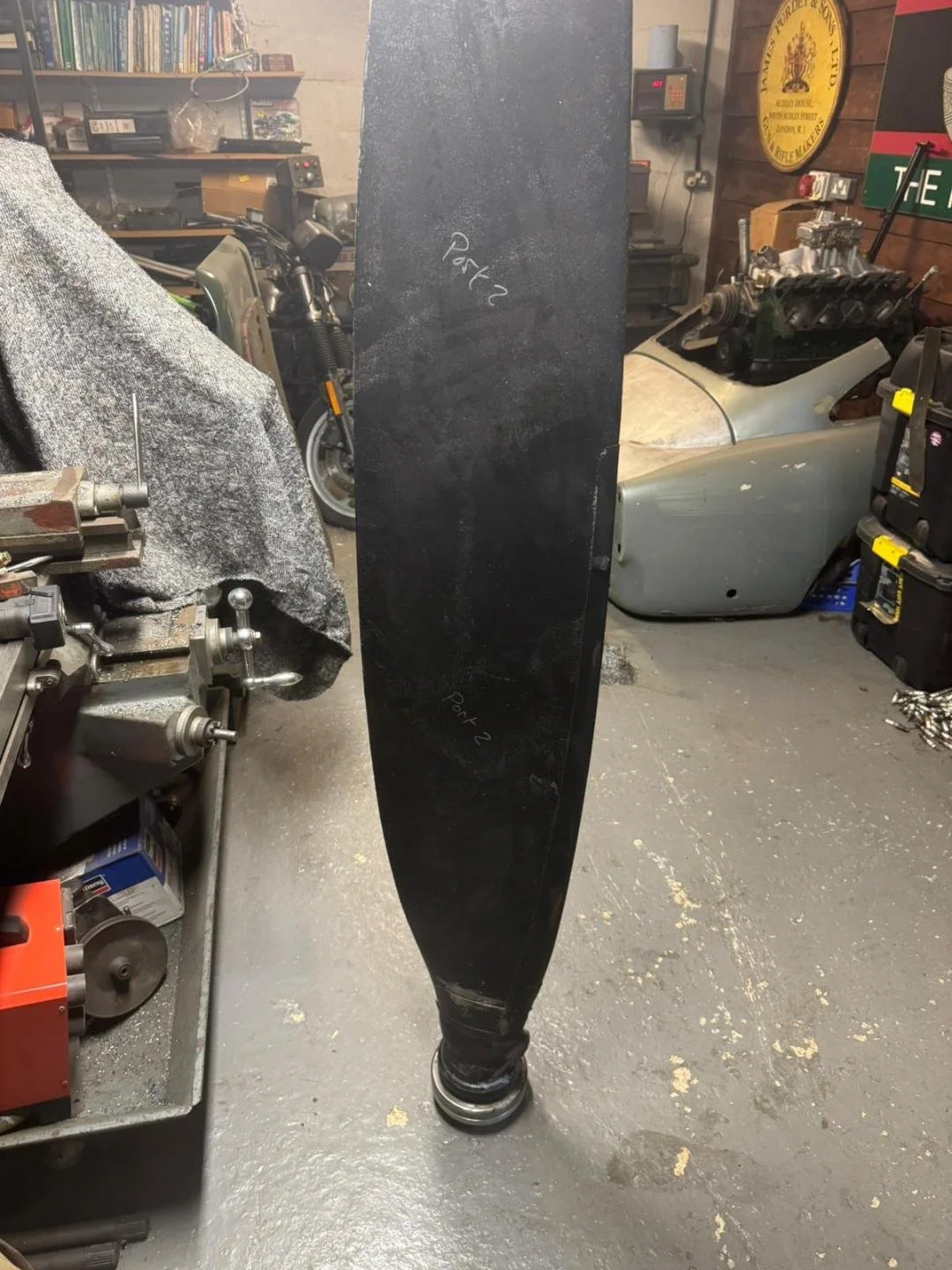
Propeller repair partially completed
12th February update
Into February and despite the wettest start to a year that most of us can remember, work continues on a lot of familiar areas of the aircraft, along with some new ones as the scope of the team’s work expands and some areas (nacelles being a good example) are nearer completion.
Some examples of parts of the aircraft now receiving more attention are the engine cowlings, and a jig that has been constructed to mount the fin vertically for restoration….
As work continued on areas that have been in progress for some time, interesting details become more visible, such as the internal detail of the ailerons (which have now both been removed from the outer wings for restoration) and the rudder. The pictures below show the starboard aileron taken inside for repair and the skinless rudder showing de-icing pipes that would normally be hidden from view, followed by a more general view of the stripped-down rudder….
Other areas where work has continued include the following, as shown in the pictures below:
Nacelles, with replacement panels being added
The wing fillets see continued work
The same can be said of the horizontal stabiliser stubs, with skins being removed for refurbishment and to enable interior work
The rear fuselage, specifically forming a rib section in this case
We’ve also been continuing our collaboration with our friends who are restoring the other UK-based Viking, “Vagrant”, at Brooklands Museum. They’ve been to Blackbushe a few times to make use of our facilties, specifically our “spray shop” where they prepped and painted some interior ceiling duct sections for their aircraft, as shown below….
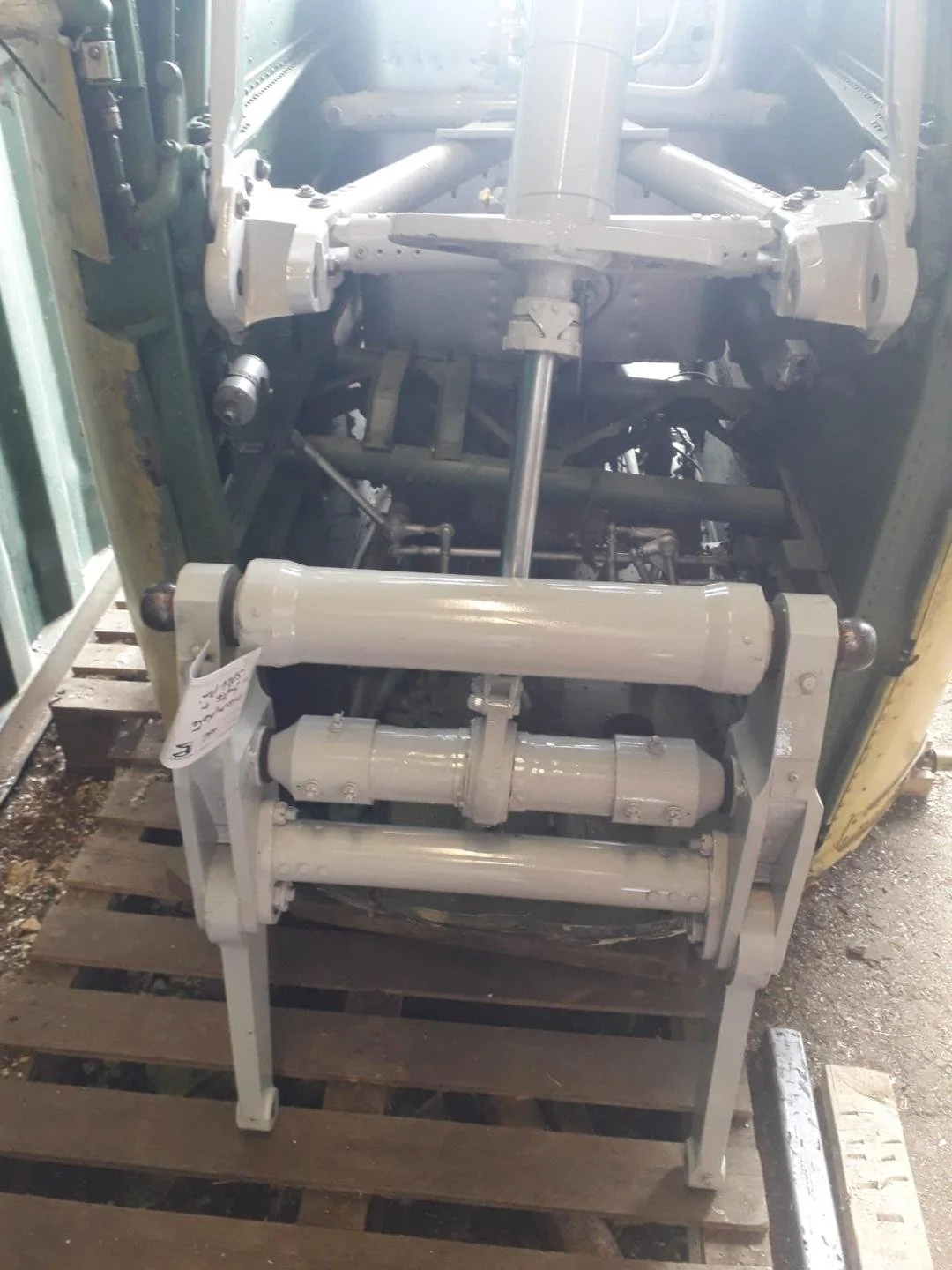
Finally for this update, a flashback 2 years to show how the main landing gear looked at the time, and how it looks more recently, having been fully refurbished by Safran Aerospace and installed into the nacelles. Just one example of the great progress the Team are making….
22nd January update
Further into the month, work continued, often in less than ideal (wet!) conditions, with similar continuing themes to the types of work being carried out. There’s more illustration of these activities in the following photos, as described below (photo credits: volunteers Phil and Nathaniel)….
Outside and inside, work progressed on the wings, and the vertical and horizontal stabilisers. The 4th picture below shows work on one of the horizontal stabiliser stubs.
The engine nacelles continued to receive attention. There’s been a lot of patching-up, which is now near to completion. The 2nd and 3rd pictures below show damage and how it’s been repaired, and the 4th work on a nacelle upper access panel.
As mentioned at the start of this 2026 blog, the rear fuselage is one of our focus areas of work for the coming year. The first photo below shows a rib trial fit and the second repair of the area where eventually the rear section will be re-fitted….
An elevator tip is shown below, firstly in dented condition, and in the second picture slightly less so!
Finally for this update, wing fillets, which were either in a poor condition or needed complete re-fabrication after the aircraft was dismantled in Bad Voslau, continue to receive attention…
8th January update
Undaunted by the winter chills, our “Tech Team” had already returned to carry on where 2025 left off and by the time of writing had completed a couple of sessions, with the focus of their efforts detailed in the words and pictures (credit: Phil) below….
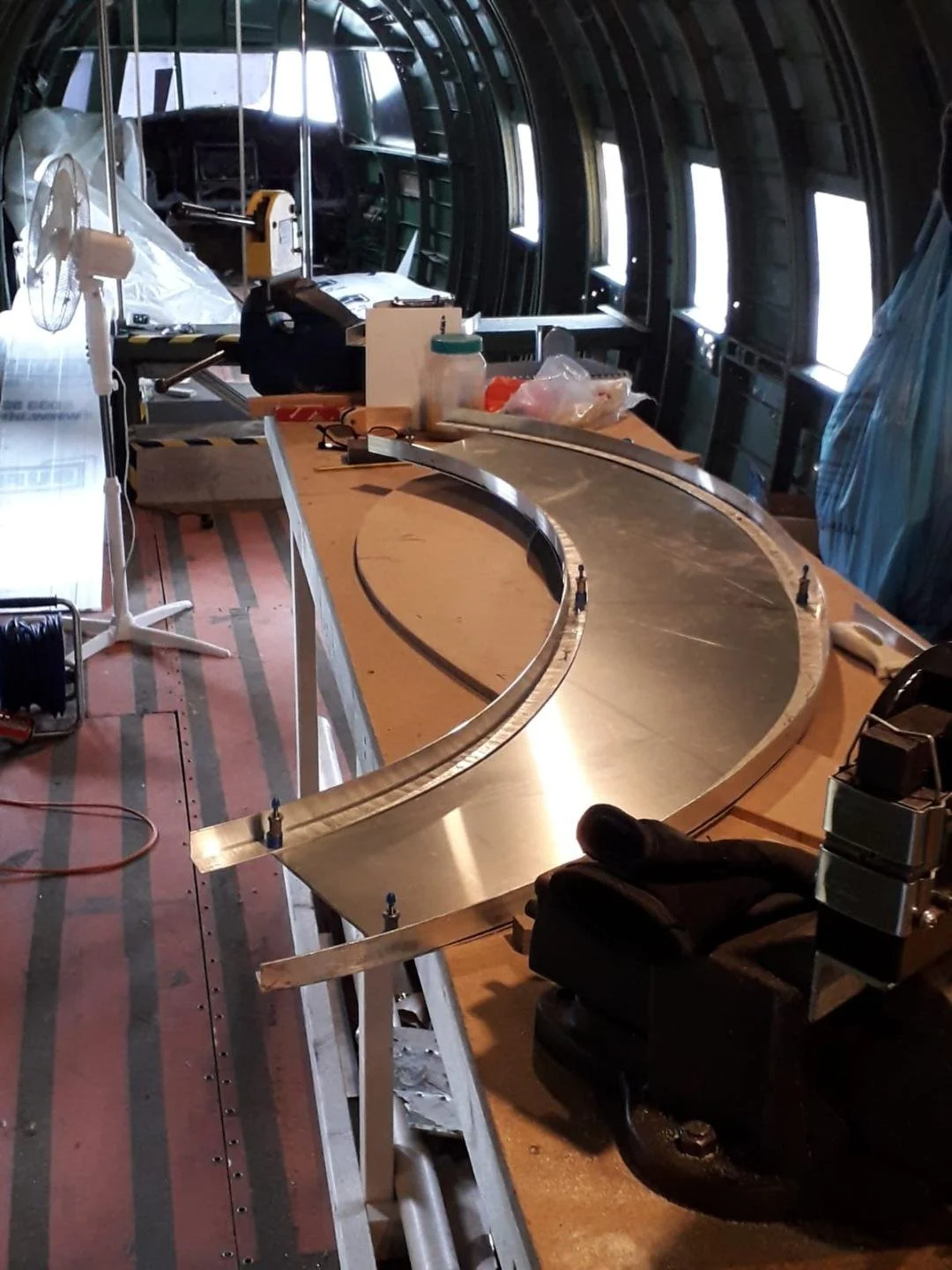
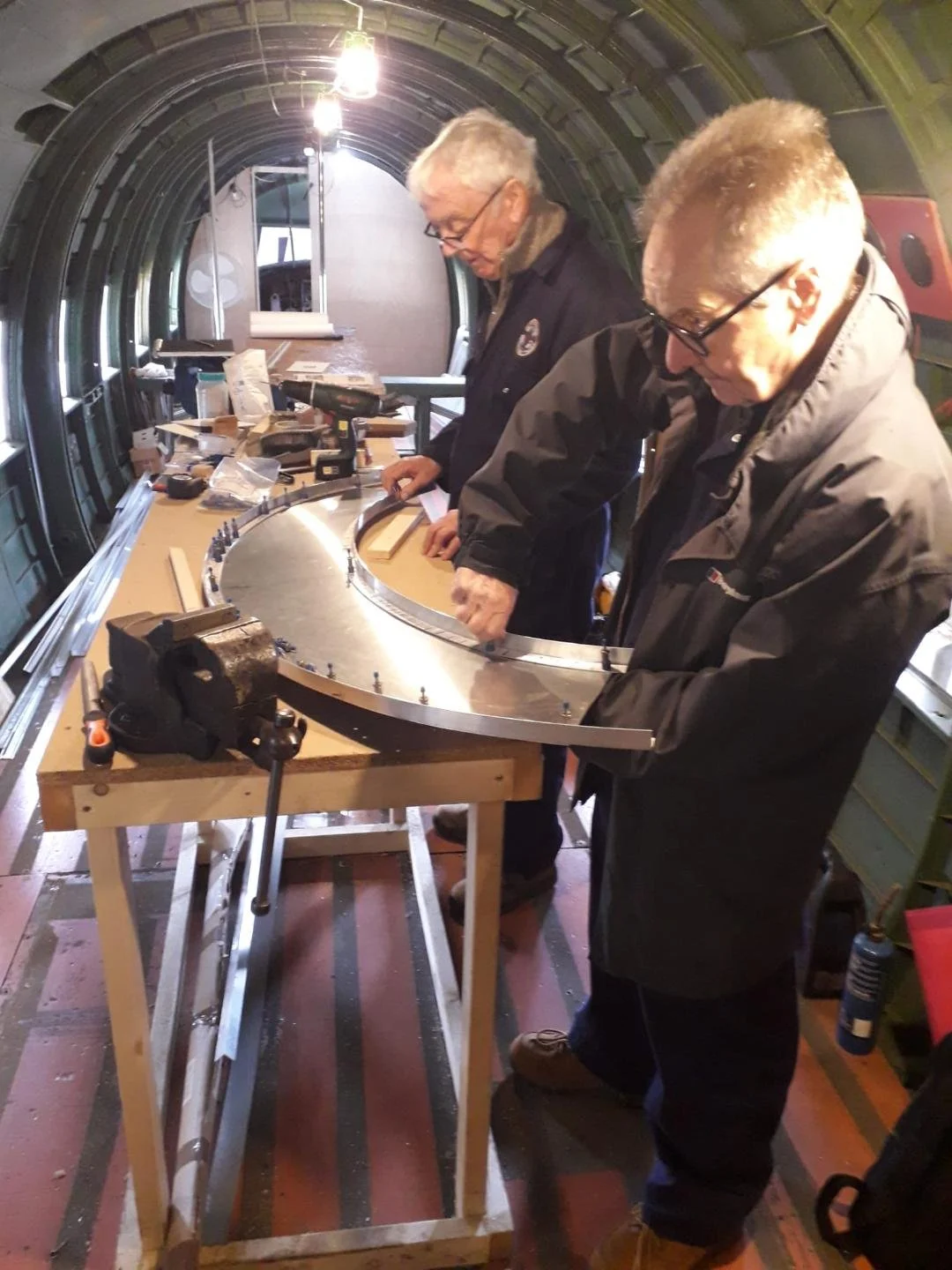
Work on what will be one of the team’s major tasks for 2026, namely the repair of the rear fuselage, continued. A lot of re-fabrication of various parts is going to be needed as this progresses.
The painting with primer of flaps and other parts (including carburettor intake ducts, as shown in the 3rd picture) continued, with our “spray shop” being warmed-up to aid the hanging-out-to-dry process (4th picture)
Propeller stubs and sawn blades were cleaned and matched
Trial fit of instruments to the acrylic templates continued
The fin was moved inside where some heat was applied to aid the stripping process
Work continued on wingtips, ailerons and wing fillets
The additonal workshop now in place inside the fuselage saw rib-forming underway, another part of the rear fuselage rebuild
Finally, nacelle repairs saw some end results with the starboard nacelle now completed (last 3 pictures)
Happy New Year….
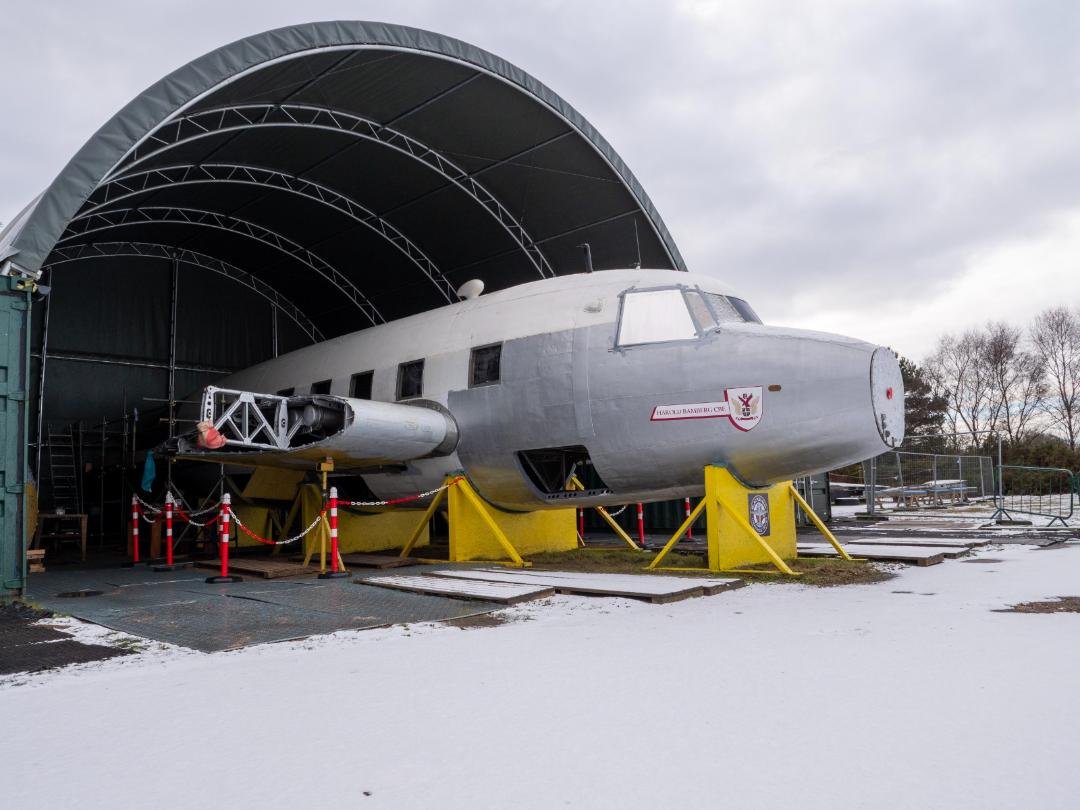
2026 started in a fairly wintry way at Blackbushe, including a light fall of snow on 6th January, as captured by our volunteer James….